
Small hardware shop interior design ideas that maximize every inch
Small hardware shop interior design comes down to one challenge: every square metre needs to serve three goals at once — maximum product visibility, easy navigation for customers, and efficient restocking for staff. These 21 ideas cover the fixtures, display systems, and layout decisions that make a compact hardware store work hard and look intentional.
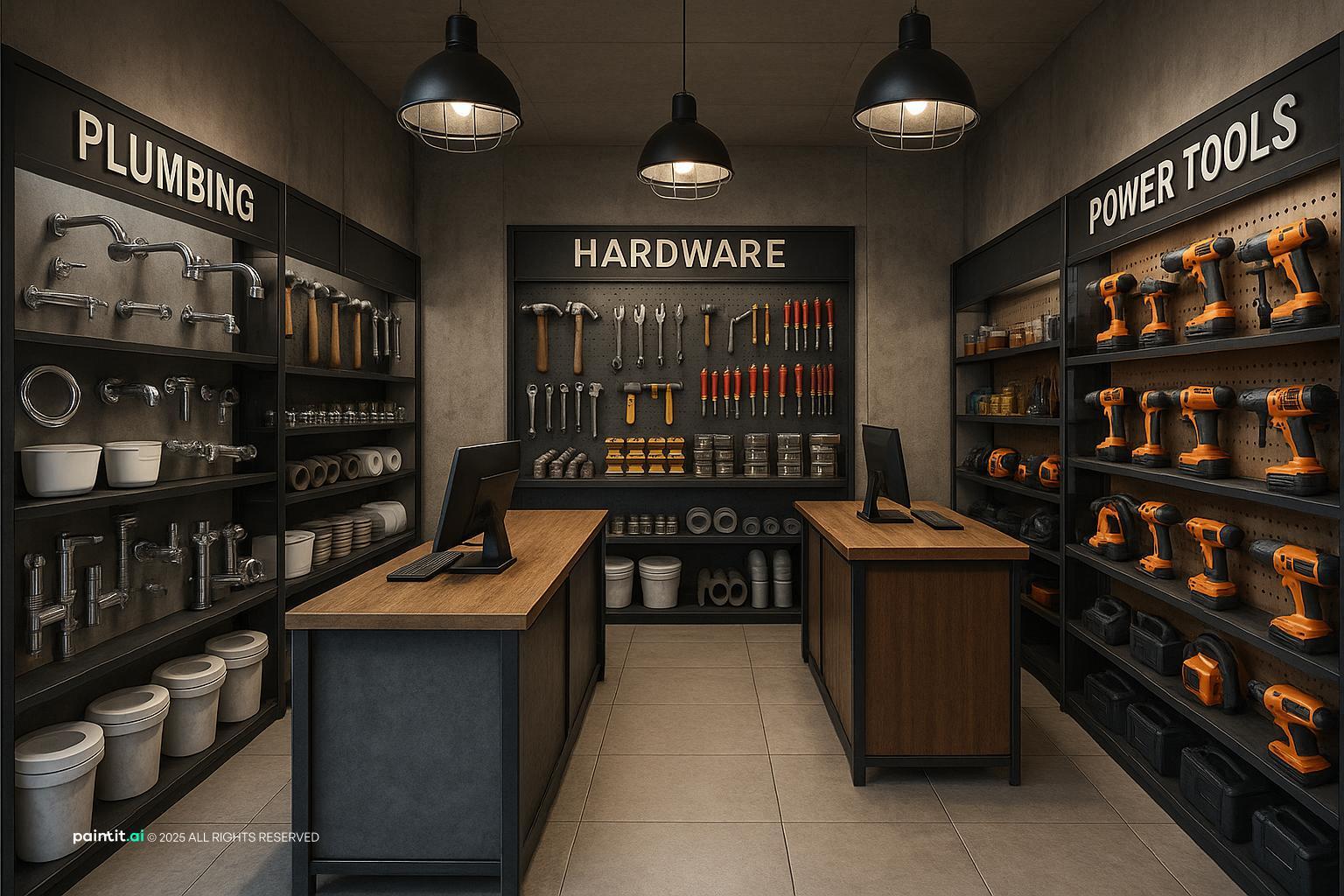
21 small hardware shop interior design ideas
Start with adjustable shelving and a clear category system before any aesthetic choices. These 21 ideas address both.
-
1. Start Every Hardware Shop Design Plan with Adjustable Shelving
A solid hardware shop design plan begins with slotted-angle or pegboard shelving that can be reconfigured as stock changes. Fixed wooden shelves look neat on day one but become a liability the first time you add a new product line.
-
2. Group Stock by Trade Category, Not Just Size
Simple hardware shop design works best when plumbing, electrical, fasteners, paint, and hand tools each get their own clearly marked zone. Customers usually know their trade before they know the exact item, so category signage speeds up every visit.
-
3. Use Bin Systems for Small Hardware Shop Display Ideas
Screws, bolts, washers, and nails need transparent bins with a visible size label, not a drawer you have to open to check. Wall-mounted bin racks near the counter make small-parts browsing self-service instead of staff-dependent.
-
4. Hang Power Tools Where They Can Be Seen and Secured
Pegboard walls with tool silhouettes let customers see the full range at a glance while keeping higher-value power tools behind a lockable panel or in a glass case near the till.
-
5. Add a Paint Mixing and Sampling Counter
If the shop stocks paint, a dedicated mixing counter with good ventilation and a colour-card wall separates a messy task from the general sales floor and doubles as a small service point.
-
6. Keep Aisles Wide for Bulky Items
Pipes, ladders, and lumber need wider turning space than a standard retail aisle. Plan at least one wide central aisle even in a small hardware store design so customers can carry longer items without knocking over displays.
-
7. Position the Counter to See the Whole Floor
A raised or centrally placed billing counter lets one or two staff keep an eye on every aisle, which matters more in a hardware shop than most retail formats because of the smaller, easily-pocketed inventory.
-
8. Use Bright, Even Lighting Over Every Aisle
Reading thread sizes, wire gauges, and fine print on packaging needs even, high-CRI lighting throughout, not just at the entrance. Dim back aisles are where customers give up and ask staff instead of self-serving.
-
9. Add Clear Category Signage from the Ceiling
Hanging category signs (Electrical, Plumbing, Fasteners, Paint, Tools) visible above the shelving let customers navigate without walking every aisle, which shortens visit time and reduces staff interruptions.
-
10. Reserve Back Storage Separate from the Sales Floor
Bulk stock, backup inventory, and heavier items like cement bags or long pipes belong in a back storage area, not stacked on the sales floor. This keeps the customer-facing space navigable even with a large total inventory.
-
11. Design a Seasonal Display Zone
Garden tools in spring, heaters and insulation in winter, or paint promotions during festival season all benefit from a flexible end-cap or entrance table that rotates with demand instead of being locked into one category.
-
12. Choose Durable, Easy-Clean Flooring
Hardware shops see heavy foot traffic, dropped tools, and occasional spilled paint or cement dust. Polished concrete or vitrified tile handles this better than carpet or laminate, and keeps maintenance costs down.
-
13. Add Price and Spec Tags at Eye Level
Fasteners and fittings often look nearly identical at different sizes. Clear tags showing size, material, and price at eye level cut down on customers pulling items off shelves just to check the label.
-
14. Keep a Fast Checkout Flow Near the Entrance
Many hardware purchases are quick, single-item trips. A counter near the entrance rather than at the back of the store shortens the path for customers who already know exactly what they need.
-
15. Use Vertical Wall Space Before Adding More Floor Racks
In a small hardware shop interior design ideas layout, floor space is the limiting factor, not wall space. Taller wall shelving with a step stool for top shelves usually beats adding another freestanding aisle.
-
16. Add a Small Advice or Service Counter
Hardware customers often need quick advice on the right fitting or fastener for a job. A small counter separate from billing, staffed during peak hours, keeps that conversation from blocking the checkout line.
-
17. Store Hazardous or Chemical Items Correctly
Paints, thinners, and adhesives need ventilated, code-compliant storage away from open flame sources or direct sun. Plan this zone early since retrofitting proper ventilation later is expensive.
-
18. Add a Digital Catalog for Items Not on Display
A small hardware store design can't stock every SKU. A tablet or printed catalog at the counter for special-order items keeps the sales floor focused on fast-moving stock while still capturing less common orders.
-
19. Keep Exterior Signage Simple and Legible
Most hardware shop customers are looking for a specific category on a time-pressed errand. Bold, legible signage naming the shop's main categories (tools, paint, plumbing) from the street draws in passing trade faster than a purely decorative storefront.
-
20. Plan for Loading and Restocking Without Blocking Aisles
A side or rear entrance for restocking bulky items (paint drums, pipe bundles, cement bags) keeps deliveries from blocking customer aisles during business hours.
-
21. Test the Layout Before Committing to Fixtures
Before finalizing your hardware shop design ideas, try laying out shelving and counter positions with a free AI visualization tool. It's far cheaper to move furniture on screen than to relocate a fixed shelving run after installation.
Small hardware shop design examples in action
-
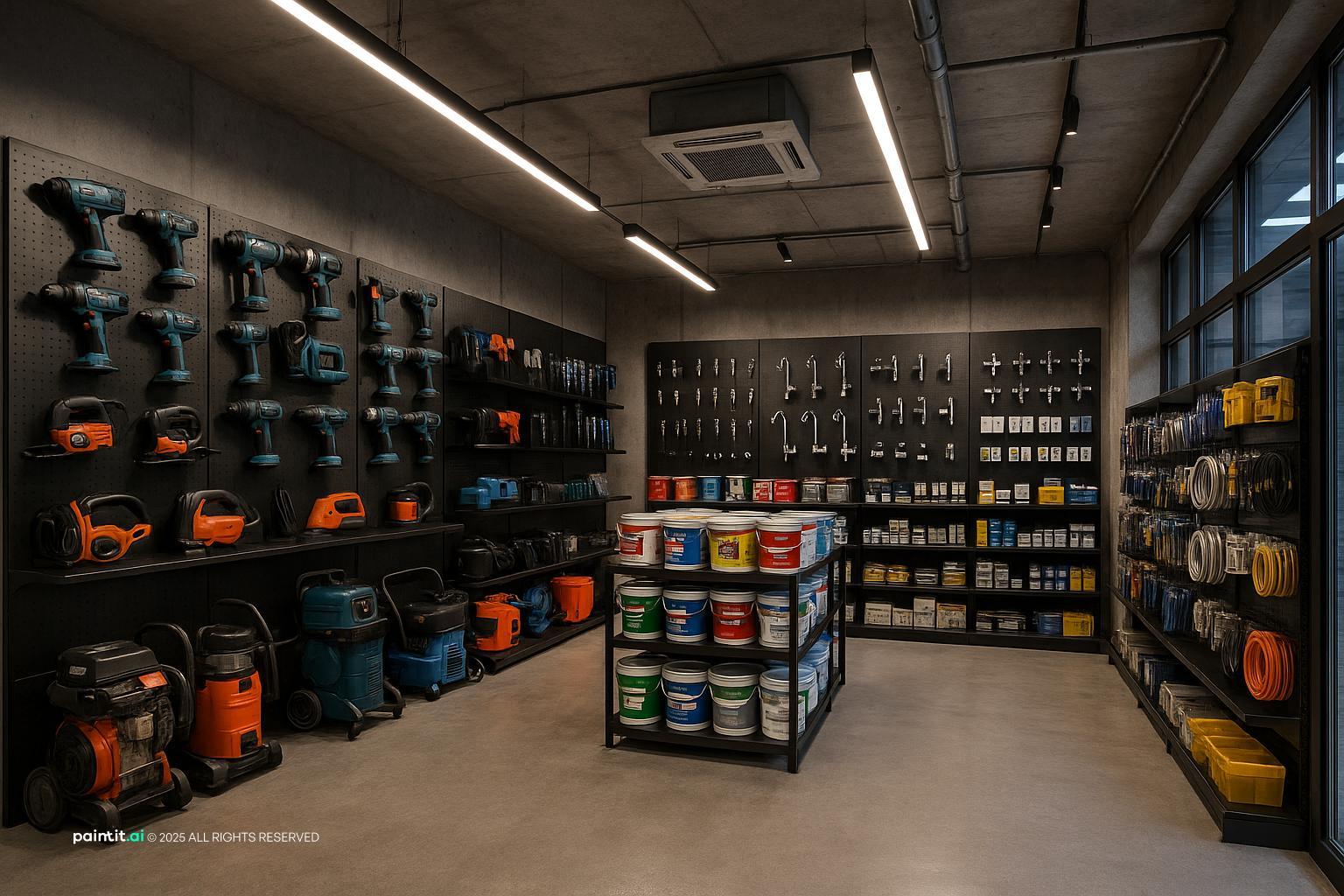
Transforming a compact hardware store into an efficient, welcoming, and sales-boosting space is absolutely doable with some creative thinking. These strategies will help every square foot work harder, turning tight quarters into a treasure trove for both DIYers and pros alike.
-
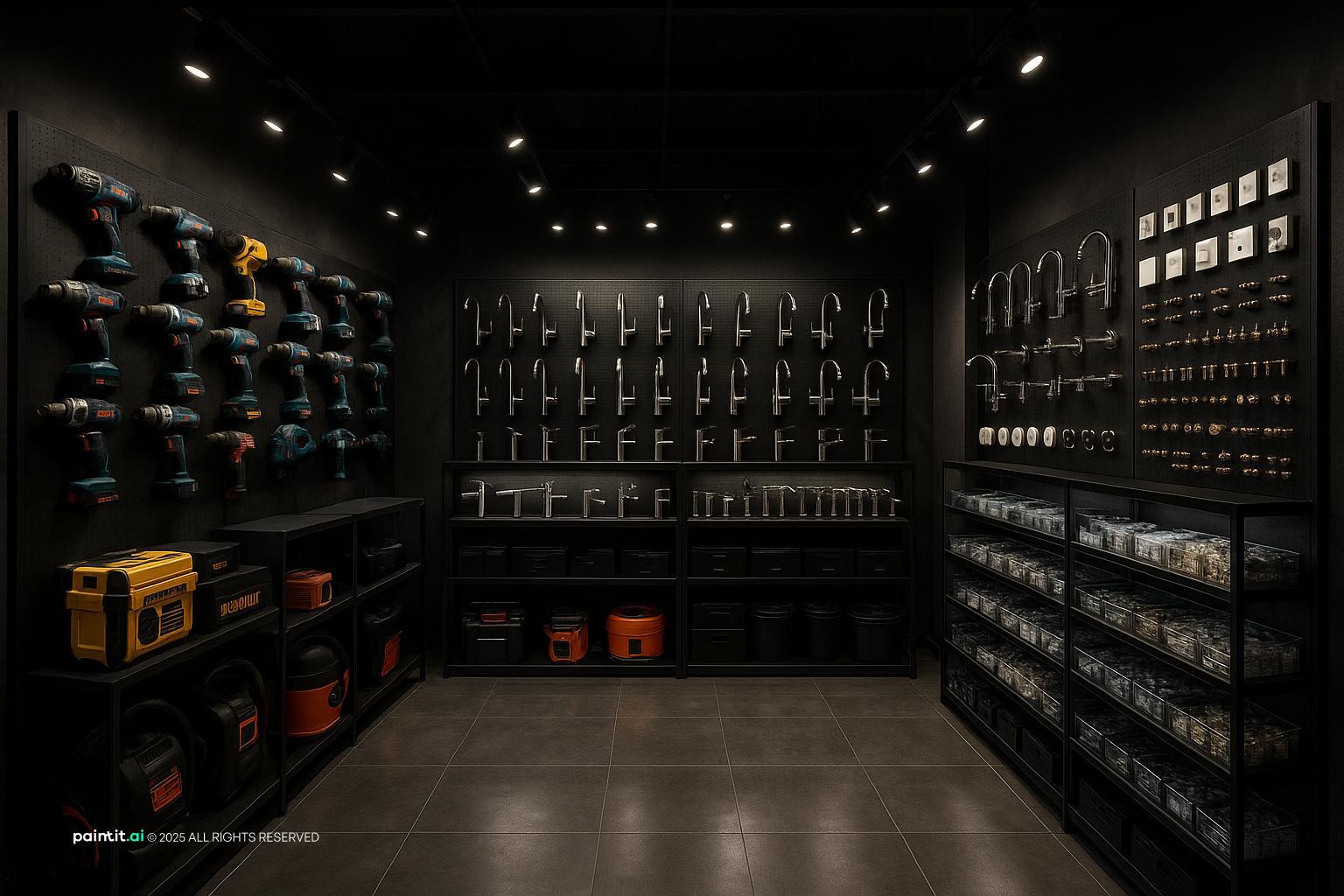
Use adjustable, modular shelving systems that let you change heights and layouts as your inventory shifts. This setup maximizes vertical storage and gives flexibility to display anything from bolts to bulky tools.
-
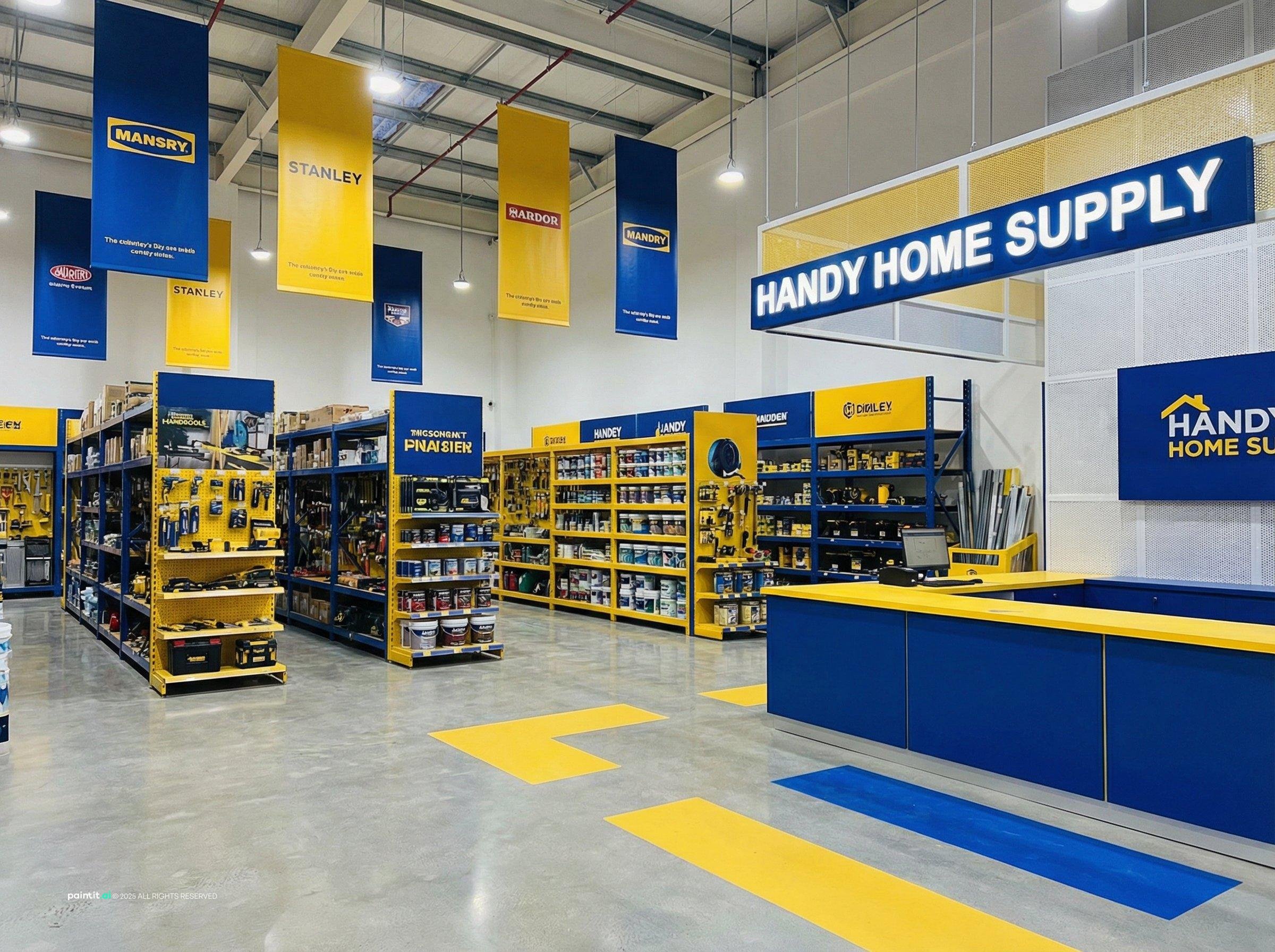
Go for durable materials like steel frames and melamine-coated shelves for easy cleaning and longevity.
-
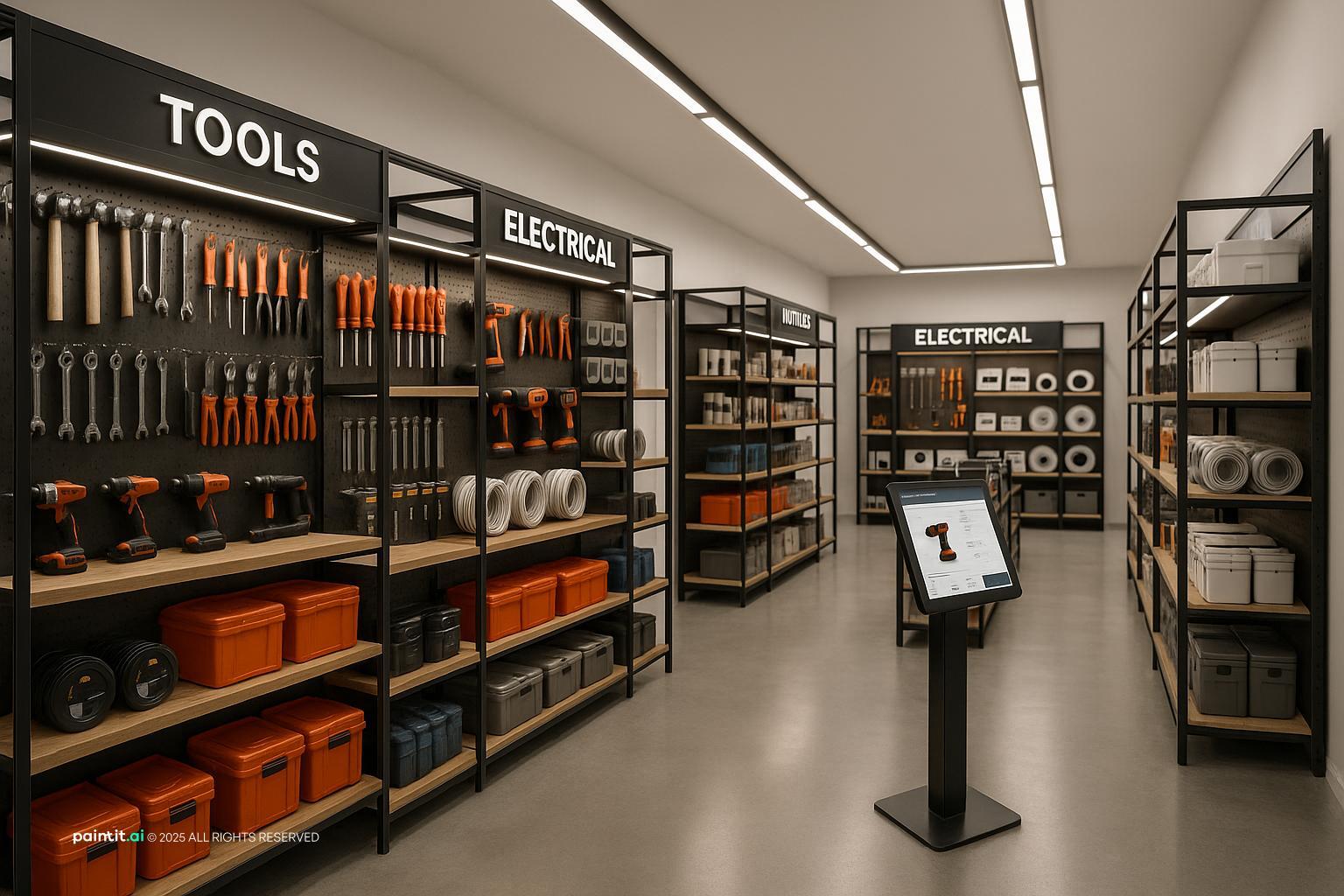
Clear, eye-level labels help customers find what they need without asking for help constantly. Use large, readable fonts and categorize logically according to use or material.
-
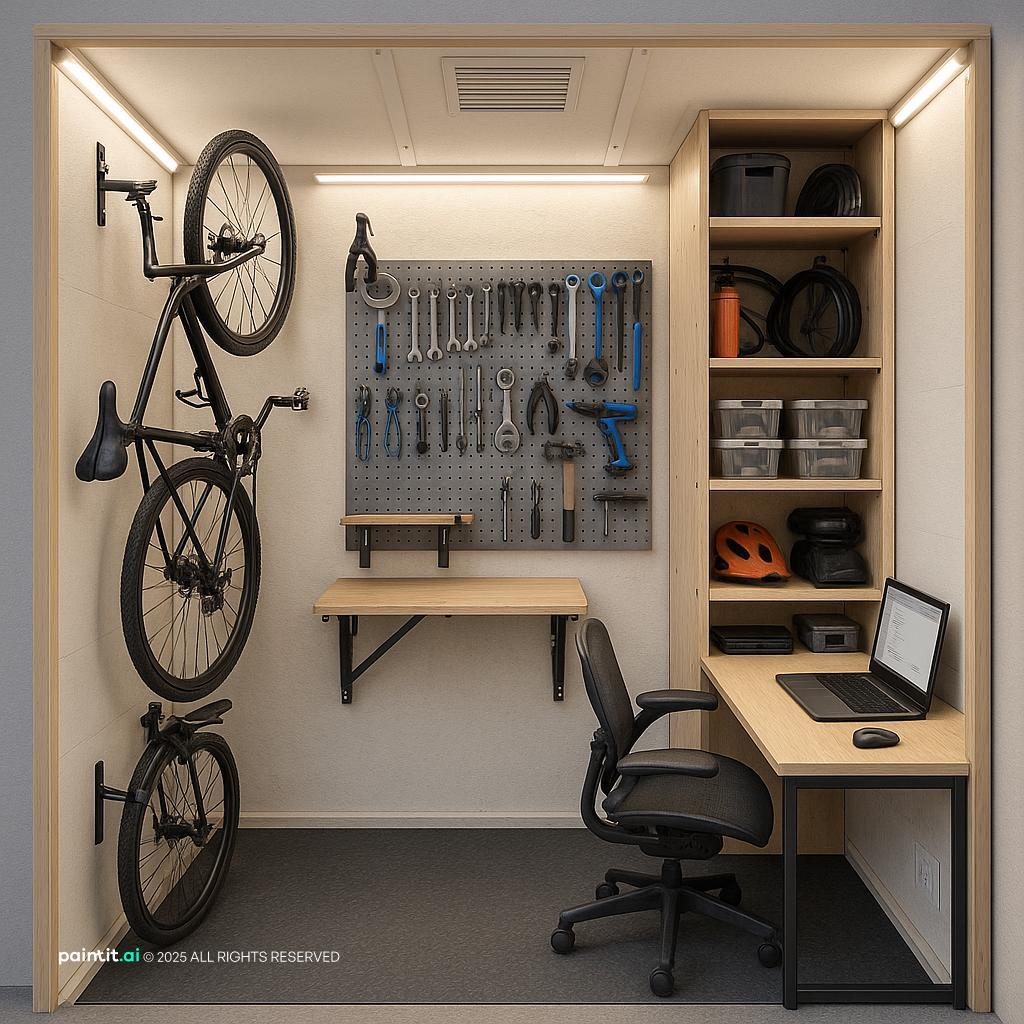
Add simple symbols beside words for quick language-free navigation, especially in neighborhoods with diverse communities.
-
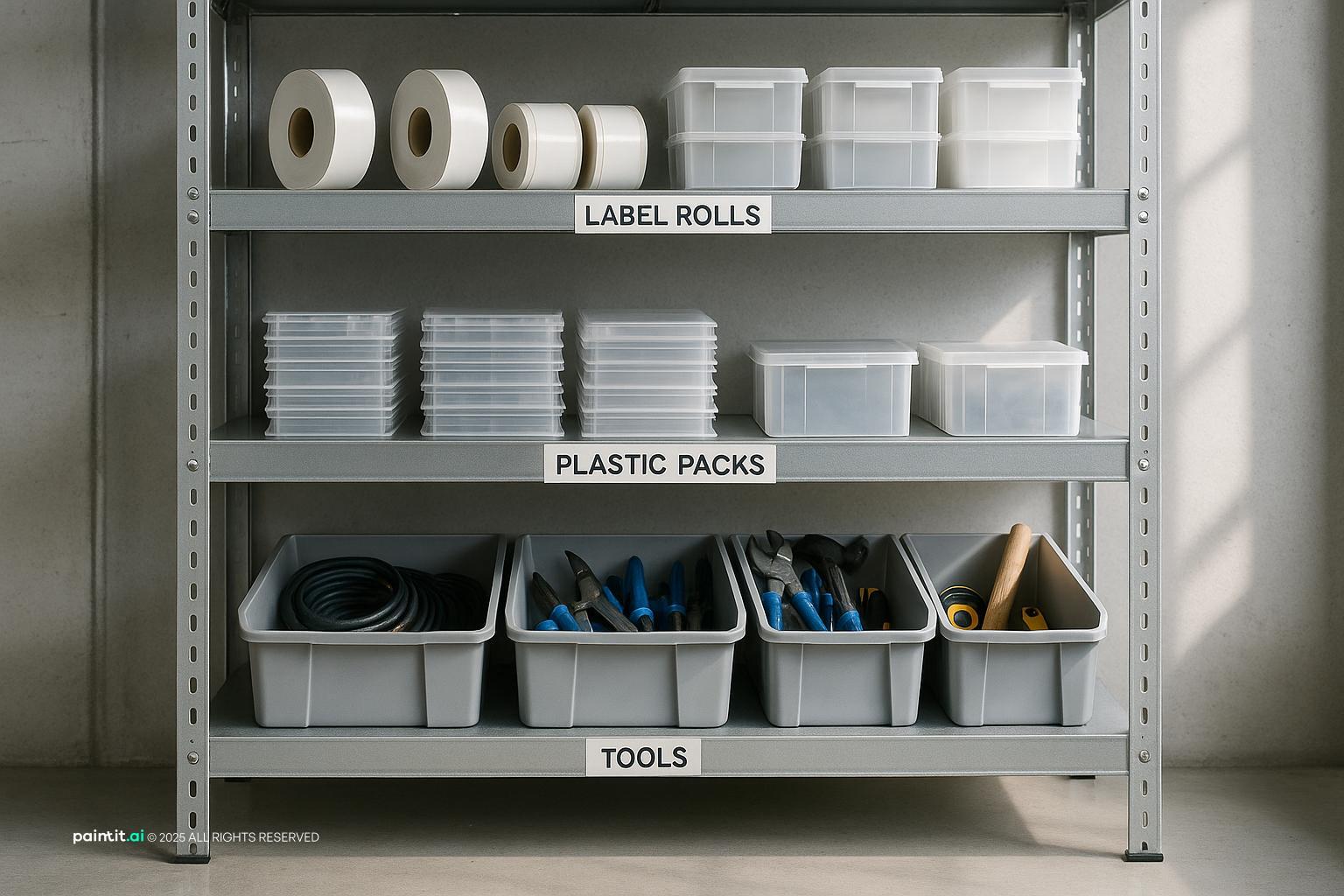
Pegboards make the most out of vertical wall space and allow you to rearrange displays for new stock or seasonal promotions. Hooks of varying length accommodate different item sizes.
-
Paint the pegboards in a light color to reflect more light and keep the space feeling open.
-
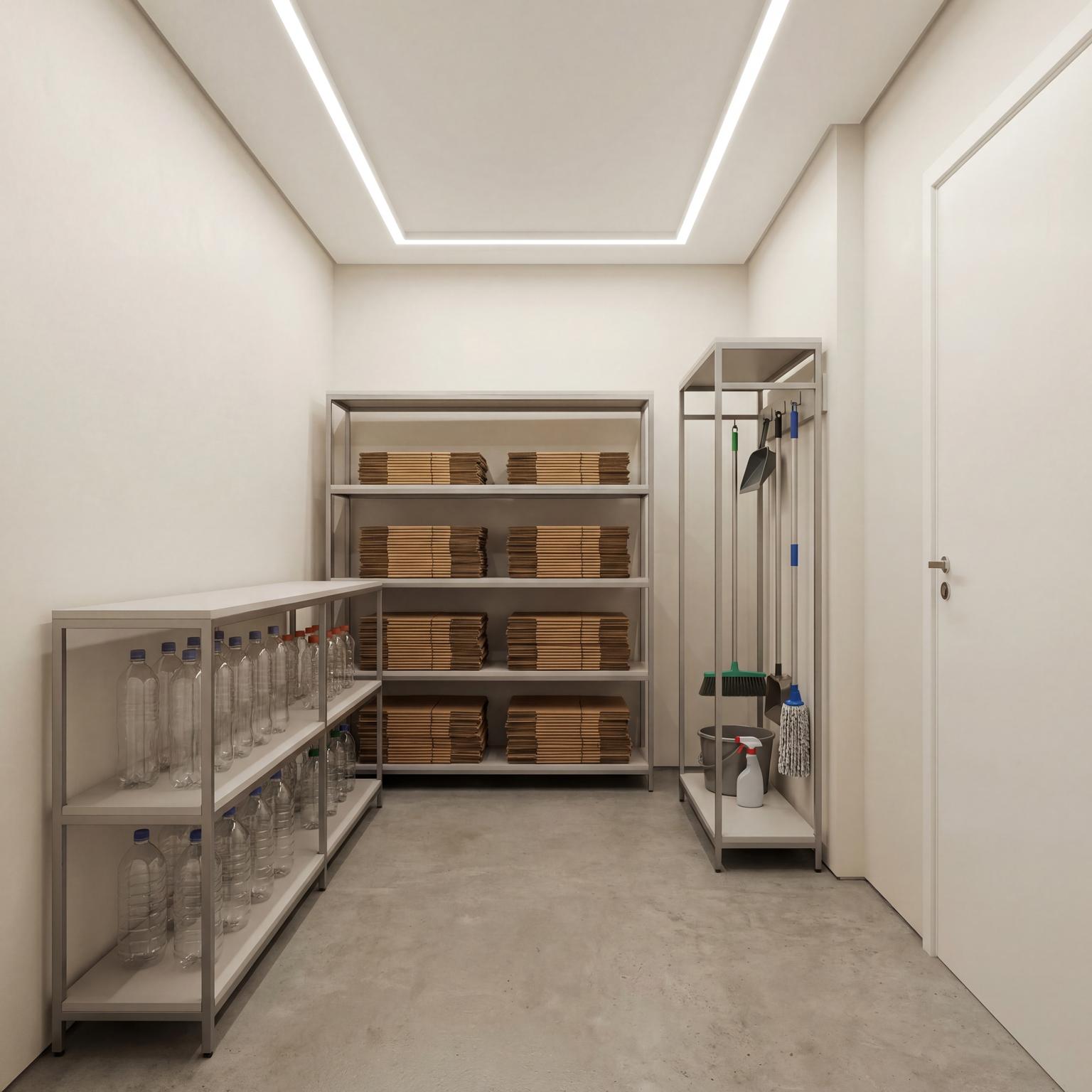
A rolling library ladder allows employees to reach top shelves without struggling with step stools. This space-saving solution also keeps floor areas clear.
-
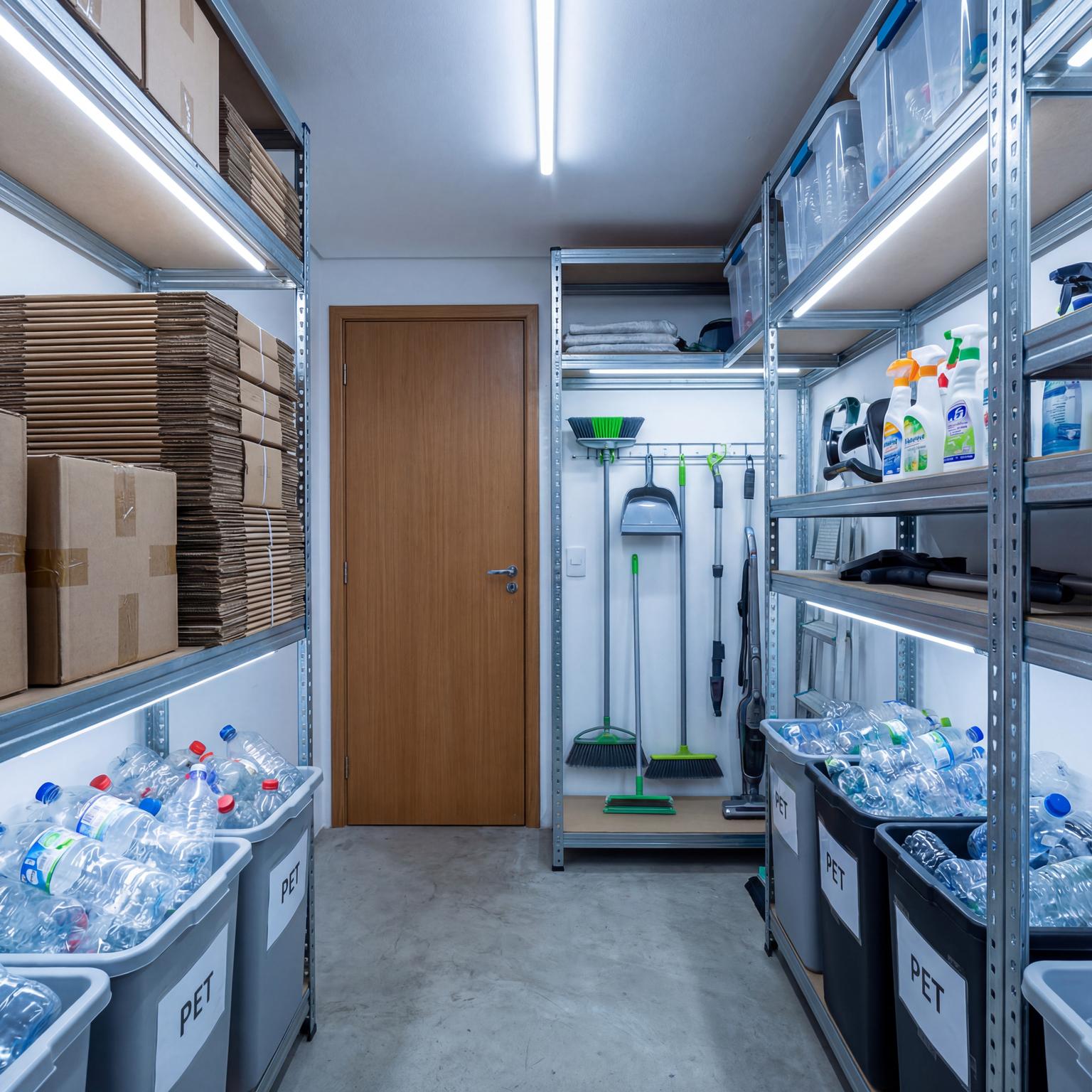
On days with heavy restocking, temporarily limit ladder use to staff for safety.
-
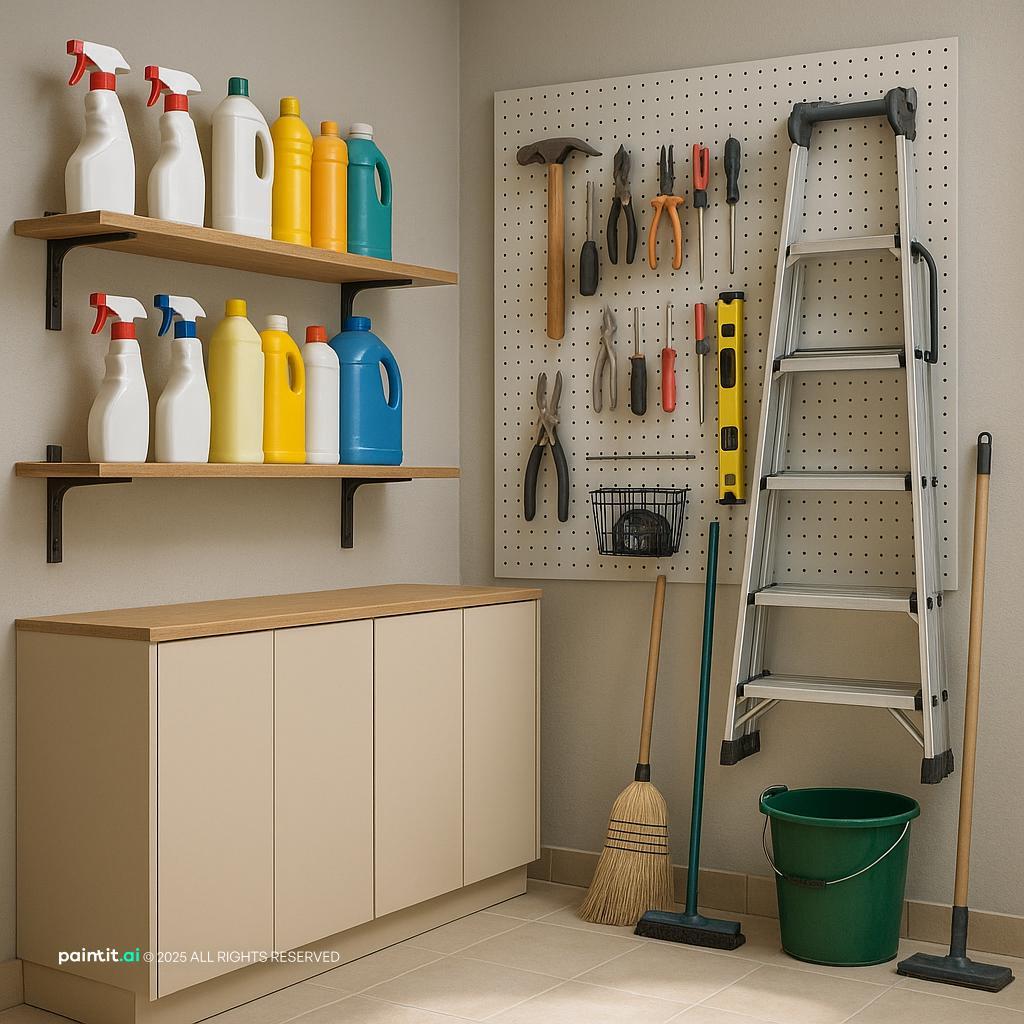
Set up enticing displays at the end of each aisle, spotlighting new arrivals or seasonal must-haves. This stops customers in their tracks and encourages impulse buys.
-
Install slatwall along narrow walkways so you can hang merchandise in shallow spaces. These panels let you switch up hooks and baskets quickly.
-
They're especially good for showcasing smaller, high-turnover items like tape measures and screwdrivers.
-
Make sure your checkout has plenty of deep drawers underneath for the backstock or specialty items. This keeps clutter out of sight but easily accessible for everyday use.
-
Use warm LEDs for communal areas and bright task lights for product bays. Thoughtful lighting makes small spaces feel less cramped and draws attention to key displays.
-
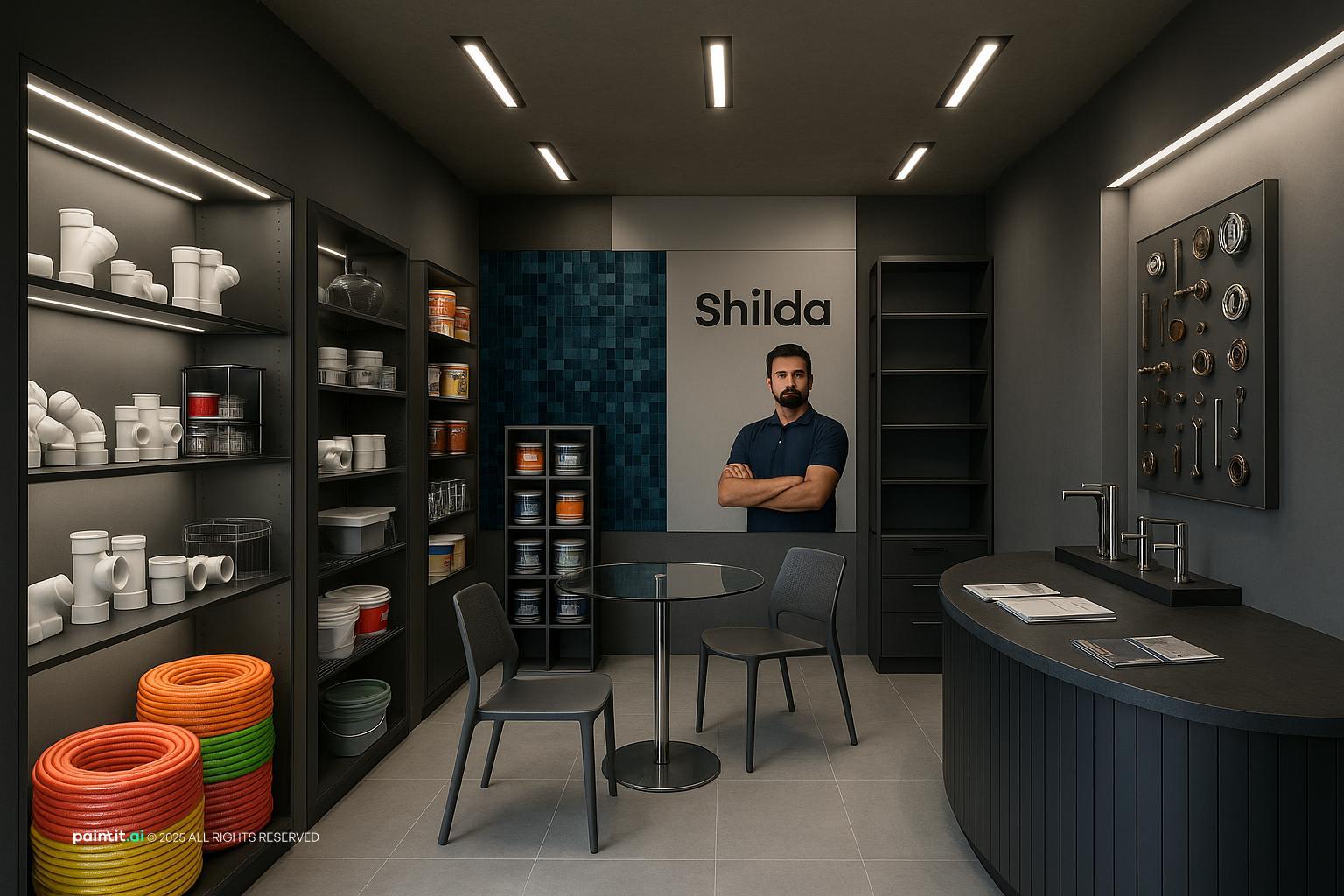
Add motion-sensor lighting inside cabinets or shelves to save energy while making products pop.
-
Choose a compact counter with lockable casters so you can move it around for events or deep cleans. Extra fold-down wings or nesting surfaces expand workspace only when needed.
-
Even the smallest boutique can fit a petite workbench for live demos or repair tutorials. This will help your audience feel closer to you and your brand.
-
Switch out demo products regularly to keep repeat visitors interested.
-
Mount magnetic strips along wall recesses or awkward pillars to display metal hand tools. This frees up shelf and bin space for bulkier items.
-
Keep high-value or specialty tools in slim, well-lit glass cases near the register. This deters theft and lets staff answer questions personally about premium products.
-
Invest in stacked clear bins for loose hardware such as screws and nails. They enable shoppers to quickly see the contents and take what they need.
Visualize your hardware shop layout with Paintit.ai
Upload a photo of your shop space to app.paintit.ai. Test different shelving configurations, colour schemes, and lighting approaches in 1–2 minutes. Useful for comparing how a light neutral wall colour reads with your existing fixtures, or for presenting a redesign concept to a landlord or business partner before committing to any work. Free to start.
Small hardware shop layout: the practical decisions
A well-laid-out hardware store answers three questions for every customer who enters: where am I, what do they have, and how do I find what I need?
Entry zone
The entry should communicate category organization immediately — either through clear overhead zone signage or a visible store map near the door. A small display of seasonal or high-demand items (adhesives, cable ties, light bulbs) positioned near the entry does double duty: it orients the customer and drives impulse purchases.
Main aisle width
Minimum 90 cm for a single-person aisle. 120 cm for comfortable two-way traffic, especially important when customers carry baskets or trolleys. In very small stores (under 40 m²), a single central aisle with product on both walls keeps the layout simple and navigation clear.
Category zoning
Group by task rather than product type where possible. "Fixing and fastening" (screws, bolts, wall plugs, rawlplugs) performs better than "screws" and "bolts" in separate sections. "Paint and surface prep" in one zone saves customers from crossing the store for related items. Logical clustering reduces customer questions and staff interruptions.
Vertical display
A hardware shop's best asset is wall space. Floor-to-ceiling shelving using adjustable bracket systems maximizes capacity. Heavy items (power tools, paint cans) at floor to mid-height; lighter, faster-moving items at eye level (optimal 120–160 cm from floor); specialist or slow-moving stock above head height. A rolling library ladder allows staff access to top shelves without step stools cluttering the aisle.
Checkout zone
Position the checkout counter for sightlines to the whole shop floor — both for security and for customer assistance. High-margin small items (adhesives, drill bits, cable ties, batteries) displayed immediately at the checkout counter generate significant impulse revenue.
Related design tools
FAQ
-
A single central aisle with shelving on both walls is the most efficient layout for a hardware store under 40 m². Overhead zone signage or a door-adjacent store map helps customers orient quickly. Category groupings by task (rather than strictly by product type) reduce customer questions. Heavy items low, fast-movers at eye level, specialist stock at the top with a ladder for access.
-
Adjustable modular shelving gives flexibility as inventory changes. Pegboards and slatwall panels for smaller items (hooks, clips, fasteners) on wall sections that can't take full shelving. Magnetic strips for hand tools — they're visible, accessible, and take no shelf space. Glass cases near the checkout for high-value or theft-risk items (premium drill bits, specialty tools). Clear labels at eye level, large font, with category symbols for non-English-speaking customers.
-
Bright, even LED overhead lighting (cool white 4000–5000K) throughout the shop ensures product labels are readable. Warm accent lighting in any customer consultation or waiting area. Motion-sensor lighting inside cabinets or enclosed shelving sections saves energy while making products visible when opened. Spotlights on endcap displays and promotional areas draw customer attention to featured products.
-
Yes. Upload a photo of your shop space to app.paintit.ai and test different shelving layouts, colour schemes, and lighting directions in 1–2 minutes. Free to start.