
Exotic Style Interior Design Inspiration and Ideas for Your Home
Exotic style interior design draws from the visual traditions of cultures far from Western European norms — Moroccan riads, Balinese compounds, Indian havelis, African ceremonial spaces, Japanese teahouses, and South American colonial interiors. The defining quality is material richness: layered textiles, carved wood, handmade ceramics, woven surfaces, and the visual evidence of craft.
This guide covers the core elements — colour, material, furniture, and atmosphere — and how to apply them without the result feeling like a themed restaurant or a hotel lobby.
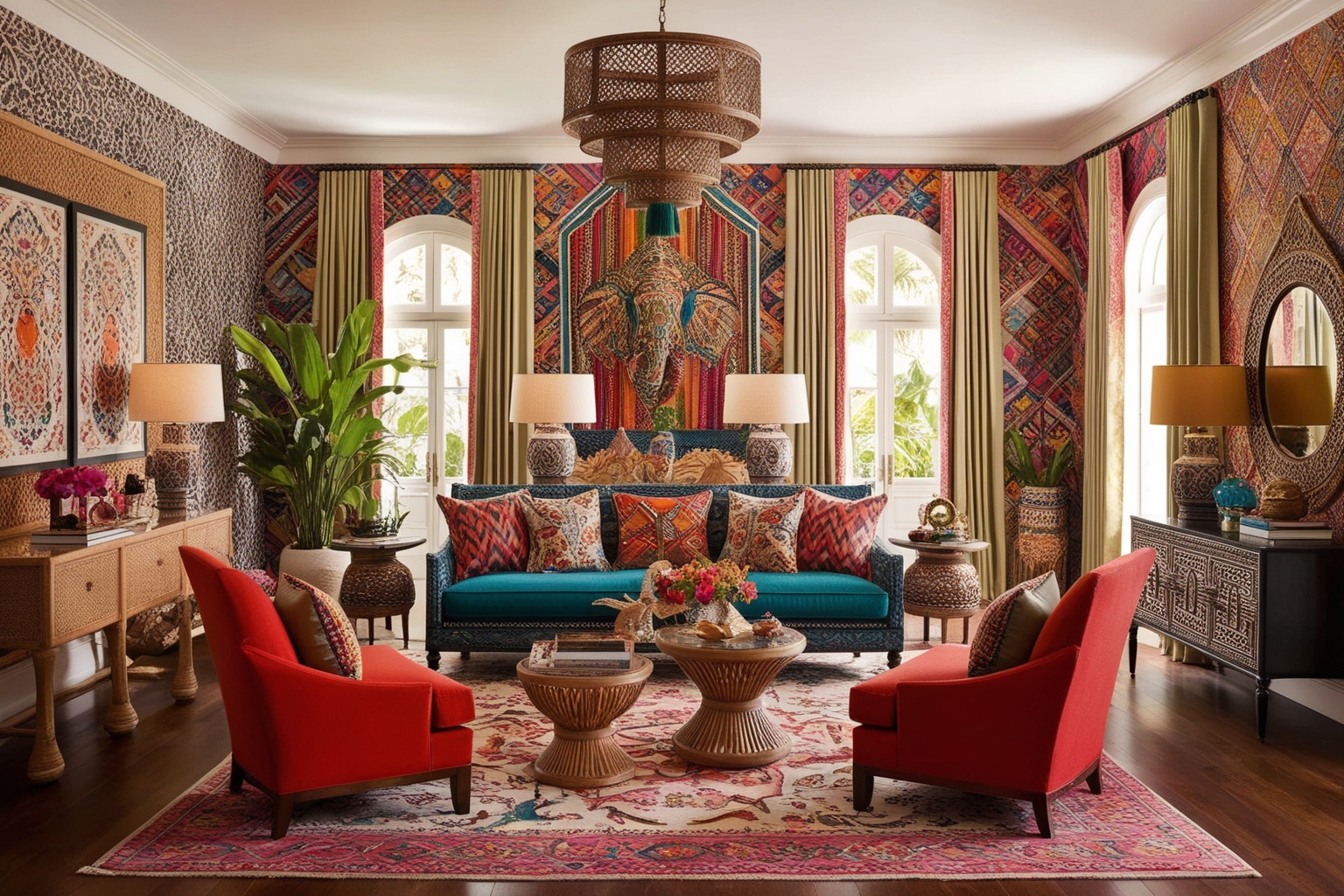
What Defines Exotic Style Interior Design?
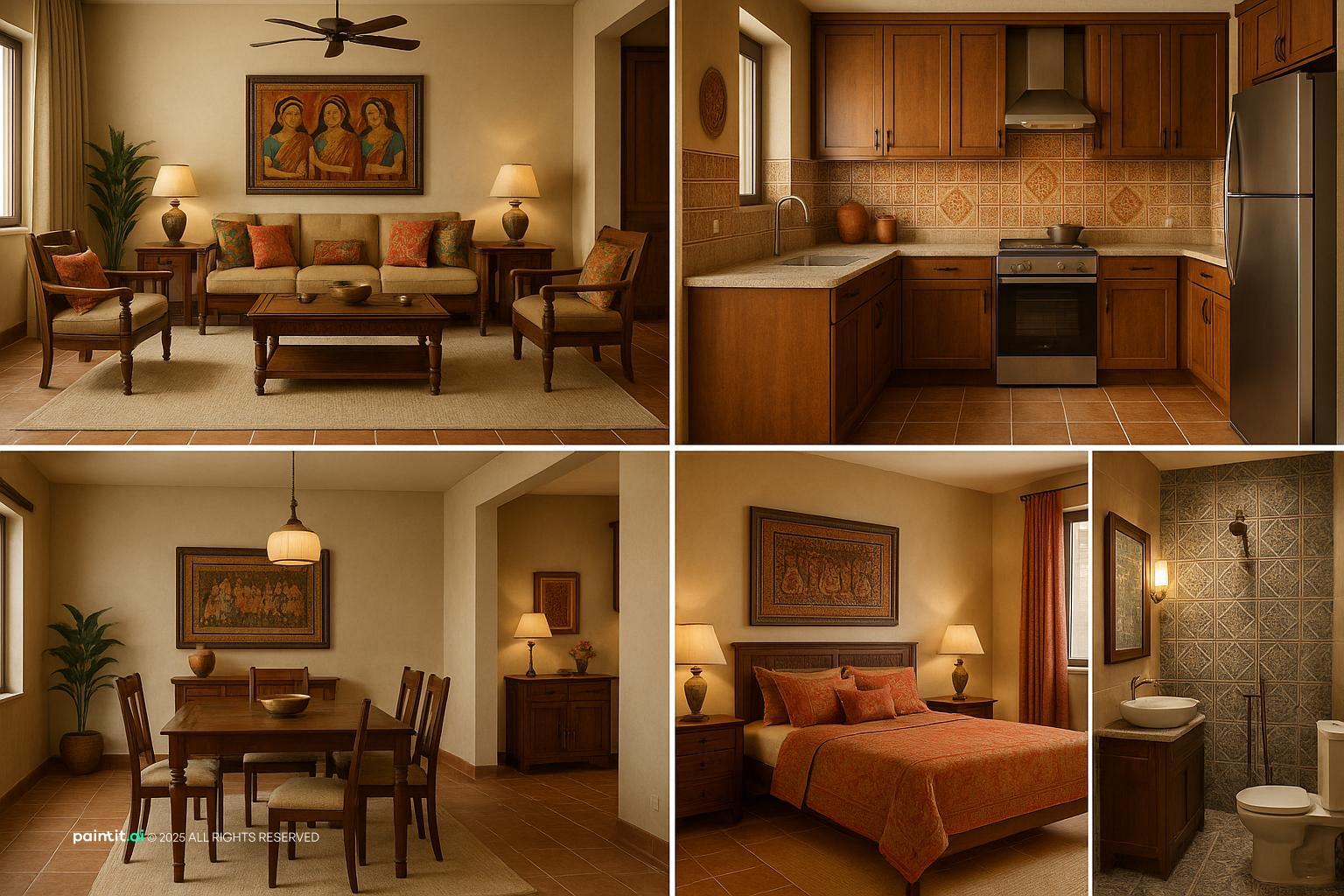
Exotic style interior design captivates through its power to evoke distant lands while instilling a spirit of adventure in your living space. This style merges distinct cultural elements to create a multifaceted array of textures, colors, and materials that captivate while inviting exploration.
-
Key Colors and Palettes
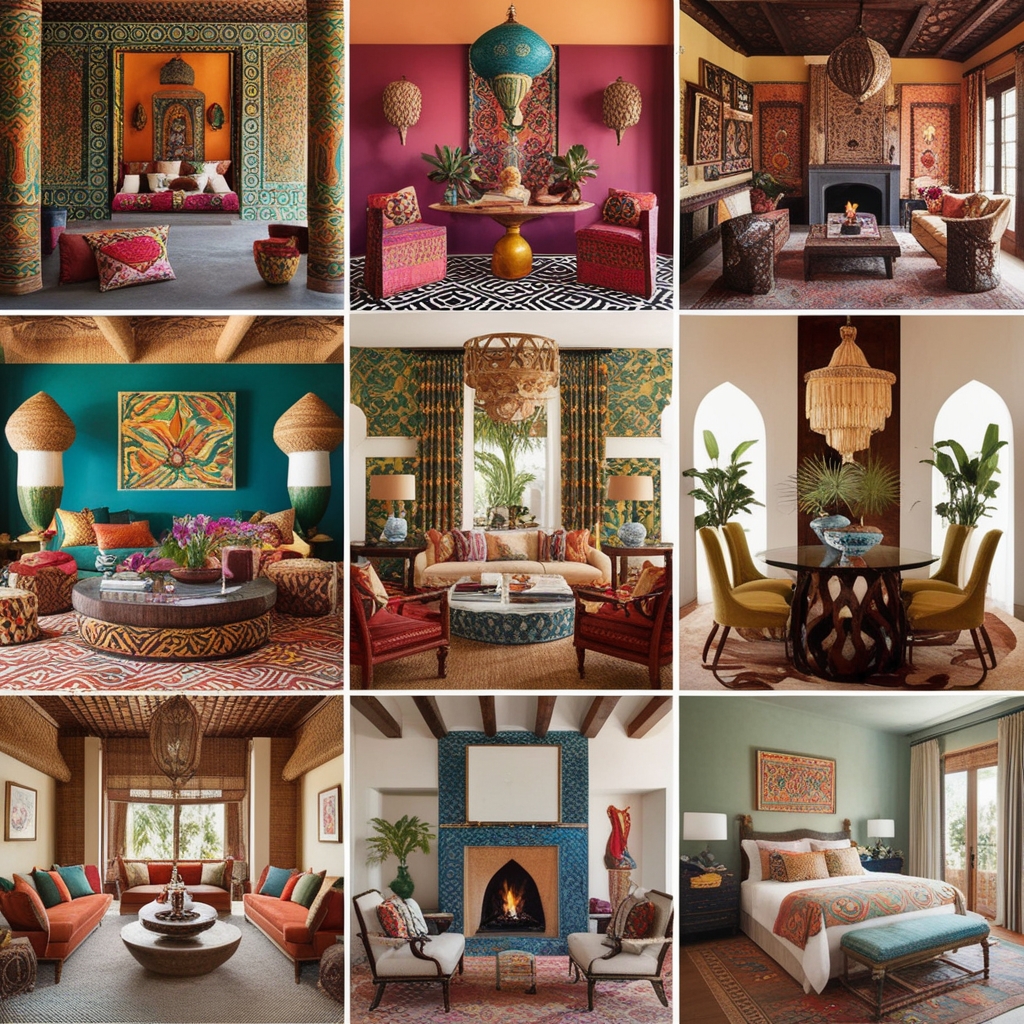
The palette draws from nature-saturated environments: deep reds and saffron from Indian dye traditions, cobalt and turquoise from North African tile, forest greens and earthy ochres from tropical landscapes, and the warm golds of Central Asian embroidery. The effect is rich and layered rather than matched — colour combinations that belong together because they come from the same geographic or material context, not because they were chosen from the same paint range.
-
Typical Materials and Textures
Exotic interiors depend on real material character: carved wood, handmade ceramics, woven grass, rattan, bamboo, stone, brass, silk, linen, and wool. Handwoven rugs, block-print textiles, and embroidered throws build layered visual interest — each piece with its own regional identity rather than a generic "ethnic" pattern.
-
Signature Furniture and Decorative Elements
Many pieces show hand-carved detail and inlay work that demonstrate regional craft traditions — Moroccan cedarwood carving, Indian sheesham inlaid furniture, Balinese teak with naturalistic motifs. A carved wooden screen or an oversized daybed anchors the room as both functional furniture and visual statement. Artifacts and collectibles tell individual stories of place and maker rather than representing culture as decoration.
-
Overall atmosphere
The room should feel collected, specific, and grounded in material craft. The strongest exotic interiors do not combine every global reference at once; they choose a primary tradition, leave negative space around statement pieces, and let texture carry the richness.
Exotic style visual references
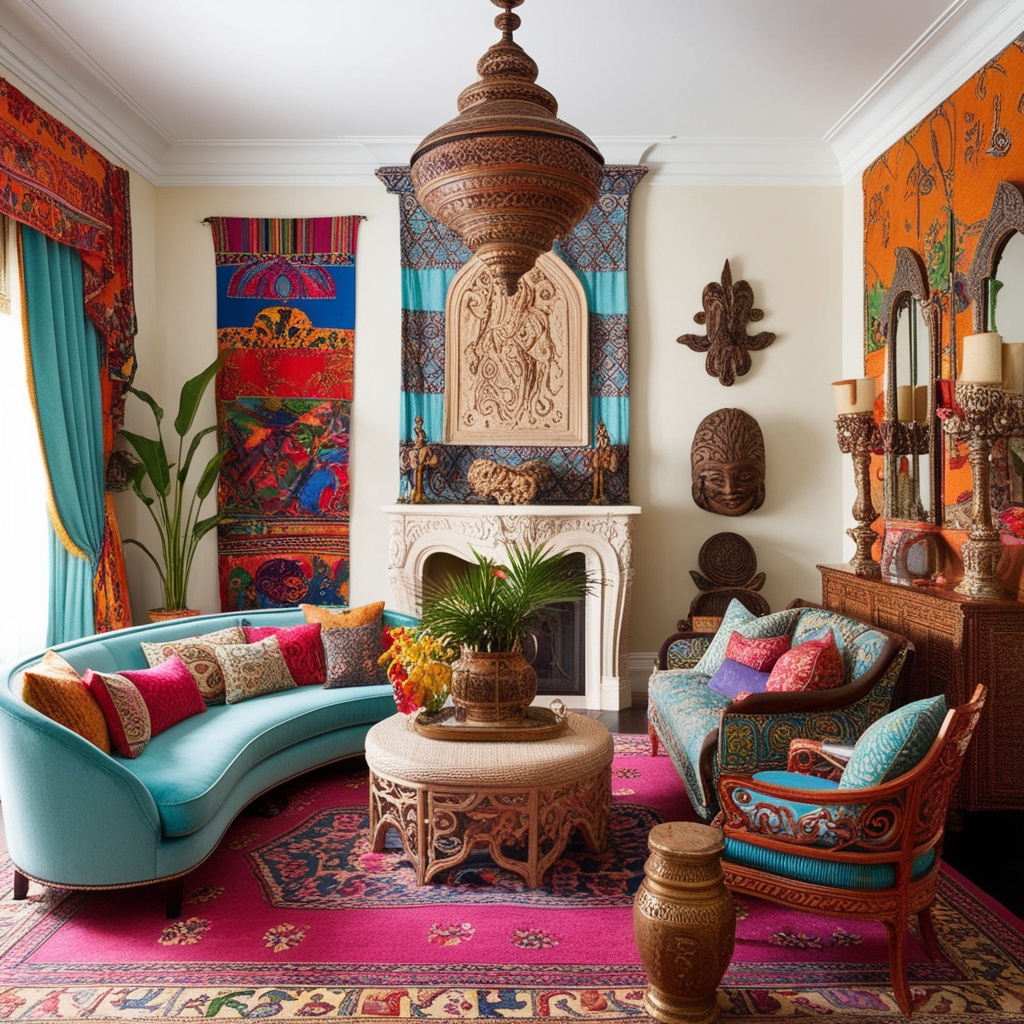
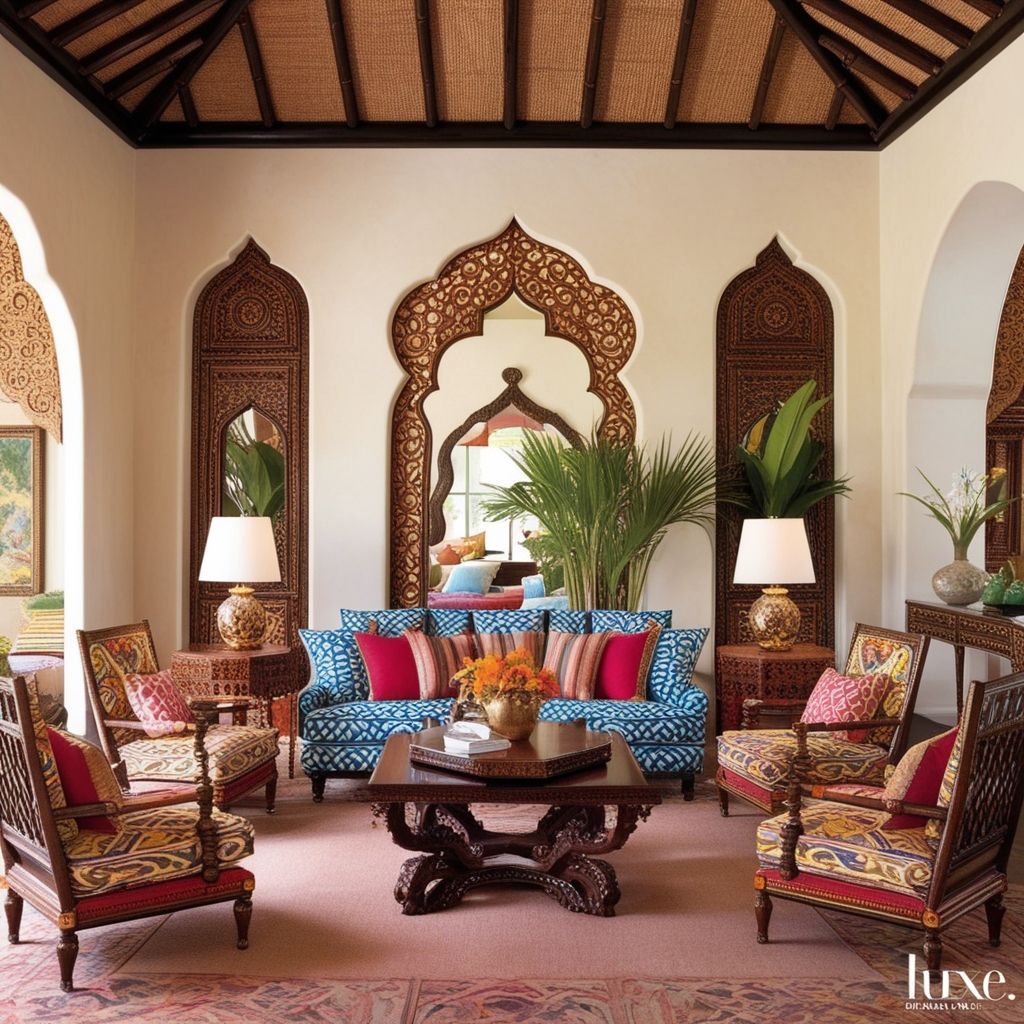
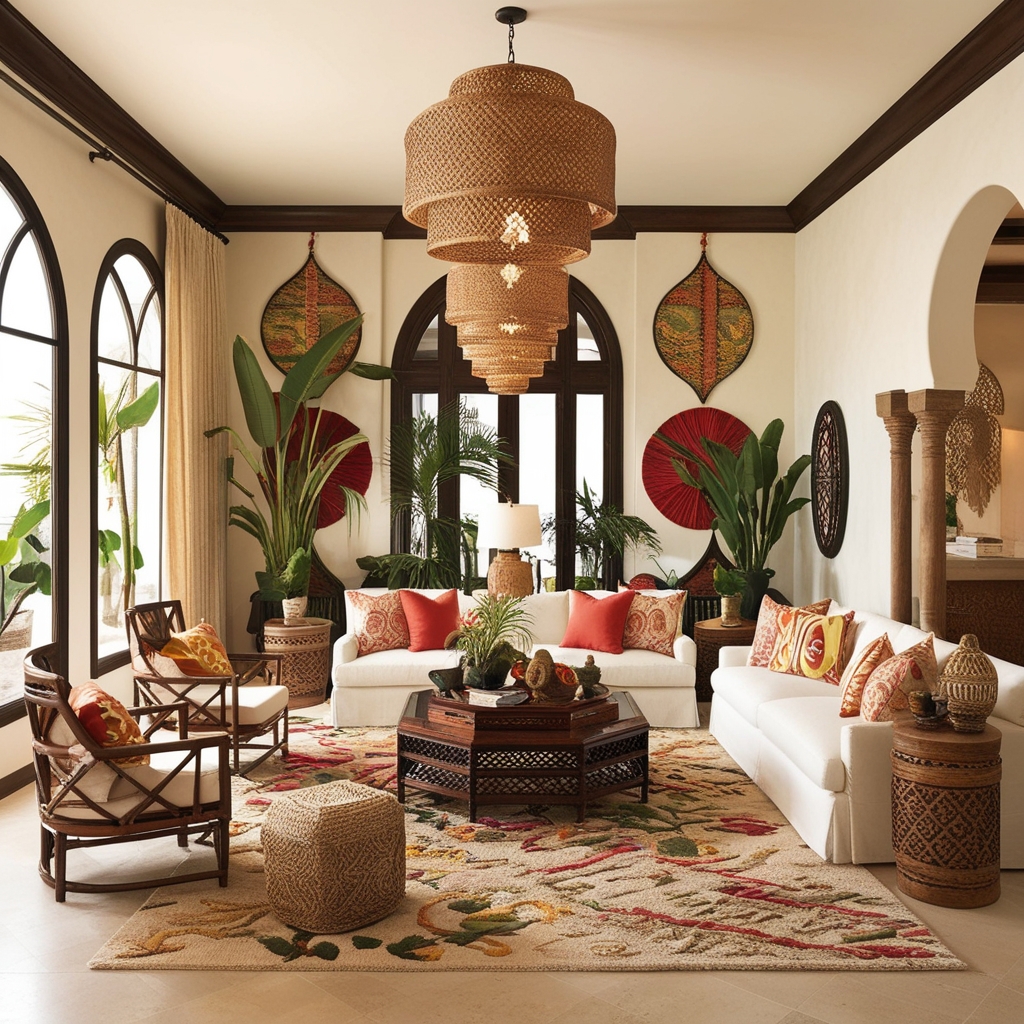
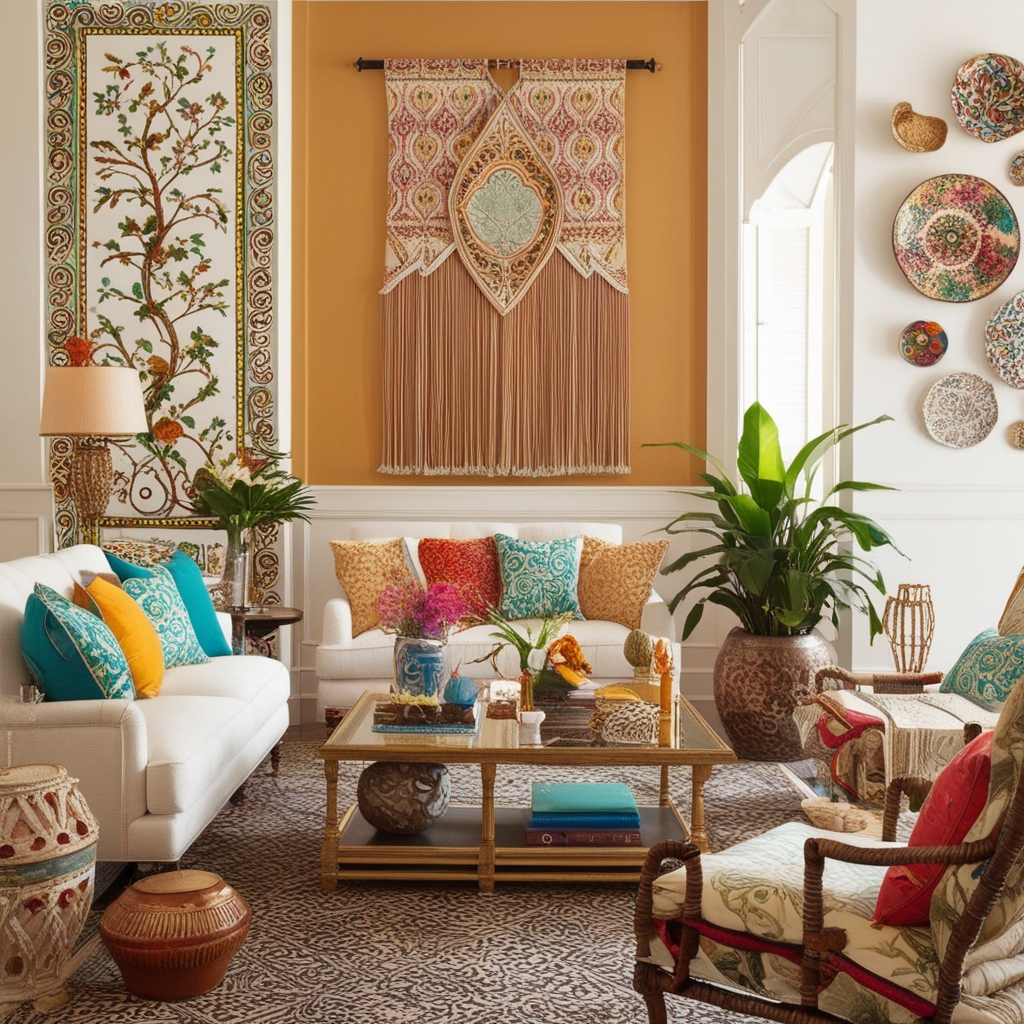
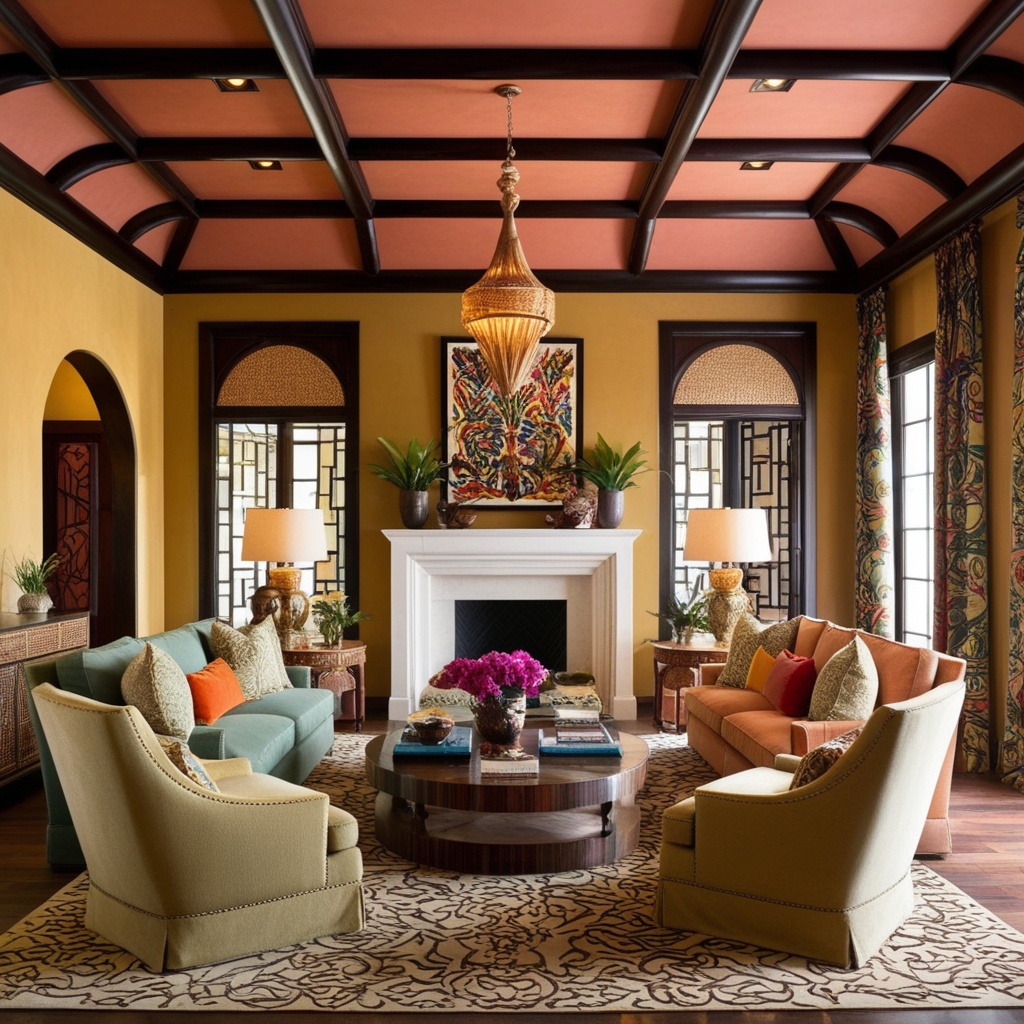
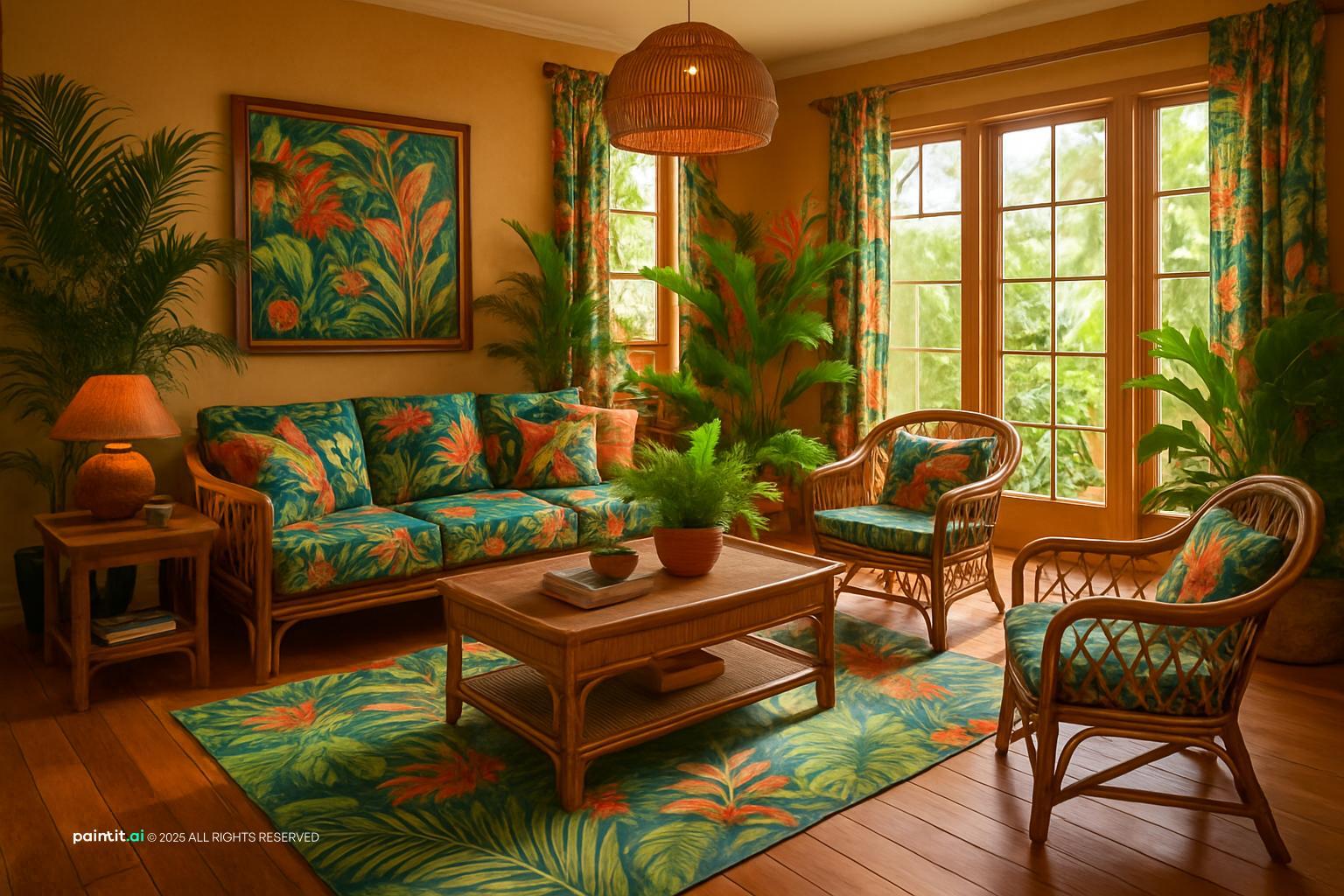
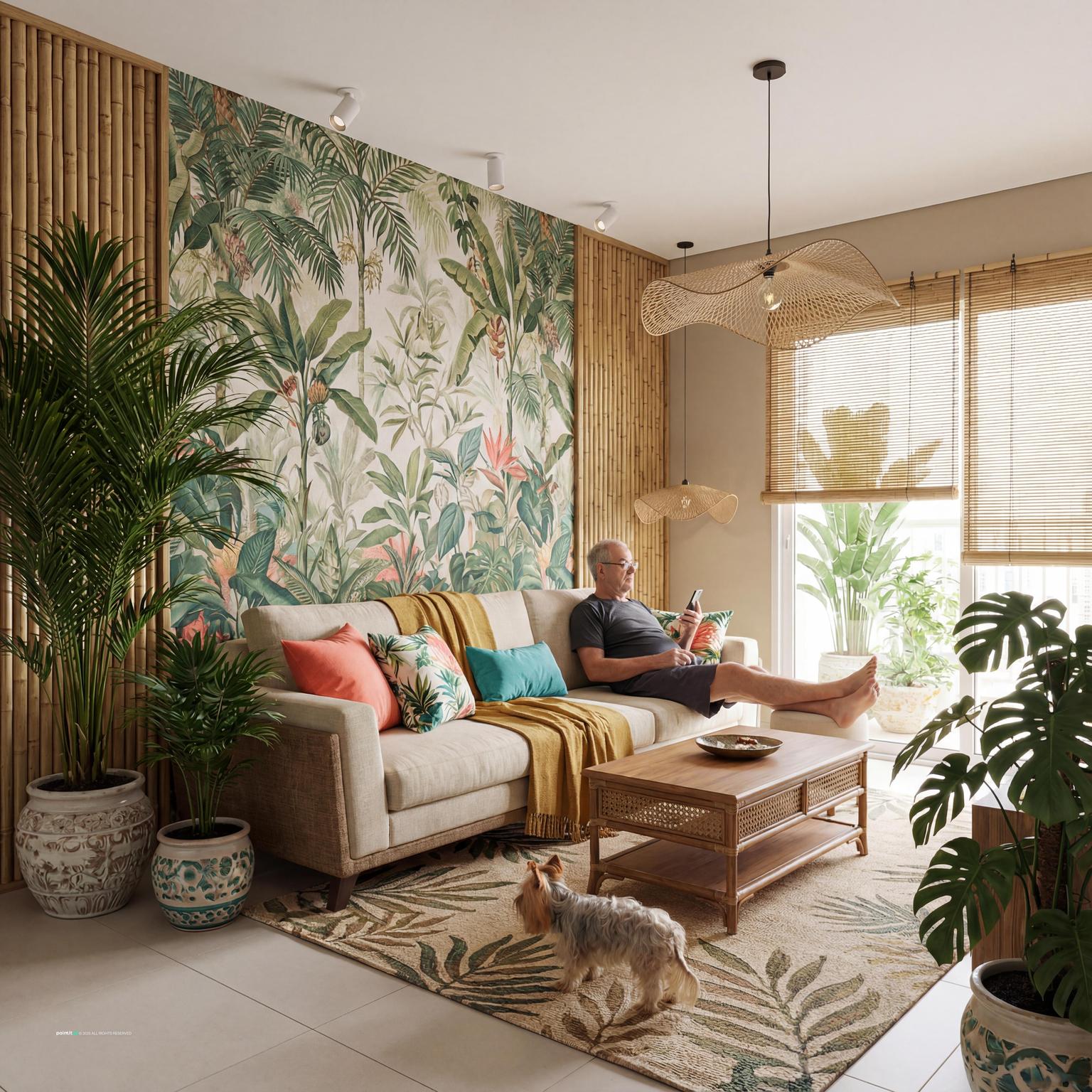
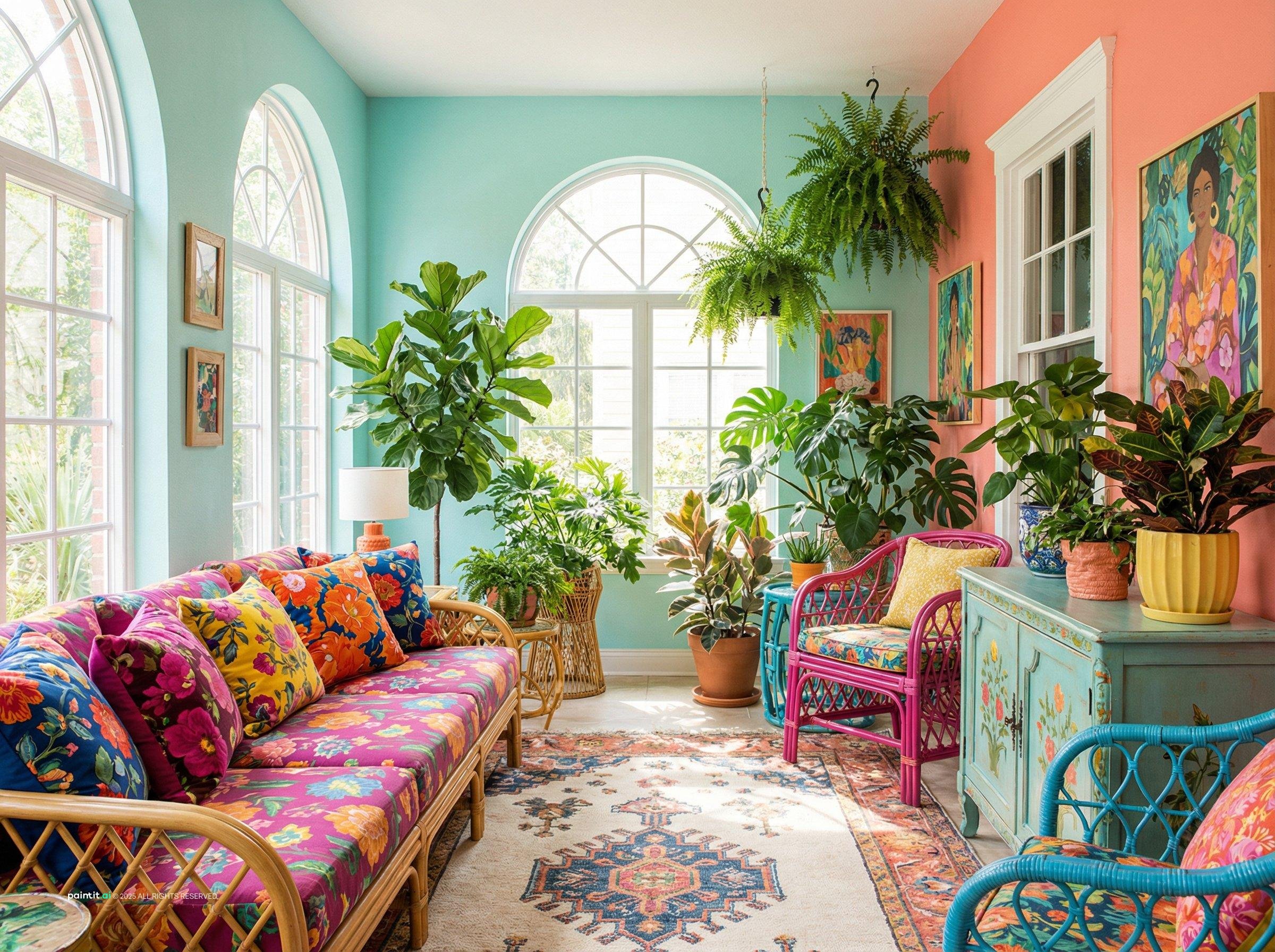
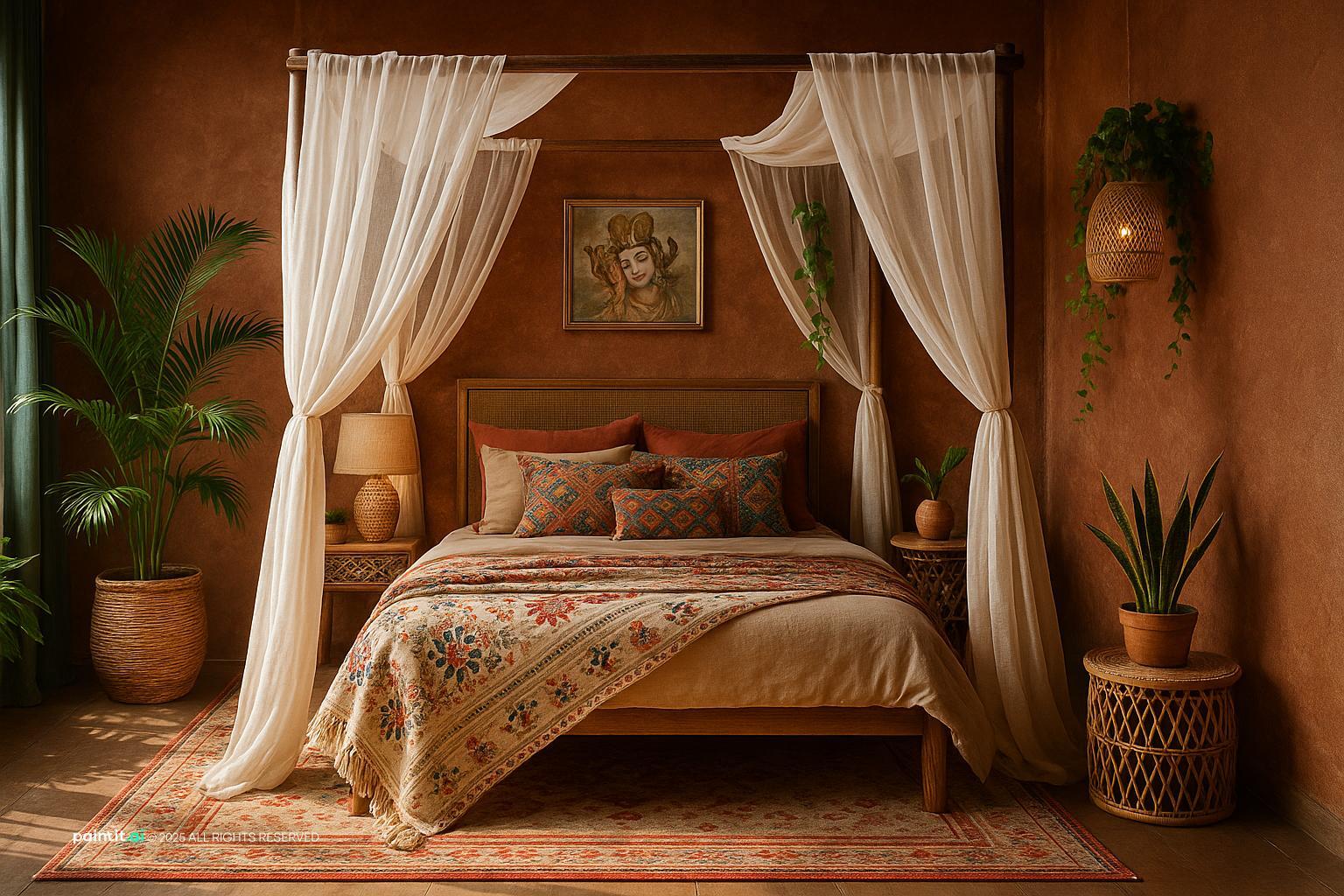
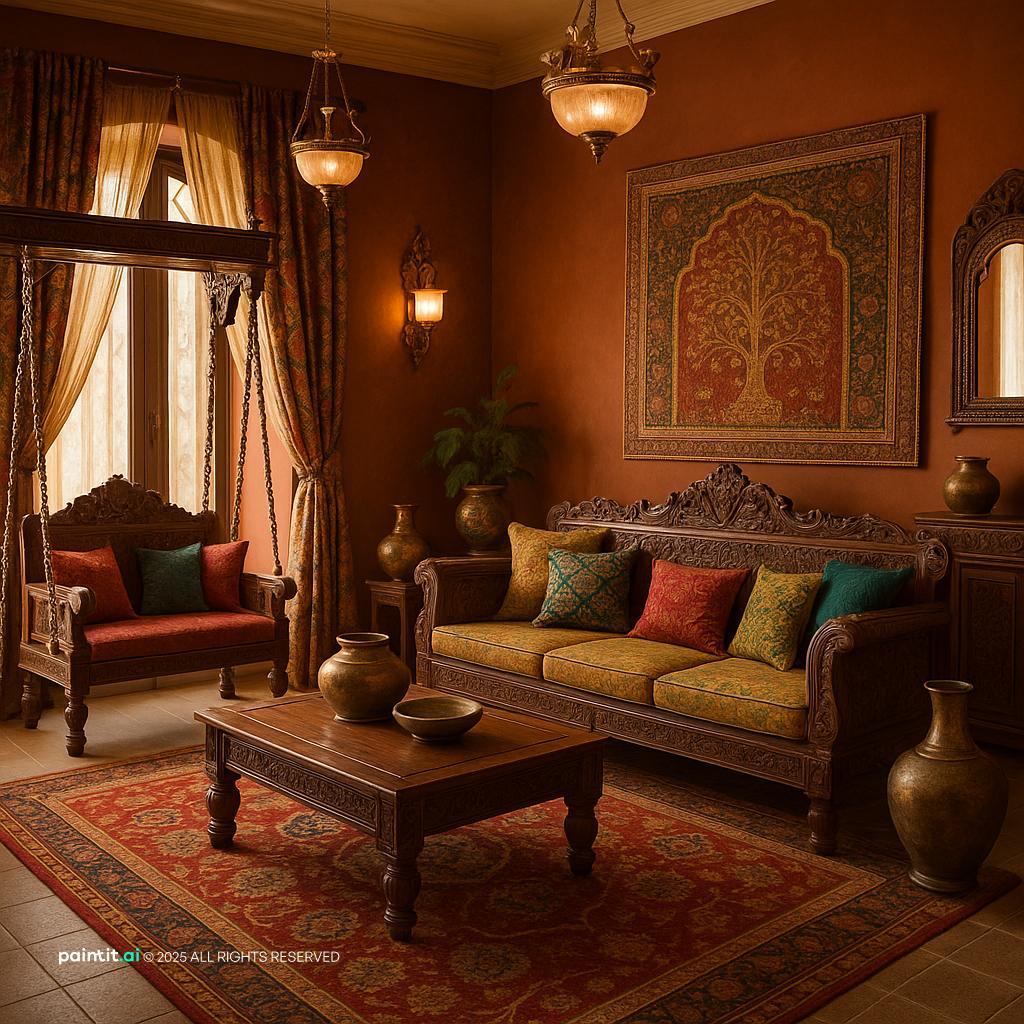
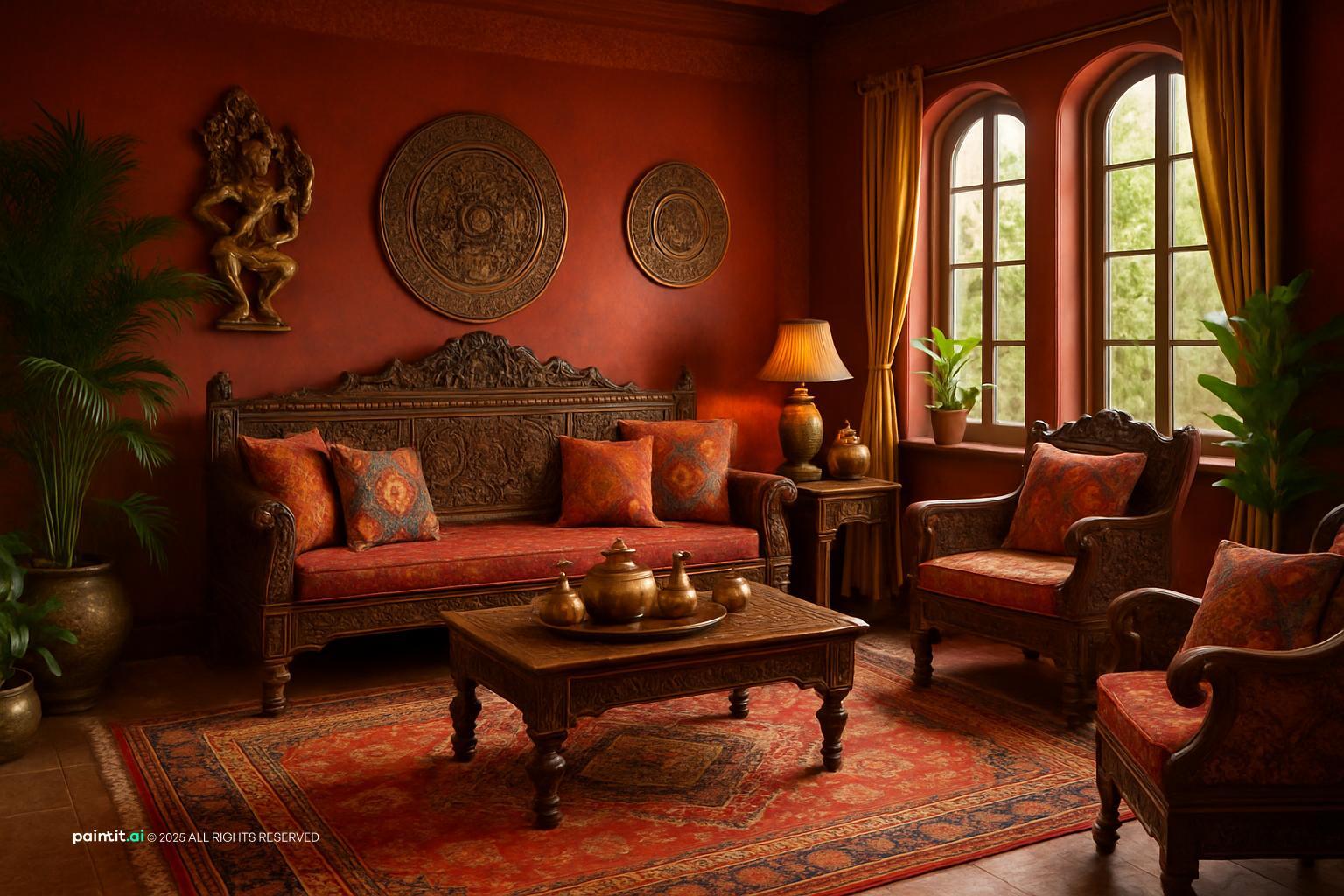
How to apply exotic style without it reading as themed
The difference between exotic style done well and done poorly is selectivity. A room that tells one coherent geographic or cultural story (a Moroccan-influenced living room, a Japanese-adjacent bedroom, a maximalist room with Indian textile traditions as its organizing principle) reads as intentional and sophisticated. A room that combines all of these simultaneously reads as an airport souvenir shop.
Pick one primary cultural reference
Start with the strongest influence and build from there. Moroccan: stucco, zellige tile, brass lanterns, kilim rugs, carved cedar. Balinese: teak carving, natural linen, stone details, tropical plants, batik textiles. Indian: block-print cotton, brass vessels, carved furniture, spice-palette colours. Japanese: minimal furniture, shoji panels, lacquerware, natural materials in quiet colours. Each tradition has its own coherent visual language — work within one before mixing.
Authentic sourcing matters
The difference between an exotic interior and a themed one is the authenticity of the objects. A genuine Moroccan zellige tile panel, a hand-woven Berber rug, and a brass lantern from a Marrakech souk work because they carry the visual integrity of their origin. Mass-produced approximations of these objects — pattern-printed tile, machine-made rug with geometric motifs, plastic lantern — don't.
Let one material type dominate
In most successful exotic interiors, one material makes the strongest statement: all the carved wood, or all the woven textiles, or all the ceramic tile. This prevents the room from feeling visually noisy despite the richness of the colour and pattern.
Negative space is your friend
Rich pattern and texture need plain surfaces to rest against. White-washed walls, plain linen upholstery, bare wooden floors — these neutral elements allow the statement pieces (a carved screen, a kilim, a collection of ceramics) to read clearly rather than competing with each other.
Visualize exotic style with Paintit.ai
Upload a photo of any room to app.paintit.ai and test how different colour palettes and material approaches — warm Moroccan, cool Japanese, vibrant Indian — read in your actual space in 1–2 minutes. Free to start.
Related styles
Use these tools and specific references to test exotic style without turning the room into a theme.
FAQ
-
Exotic style interior design draws from the visual and craft traditions of cultures outside Western European design conventions — North African, South and Southeast Asian, Middle Eastern, East African, Japanese, and Latin American traditions are the most common reference points. The defining characteristics are material richness (handcrafted surfaces, woven textiles, carved wood, handmade ceramics), saturated or earthy colour palettes from the referenced culture's natural environment, and pattern that comes from genuine craft tradition rather than generic "ethnic" reproduction.
-
"Global style" is a broader, more contemporary term that implies a curated mix of influences from multiple cultures — a room with a Moroccan rug, Japanese ceramics, Indian textile, and African wooden sculpture. "Exotic style" historically implied a specific non-Western culture referenced from a Western perspective. In contemporary design, both terms describe similar territory, and the same principles apply: selectivity, authentic sourcing, and material coherence.
-
Three principles: pick one primary cultural reference rather than mixing many, source authentic objects with clear geographic origins rather than mass-produced approximations, and use negative space (plain walls, neutral upholstery, bare floors) so statement pieces can be seen individually rather than crowding each other. The lobby failure mode is every surface competing simultaneously — too many patterns, too many cultures, no visual rest.
-
Yes. Upload a photo of your room to app.paintit.ai and test how different exotic colour palettes and material approaches read in your space in 1–2 minutes. Free to start.