
1 Bedroom Apartment Interior Design Ideas for Layout, Decor, and Storage
A 1 bedroom apartment (or 1 bedroom flat, or 1 bedroom condo, depending on where you are) works best when every zone has a clear role - entry, living area, sleeping space, storage - and the materials and colors run through all of them consistently. Without that thread, even well-chosen furniture makes the apartment feel patchy.
We've seen this across thousands of Paintit.ai renders: the apartments that look the most pulled-together aren't the ones with the most pieces. They're the ones where layout decisions came first. In our experience, getting the zone flow right delivers more visual impact than any single decor choice.
Upload a photo of your apartment and see a redesigned version in 1-2 minutes - try it free at app.paintit.ai.
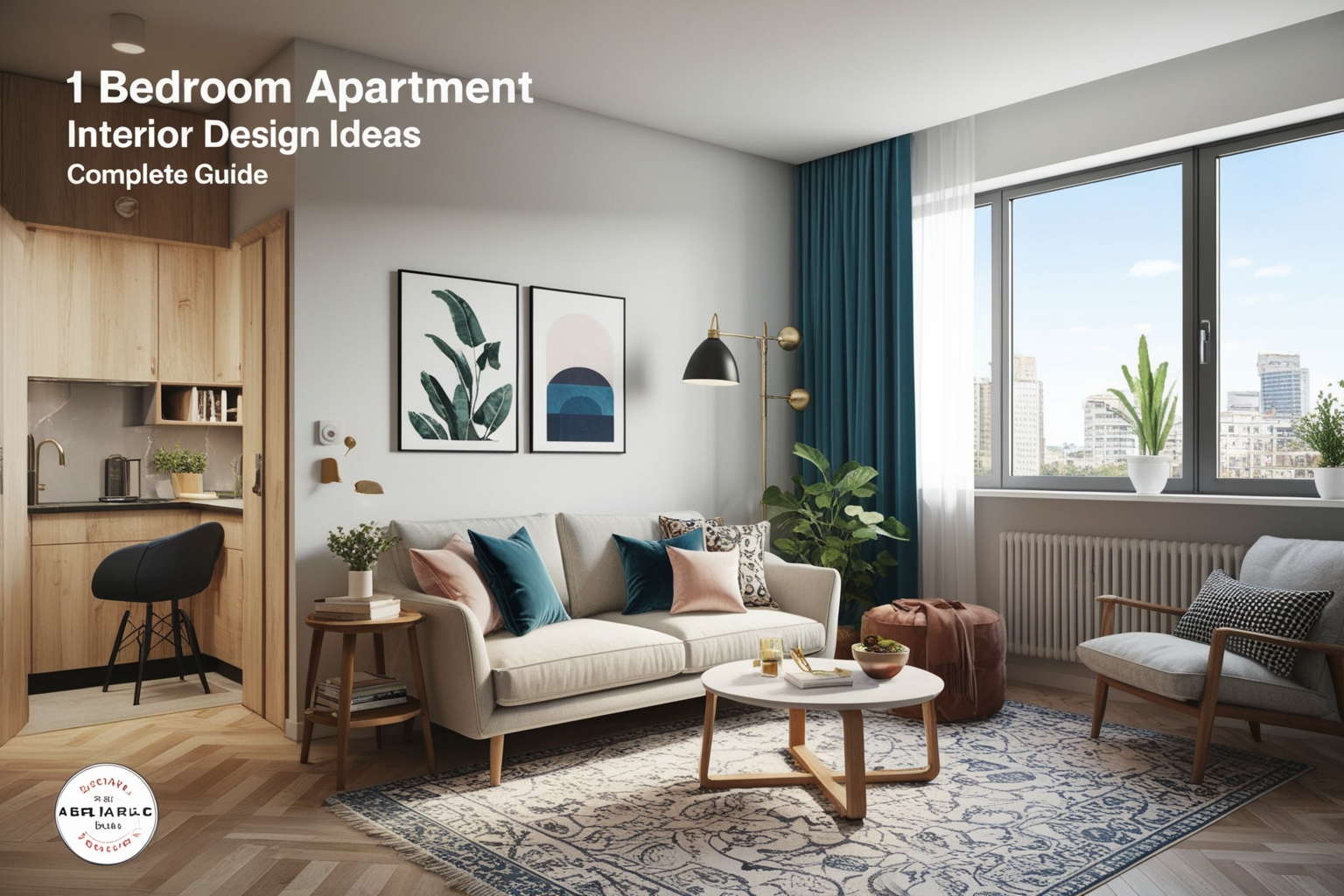
One bedroom apartment interior design: what actually matters
Think of the apartment as a sequence of zones: entry, living room, dining corner, bedroom, work space, storage. Each zone needs a clear function. The palette and materials should run through all of them. That consistency is what makes a small apartment feel intentional rather than crowded.
-
Color palette
Light, warm neutrals - beige, warm white, soft greige - make small apartments read as more spacious. They reflect natural light and don't compete with each other across zones. If you want contrast, bring it in through a single accent: one wall, one textile, one furniture piece. Spreading strong color across multiple zones makes the apartment feel smaller, not more interesting.
-
Materials and textures
Two or three materials maximum - that's the practical limit for a 1 bedroom apartment before the space starts feeling busy. Light oak or white-stained wood for furniture, a matte or linen finish for textiles, stone or tile accents in the bathroom. Repeating the same wood tone across the bedroom and living area creates visual continuity without extra effort.
-
Furniture and decor
Scale is the most common mistake in 1 bedroom apartments. A sofa that's 10 cm too wide blocks the walking path. A dining table that seats four takes up space you actually need for circulation. Measure the main path before you buy anything - you need at least 90 cm of clearance between pieces. Multi-function furniture earns its place here: storage beds, nesting side tables, benches that double as storage at the entry.
-
Lighting
Layered lighting does more for a small apartment than almost any decor purchase. Ambient (overhead), task (reading, desk), and accent (shelves, artwork) - when all three are present, the apartment feels larger and more considered at night. In a 1 bedroom apartment, this means at minimum: a ceiling fixture, a floor or table lamp in the living zone, and a bedside light that doesn't rely on overhead alone.
1 bedroom apartment layouts by size
The right approach depends on how much space you're actually working with.
-
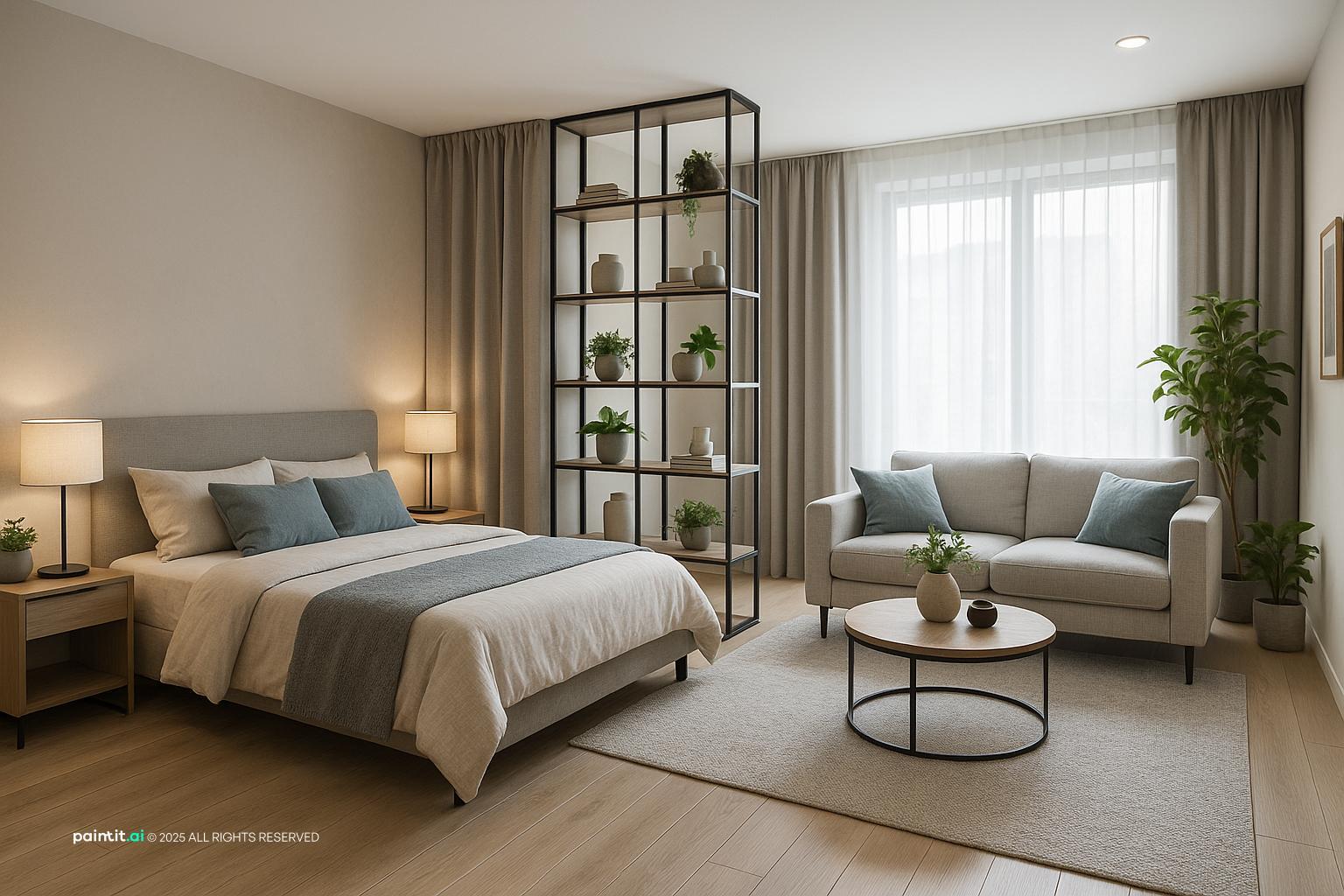
Under 45 m2 (under ~480 sq ft). Prioritize open plan. Keep the kitchen, dining, and living zones in one continuous space. The bedroom should be fully enclosed for sleep quality, but compact: 160-180 cm bed width is enough. Built-in or wall-mounted storage everywhere.
-
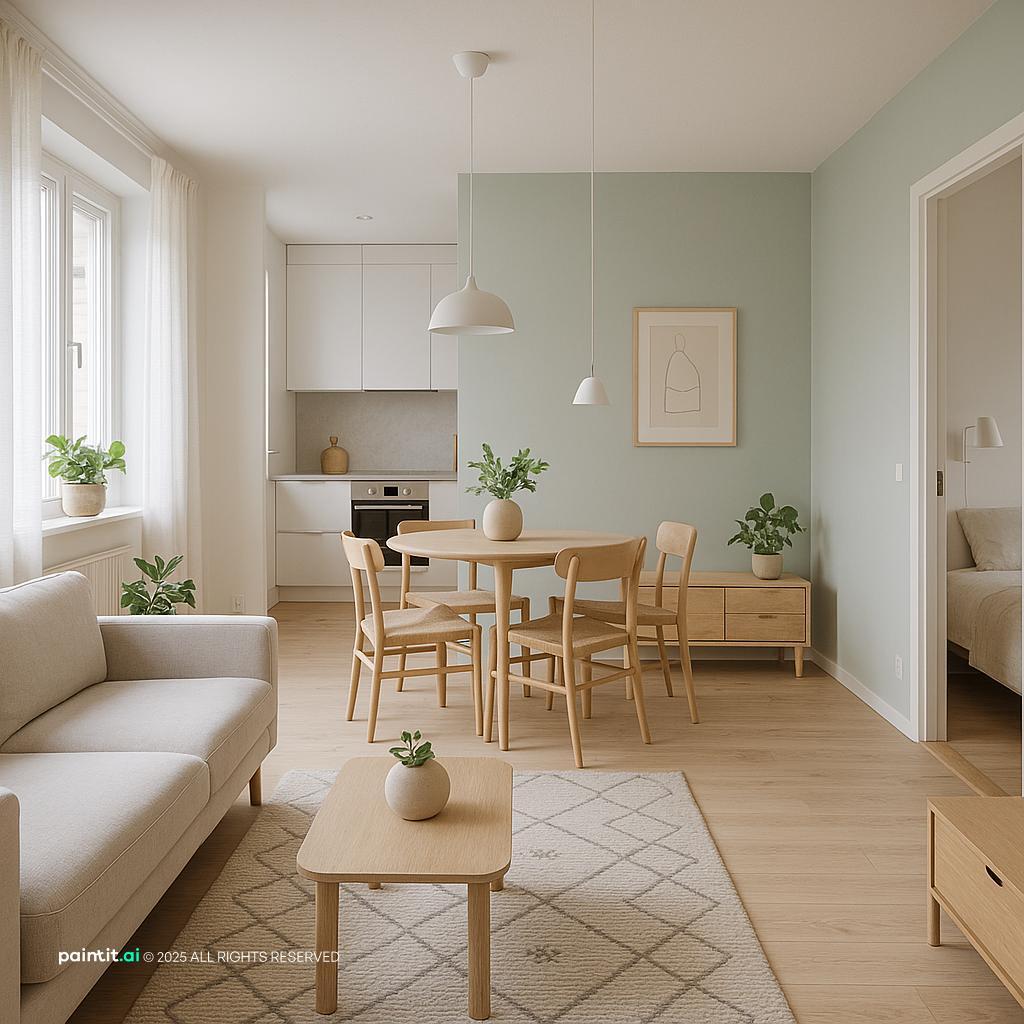
45-65 m2 (~480-700 sq ft). You have room for a defined living area. A sofa up to 220 cm, a coffee table, and a rug can anchor the zone. A small dining table for four works near the kitchen or against a wall.
-
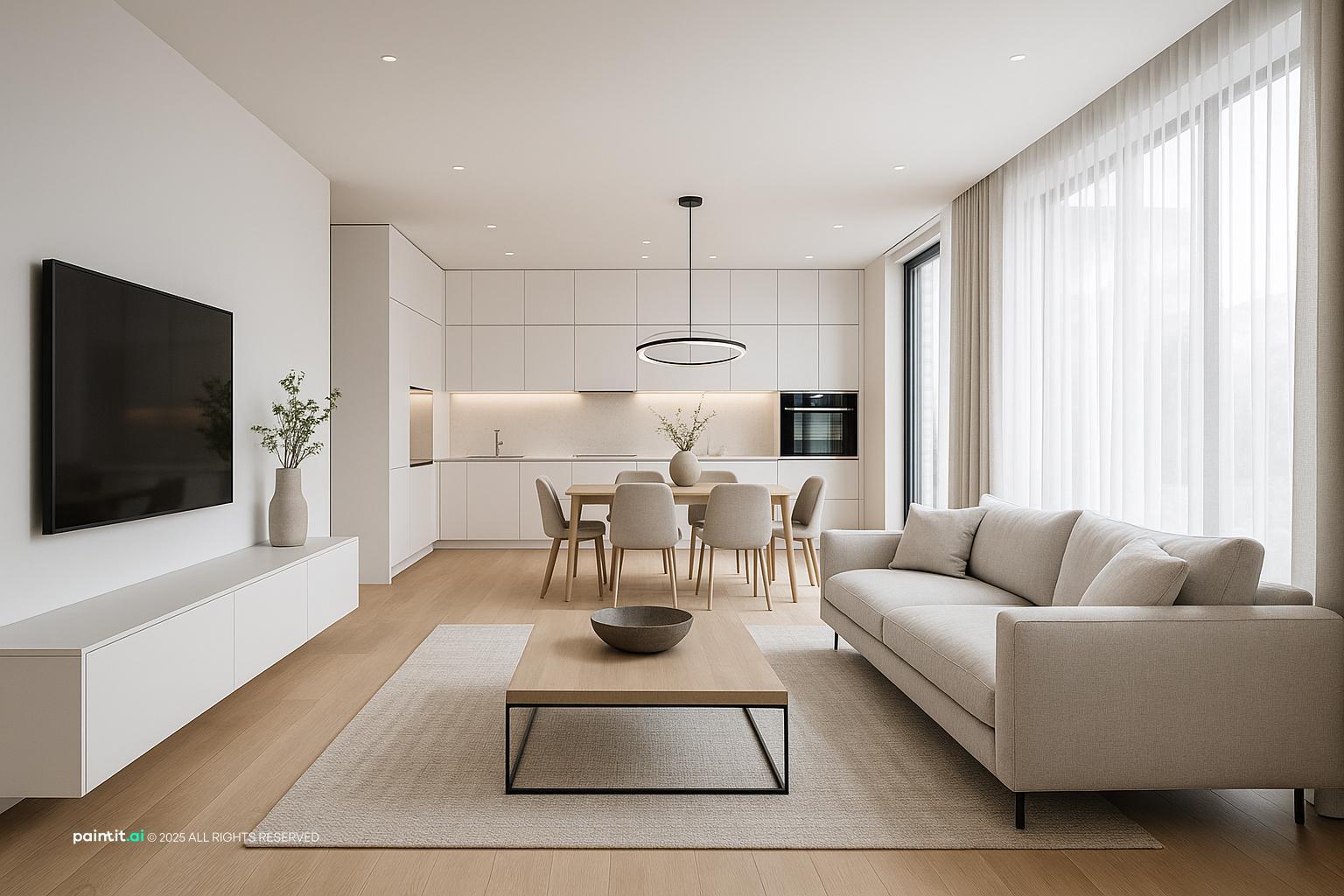
65 m2+ (700+ sq ft). More room means more decisions. Add a reading chair, a proper desk zone if you work from home, and consider open shelving as a soft division between living and dining.
-
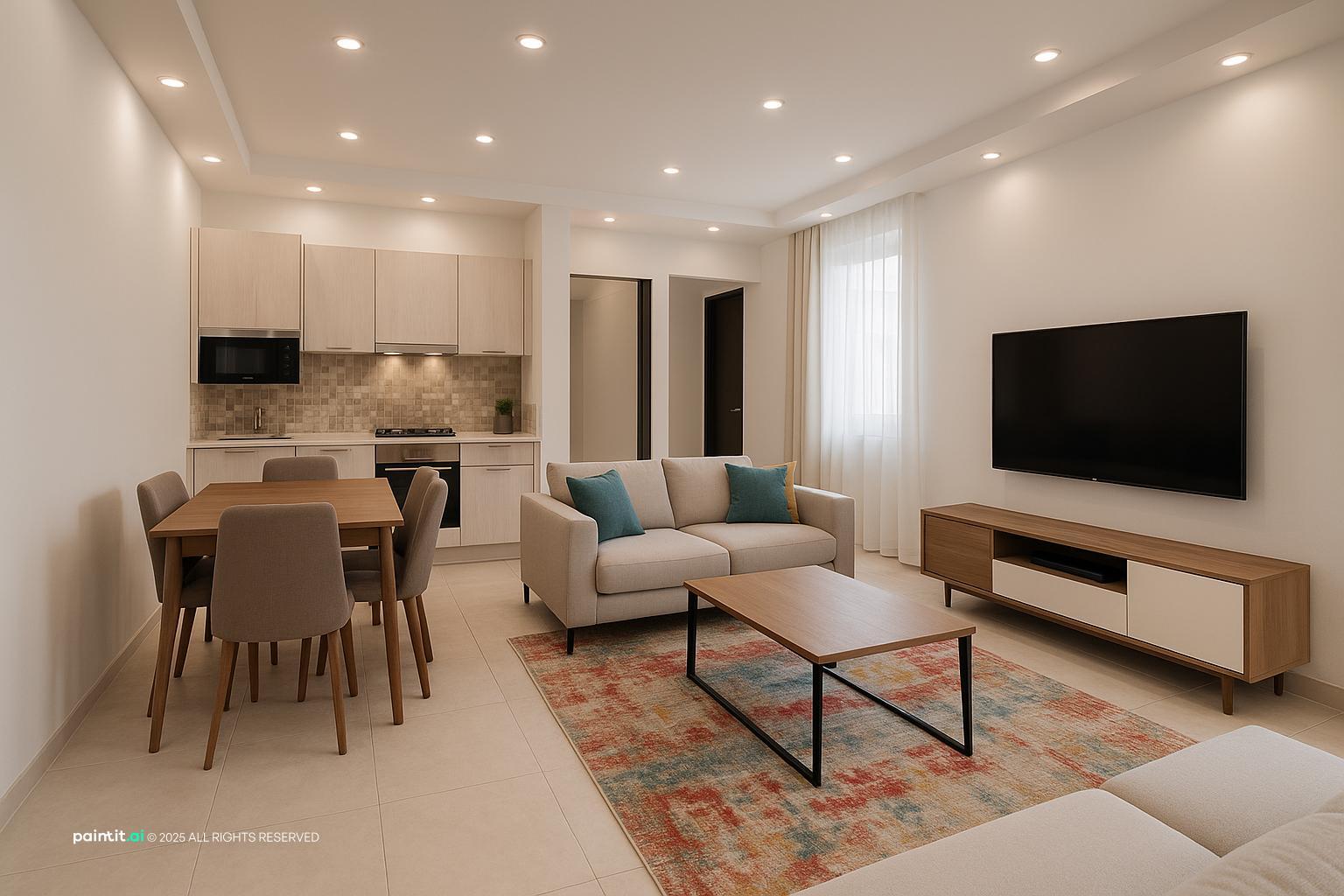
Zone separation without walls. Use a rug, low bookcase, ceiling-track curtains, and different lighting between zones. Each works without losing daylight.
-
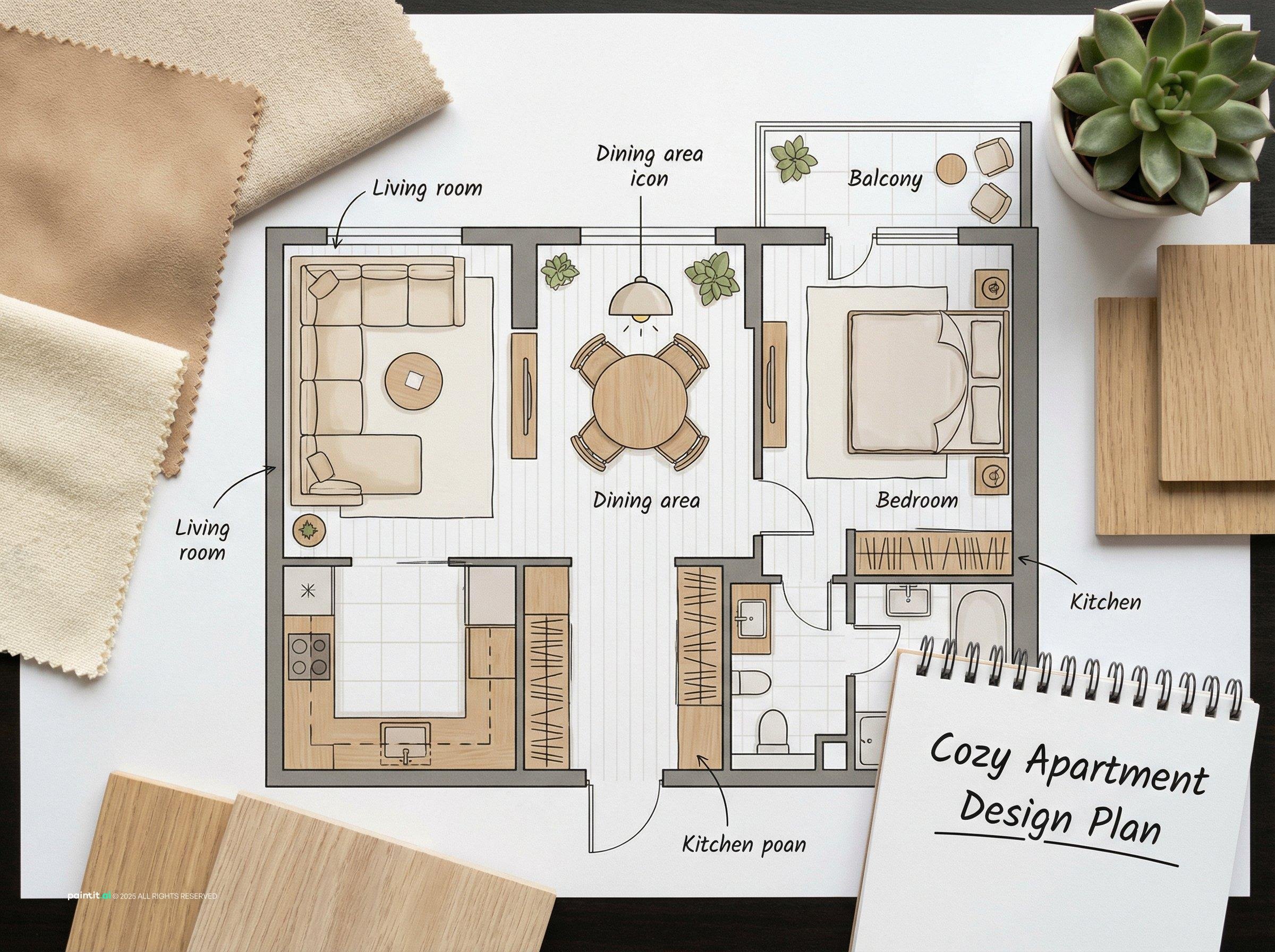
How Paintit.ai fits into this. Upload a photo, choose a space type and style, and get a redesigned render in 1-2 minutes. Real furniture from IKEA, Amazon, and Ashley appears under the render.
Storage ideas that actually work in a 1 bedroom apartment
Storage fails when it is scattered and inconsistent. These options work across apartment sizes.
-
Vertical storage. Floor-to-ceiling shelving in the living area adds storage without increasing the floor footprint.
-
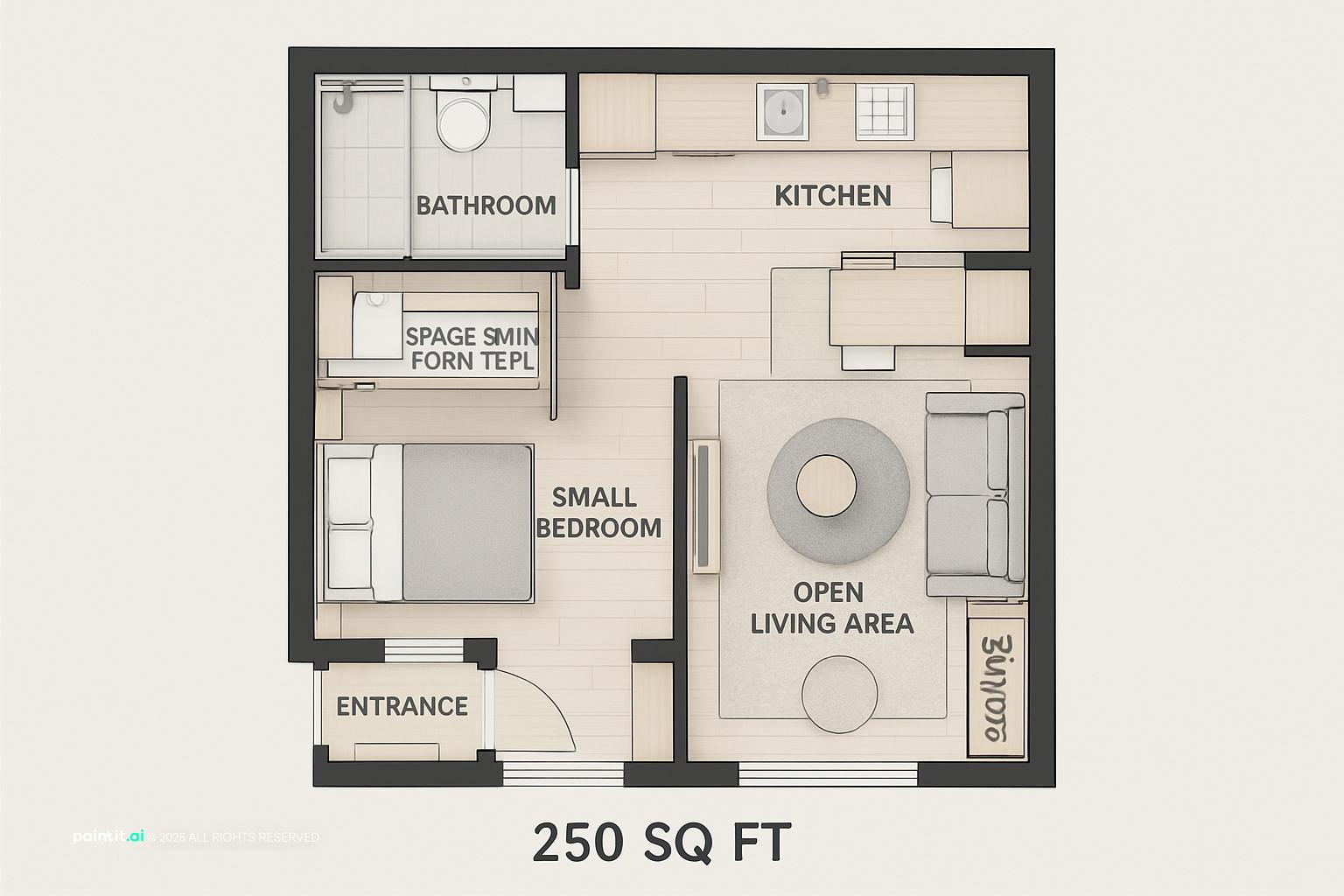
Under-bed storage. A bed with drawers or a lift frame gives you the equivalent of a medium wardrobe without taking floor area.
-
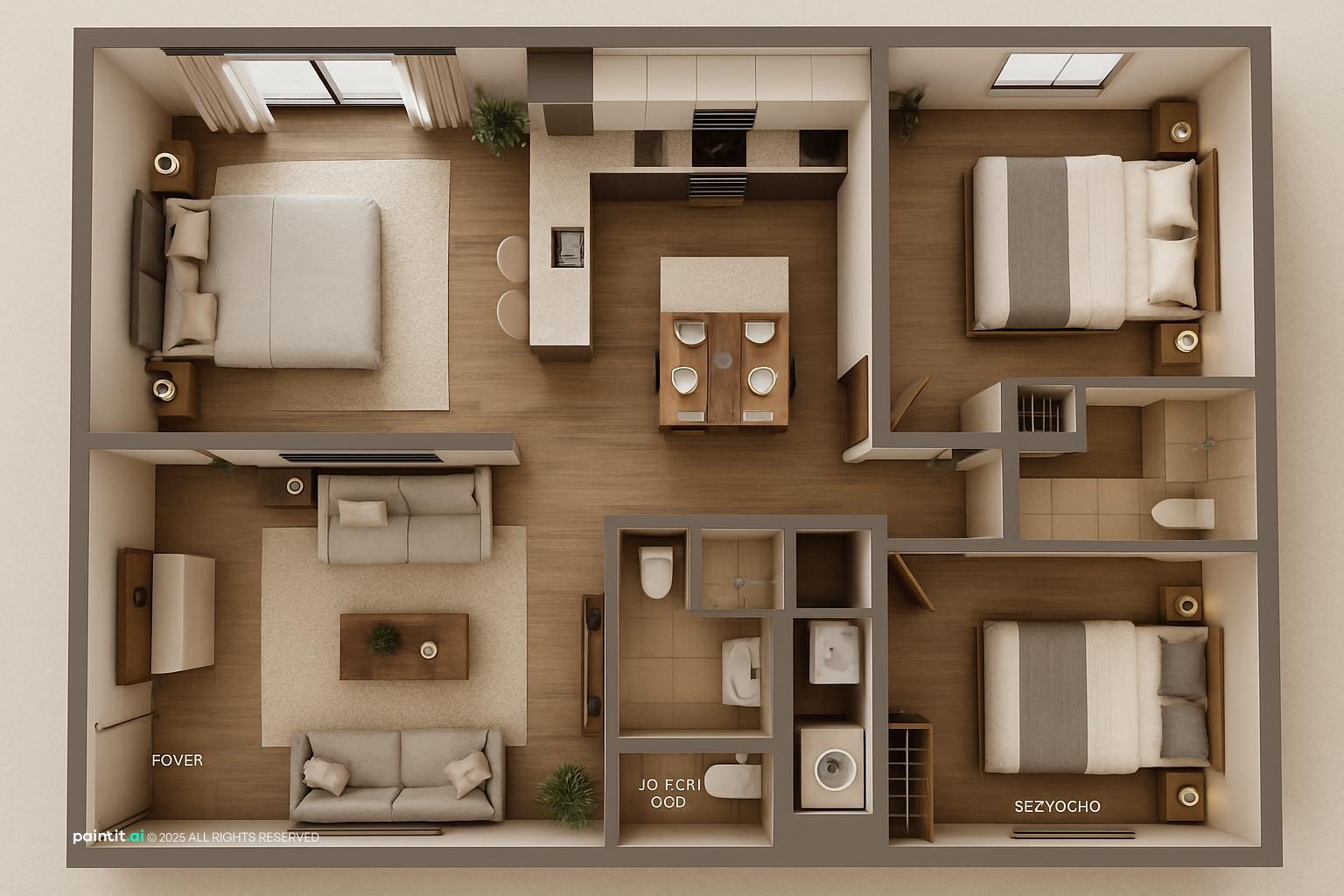
Entry storage. A slim console with hooks above and a shoe shelf below stops clutter at the door.
-
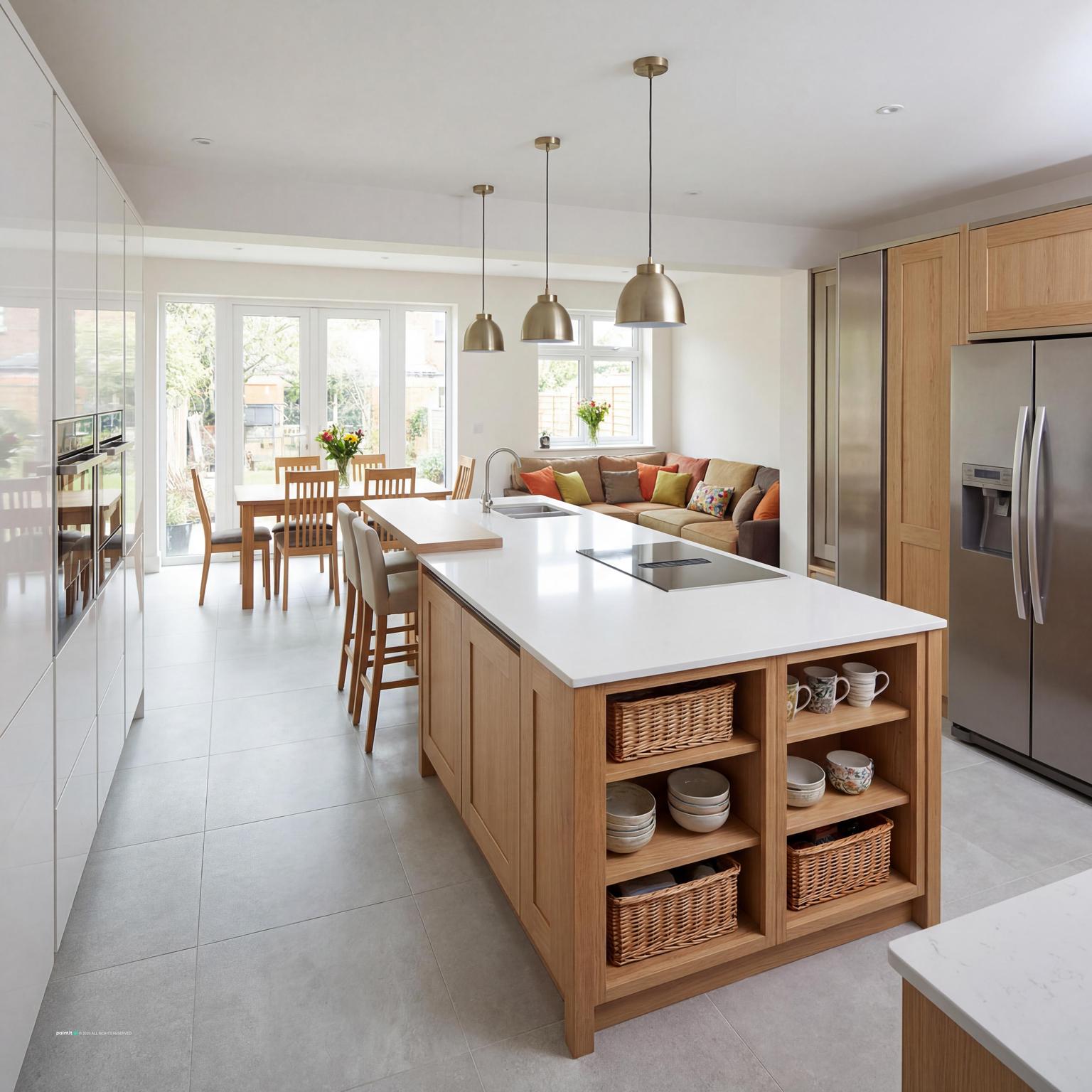
Kitchen and bathroom walls. Wall-mounted rails and recessed shelving can replace larger furniture that blocks circulation.
Design your apartment with AI
Ready to try a different direction for your space? Paintit.ai tools for apartment design:
FAQ
-
Start with layout, storage, and a consistent color palette. Then add compact furniture, rugs, lighting, and decor that define the living, dining, bedroom, and work zones.
-
The best layout keeps the main path open, places storage where clutter starts, and separates sleeping, living, dining, and work zones without blocking light.
-
Use lighter wall colors, visible floor space, mirrors, slim furniture, vertical storage, and fewer visual breaks. Good lighting also makes small rooms feel more open.
-
Choose a compact sofa, storage bed, nesting tables, wall shelves, slim dining table, and furniture with hidden storage. Avoid pieces that block windows or pathways.
-
Use a rug to anchor the living zone, a low bookcase or open shelving unit as a divider, floor-to-ceiling curtains on a ceiling track, or a change in lighting type. Each creates separation without making the apartment feel smaller.
-
Light, warm neutrals are the safest choice: warm white, off-white, soft beige, and light greige. They reflect natural light and keep zones visually connected. Test color directions on your actual apartment photo in Paintit.ai before buying paint.