7 min. reading

Yulii Cherevko
CEO paintit.ai

Choosing the right vinyl plank layout patterns can seriously transform your space in 2026. It's not just about looking good; your floor's pattern dictates how light bounces around, how big a room feels, and the whole vibe of your design. Think about it: from the simple, clean lines of a straight lay to the intricate elegance of herringbone, each pattern offers unique visual perks. To take the guesswork out of this big decision, we'll dive into expert advice and show you how to instantly visualize your ideal floor using AI-powered tools like Paintit.AI. This guide covers the most popular vinyl plank floor patterns and will help you pick the perfect one for your home.
Picking your vinyl plank layout patterns is a fundamental design choice that sets the stage for your entire room. Vinyl plank flooring, often called LVP flooring pattern, is loved for its durability and versatility. It does a fantastic job of mimicking real wood or stone. The way these planks are laid down-the actual plank flooring patterns-can completely change how big a room seems, which way your eye is drawn, and the overall feel of the space.
Let's break down some common vinyl flooring pattern layout options and see what unique visual impact they bring.
This is probably the most common vinyl flooring pattern layout and often the easiest to install. You just lay the planks parallel to the walls, creating a neat, organized grid. It's a classic vinyl plank floor pattern that really champions simplicity.
Imagine planks laid at a 45-degree angle to your walls. That's the diagonal lay. It adds movement and depth. This particular vinyl plank flooring pattern can actually make smaller rooms feel much larger and wider by guiding your eye across the longest part of the room.
Herringbone gives you that distinct V-shaped pattern by interlocking planks at 90-degree angles. This intricate and sophisticated vinyl plank pattern offers a luxurious, classic feel. You often see it in more traditional or high-end designs.
The chevron pattern is similar to herringbone, but it forms a sharper, continuous V-shape. This means the planks need to be cut at a 45-degree angle on both ends to meet up perfectly. This vinyl plank flooring installation pattern makes a bold, contemporary geometric statement.
The offset lay, also known as brick lay, staggers planks. Usually, you'll see a 1/3 or 1/2 offset from the row before it. This creates a more casual, traditional, and grounding feel, much like classic brickwork.
You don't see this as often with standard vinyl planks, but parquet patterns involve arranging smaller planks into geometric designs, like squares or fancy basketweaves. This approach delivers a very traditional and crafted aesthetic.
Another classic pattern that you can adapt with vinyl planks, basketweave looks like woven strands. It offers a rich, textured feel that's often rustic or traditional. This typically calls for specific plank sizes or pre-cut tiles.
Here's a quick overview of how different vinyl plank layout patterns can shape your space:
| Pattern | Vibe | Best For | Easy Mistake | Quick Fix |
|---|---|---|---|---|
| Straight Lay | Minimalist, clean, spacious | Modern homes, small rooms, maximizing light | Overly busy wood grain, looking flat | Subtle patterns, uniform planks |
| Diagonal Lay | Dynamic, expansive, fluid | Narrow rooms, adding interest, entryways | Inconsistent angles, appearing crooked | Precise 45-degree cuts, consistent alignment |
| Herringbone | Classic, luxurious, intricate | Formal areas, statement floors, large rooms | Planks too large, misalignment | Smaller planks, professional installation |
| Chevron | Bold, modern, energetic | Contemporary spaces, focal points, corridors | Imperfect V-joins, feeling too busy | Meticulous cuts, balance with simple decor |
| Offset Lay | Casual, traditional, stable | Family rooms, high-traffic areas, versatile | Awkward "grout" line alignment | Intentional staggering, varying offset |
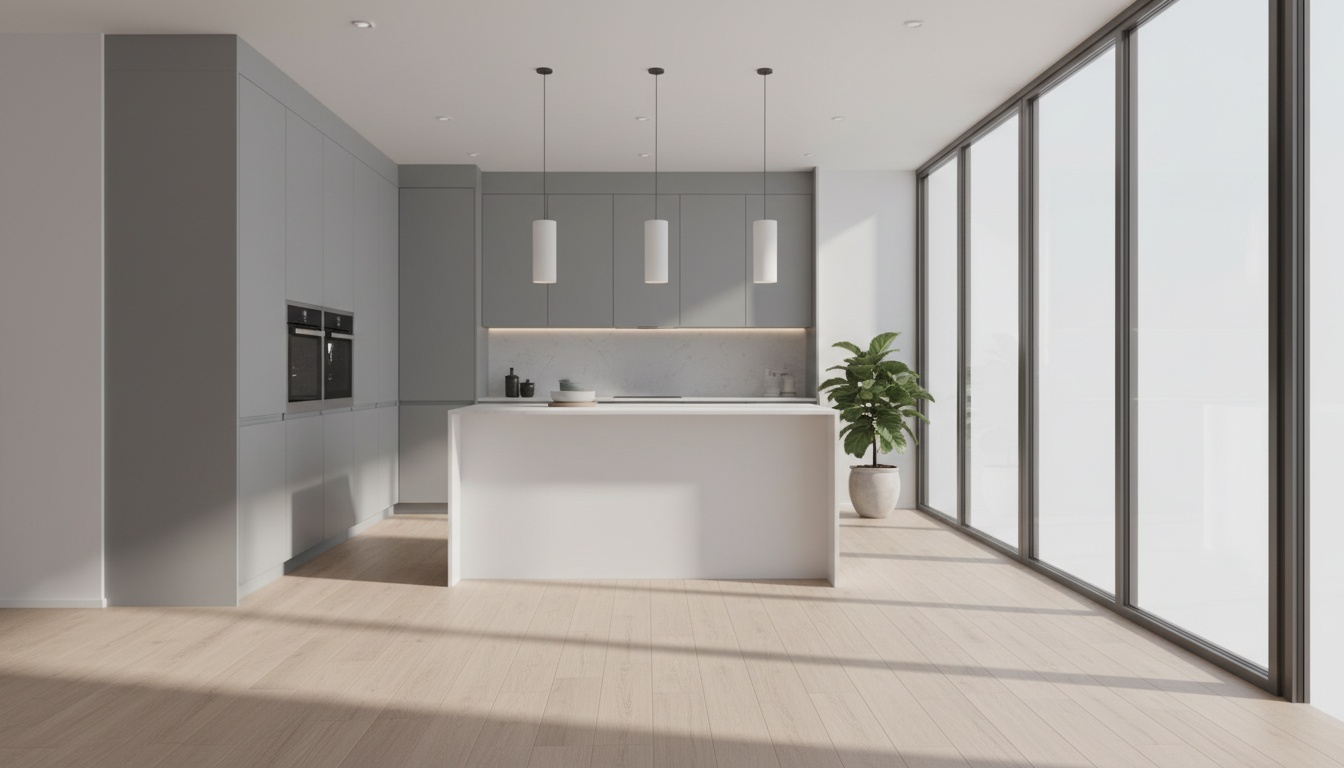
Picking the best pattern for vinyl plank flooring is more than just about what looks pretty. It's about how the vinyl flooring pattern layout interacts with your room's unique features to get the look you're after.
The right vinyl plank layout pattern can literally make a room look bigger or smaller. Straight lay planks, when run parallel to the longest wall, naturally draw your eye along that length, making the room feel longer. Diagonal patterns, on the other hand, can make a room seem wider and more dynamic, especially in rectangular spaces, by breaking up those parallel lines. But be careful: super intricate patterns like herringbone, while luxurious, can sometimes make a really small room feel too busy or closed in because of all that strong visual texture.
Lighter-toned planks, no matter the pattern, will always reflect more light, instantly brightening a room. The pattern itself also plays a role in how light is distributed. Straight lay and diagonal patterns tend to spread light more evenly across the floor. The sharp angles of chevron or the intricate V-shapes of herringbone create more distinct shadows and highlights. This adds depth and visual interest, which can look amazing in a well-lit space or feel dramatic with specific artificial lighting.
Your chosen vinyl plank pattern should really complement your current or desired interior design style. A straight lay with a light, matte wood-look LVP flooring pattern fits perfectly with minimalist or Scandinavian aesthetics. A classic herringbone in a rich walnut tone looks fantastic with traditional or transitional styles. For an industrial or modern farmhouse vibe, an offset brick pattern using a concrete-look or distressed wood-look vinyl plank floor pattern provides that authentic, grounded feel.
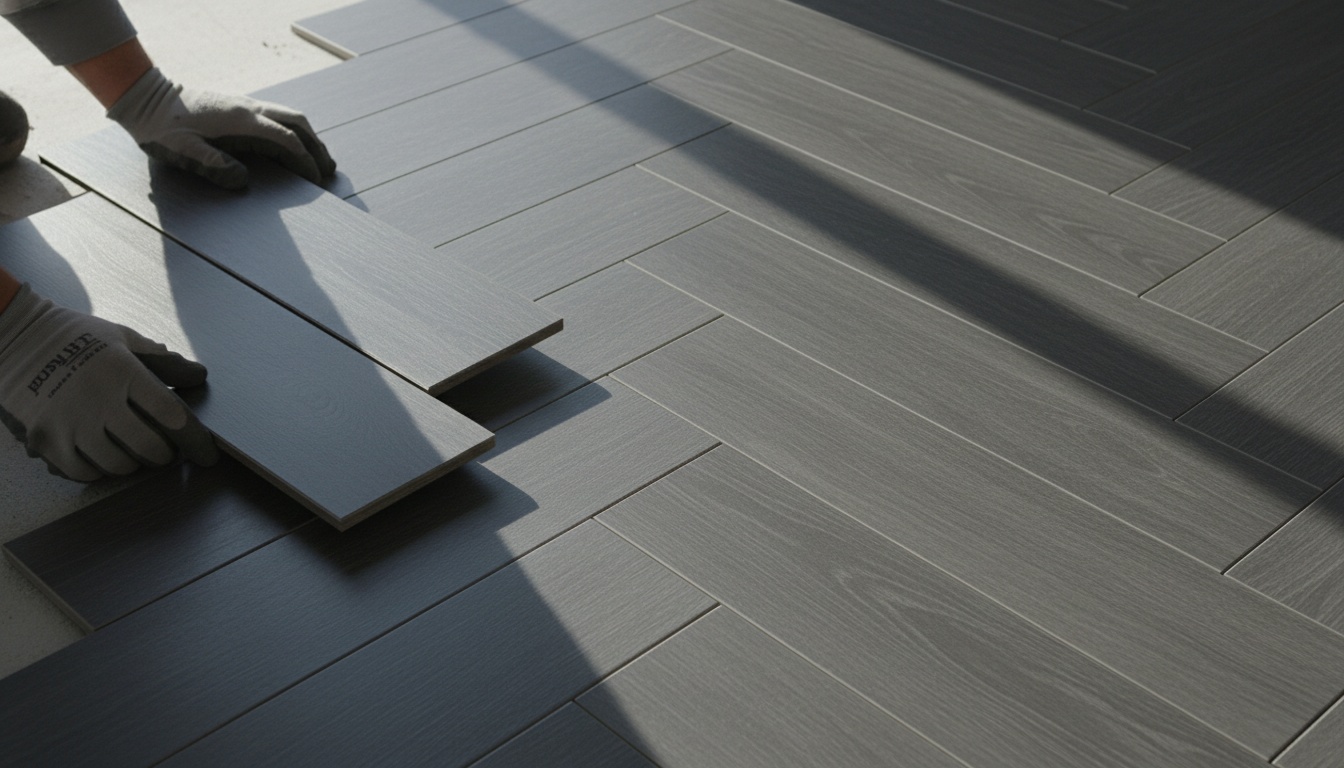
The visual punch of any vinyl plank layout pattern is heavily influenced by the planks themselves-their finish, texture, and color. In 2026, we're still seeing a strong preference for realistic textures and nuanced color palettes.
Matte finishes are still leading the pack in 2026. They offer a sophisticated, understated elegance that perfectly mimics natural wood or stone without that tell-tale reflective shine. Plus, they're practical; they tend to hide minor scuffs and dust better than high-gloss options. High-gloss finishes, while less common, can be used strategically in specific vinyl plank installation patterns like a straight lay. This can create a dramatic, reflective effect that really amplifies light and gives a modern, almost wet look.
Neutrals are, as always, timeless. Think warm, muted grays and creamy beiges for versatile backgrounds. Light, natural oak tones with subtle cool undertones are popular because they brighten spaces and go with just about any decor. If you're looking for more character, richer, darker woods with warm, red undertones are making a comeback in traditional and transitional designs. Stone-look vinyl planks in charcoal grays or soft, earthy whites are trending for contemporary and minimalist interiors. When you're planning your design, remember you can explore endless options and get super realistic AI interior visualizations using advanced AI tools.
https://hel1.your-objectstorage.com/paintit-stage/storage/blog_posts/image/19e727b8-dfe2-48ed-b4cb-8eb37bcad883.jpg
Lighting is a powerful, yet often overlooked, factor in how your vinyl plank layout patterns are perceived. Natural light streaming in through windows will create different effects throughout the day. Artificial lighting, like recessed lights or floor lamps, can either really boost or tone down the visual impact of your chosen pattern.
Warm, diffused lighting can soften the edges of geometric patterns, creating a cozy atmosphere. Cool, bright overhead lighting will really highlight the sharp lines of a chevron or herringbone, emphasizing their intricate nature. Grazing light-that's light that skims across a surface at a low angle-is particularly good at showing off the texture and subtle variations within each plank and the overall pattern. Always think about how both ambient and task lighting will interact with your floor's finish and the direction of its pattern.
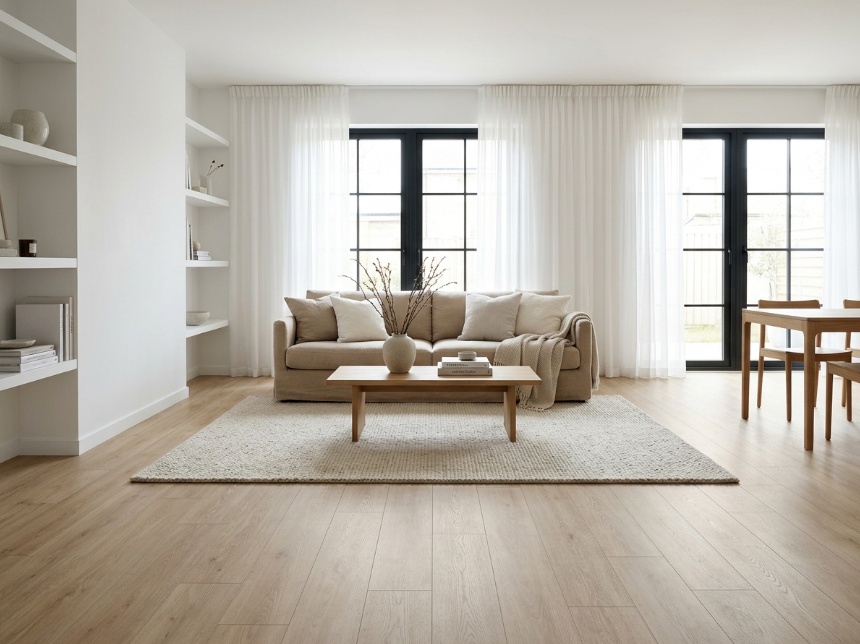
This classic choice makes a room feel calm and spacious. Planks are laid parallel to the longest wall, which makes the room look longer and wider. The uniform lines create a sense of peace and order, perfect for minimalist or Scandinavian-inspired spaces. A light oak with a matte finish shows off the natural grain without making the room feel heavy.
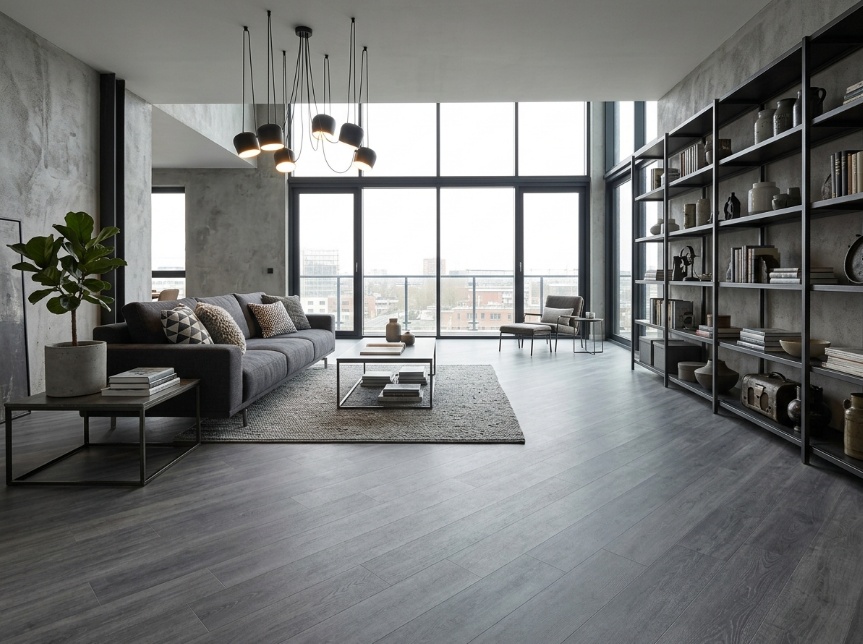
A diagonal layout adds a dynamic flair to any room, making it feel bigger and more interesting. By setting planks at a 45-degree angle to the walls, your eye gets drawn across the space, expanding its perceived size. A realistic slate gray with a subtle texture provides a contemporary, sophisticated base that works well with modern or industrial aesthetics.
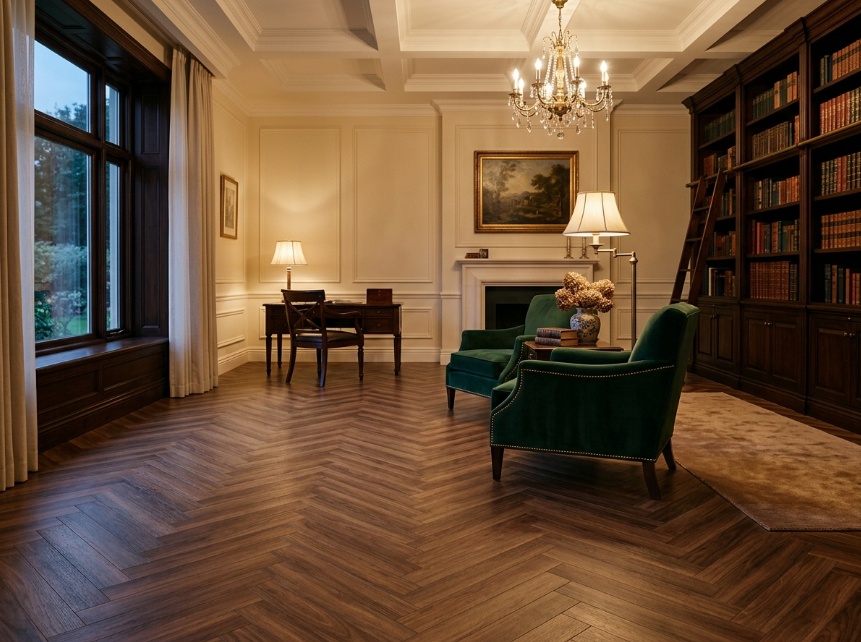
For timeless elegance and a touch of luxury, you can't beat the herringbone pattern. Those intricate V-shapes create a strong visual texture that really makes a statement. A rich, warm walnut tone adds depth and traditional charm, ideal for formal living areas or studies. This pattern looks best with consistent plank sizes to keep its sophisticated rhythm.
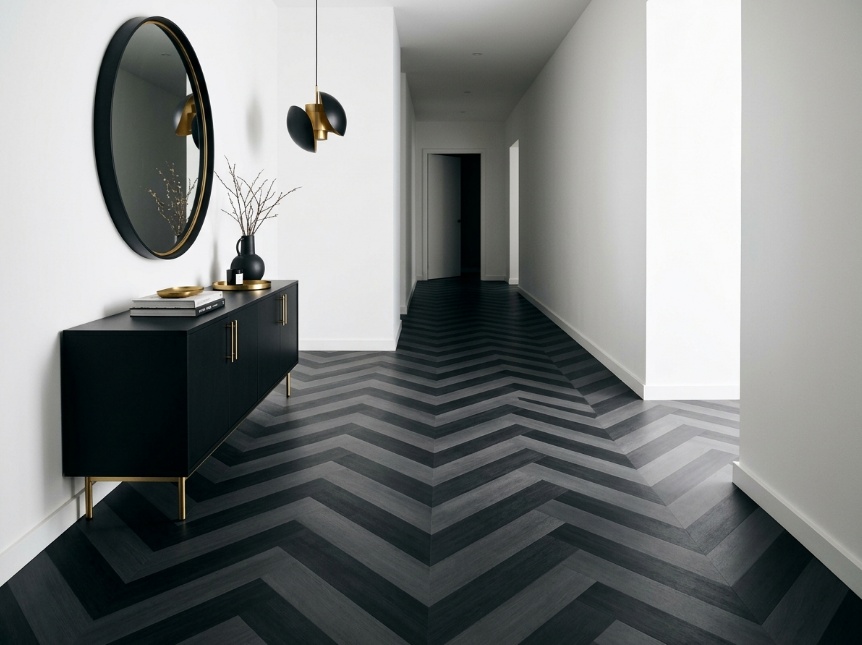
The chevron pattern brings a sharp, energetic, and undeniably modern feel to a space. The continuous, pointed V-shapes create a strong sense of movement and architectural interest. Using a deep charcoal gray with a smooth, satin finish really highlights the geometric precision, making it perfect for contemporary, high-design interiors or dramatic entryways.
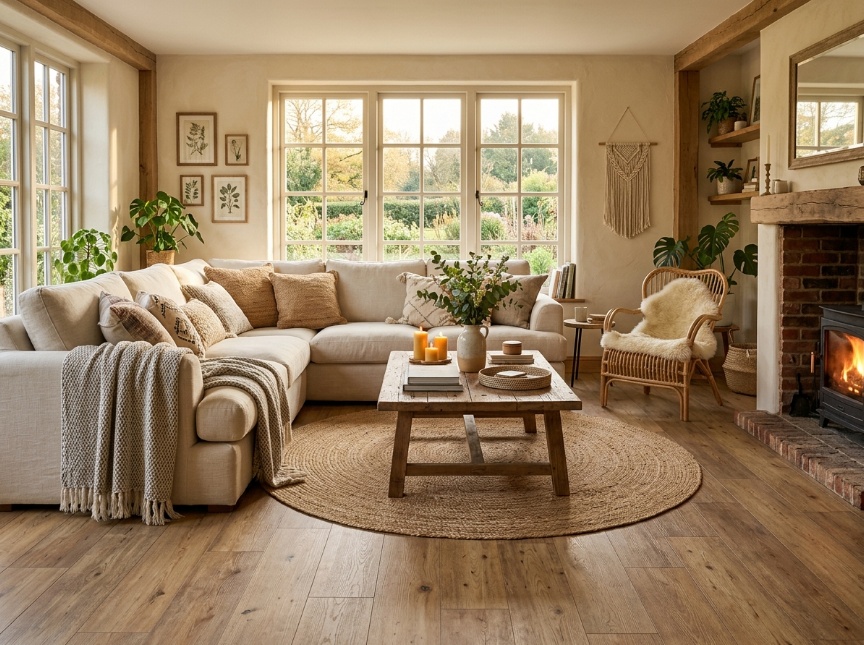
The offset, or brick, lay offers a comfortable, grounded, and versatile appeal. By staggering the planks in a predictable yet natural rhythm, it creates a sense of stability and familiarity. A distressed pine look with a subtle texture adds rustic charm, suitable for farmhouse, bohemian, or casual family spaces. This pattern is quite forgiving and works in most room sizes.
For more inspiration, you can also explore how to design your living room with AI, applying these patterns to your specific space.
Choosing the right vinyl plank floor patterns is crucial, but so is avoiding common mistakes in both design and installation.
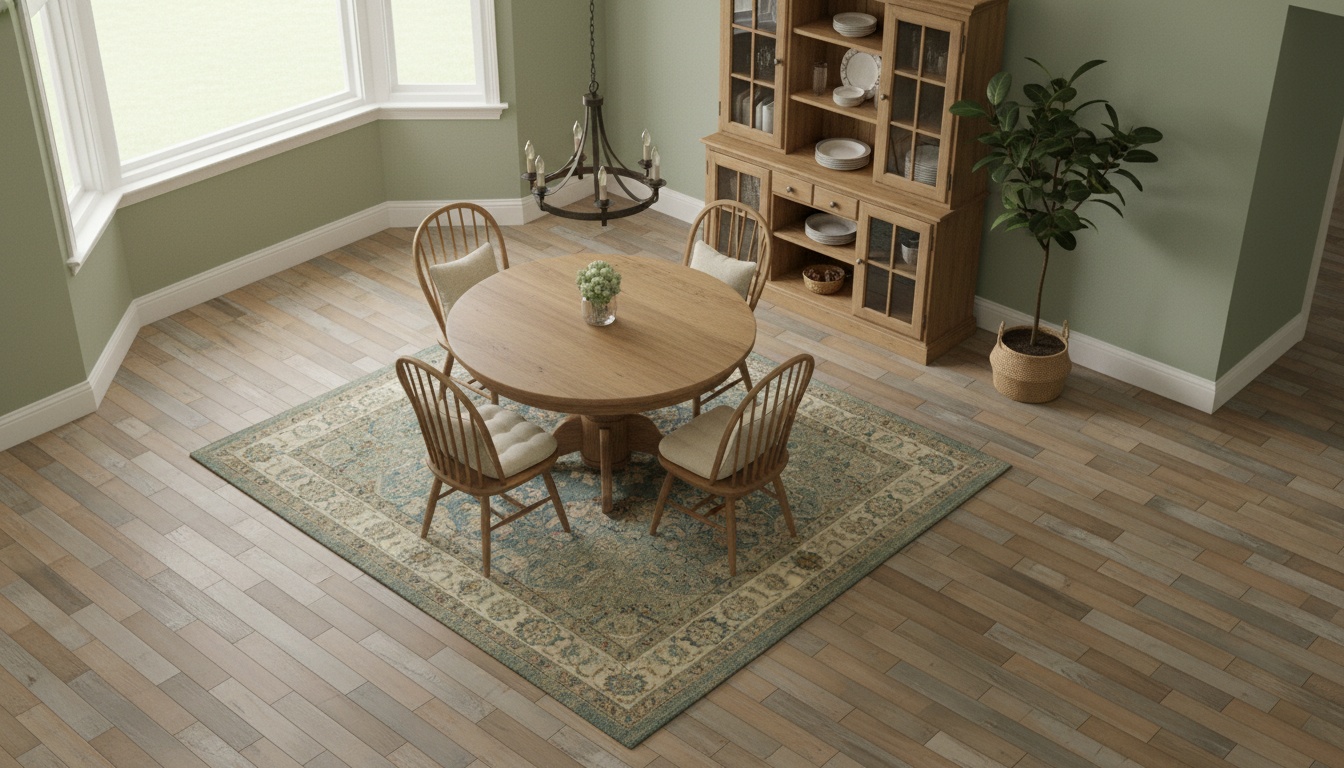
Choosing the right vinyl plank floor patterns for your home can feel like a huge guessing game when all you have are tiny samples or online photos. It's genuinely hard to picture how different vinyl plank layout patterns will actually look with your specific room's lighting, furniture, and wall colors. Traditional methods often leave way too much to chance.
With Paintit.AI, you can finally close that gap between inspiration and reality. Our AI-powered tools let you:
Don't let uncertainty stop you. Experience AI room design firsthand and visualize your perfect flooring with total confidence. While AI previews are incredibly accurate, remember that real-world lighting and surrounding materials can cause slight shifts in color perception, so it's always a good idea to test a physical sample if you can.
While technically possible, herringbone works best with specific, smaller-sized planks designed for intricate patterns. Using standard-sized planks can look visually overwhelming or disjointed. You really need to pick planks suitable for the pattern's precise angles and repeated V-shapes to get the best vinyl plank flooring layout pattern.
Patterns like Straight Lay or Diagonal Lay, especially when oriented correctly (for example, diagonally across the longest dimension of a rectangular room), tend to make a space feel larger and more open. Lighter colors and matte finishes further enhance this effect by reflecting light more uniformly.
Honestly, both chevron and herringbone patterns are significantly more complex to install than a standard straight lay. Chevron requires planks to be precisely cut at 45-degree angles on their ends to meet perfectly, while herringbone involves precise 90-degree angles and alternating placement. Both demand meticulous cutting and alignment, so they're often best handled by professionals.
Think about the overall style of your room. Wood-look planks offer warmth and are super versatile for styles ranging from farmhouse to modern. Stone-look or concrete-look planks provide a cooler, more contemporary or industrial aesthetic. Both can be used effectively in different patterns; for example, a distressed wood-look in an offset pattern evokes a rustic feel, while a sleek stone-look in a straight lay pattern suits a minimalist design.
You maintain patterned vinyl plank floors pretty much like any other vinyl flooring: regular sweeping or vacuuming with a soft brush attachment, and damp mopping with a pH-neutral cleaner. Just avoid abrasive cleaners or too much water, as these can damage the seams and finish over time, especially in intricate patterns where debris can collect more easily.
The choice of vinyl plank layout patterns is a powerful design tool that can profoundly influence the character and perception of any room. From the expansive simplicity of a straight lay to the sophisticated geometry of herringbone, each pattern brings its own unique set of advantages. You should let things like room size, natural light, and your desired aesthetic style guide your decision, ensuring your chosen vinyl plank floor pattern enhances your home's overall design in 2026.
By understanding the visual impact of different patterns and leveraging advanced AI visualization tools like Paintit.AI, you can confidently select the best pattern for your vinyl plank flooring, transforming your space with both style and practicality. Ready to see the possibilities in your own home? Discover how to use AI to design a room and bring your vision to life.