9 min. reading

Yulii Cherevko
CEO paintit.ai
Key Takeaways
As we settle into the winter of 2025, something fundamental is shifting in the world of interiors. For years, we have seen clean lines and neutral palettes dominate our feeds. But looking at the data from the last week of December-specifically December 7th to 14th-it is clear that the era of sterile minimalism is behind us. We are entering a phase of "maximalist" expression, driven by a desire for emotional connection with our spaces.
I am Juliy Cherevko, CEO of Paintit.ai, and our latest monitoring of Pinterest, TikTok, and Instagram reveals a radical change. The market is no longer just about aesthetics; it is about feeling. With Gen Z and Millennials now shaping 65% of the trends for the upcoming year, we are seeing a move toward spaces that tell a story.
Whether you are planning a renovation for the cozy winter months or looking ahead to the bright optimism of Spring 2026, this report covers the essential movements you need to know.
Winter is traditionally a time for turning inward, and the trends for late 2025 reflect this perfectly. We are seeing a rejection of the "all-white" aesthetic in favor of depth, warmth, and social connection.
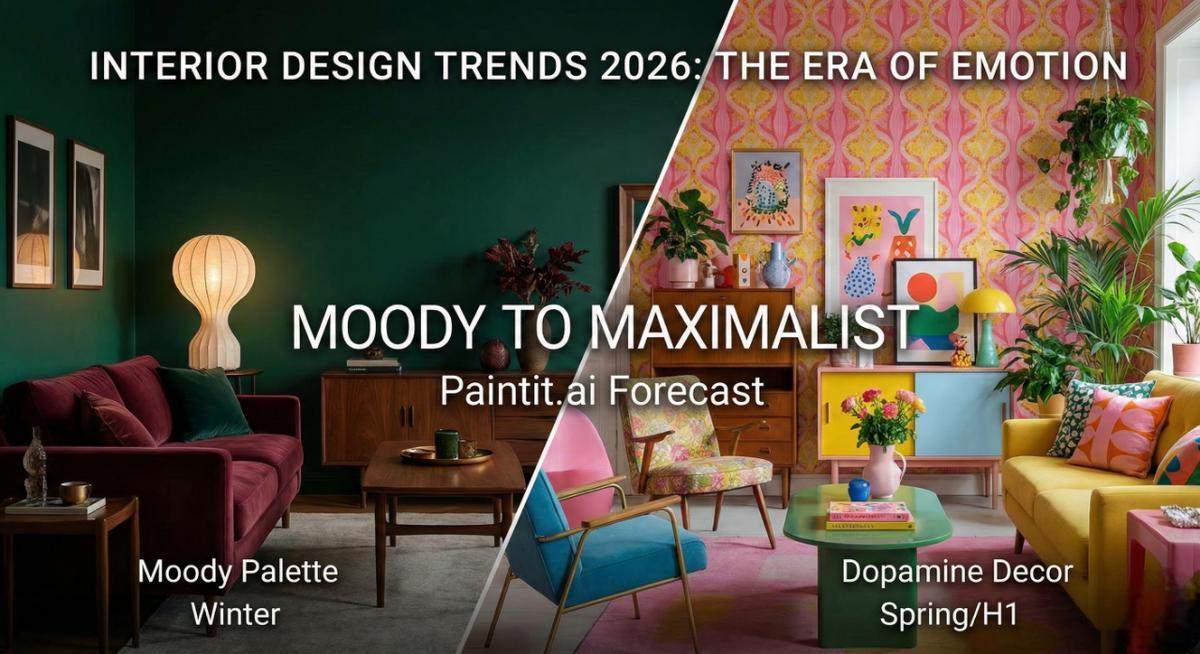
If there is one trend that defines this winter, it is the embrace of darkness. Our analysis places "Moody Color Palettes" in the top 5 trends of December. This is not just about painting a wall grey; it is about "precious" tones. Think deep emeralds, sapphires, rich burgundy, and the increasingly popular "oxblood."
Designers are calling this an emotional response to the sterility of the pandemic years. We want our homes to feel like a warm hug. In the UK and EU specifically, this trend is manifesting through Color Drenching. This technique involves painting walls, ceilings, and trim in the same dark, saturated hue.
Why does this work? Psychologically, color drenching removes visual "noise." Without the harsh lines where white trim meets a colored wall, your eye can relax. It creates a seamless, cocoon-like effect that is perfect for the colder months.
For those who are not ready to dive into dark waters, minimalism is still here, but it has evolved. We call it Warm Minimalism. It is no longer about cold concrete and sharp edges.
The data shows a massive spike in engagement for interiors featuring beige, taupe, and soft terracotta. The key differentiator for Winter 2025 is texture. It is about "plush" furniture, natural wood, and organic fabrics. It is minimalism that you actually want to touch. This style is particularly dominant among professional designers in the US and EU who want to maintain a clean look without sacrificing comfort.
The most human trend of the season is arguably "Hostingcore." We are seeing a surge in designs focused specifically on social interaction. In the US, this is a direct response to the "loneliness crisis," with data suggesting 30% of adults experience loneliness weekly.
Homeowners are fighting back through design. They are requesting intimate dining areas, "conversation pits," and layouts that facilitate flow. The visual elements include drink tables, banquette seating, and multi-level lighting that sets a mood for guests. It is about creating a space where people want to stay and talk, making it a critical trend for the holiday hosting season.
As we look toward the first half of 2026, the trends shift from the cozy introspection of winter to high-energy expression. The keywords here are "Dopamine" and "Eclectic."
This is the heavyweight champion of 2026. Our metrics show a staggering 110% year-over-year growth in searches for Dopamine Decor. This style is exactly what it sounds like: interiors designed to trigger happiness.
We are talking about bright pinks, yellows, and oranges mixed with playful patterns. It is a global phenomenon, rapidly spreading from the US and UK to Asia. The science backs it up; researchers suggest that vibrant colors can produce "micro-doses" of dopamine, providing a sense of optimism.
If you are using our AI interior design tools, this is the perfect time to experiment. You don't need to paint your whole house neon yellow. Start with a "Dopamine mood trigger" approach-ask the AI to generate a room based on an emotion like "joy" or "playfulness" to see how powerful color can be.
Closely tied to dopamine decor is the rise of Eclectic Maximalism, which has seen a 215% growth in search traffic on Pinterest. This is a direct rebellion against the "cookie-cutter" catalog look. People are tired of homes that look like showrooms.
The visual language of 2026 is a mix. It is about layering vintage rugs with modern sofas, or pairing bold wallpapers with antique lamps. The "Vintage Renaissance" is a huge part of this, with a 260% increase in interest for vintage maximalism specifically. It is sustainable, it is personal, and it ensures no one else has a living room quite like yours.
While styles change, the underlying demand for quality and nature remains constant.
We tracked a fascinating viral sentiment on TikTok this week. A video circulated discussing a creator who spent $2,000 and 42 hours building a table rather than buying an $800 mass-produced one. The consensus? It was worth it.
This "Artisan Craftsmanship" trend is exploding. People crave the "hand of the maker." In interiors, this looks like carved wood, wavy panels, and tactile, sculptural surfaces. It is a move away from fast furniture toward pieces that have a soul.
Biophilia is no longer just a trend; it is a standard. However, the application is changing. In 2025, it is not just about having a potted plant. It is about "architectural topiaries," water elements, and maximizing natural light.
The regional variation here is interesting. In the EU, the focus is heavily on the quantity of plants. In the US, the focus shifts to how light interacts with the space. Using tools like our AI landscape design can help you visualize how to integrate these natural elements seamlessly into your home or garden before you buy a single fern.
Keep an eye on these rapid risers. They haven't hit the mainstream yet, but their growth rates are impressive.
Rococo Revival (+140% growth): This is the fastest-growing trend of the week. It appeals to Gen X and Boomers, featuring ornamental gold details, velvet textures, and baroque influences. It is luxury with a capital L.
Food-Inspired Interiors: Yes, you read that right. We are seeing palettes inspired by "butter yellow," "cherry red," and "dill green." Lighting that mimics melting butter and furniture that looks like baked goods are trending. It sounds wild, but it adds a sensory, delicious layer to home design.
Design is global, but local nuances matter. Here is how the trends break down by region for Winter/Spring 2026:
| Region | Dominant Trends | Key Demographic |
| USA | Dopamine Decor, Moody Palette, Hostingcore | Gen Z, Millennials |
| UK | Color Drenching, Biophilic Design | Gen X, Millennials |
| EU | Artisan Craftsmanship, Vintage Renaissance | Gen X, Boomers |
| Asia | Biophilic Design, Traditional Minimalism | All Ages |
Reading about "Oxblood walls" or "Dopamine Decor" is one thing; seeing it in your own living room is another. This is where AI bridges the gap between imagination and reality.
At Paintit.ai, we have updated our algorithms to recognize these specific 2025 shifts.
The winter of 2025 and the spring of 2026 are shaping up to be the most expressive seasons we have seen in decades. Whether you find comfort in the deep embrace of a moody room or joy in the bright chaos of dopamine decor, the message is the same: your home should make you feel something.
Don't be afraid to experiment. The trends support boldness, personalization, and emotional connection. And remember, you don't have to commit to a renovation blindly. Use the tools available to visualize these bold new worlds before you lift a paintbrush.
Based on growth metrics, Dopamine Decor and Eclectic Maximalism are the most significant trends, showing triple-digit growth. They prioritize personal expression and bright, happy aesthetics.
Sterile minimalism is fading, but it is being replaced by Warm Minimalism. This style uses the same clean lines but incorporates warm colors like beige and terracotta, along with rich textures to create coziness.
A moody palette relies on deep, saturated tones like emerald green, sapphire blue, burgundy, and oxblood. It often involves Color Drenching, where the ceiling and trim are painted the same color as the walls to create an immersive experience.
The Eclectic Maximalism trend suggests mixing vintage pieces with modern elements. Pair a vintage velvet sofa with a sleek, modern coffee table, or use antique art on a freshly painted, bright wall.