9 min. reading

Yulii Cherevko
CEO paintit.ai
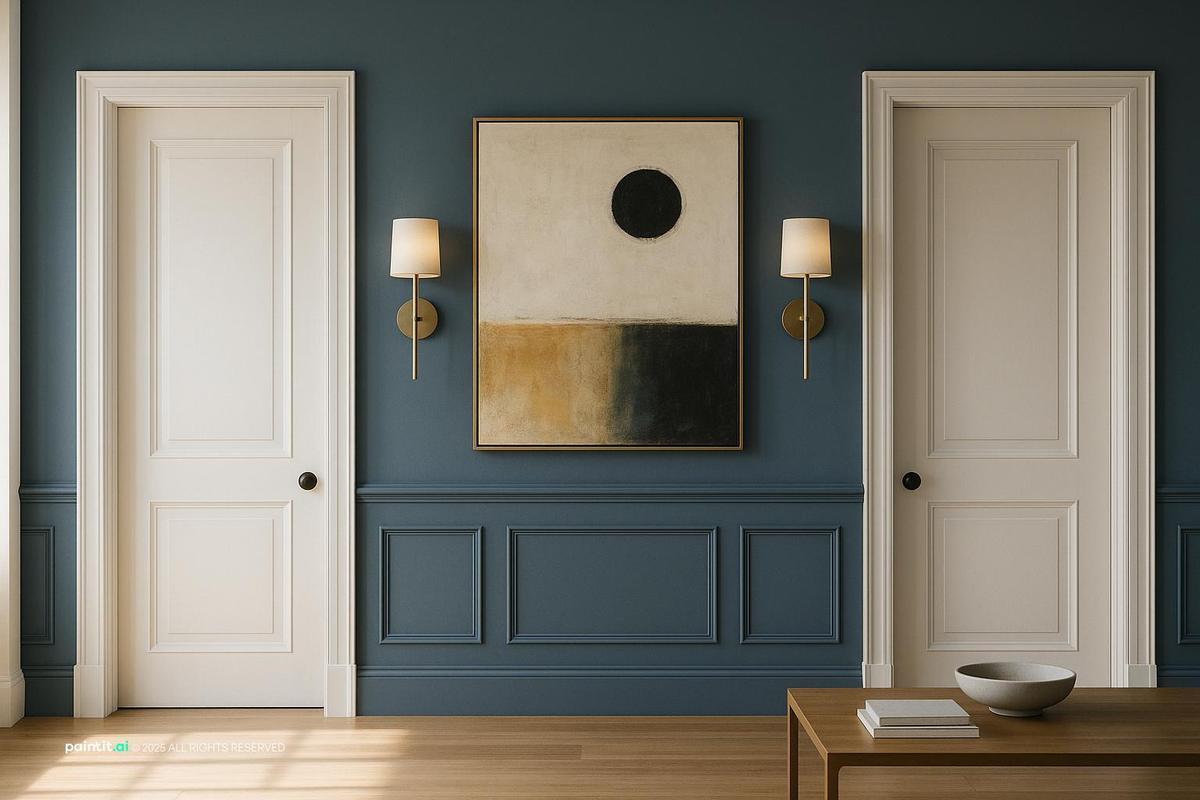
Key Takeaways
Today’s interior design understands walls as far more than mere structural boundaries. They are primarily the surfaces we build to tell the story of a room; their emotion, style, and design purpose act as a canvas. One of the most powerful features of a successful living room wall strategy is the ability to adapt with ease to the surroundings.
As Williams notes, the emphasis today is on personalization, excellent appearance, and high aesthetic quality. Creating a living room highlight wall is now more important than simple adornment. The era of mass production and generic art designed to "fit" into the background is over. It has been replaced by unique, bright designs that tell a different story. Whether you prefer straightforward decor swaps or permanent architectural paneling, this guide presents specialist strategies to help you pivot toward individual choices rooted in your unique context.
This selection of quick and manageable ideas is based on key principles of building design, perfect for anyone in need of a fresh perspective.
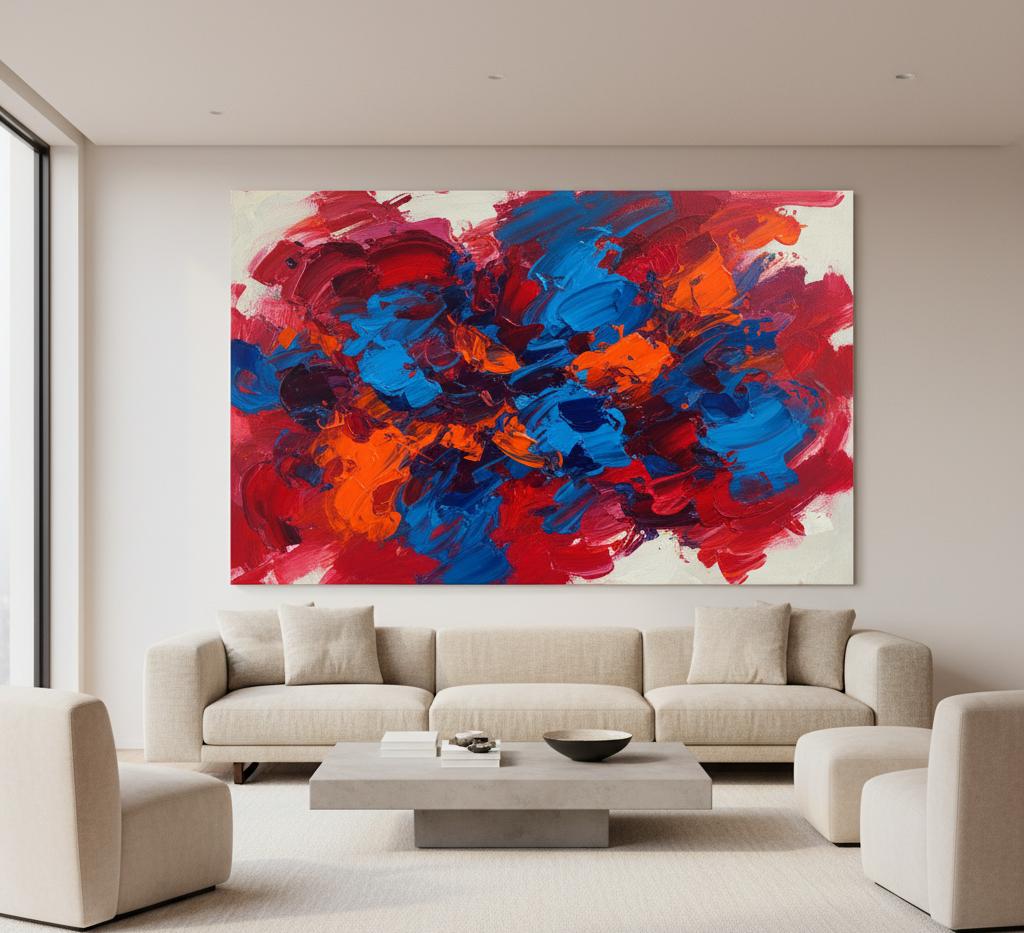
The most basic and dramatic way to establish a focal point. A single grand work of art or a giant mirror catches the eye, introducing light and depth. It often serves as an anchor for the room's color palette.
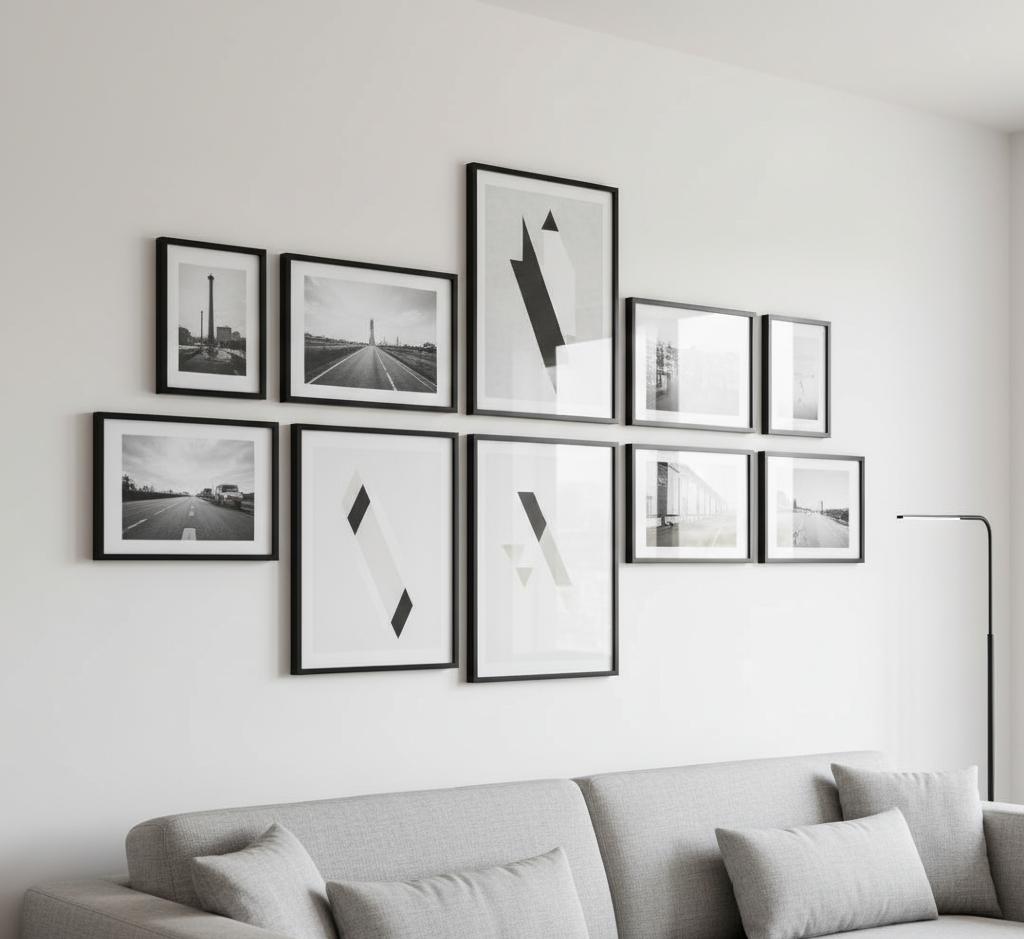
Enable a crafted narrative with photos and memories. The key to success is visual balance. If prints utilize different styles, consistent framing (like all black or all white) creates harmony.
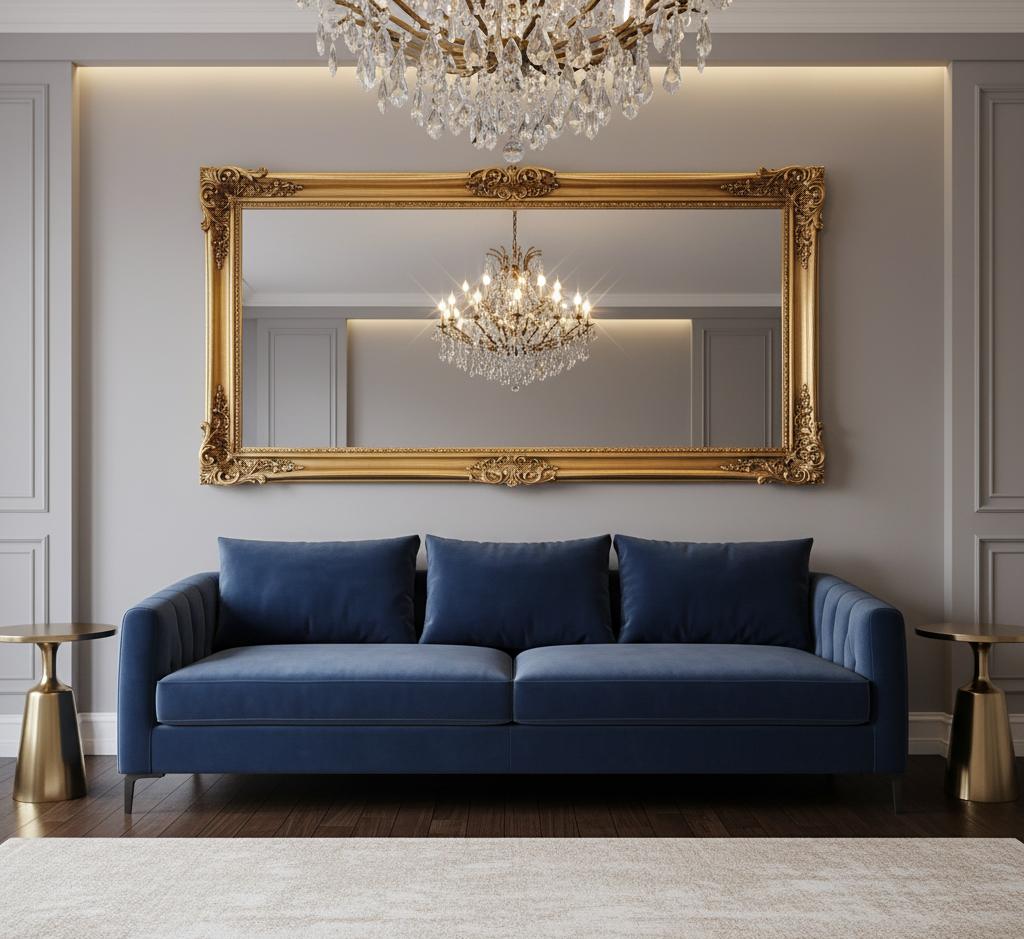
A large mirror with an elaborate frame adds drama and luxury. For balance, the mirror should occupy roughly two-thirds to three-quarters of the wall space above key furniture like a couch.
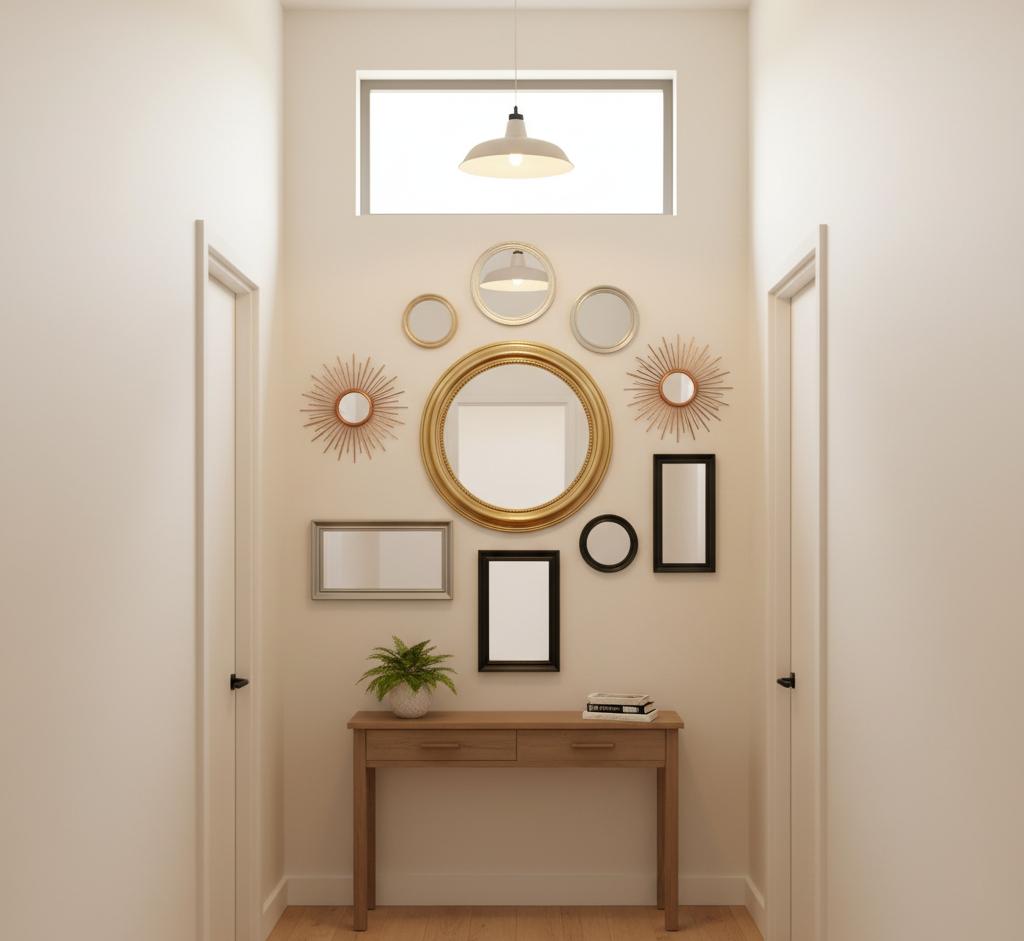
In narrow, dark transitional environments, a gallery made entirely of diverse mirror shapes is an excellent way to illuminate the space from all directions.
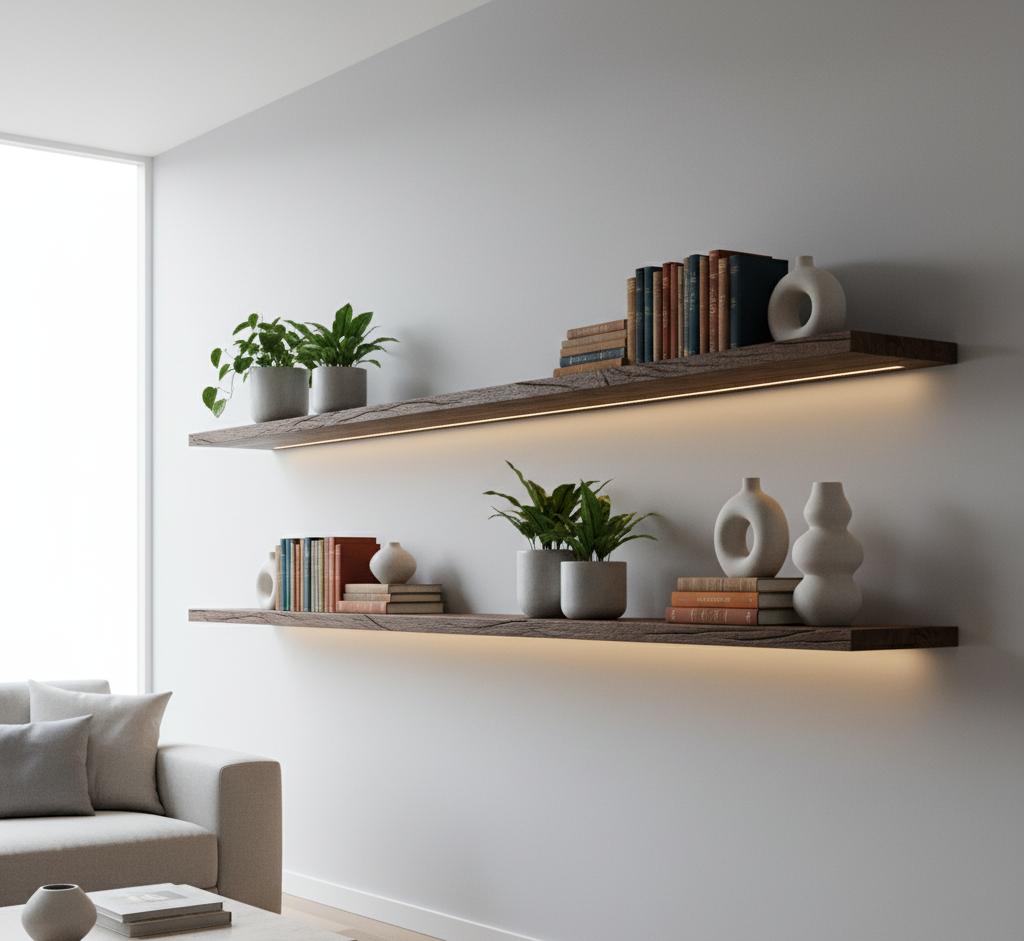
These provide instant visual interest. Materials like live-edge wood add natural texture, while metal or glass suits contemporary spaces. A single shelf installed along the entire width of a wall can create an optical illusion of a bigger room.
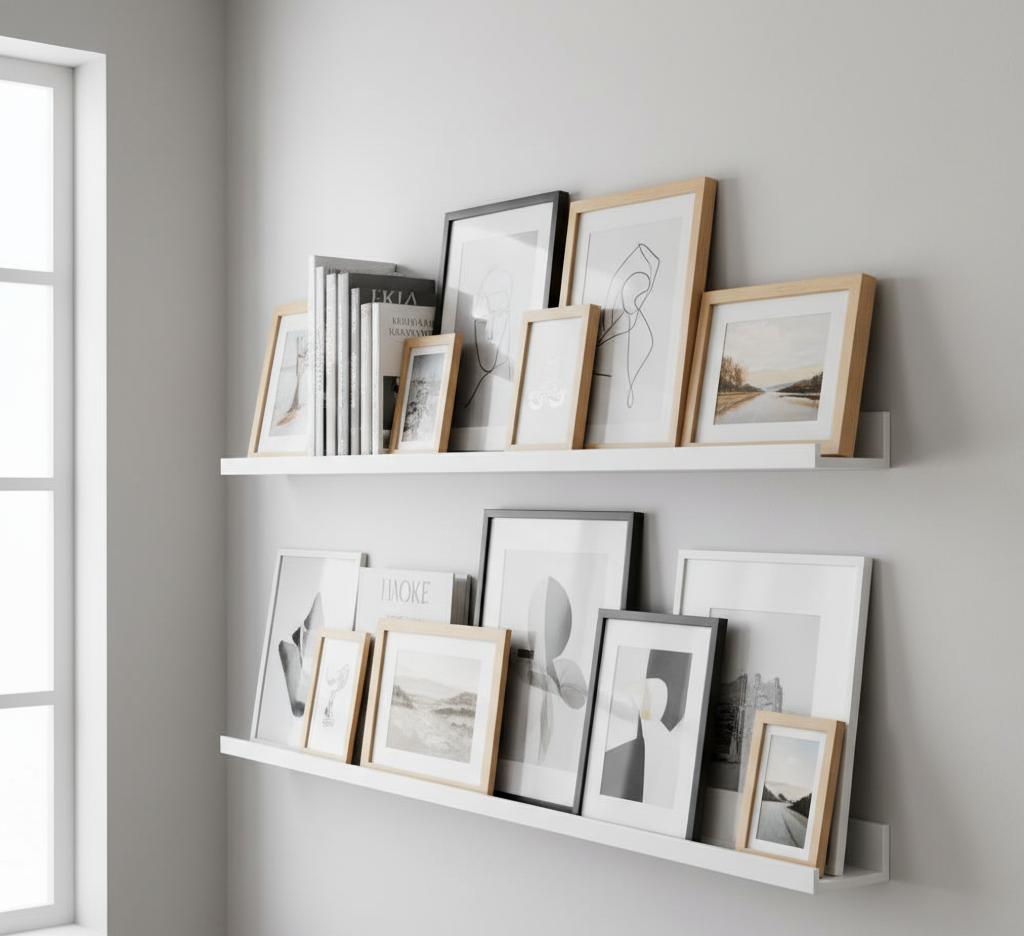
A lean alternative to floating shelves. They feature a tiny raised lip for artwork to sit securely, allowing you to swap art without new hardware.
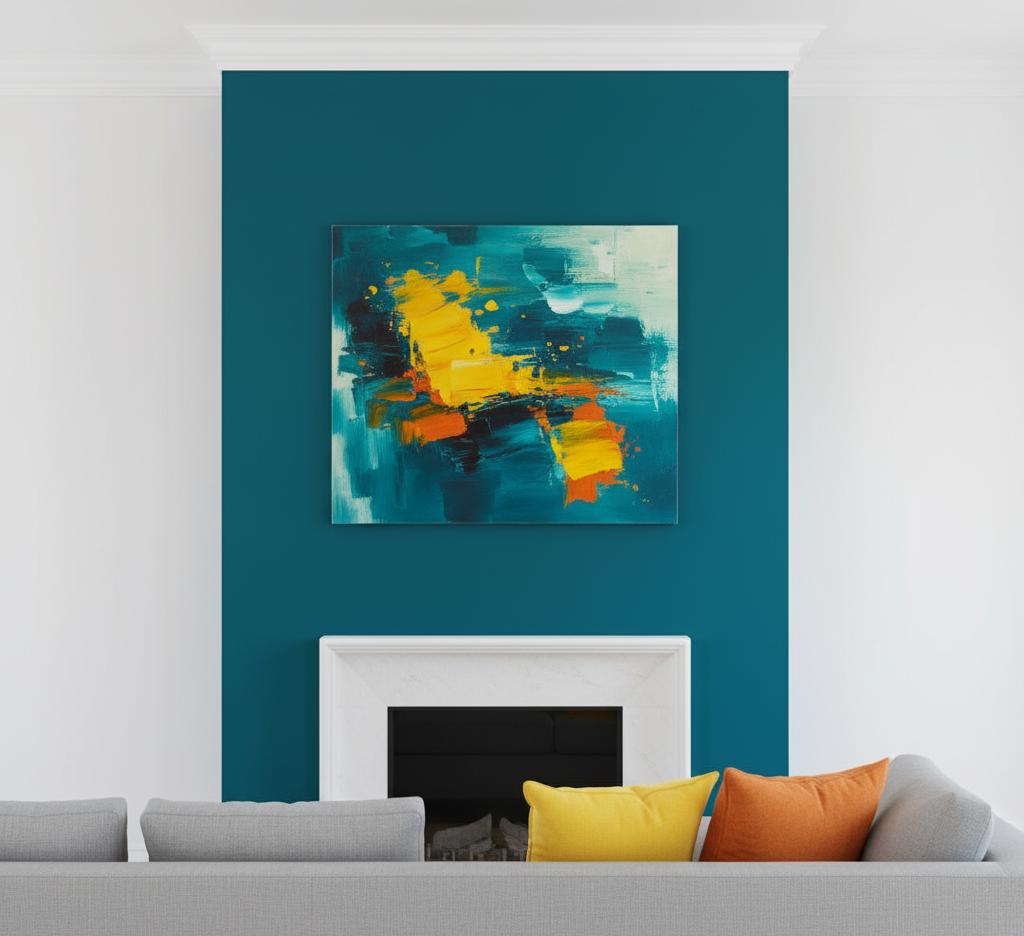
Choosing color is key to setting the emotional tone. A single accent color on a feature wall represents the final 10% of the 60-30-10 rule.
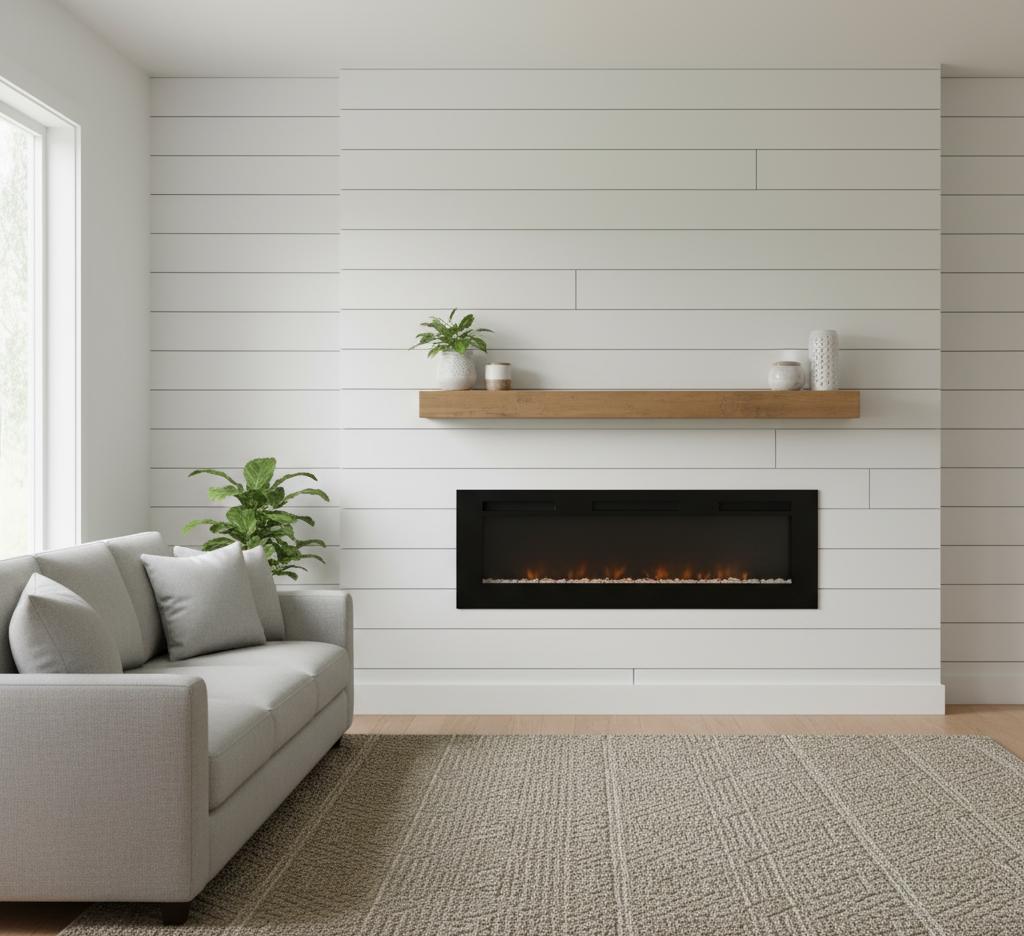
Interlocking boards (usually 6 inches wide) provide a fresh, modern look. White shiplap subtly highlights architectural aspects and draws the eye upward.
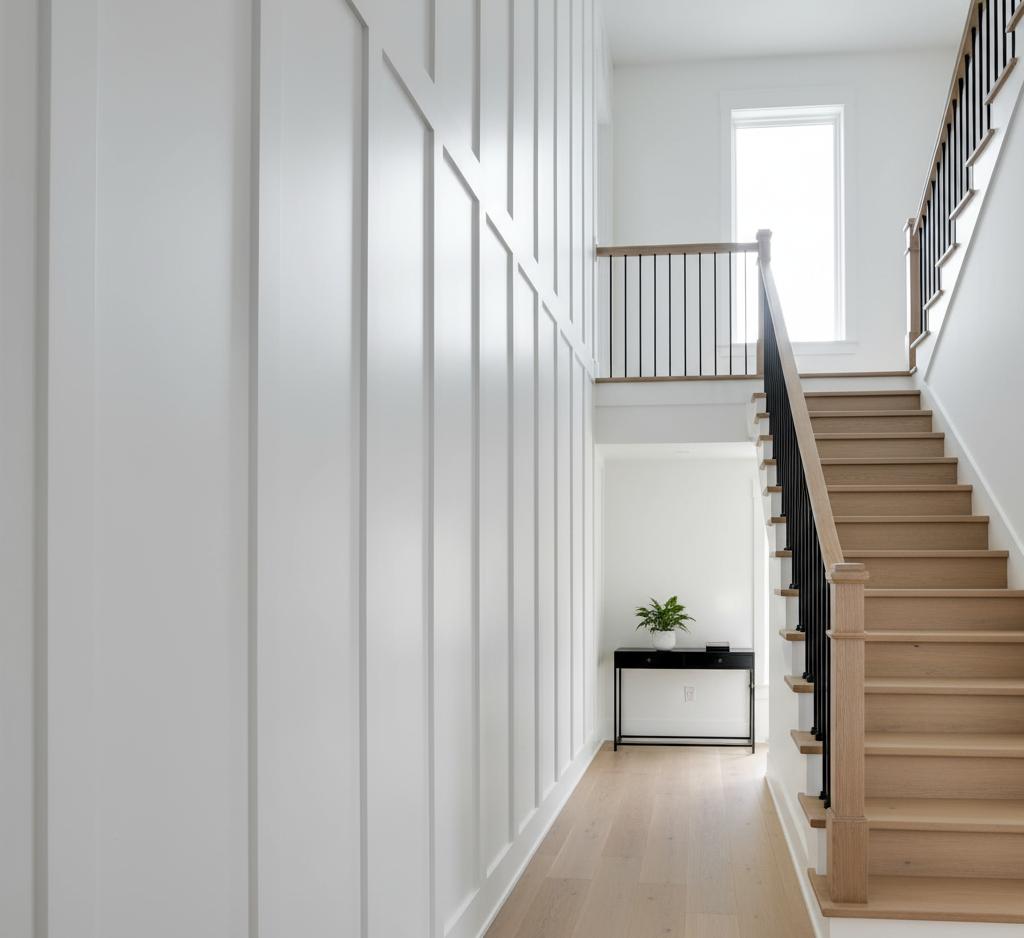
This versatile style is created by installing narrow strips (battens) over larger flat boards. Extending the board-and-batten treatment from floor-to-ceiling creates a strong vertical element that is highly effective on long walls or staircase walls in entryways.
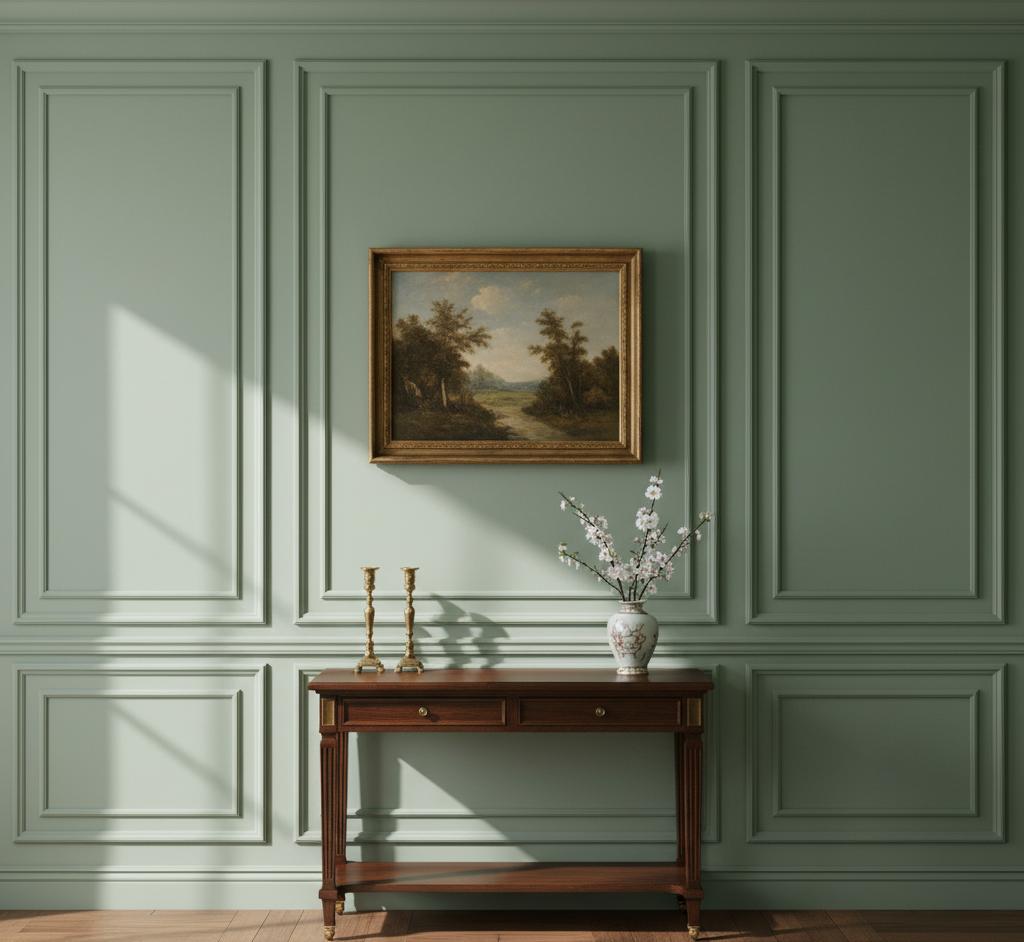
Traditional millwork involves applying molding to create a series of frame-like boxes on the wall. This simple technique instantly transforms a plain wall into an elegant feature element. Conversely, using a slightly different hue or a higher-gloss paint finish introduces subtle contrast and dimension.
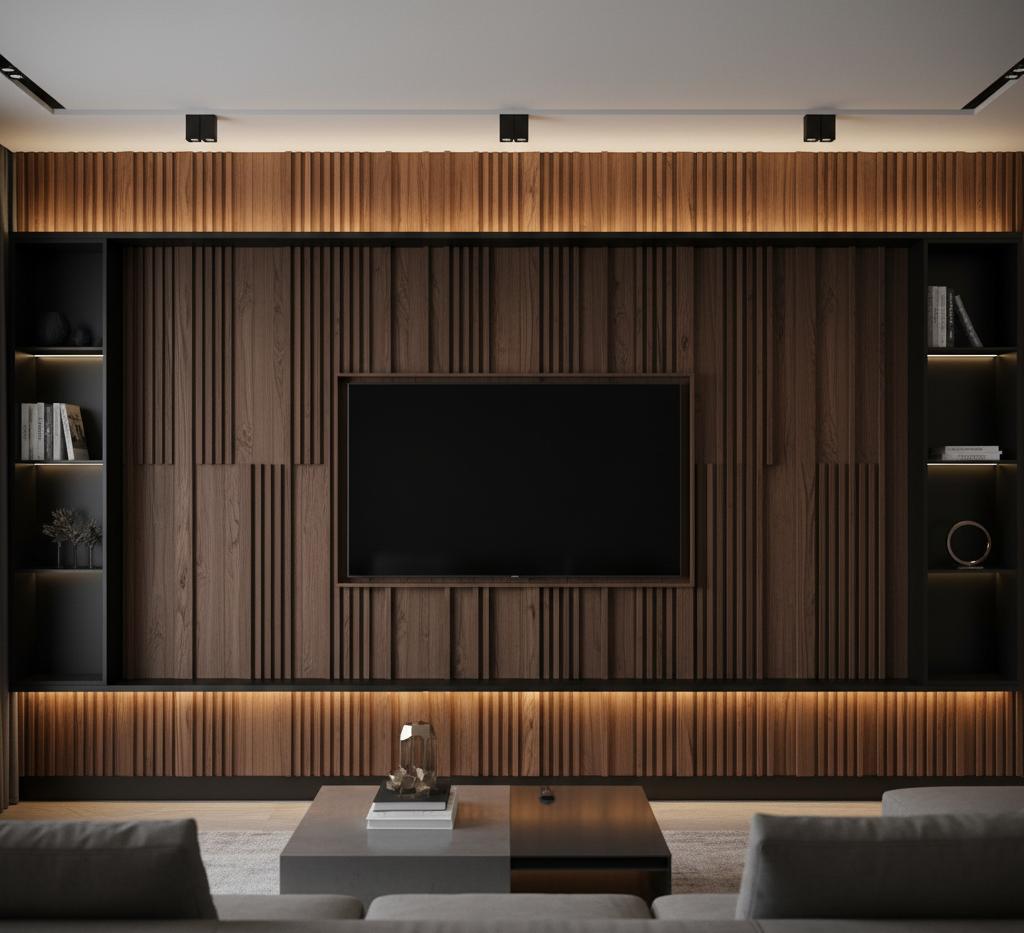
The use of 3D decorative wall panels represents a significant trend in contemporary design. Materials like louvered MDF panels or geometric wooden panels provide dynamic visual interest and a captivating interplay of shadows and depth. These panels function essentially as built-in, non-removable structural art. You can visualize how different 3D textures will look using an AI room design tool.
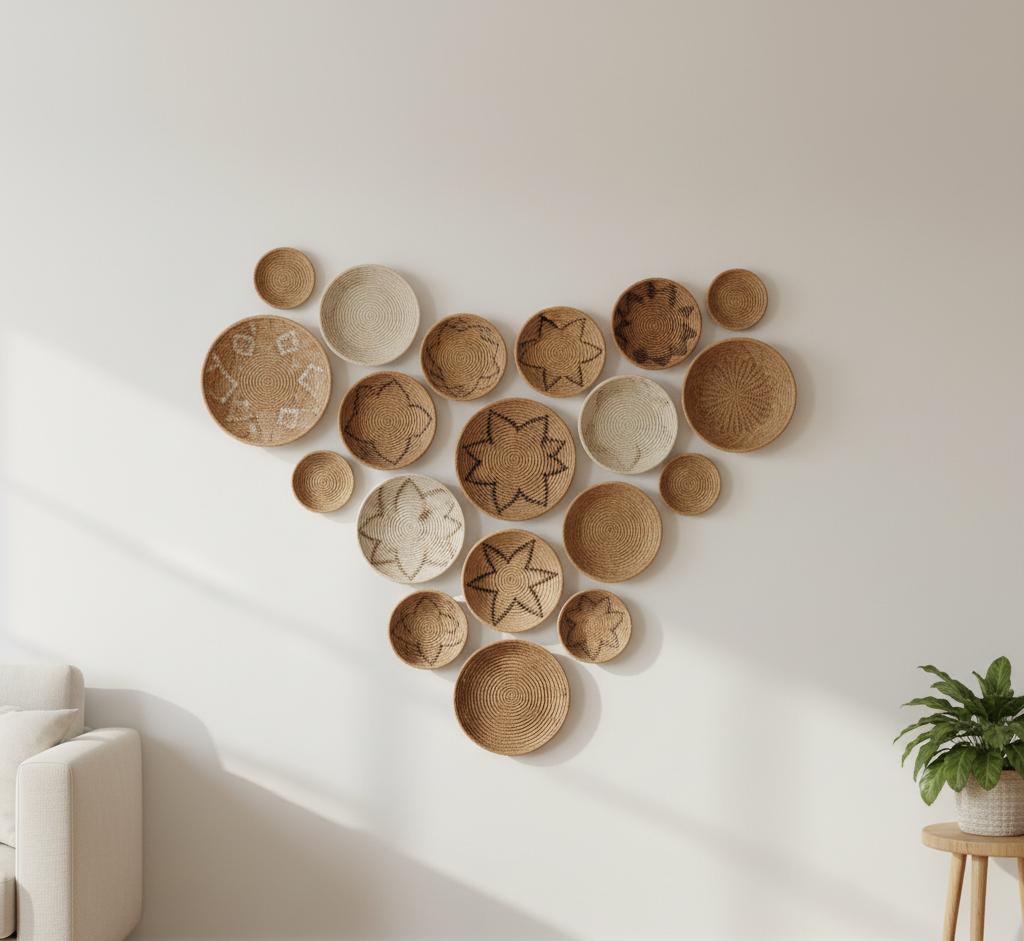
When confronted with a large, empty wall, handwoven wall baskets are excellent, cost-effective items. Arranged in alternating patterns or stacked vertically, these lightweight items introduce texture and a natural aesthetic.
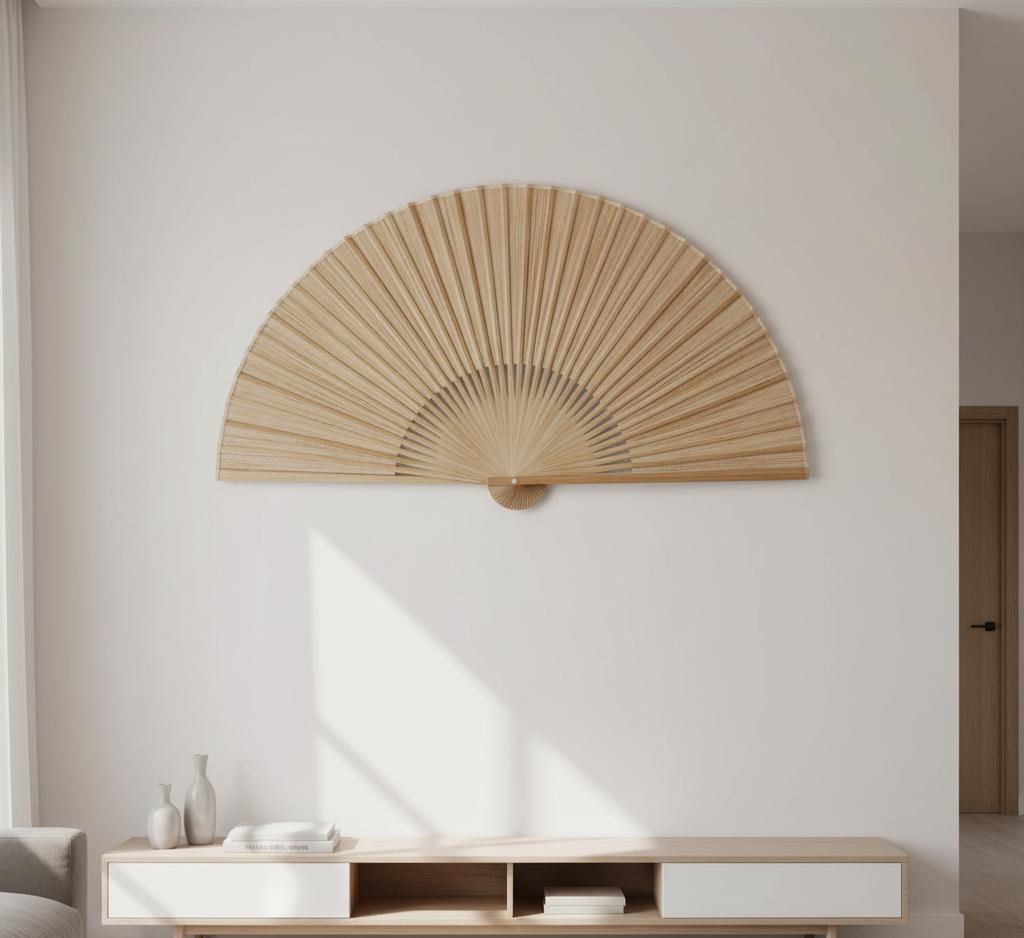
A large bamboo folding fan, placed high and centered, can act as a natural, affordable focal point. The key to success is leveraging the texture and material (e.g., bamboo, seagrass) to achieve depth without significant expense.
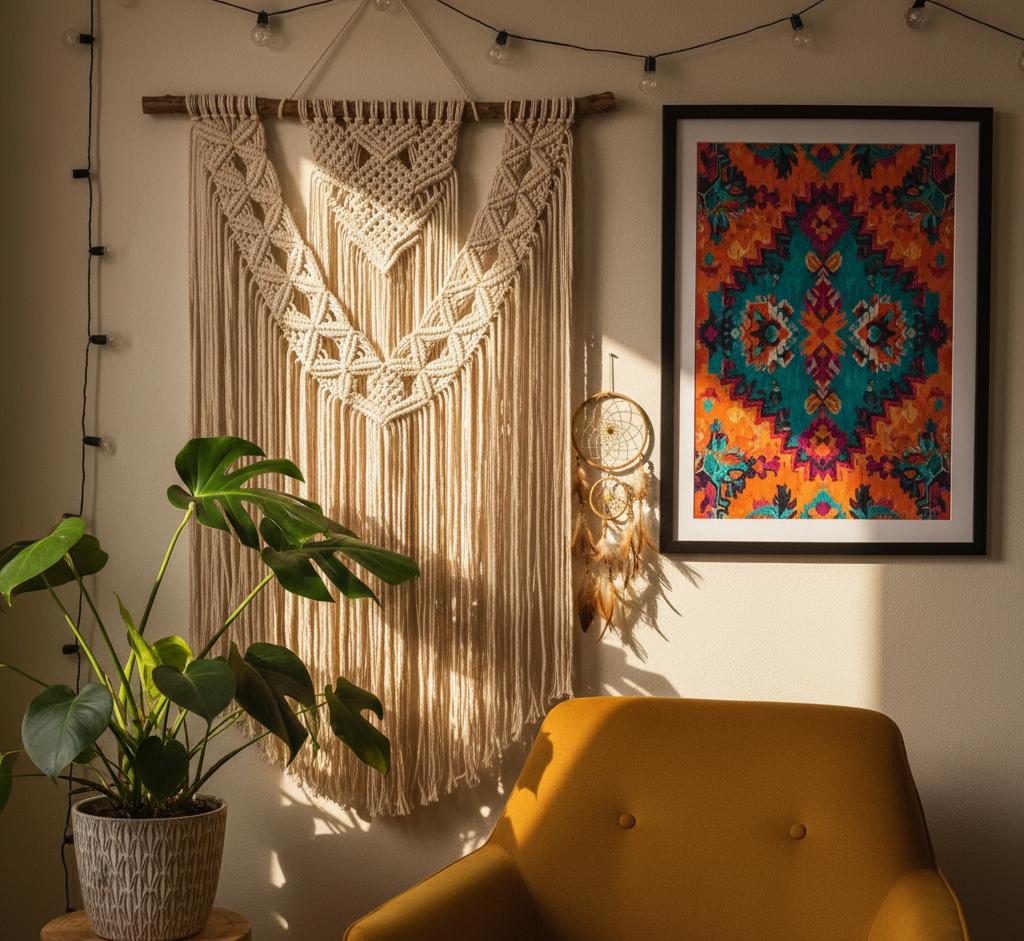
Bohemian design thrives on texture and layering. To achieve the intended ultimate boho vibe, wall art is often layered with additional decorative elements, such as woven wall hangings or macrame.
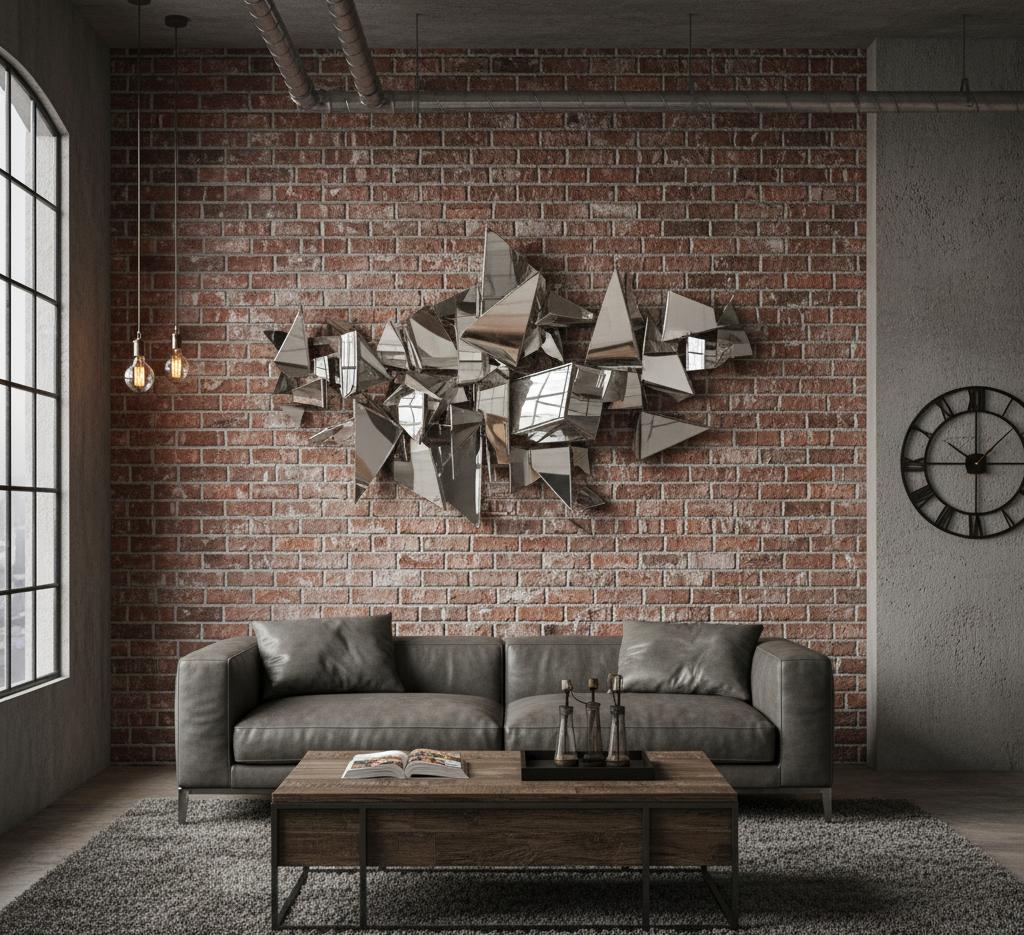
The inclusion of reflective metal wall sculptures introduces dynamic visual interest. This is especially effective in industrial decor, where abstract prints enhanced with metallic details complement the raw, mechanical features characteristic of the style.
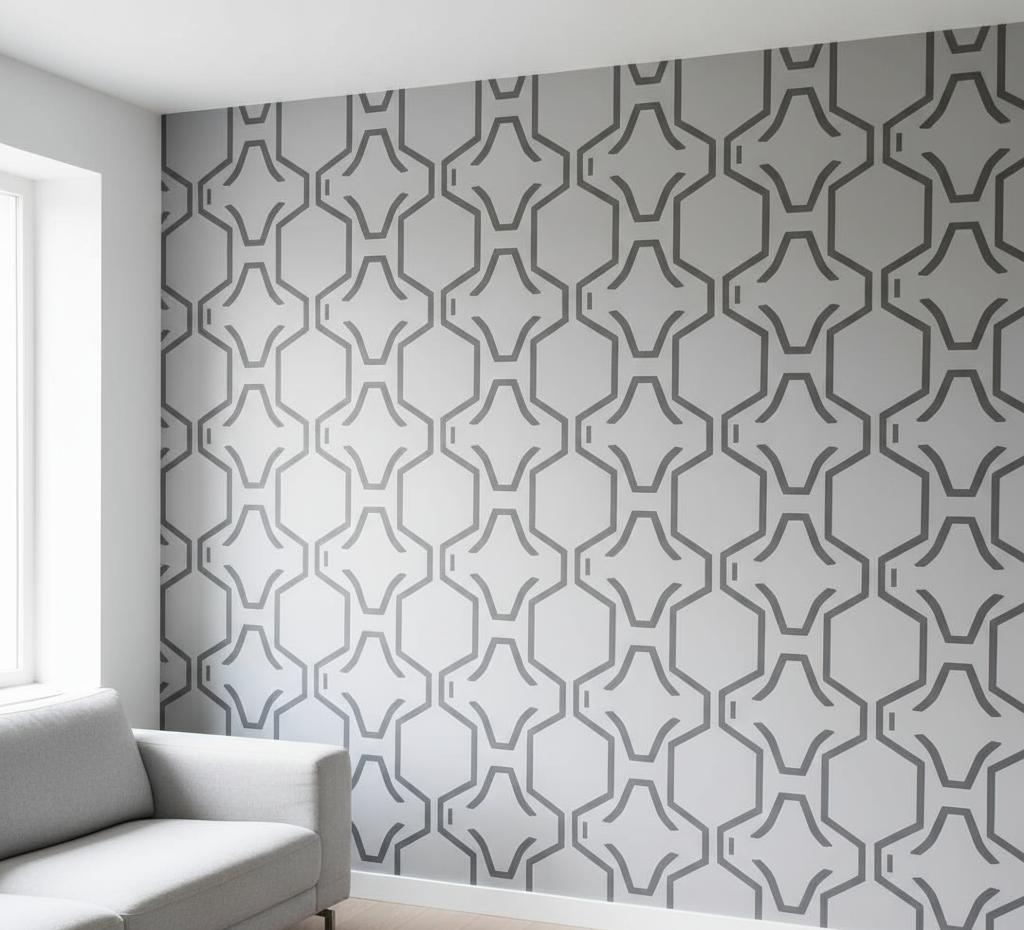
Large wall stencils provide a cost-effective method to replicate the intricate look of expensive wallpaper or millwork panels. For custom, large-scale graphic designs, techniques involving overhead projectors can be used to blueprint the pattern onto the wall before painting. You can test color combinations first with an AI house painter visualizer.
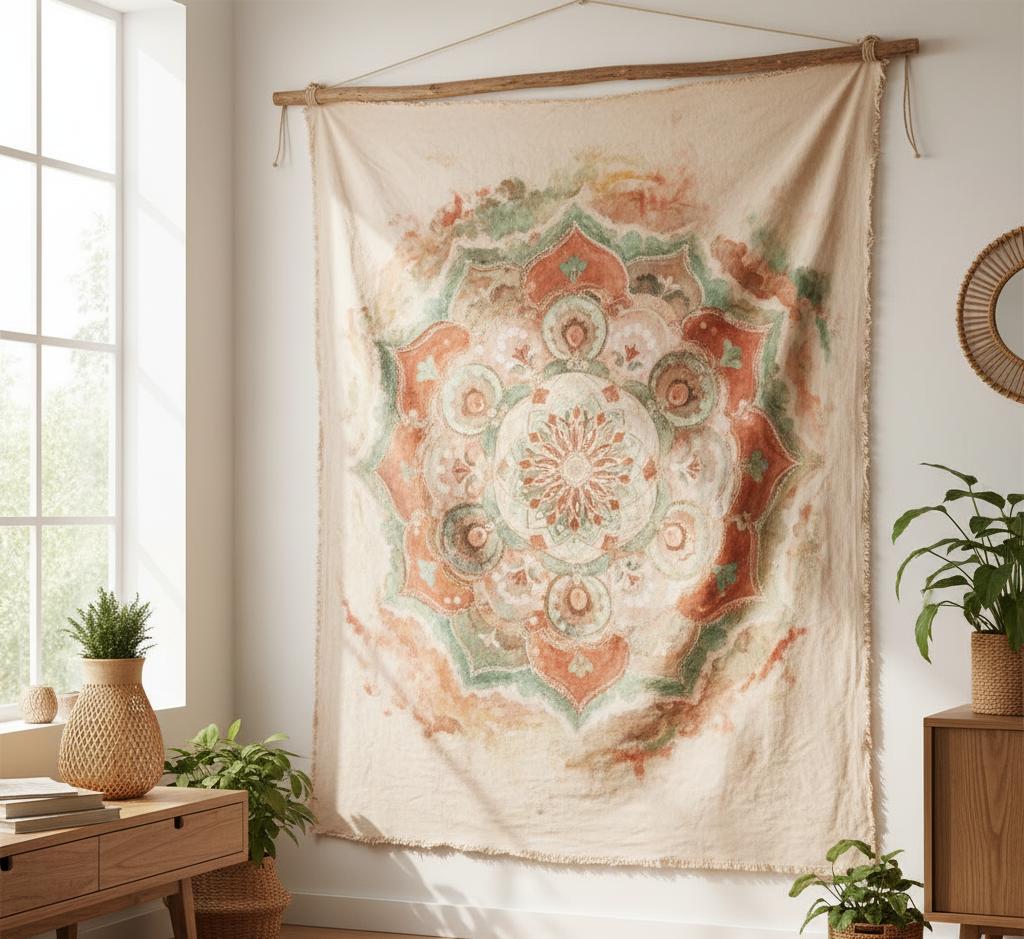
Old curtains, scarves, or bedsheets can be reused as tapestries. By painting abstract designs or mandalas onto the fabric, a unique and custom wall hanging can be created, embodying the current trend for individualized, comforting art.
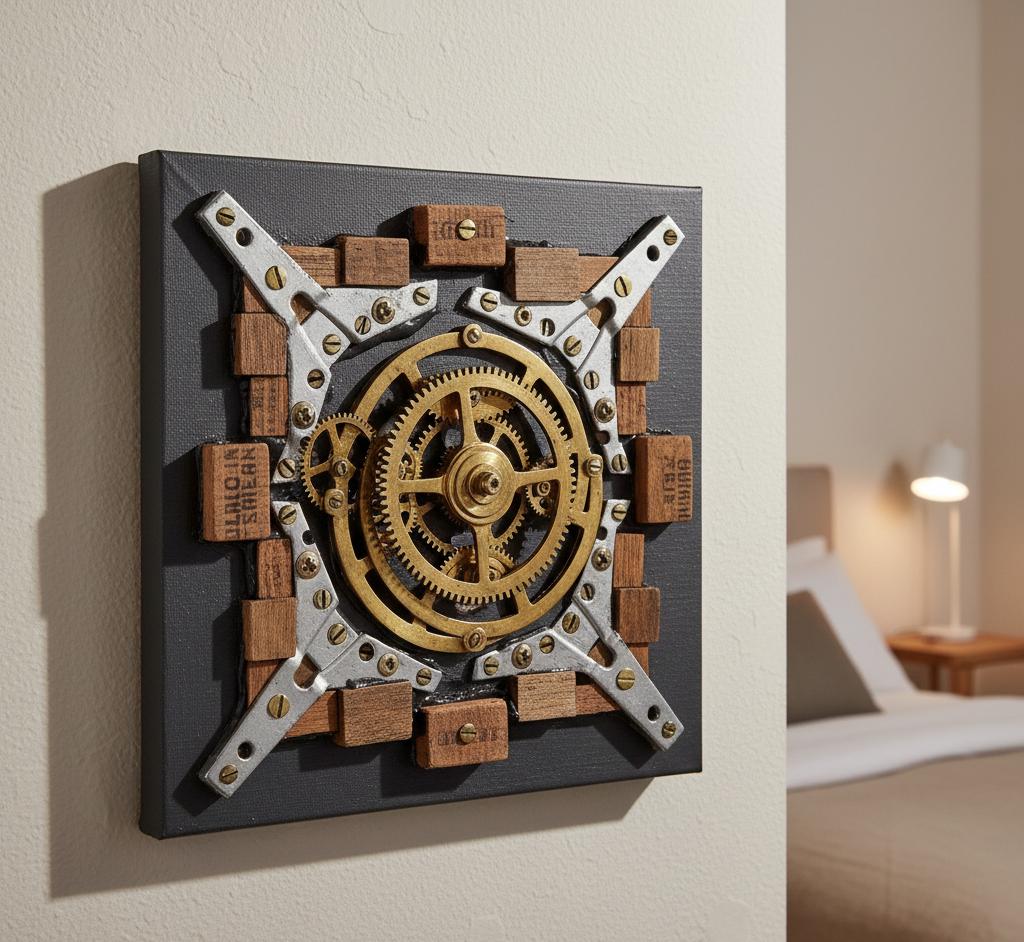
This approach transforms discarded items into textural, personal wall hangings. Designers can affix found objects-such as decorative metal sheeting or recycled wood-onto a base to create a unique 3D assemblage piece.
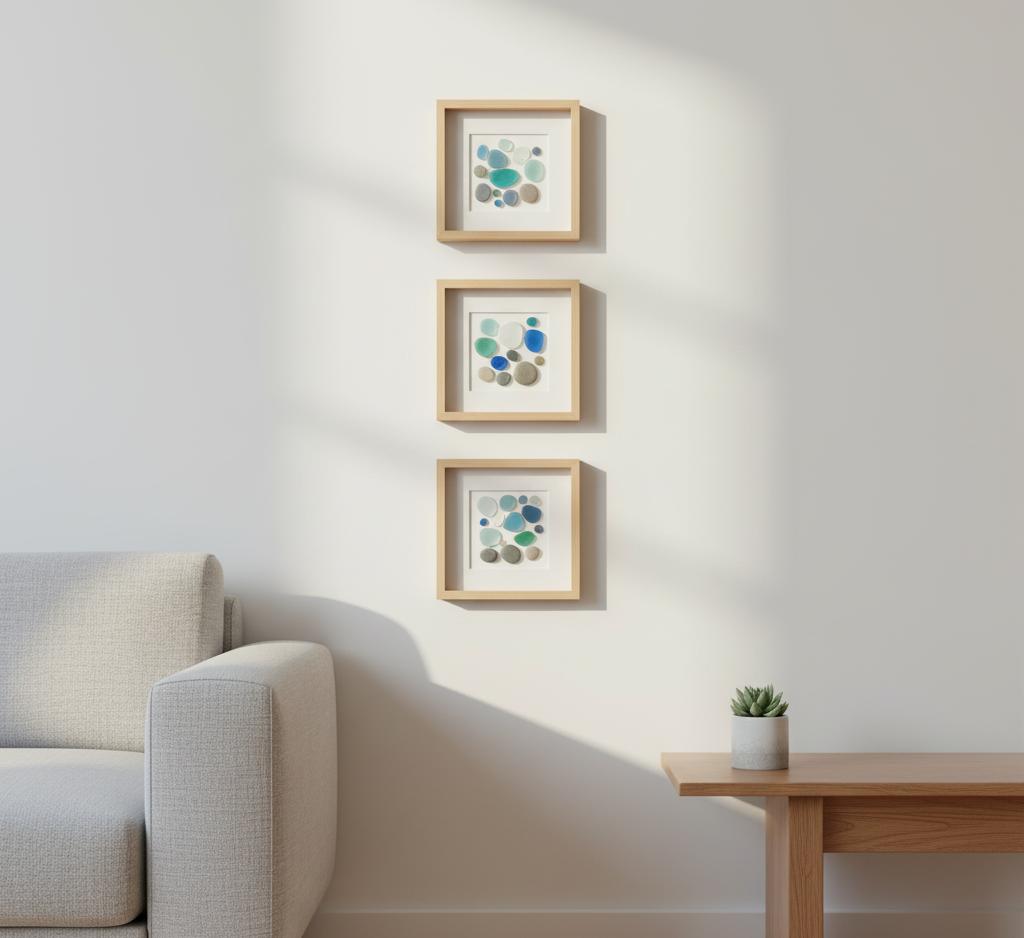
Collected natural elements like shells, rocks, or sea glass can be attached to wooden panels to create custom, nature-inspired framed art. This connects the interior to the external environment, enhancing well-being within the living space.
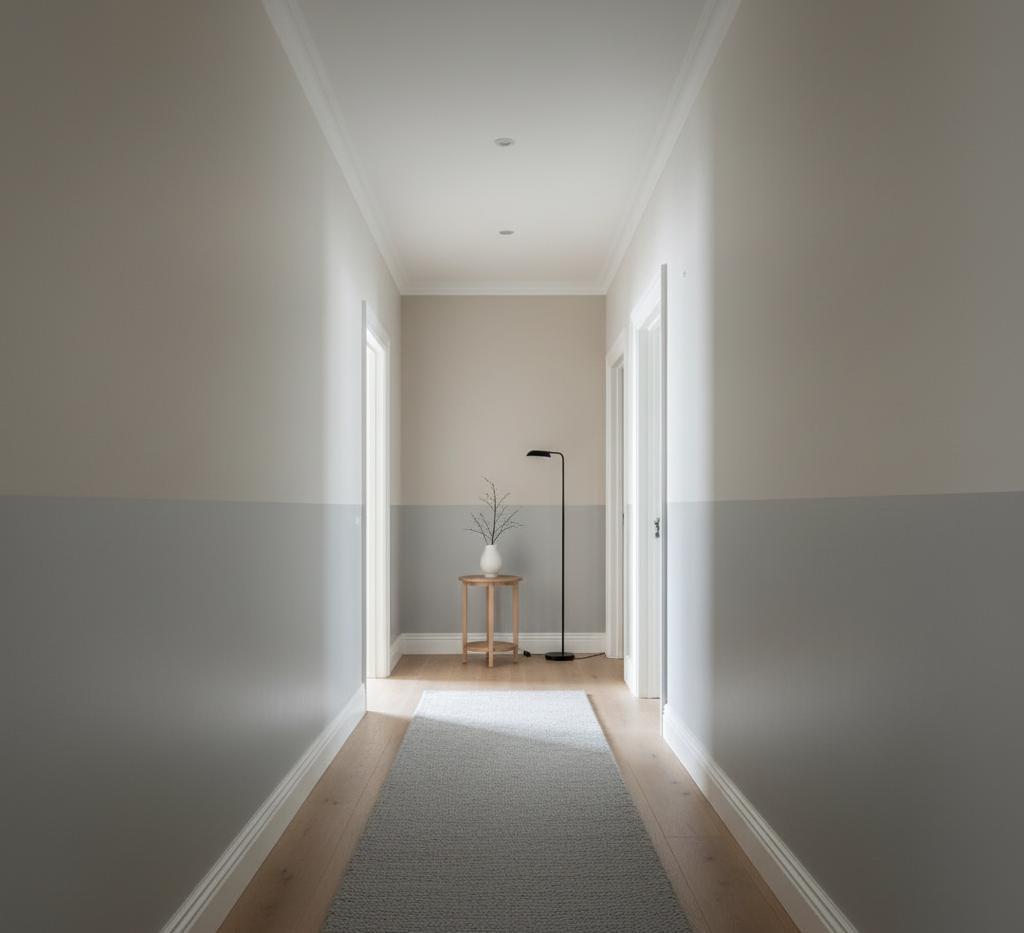
In narrow corridors, a monochromatic color palette works exceptionally well. By selecting a combination of light and neutral colors, the space avoids visual fragmentation and creates an essential sense of airiness and openness.
Sophisticated design focuses on how a strong focal point is created. A perfect feature wall creates a solid foundation for your furniture positioning.
Incorrect hanging height is an inherent error that cuts art off from the furniture and the people using the space.
Seated Eye Level: In the living room, the middle of the artwork needs to be set lower (48-56 inches from the floor).
Breathing Room: Keep a 6-12 inch gap between the bottom of the frame and the top of any sofa or console.
Gallery Spacing: To avoid a crowded look, the distance between pieces should remain consistently close to 3 inches.
| Wall Feature | Standard Height/Position | Design Rationale |
| Art Centerline (Seated View) | 48-56 inches from the floor | Keeps art visible and comfortable to view when the room's use is predominantly seated (Living/Dining Rooms) |
| Art Above Furniture | 6-12 inches above the top edge of the item (sofa, console) | Provides necessary "breathing room" and integrates the art visually with the furniture piece |
| Gallery Wall Spacing | Approximately 3 inches between frames | Prevents crowding and maintains visual cohesion across eclectic collections |
Architectural wall treatments are a sophisticated approach to adding texture, depth, and character. Modern installations, such as geometric or louvered systems, are regarded as "structural art" that is integrated into the building itself.
Custom building elements are the ultimate in personalized use. They take overlooked walls and awkward niches and turn them into hyper-functional spaces. Custom wall units are often used to flank important elements, such as a stacked stone fireplace. This is a fundamental aspect of professional AI-driven architectural generation.
A specialized strategy is needed for hallways, as these are small transitional spaces. The work is directed at maximizing light and space perception.
Color: A monochromatic palette (light and neutral colors) ensures light does not break up. Using a dado (painting the walls halfway up) visually transports the eye down the wall and extends the entire space.
Mirrors: To catch and mirror incoming light, place a big mirror directly opposite a window or key light fixture. This creates the illusion that your square footage has increased.
In a narrow hall, the selection of artwork must prioritize verticality and simplicity. Vertical artwork creates a strong visual pull upward, which is critical for generating the illusion of a taller, more expansive space. The sophisticated approach is to avoid multiple small pictures and opt for one oversized piece of vertical art to create a singular, strong statement.
The selection and placement of color are fundamental to controlling light distribution and establishing the emotional tone of a room.
Foundational Palette: The walls themselves form the largest canvas. Lighter shades-such as whites, creams, or pastels-are essential as they reflect significantly more natural light, making spaces appear brighter and visually more expansive.
The 60-30-10 Rule: To achieve a cohesive and harmonious palette that ties the entire room together, the 60-30-10 rule is employed:
60% Dominant Color: Applied to the largest surfaces, such as the walls and major furniture (sofa).
30% Secondary Color: Applied to secondary elements, such as drapes, rugs, or architectural features.
10% Accent Color: This boldest color is derived directly from the anchor artwork and is applied to smaller decorative elements like throws, cushions, and specific art details.
The best wall design for a living room is one that establishes a clear focal point and reflects your personal style. This can be a single, large statement piece of art, a meticulously curated gallery wall, or an architectural feature wall using 3D paneling or wainscoting.
The wall chosen for a living room highlight wall should be the wall that draws the eye upon entering the room. This is typically the wall behind the sofa, the fireplace, or the main entertainment unit. The strategy is to establish a focal point that grounds the furniture arrangement.
Simple living room wall decor ideas that are high-impact include hanging an oversized mirror (two-thirds the width of the furniture), creating a flexible display with picture ledges, arranging a cluster of woven baskets for texture, or using a large wall stencil to mimic wallpaper.
For an interior wall design for a hall, focus on spatial compensation. Use a monochromatic paint scheme to maximize light reflection, strategically place large mirrors opposite light sources, and prioritize tall, vertical artwork to draw the eye upward and counteract the feeling of compression.
The successful interior wall design for a living room requires a blend of aesthetic innovation and disciplined spatial strategy.
Whether creating a focal point with a single statement piece or installing permanent 3D architectural panels, adherence to the technical rules of placement-such as hanging art at a seated eye level (48-56 inches) and maintaining 6-12 inches of "breathing room" above furniture-is paramount for seamless integration. In transitional areas like hallways, the strategy shifts to compensation, leveraging monochromatic color palettes and oversized mirrors to maximize the perception of depth and brightness.