We use essential cookies to make our site work. With your consent, we may also use non-essential cookies to improve user experience, personalize content, and analyze website traffic. For these reasons, we may share your site usage data with our social media and analytics partners. By clicking “Accept,“ you agree to our website's cookie use as described in our Cookie Policy. You can change your cookie settings at any time on your browser preferences.
  • About
  • Prices
  • Blog
  • Contacts
  • Affiliate program
AiEi

Products

  • For Interior Designers
  • For E-commerce
  • For Real Estate

Tools

  • AI architecture generator
  • AI concept generator
  • AI exterior design
  • AI house generator
  • AI house painter
  • AI landscape design
  • AI rendering
  • AI room design
  • Home exterior design tool
  • AI Virtual Staging

Use Cases

  • AI Kitchen Design
  • AI Living Room Design
  • AI Bedroom Design
  • AI Bathroom Design
  • AI Closet Design
  • AI Office Design
  • AI Pool Design
  • AI Laundry Room Design
  • AI Restaurant Design
  • AI Classroom Design
  • AI Basement Design
  • Terms of Service
  • Privacy Policy
  • Trust
Logo
Paintit.ai - Free AI Interior Design Tool

© 2026

Stand with Ukraine
PAINTITAI LTD, 52 Leytonstone road, London, E15 1SQ, UK
Paintit.ai - ai home design free
  • Pricing
  • About
  • Blog
  • Contacts
/Blogs/Paint Room AI Guide
AI interior design
18 may 2026

5 min. reading

How to Paint a Room: Step-by-Step Guide + How to Test Colors Before You Start 

avatar-blog

Yulii Cherevko

CEO paintit.ai

Share
  • ChatGPT
  • Perplexity
  • Claude
  • Grok
  • Google AI
How to Paint a Room: Step-by-Step Guide + How to Test Colors Before You Start

Page [break] Contents: 

  • 1. Before You Touch a Brush: Test Colors the Modern Way
  • 2. Step 1: Choosing Your Palette and Gathering Supplies
  • 3. Step 2: Preparing Your Room for a Smooth Finish
  • 4. Step 3: The Painting Process, from Ceiling to Floor
  • 5. Step 4: Finishing Touches
  • 6. Frequently Asked Questions

Painting is one of the most personal and instant ways to transform how a space feels. It’s no surprise that 91% of homeowners plan to use paint to decorate their walls, according to a survey by Houzz. Taking on a painting project yourself also saves money. The real challenge isn't just the physical labor; it’s committing to a color based on a tiny swatch and hoping it truly works on all four walls.

Honestly, the biggest problem in any painting project happens before you even open a can: picking the wrong color. At Paintit.ai, we see this frustration all the time. The answer isn't just buying more physical sample pots; it’s about better visualization. This guide will show you how to paint a room, starting with the crucial first step many people skip: seeing the finished result before you even begin.
section1

Before You Touch a Brush: Test Colors the Modern Way

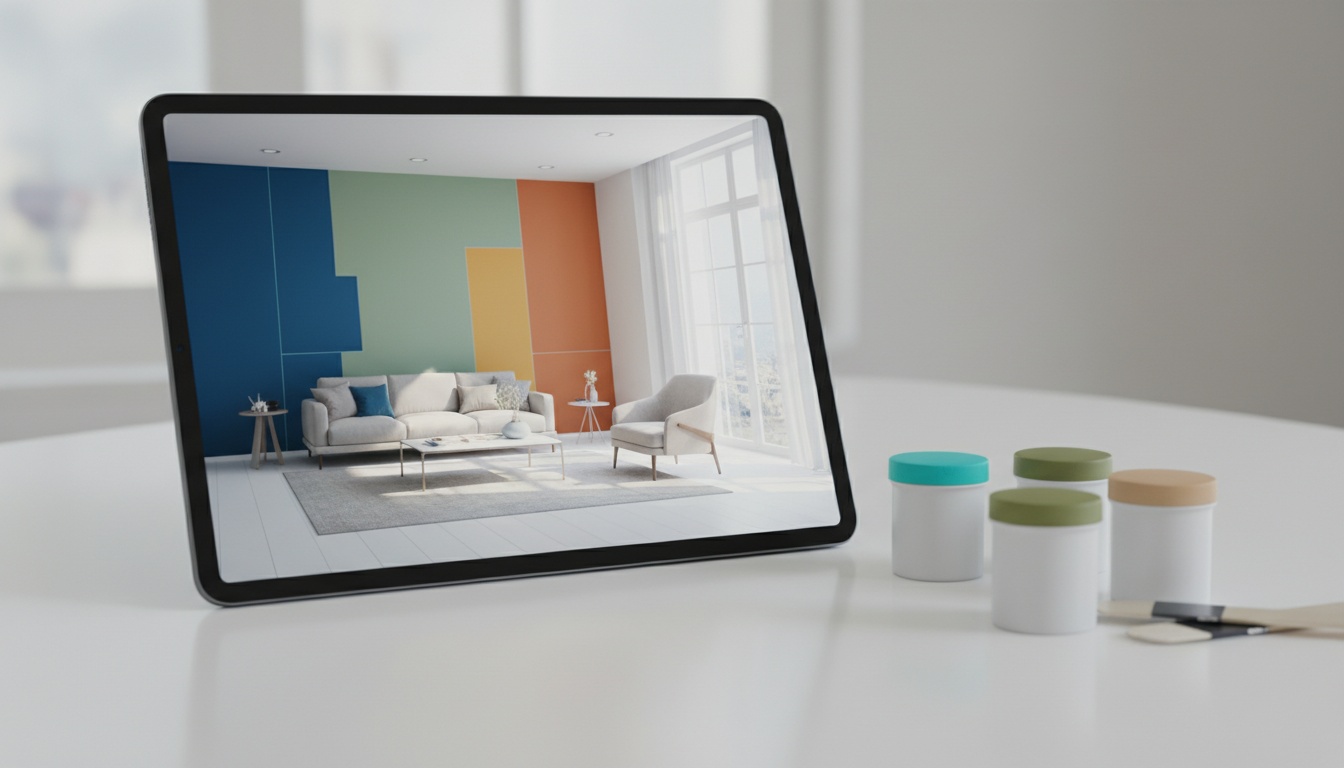
Traditional color testing is rarely accurate. You buy sample pots, paint small patches on your wall, and then struggle to imagine what an entire room will truly feel like. Those patches look different in morning light, under artificial lamps at night, and are always influenced by the old color surrounding them. It's an expensive, often inaccurate guessing game.

This is exactly why so many DIY projects fail. In fact, 80% of DIYers admit to making mistakes, with nearly half saying they’ve "completely butchered" a project, as reported by the National Association of REALTORS®. The most common and expensive mistake? A full repaint because of color regret.

AI visualization transforms how we approach this. Instead of guessing, you can upload a photo of your actual room and test hundreds of colors in seconds. Based on Paintit.ai user data, we’ve observed that the most effective design process is iterative. People don't just pick one color; they refine it. We see thousands of prompts with phrases like "make it a bit warmer" or "a slightly darker shade of blue." This intuitive flow of decision-making is something only a dynamic tool can support, allowing you to find the perfect shade for your specific lighting and furniture. By using our virtual house painter, you can cycle through options and gain confidence in your choice.
section2

Step 1: Choosing Your Palette and Gathering Supplies

Once you have a clear visual direction, you can move on to the physical materials with confidence.

How to Get a Realistic Preview

The key to getting a truly useful digital preview is providing the right context. In our analysis of over 13,000 user sessions, we found that nearly 70% of homeowners use simple, short prompts like "paint the walls beige." While this works, adding a little more detail creates a much more accurate result. For instance, less than 10% of users specify lighting conditions (e.g., "warm afternoon light," "bright, indirect sunlight").

To get the best way to paint a room previewed accurately, try adding modifiers like:

  • Lighting: "Paint walls Benjamin Moore 'Swiss Coffee' in soft, morning light."
  • Keep Elements: "Repaint the walls in a deep green, but keep the wooden beams and white trim."
  • Mood: "A calm and airy living room with light gray walls."

This process turns a simple color test into a full design preview. It helps you anticipate how the final painting interior will truly feel. This is an essential part of painting walls for beginners who want a professional outcome.

Your Painting Toolkit

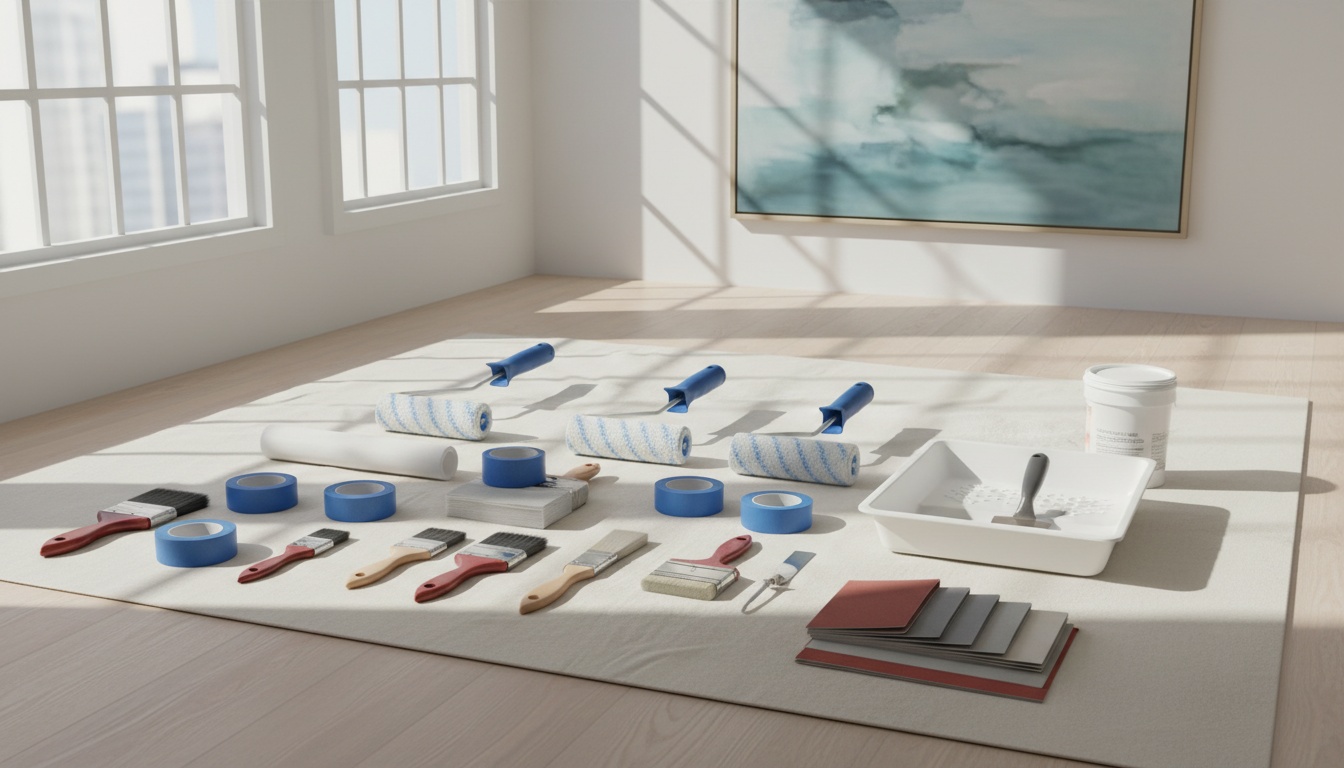
With your color confidently chosen, it’s time to shop. Here’s a basic checklist:

  • Paint: One gallon (3.78 liters) typically covers 350-400 square feet with one coat.
  • Primer: Essential for covering dark colors, new drywall, or stains.
  • Paint Roller & Frame: A 9-inch roller with a 3/8-inch nap is standard for interior walls.
  • Roller Extension Pole: To save your back and easily reach high spots.
  • Paint Tray & Liners: For easy cleanup.
  • Brushes: A 2 to 2.5-inch angled brush for cutting in edges and trim.
  • Painter’s Tape: For crisp lines around trim, windows, and ceilings.
  • Drop Cloths: Canvas or plastic to protect floors and furniture.
  • Spackle & Putty Knife: For filling holes or cracks.
  • Sandpaper: A fine-grit block (180-220 grit) for smoothing patches.
  • Cleaning Supplies: Rags, soap, and a bucket.

Step 2: Preparing Your Room for a Smooth Finish

Proper preparation is what separates an amateur job from a professional one. It’s tedious, yes, but absolutely essential for a smooth, lasting finish. This is a core lesson in how to paint a room for beginners.

Clear, Clean, and Cover

Move as much furniture out of the room as possible. For any large items you can't move, push them to the center and cover them securely with a drop cloth. Make sure to cover the entire floor too. Then, use a simple solution of mild soap and water to wipe down the walls. This removes any dust, grease, and grime. Let them dry completely.

Patch and Sand

Inspect your walls closely for any holes, cracks, or imperfections. Apply spackle with a putty knife, slightly overfilling each hole. Once dry, sand the patch until it’s perfectly smooth, flush with the wall. Wipe away any sanding dust with a damp cloth.

Tape with Precision

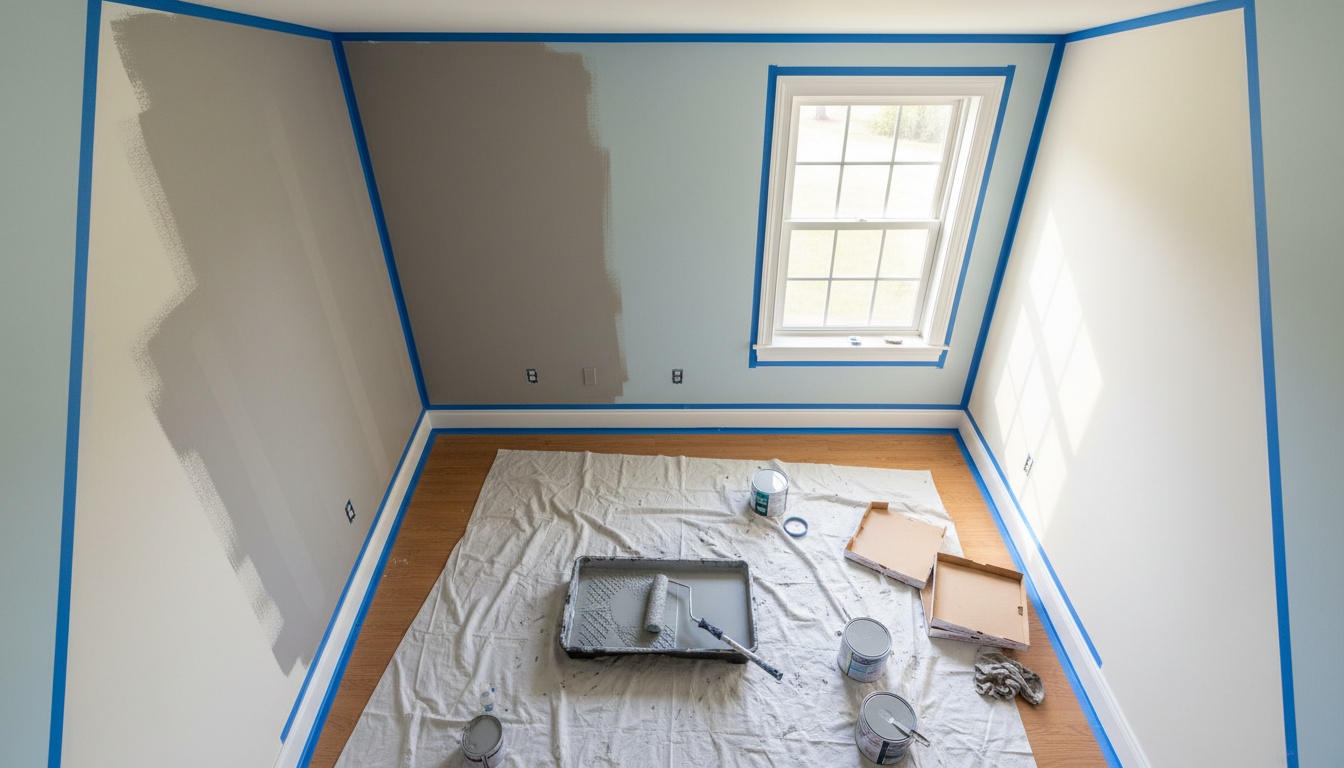
Apply painter’s tape along the top edge of baseboards, around window and door frames, and along the ceiling line (if you're not painting it). Press down firmly on the edge of the tape to create a tight seal. This stops paint from bleeding underneath. This one step is critical to learning how to paint walls correctly.
section3

Step 3: The Painting Process, from Ceiling to Floor

With the prep work done, you can finally paint a room. The key is a methodical approach and the right technique. Learning how to paint a room step by step saves you from fixing drips or mistakes later.

Always Start with Primer

If you’re making a drastic color change (like dark to light), painting over stains, or working on new drywall, it’s essential to prime. Primer seals the surface, ensures even paint absorption, and helps the true color of your paint show through beautifully. Apply one full coat just as you would with paint.

The Order of Operations: Ceiling, Walls, Trim

Pros follow a specific sequence to manage drips and ensure clean lines, every time:

  1. Ceiling First: If you’re painting the ceiling, do it first so any drips or splatters land on unpainted walls and trim.
  2. Walls Second: Once the ceiling is dry, you can tape it off (if needed) and paint the walls.
  3. Trim Last: Baseboards, windows, and door frames are done last for the sharpest possible finish.

How to Cut In and Roll for a Professional Finish

“Cutting in” means painting the edges and corners with a brush, reaching spots a roller can't. This technique is essential for anyone wanting to know how to paint a room like a pro.

  1. Cut In: Use your angled brush to paint a 2-3 inch band along the ceiling line, corners, and around trim. Work in small sections, focusing on one wall at a time.
  2. Roll: While the cut-in paint is still wet, use your roller to fill in the main part of the wall. Roll in a "W" or "M" pattern to distribute paint evenly, then go back over the section with straight, parallel strokes from top to bottom. This seamless, flowing blending of brushed and rolled areas is known as maintaining a "wet edge."

Let the first coat dry completely according to the manufacturer's instructions (usually 2-4 hours) before applying a second coat for a rich, even color. For many homeowners, a digital preview of the project with our AI room design tool can serve as a constant reference during this phase.

Step 4: Finishing Touches

Once your final coat is dry to the touch (but not fully cured), carefully remove the painter's tape. Pull it off at a 45-degree angle to avoid peeling any new paint. Allow the paint to cure for the recommended time (often several days) before moving furniture back against the walls. This is when you can finally step back and truly enjoy the space you've created — a space you saw and approved of with confidence long before you even began.

The ability to preview your painted house with AI doesn’t just save you from color regret; it gives you the confidence to start the project at all. You can apply the same logic to furniture and decor with our virtual staging tool or learn exactly how to virtually repaint your room as a smart first step.

Frequently Asked Questions

How much paint do I need for a room?

A general rule is one gallon per 400 square feet of wall space. To calculate, add the lengths of all walls, multiply by the room height, and then subtract the area of windows and doors. It's always wise to buy a little extra for touch-ups.

Do I really need to use primer?

It's highly recommended if you're painting over a dark color, a glossy finish, or bare drywall. Primer ensures better adhesion and a more uniform final color. If you are painting over a similar, flat-finish color, a paint-and-primer-in-one product may suffice.

How long should I wait between coats of paint?

Check the paint can for specific instructions, but a typical wait time is 2 to 4 hours for latex paint. Rushing the second coat can cause the first coat to peel off with the roller.

What's the best way to clean paint brushes and rollers?

For latex (water-based) paint, use soap and warm water. For oil-based paint, you'll need mineral spirits or turpentine. A painter's comb can help remove excess paint from brush bristles. Clean your tools thoroughly if you want them to last for the next project.


Trending 

AI interior design
5 min read

Awkward Living Room Layout Ideas: Solutions for Every Tricky Space

AI interior design
5 min read

Best AI Paint Visualizers for Interior Walls in 2026

AI interior design
5 min read

How to Set Up a Home Office: Layout, Design and Productivity Tips for 2026

AI interior design
5 min read

How to Paint a Room: Step-by-Step Guide + How to Test Colors Before You Start

kitchen design
5 min read

What Color Cabinets Go with Brown Floors? Best Combinations for Every Shade

Related articles 

Painted furniture ideas: choose colors before your DIY makeover
AI interior designIdeas
20 may 2026

5 min read

Painted furniture ideas: choose colors before your DIY makeover

Discover creative painted furniture ideas, learn color selection logic, and avoid common mistakes for your DIY makeover. Visualize colors instantly with Paintit.ai.

avatar-blog

Yulii Cherevko

CEO paintit.ai

Awkward Living Room Layout Ideas: Solutions for Every Tricky Space
AI interior designIdeas
20 may 2026

5 min read

Awkward Living Room Layout Ideas: Solutions for Every Tricky Space

Solve your awkward living room layout challenges! Find expert solutions for long, narrow, L-shaped, and small spaces. Create flow and define zones. Try Paintit.ai

avatar-blog

Yulii Cherevko

CEO paintit.ai

Best AI Paint Visualizers for Interior Walls in 2026
AI interior design
19 may 2026

5 min read

Best AI Paint Visualizers for Interior Walls in 2026

Find the top AI paint visualizers for interior walls. Our guide compares features, helps you choose the perfect tool for your home design. Try Paintit.ai

avatar-blog

Yulii Cherevko

CEO paintit.ai

How to Set Up a Home Office: Layout, Design and Productivity Tips for 2026
AI interior designIdeas
19 may 2026

5 min read

How to Set Up a Home Office: Layout, Design and Productivity Tips for 2026

Master setting up a home office for peak productivity in 2026. Explore design tips on layout, lighting, and colors to create your ideal workspace. Visualize your space today.

avatar-blog

Yulii Cherevko

CEO paintit.ai

How to Paint a Room: Step-by-Step Guide + How to Test Colors Before You Start
AI interior design
18 may 2026

5 min read

How to Paint a Room: Step-by-Step Guide + How to Test Colors Before You Start

Learn how to paint a room like a pro, from modern color testing with AI visualization to precise preparation and step-by-step application. Avoid costly mistakes. Try Paintit.ai!

avatar-blog

Yulii Cherevko

CEO paintit.ai

What Color Cabinets Go with Brown Floors? Best Combinations for Every Shade
kitchen designAI interior design
15 may 2026

5 min read

What Color Cabinets Go with Brown Floors? Best Combinations for Every Shade

Discover the best cabinet colors for your brown floors. Learn to identify undertones and create a harmonious kitchen design with whites, grays, blues, and greens. Visualize your space today.

avatar-blog

Yulii Cherevko

CEO paintit.ai