9 min. reading

Yulii Cherevko
CEO paintit.ai

A useful garage layout starts with the vehicle you actually park, not a photo of an empty garage. Measure the inside width and depth, park the car where it will normally sit, and open every door and the trunk. Then mark the space needed for walking, storage, and the garage-door tracks. Only the floor area left over is available for a workbench or gym.
These garage layout ideas cover one-, two-, and three-car spaces, with options for storage, a workshop, and mixed use. The examples are starting points; your measurements, door swing, utilities, and local requirements decide what fits.
Measure the clear interior width and depth, ceiling height, and the positions of doors, windows, outlets, water heaters, and columns. Include the garage door while it is open: tracks and the opener can rule out an overhead rack. Measure your own car with the mirrors, hatch, and doors in their normal positions. A clearance figure from someone else's garage cannot replace this check.
Use painter's tape or cardboard to outline proposed cabinets on the floor. Try parking and walking through the garage for a day. If you cannot reach the house door with groceries or open the driver's door without stepping around equipment, revise the layout before buying anything.
| Garage Type | First Layout Move | Best Storage Location | Check Before Buying |
|---|---|---|---|
| One car | Keep the parking lane clear and choose one working wall. | Shallow wall storage and a fold-down bench if space allows. | Car-door swing and whether shelves project into it. |
| Two cars | Park both vehicles first, then assign the back wall or one corner to a task. | Back-wall cabinets and vertical storage away from door swings. | Whether both cars can be entered when parked together. |
| Three cars or more | Give each bay a job rather than spreading storage everywhere. | A dedicated work or storage bay, with shared circulation kept open. | Power, ventilation, door tracks, and any future vehicle changes. |
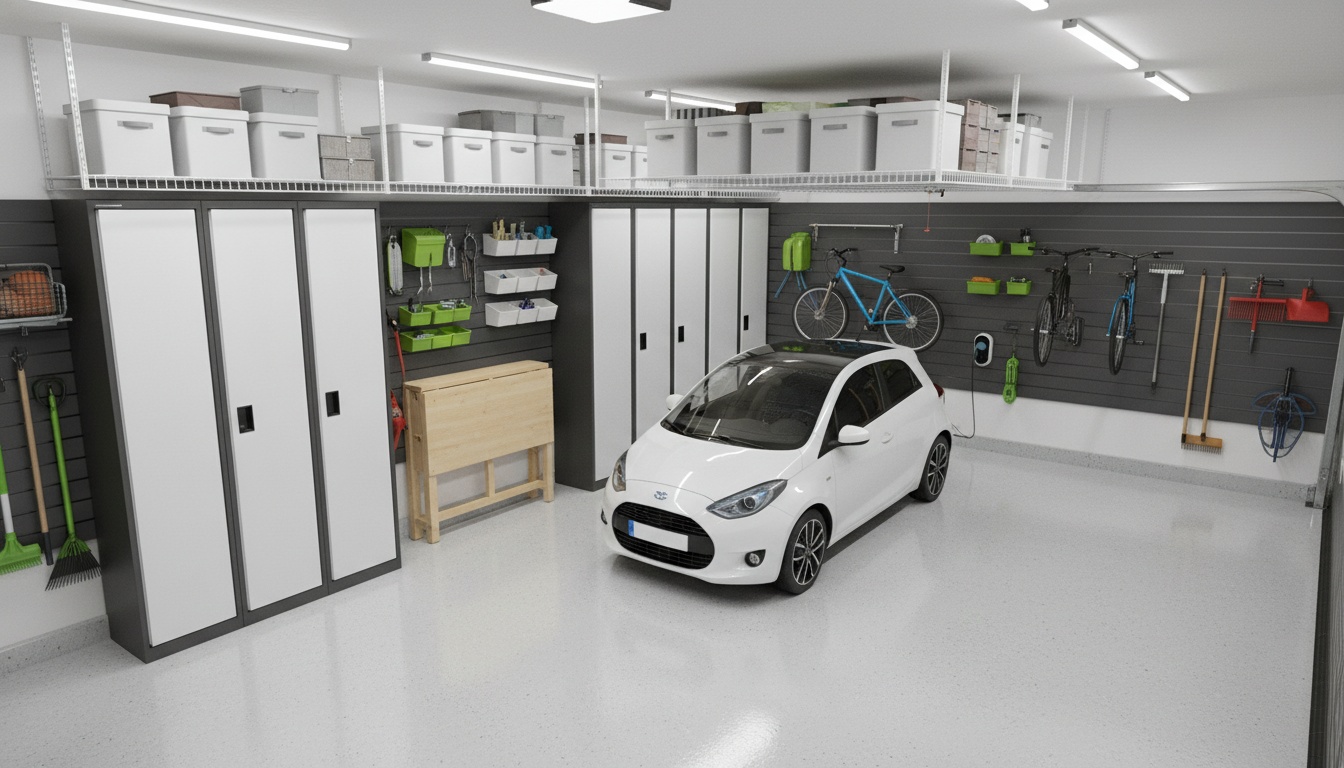
A single-car garage often has only one workable storage wall. Start with shallow shelves, wall rails, or pegboard for items used every week. A folding workbench can serve occasional projects without claiming a permanent footprint. Put bikes or long tools on the wall only if they will not hit a mirror or block the path to the house.
Overhead racks can hold lighter seasonal items, but check the manufacturer's load rating, the ceiling structure, and the garage-door travel before installation. Heavy items should remain low enough to lift safely. If the garage is too narrow to park and open the doors comfortably, a neatly organized storage room may be more honest than a compromised parking layout.
For a two-car garage, mark both vehicles at once. A rear wall may hold closed cabinets, a workbench, or sports equipment, but allow for trunks and hatchbacks to open. If only one vehicle is parked regularly, use the spare bay as a flexible zone rather than filling it wall to wall with permanent fixtures.
A narrow strip between parked cars is not a good place for deep shelves. When both car doors need to open toward the center, shift storage to the outer walls or back wall after testing the clearance with the actual vehicles.
One bay can become a workshop, gym, or equipment zone while the other two remain for parking. Keep the shared route to the house clear, and place noisy or dusty work away from the connecting door. If a bay will become a regularly occupied room rather than occasional workspace, check local permit, insulation, ventilation, and fire-separation rules before treating it as a conversion.
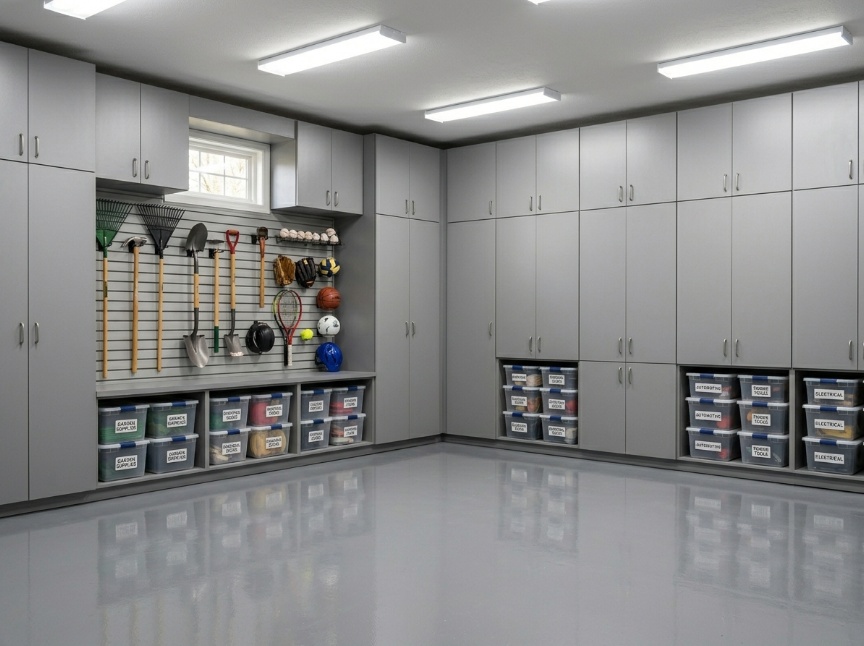
Sort belongings by how often you use them. Place daily items near the house door, tools near the work area, and seasonal bins farther back or higher up. Closed cabinets reduce visual clutter; open shelves make bulky equipment easier to find. Choose shelving by its stated load capacity and anchor it as the manufacturer requires.
Leave space at the floor for wet shoes, muddy tools, or a rolling bin rather than sealing every inch with cabinetry. If you are comparing surface finishes, the garage floor paint guide covers coating choices separately from layout.
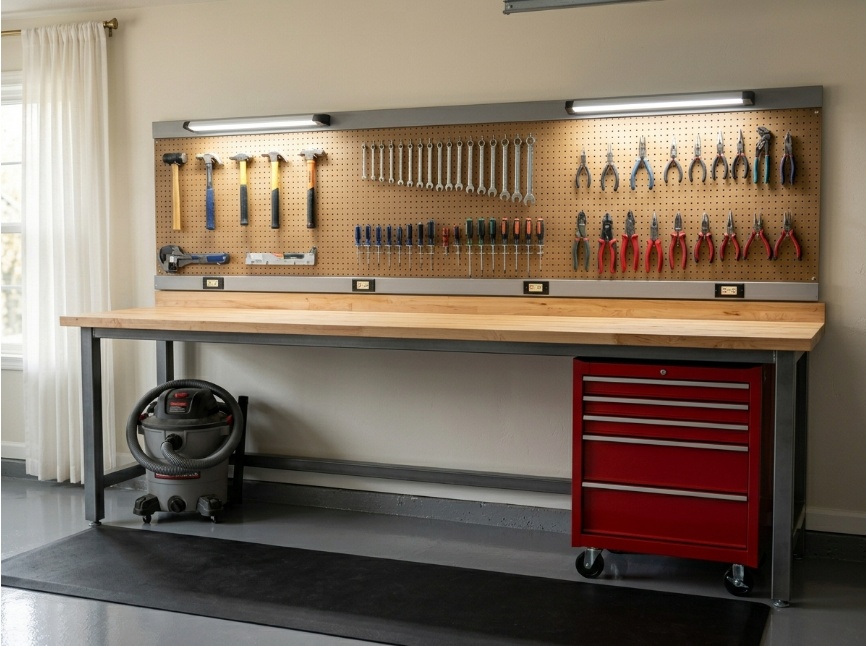
Place the workbench where you can reach power and light without running cords across a walkway. Keep frequently used hand tools at the bench and reserve a clear surface for the project itself. Dust-producing or fume-producing work needs suitable ventilation and equipment; a tidy rendering does not tell you whether the space is safe for it.
For occasional DIY, a folding bench or rolling tool chest may work better than a fixed run of cabinets. Do the parking test again with the bench open, not just folded away.
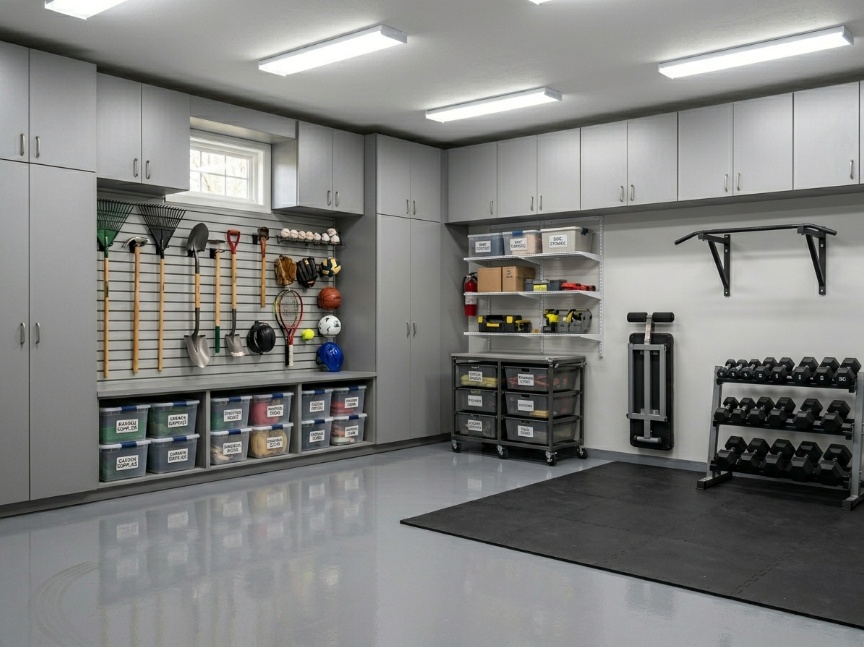
Keep exercise equipment out of the vehicle's path and allow enough room to use it, not merely store it. Rubber mats can define the workout area, while closed storage keeps small equipment from spreading into the parking lane. Check ventilation, temperature, and the floor manufacturer's instructions before installing a permanent surface.
A gym next to a parked car is not the same as a dedicated conditioned room. Avoid presenting this layout as a bedroom or living space without addressing code, air quality, and separation from the garage.
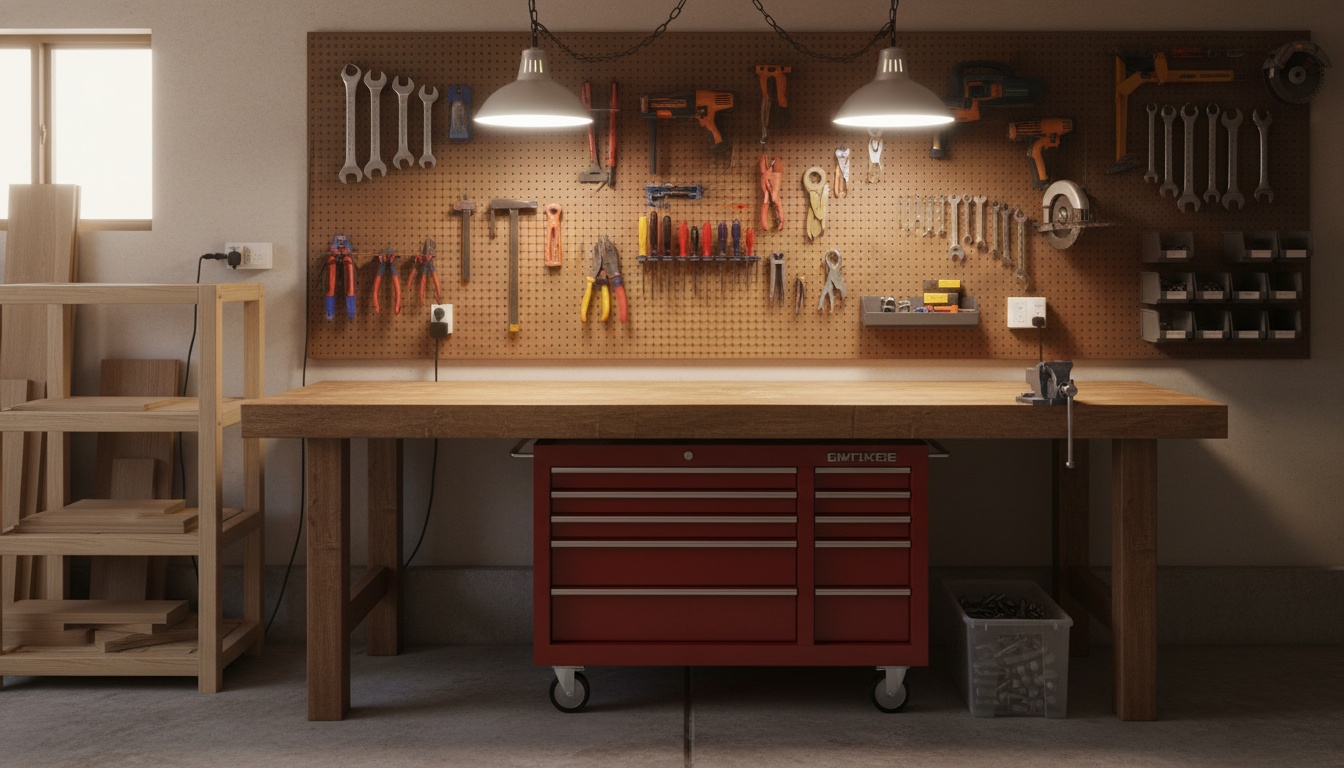
A lighter wall finish can make dark corners easier to see, but do not choose a coating only from a generated image. Match wall paint, floor coatings, and mats to the surface condition and the manufacturer's preparation instructions. A glossy floor may look bright in a picture but reveal dirt and create glare; the right finish depends on use.
Start lighting with even coverage over the parking and walking areas. Add task lighting at the workbench so your body does not cast a shadow across the tools. Keep fixtures clear of the raised garage door and stored objects. Where new outlets or circuits are needed, use a qualified electrician.
Do not block the electrical panel, the door into the house, or the garage door's moving parts. Keep combustibles away from heat-producing equipment. The U.S. Fire Administration's garage fire-safety guidance recommends storing oil, gasoline, paints, propane, and varnishes in a shed away from the home and warns against using extension cords to charge appliances in the garage.
Overhead racks and heavy shelving need suitable anchoring and load checks. A garage photo can help you decide where storage looks useful; it cannot reveal hidden framing, electrical wiring, or structural capacity.
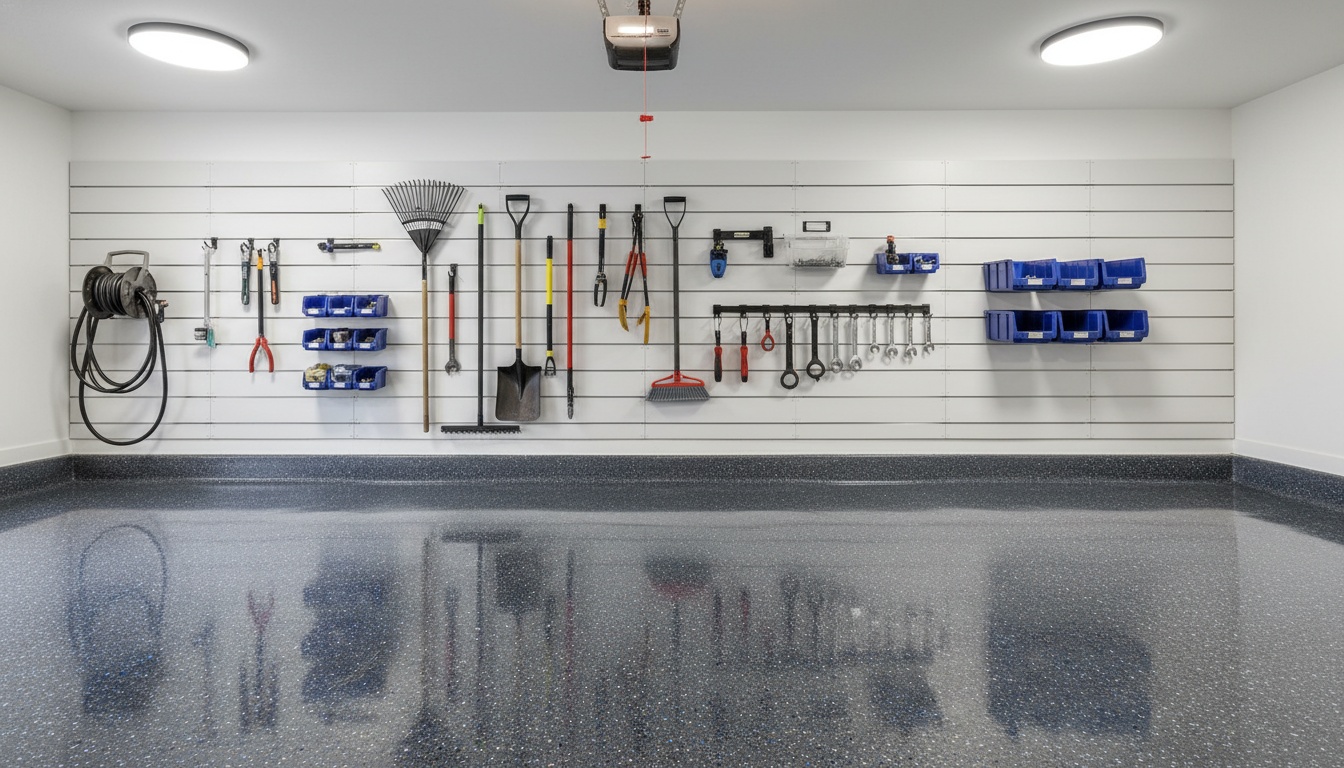
A photo-based concept is useful for comparing cabinet colors, wall treatments, and whether the garage feels too crowded. Upload a clear photo taken from the door, describe what must stay unchanged, and try one change at a time. The photo-based room design tool can show how different garage layout ideas might look; it is not a clearance certificate or an installation drawing.
For a new arrangement, you can also draft a floor-plan concept from a written brief. Compare the concept with your own measurements and any contractor drawings before ordering cabinets or moving utilities. If the image shifts the garage door, windows, or walls, discard that version rather than planning around it.
| Problem | Why It Happens | Better Check |
|---|---|---|
| Car doors hit storage. | The layout was planned with the car absent. | Park the actual vehicle and open every door before marking cabinet depth. |
| Tools spread across the floor. | The work zone has no nearby storage. | Put everyday tools within reach of the bench and assign a home to bulky items. |
| Overhead rack blocks the door. | Ceiling height was measured without the open door and tracks. | Check the full door travel and rack load before installation. |
| The garage looks good but feels cramped. | A visual mockup was treated as a scaled plan. | Use tape and cardboard to test the proposed footprint in person. |
Park the car, open its doors, and mark a clear path to the house. Use the wall that remains for shallow shelves or rails. If a folding bench fits, test it in the open position. Keep heavy items low and check ceiling structure before considering overhead racks.
Keep both parking positions usable. The back wall is often the simplest place for a workbench or cabinets, provided both vehicles' trunks can open. Test the middle gap with both car doors open; avoid deep storage there if it becomes a pinch point.
Yes, if the equipment has a separate usable area and does not intrude into the vehicle's path. Check ventilation, temperature, lighting, and the floor system. For a permanent conditioned conversion, consult local requirements rather than treating a parking garage as finished living space.
No. An AI preview can help compare styles and the apparent balance of a room, but it cannot verify wall structure, cabinet depth, car-door swing, or building-code compliance. Measure on site and use manufacturer dimensions for every planned item.
Keep the exit route, the electrical panel, garage-door tracks and opener, heat-producing equipment, and any required service access unobstructed. Place storage so a person can move through the garage even when the vehicle is parked and its doors are open.
A successful garage setup is easy to use on a wet Tuesday, not just in an empty-room photo. Decide whether parking, projects, or storage comes first, test the footprint with real objects, and only then choose cabinets, lighting, and finishes. The best garage layout ideas are the ones that still work when the car, tools, and people are all inside.