8 min. reading

Yulii Cherevko
CEO paintit.ai
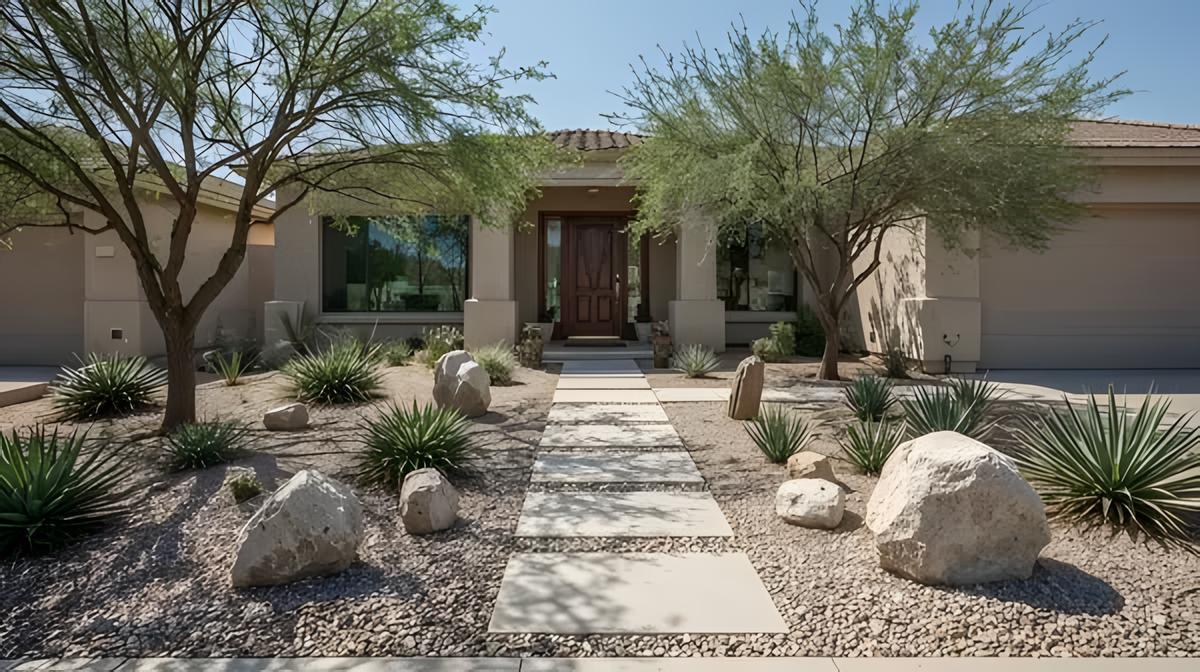
A good desert front yard is not a sheet of gravel with a cactus in the middle. It gives visitors a clear route to the door, places shade and planting where they matter, and leaves room for plants to grow without blocking windows or sidewalks. Whether your lot is in the low desert or a colder high-desert town, the layout should respond to the site before it responds to a style trend.
The nine ideas below use the same practical starting point: keep the entry legible, group plants with similar water needs, and give runoff somewhere safe to go. The photos show different looks, but the plant names and irrigation decisions still need to be checked against your local climate, soil, and water rules.
Stand at the curb and trace the route a guest would take to the front door. Mark the driveway, sidewalk, mailbox, downspouts, utility covers, irrigation valves, and the areas that receive hard afternoon sun. Also note where water currently collects after a storm. These observations determine whether a narrow path, a planted basin, or a simpler open layout will actually work.
Check plant size at maturity, not just at the nursery. A young agave can fit neatly beside a path and later crowd it with sharp leaves. Keep thorny plants away from doors, parking spaces, and public walkways. If the lot is in a wildfire-prone area, follow the local defensible-space guidance before placing plants or mulch near the house.
Soil and drainage deserve a site-specific decision. Desert-adapted plants often do poorly where compacted soil holds water around the roots; adding sand to a planting hole is not a universal fix. The University of Arizona Cooperative Extension's plant-selection guidance explains why soil, drainage, exposure, and microclimate need to be considered together.
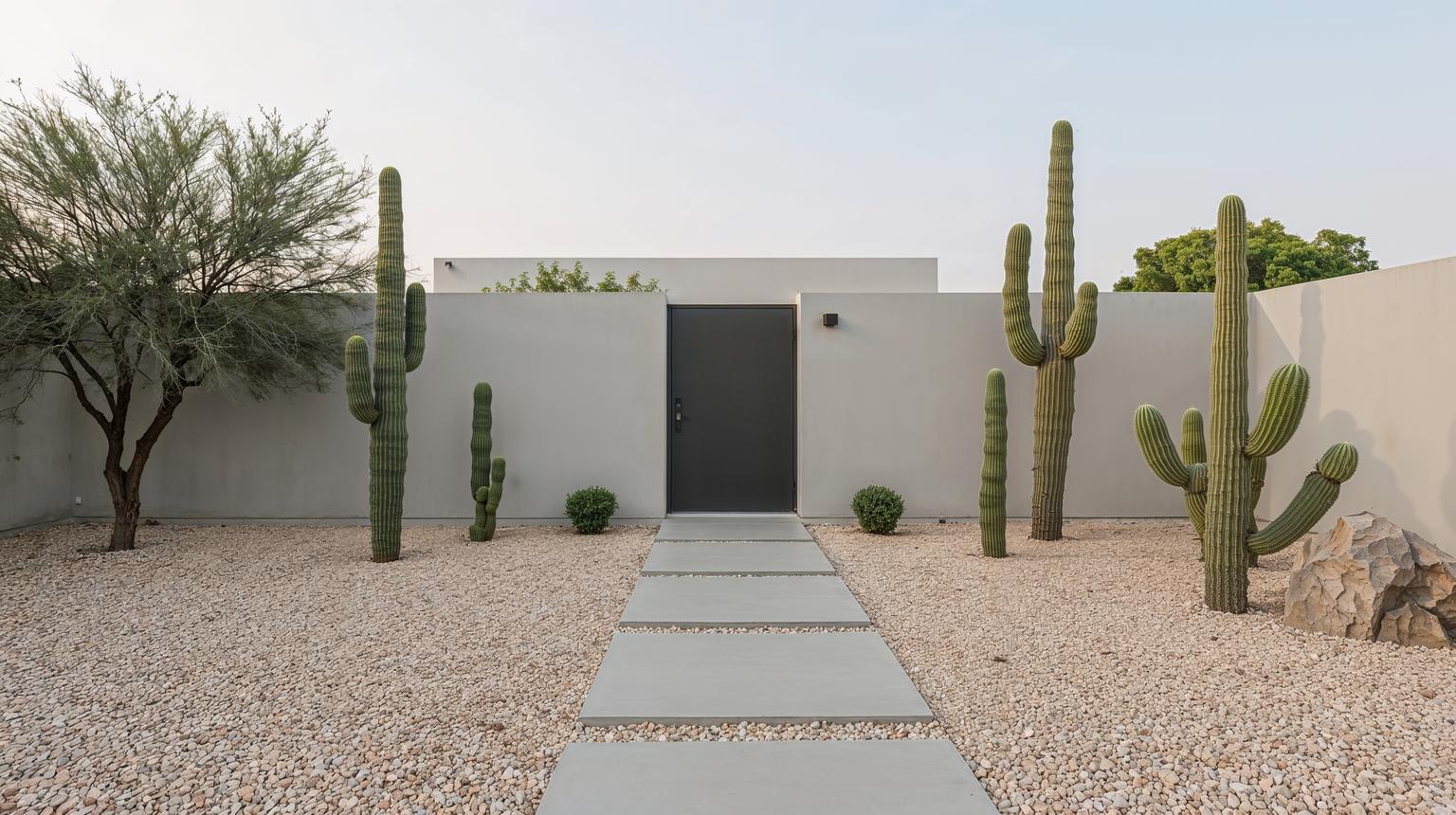
A straight run of pavers can make a simple desert yard look deliberate. Let the path lead directly to the entry, then arrange low plants on either side rather than scattering them evenly across the lot. Repeat one or two materials, such as pale gravel and concrete, so the plants remain the focal point.
This works especially well for a modern desert front yard with a plain facade. Leave enough space between pavers for stable footing, and specify a surface that will not become loose under a stroller, wheelchair, or delivery cart. A photogenic gap is not worth an awkward daily walk.
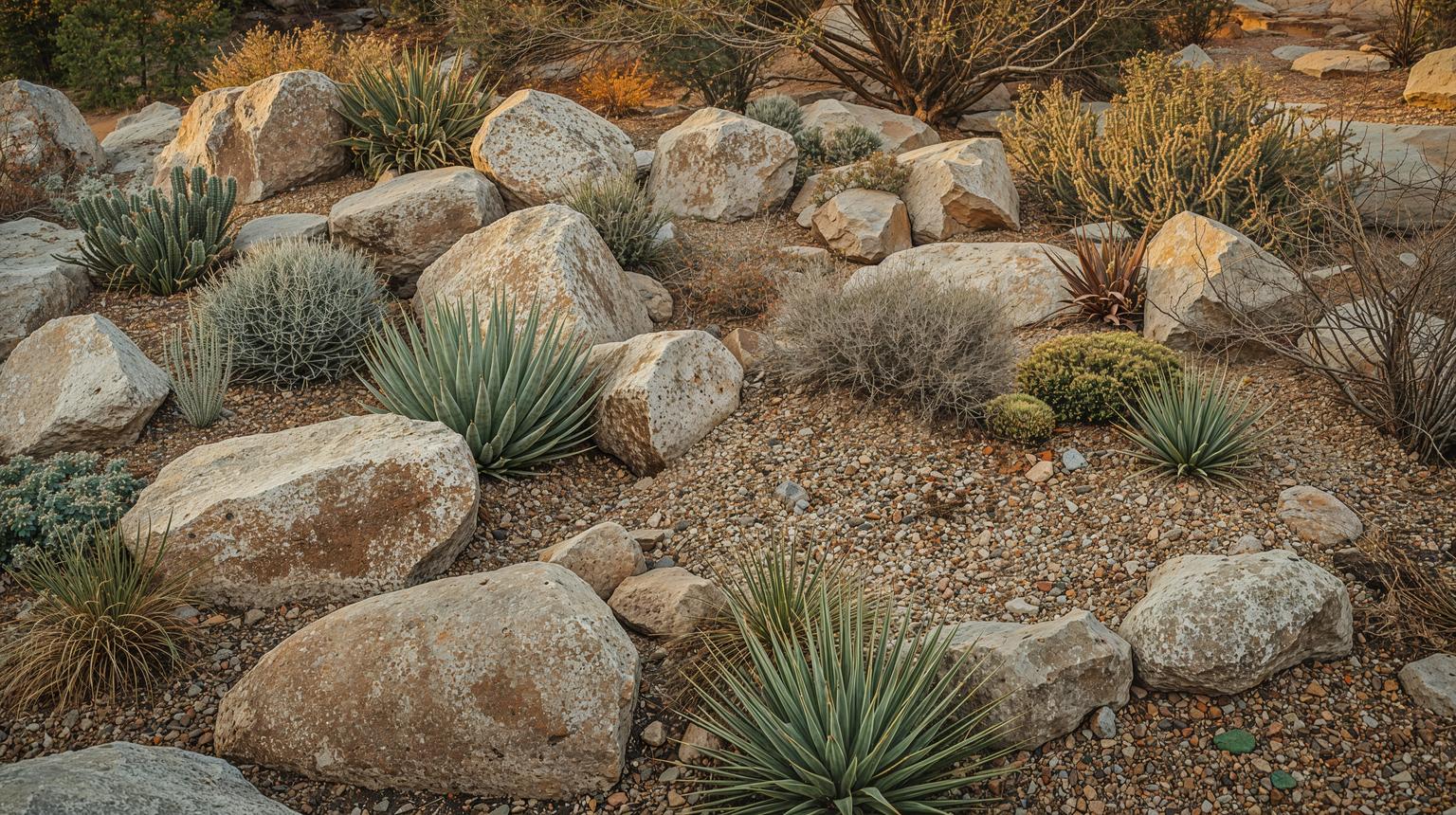
Use a few larger stones to create structure, then repeat smaller gravel in the planting beds. The contrast in scale gives a rock garden depth without filling every square foot with boulders. Position rocks before planting so they do not crush new root zones.
Choose cacti and succulents by local hardiness and exposure. A plant sold as a houseplant or patio succulent may not survive a blazing summer wall or a freezing high-desert night. Keep rock mulch away from plant crowns and check how much heat a dark stone surface will reflect onto nearby leaves.
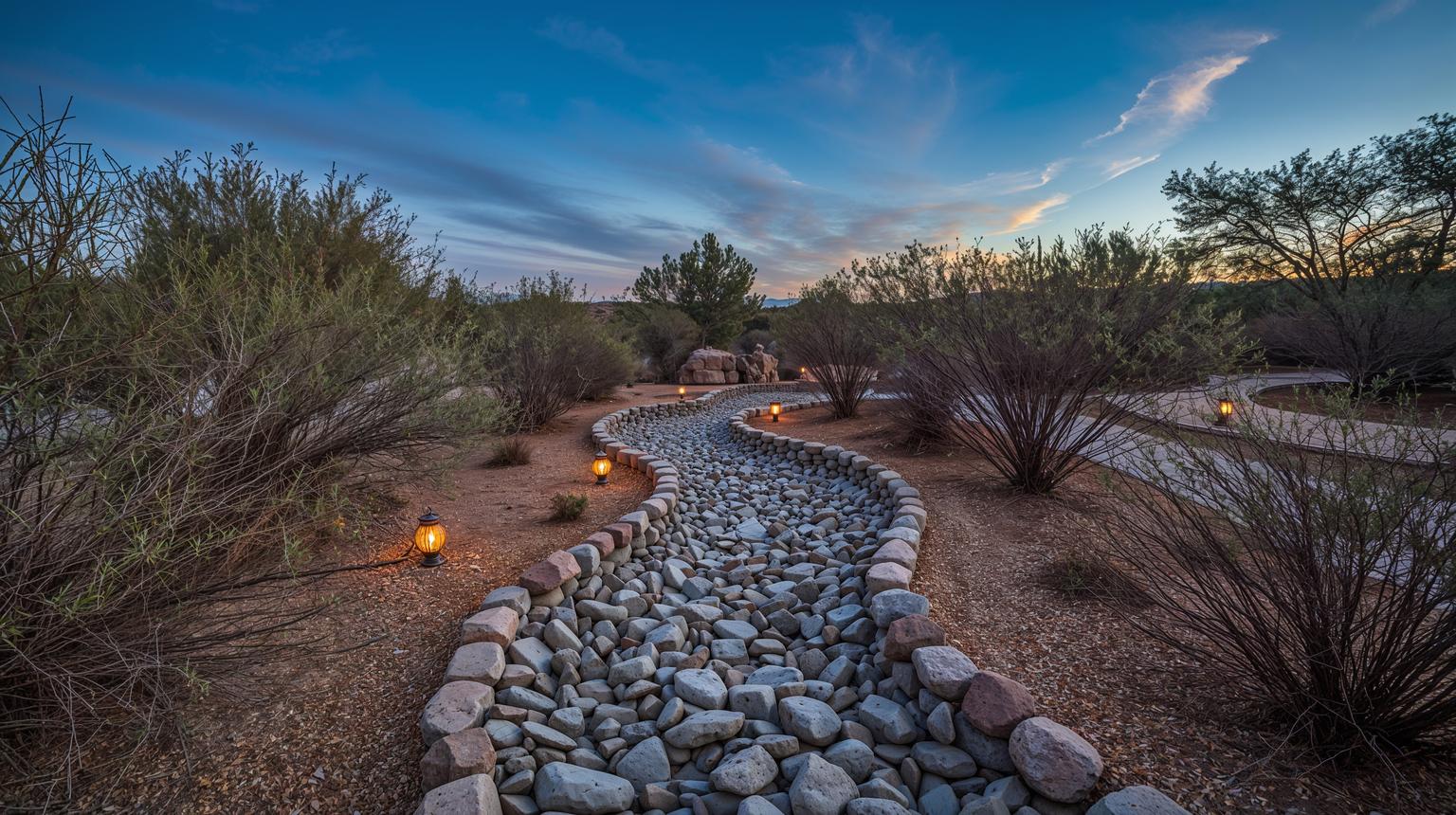
A dry creek can turn a visible drainage route into a landscape feature. Make it follow the direction water already takes, with stones sized and set for the expected flow. Plant along the edges so the channel still reads as a useful feature when it is dry.
Do not send roof runoff toward the foundation, across a neighbor's property, or onto a public walkway. A contractor or local stormwater office should review major grading changes. Decorative rock alone will not solve a drainage problem if the grade underneath still points at the house.
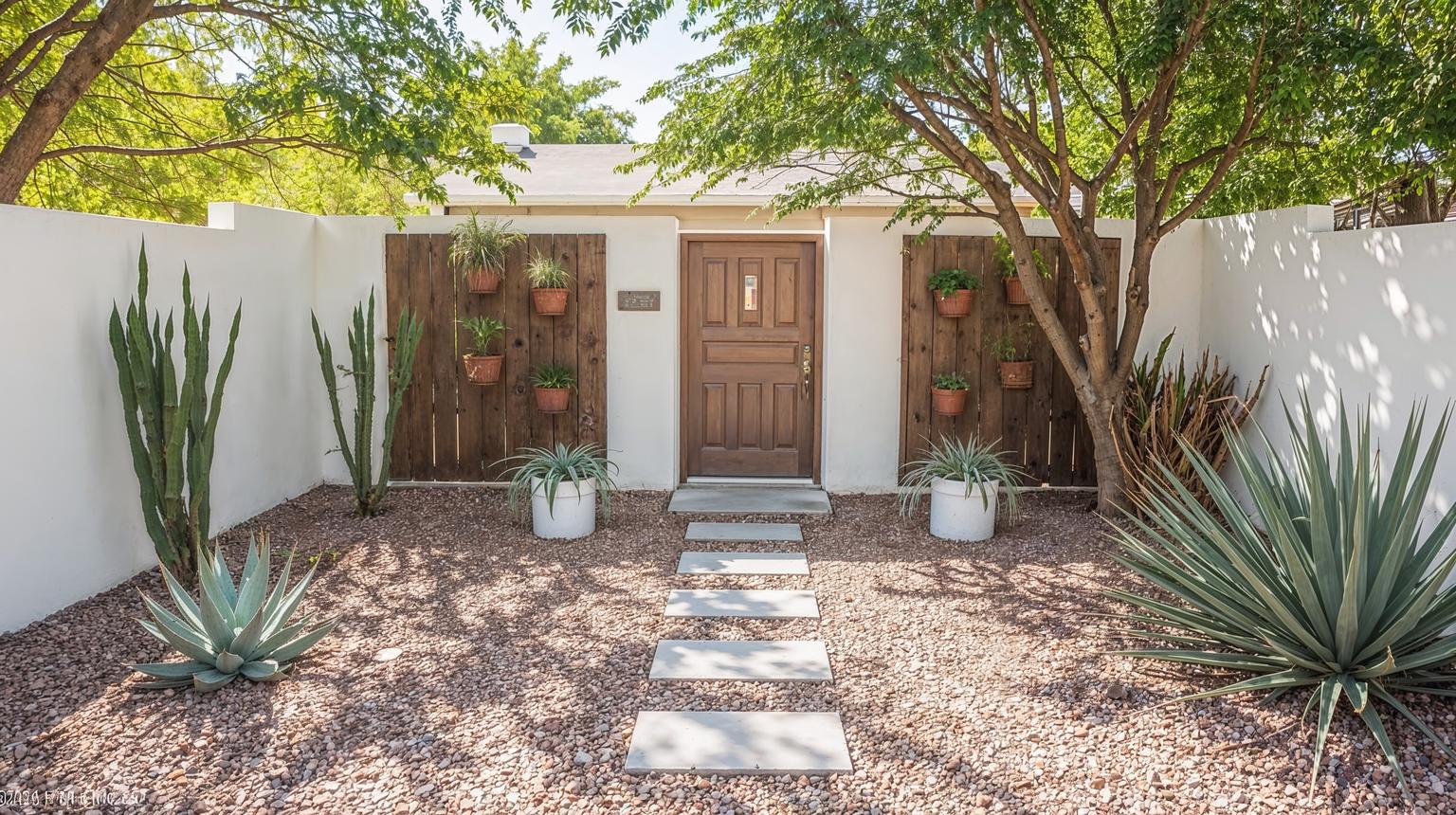
In a small front yard, keep the center or entry side open and group plants where they frame the path. One desert spoon, a modest flowering shrub, or a well-scaled container can anchor the design. Avoid rows of tiny plants that will either look sparse for years or eventually collide.
A simple front yard desert landscape can also use the existing hardscape. If the walkway is sound and well placed, design around it. Replacing a perfectly usable path to achieve symmetry can consume the budget without improving the yard.
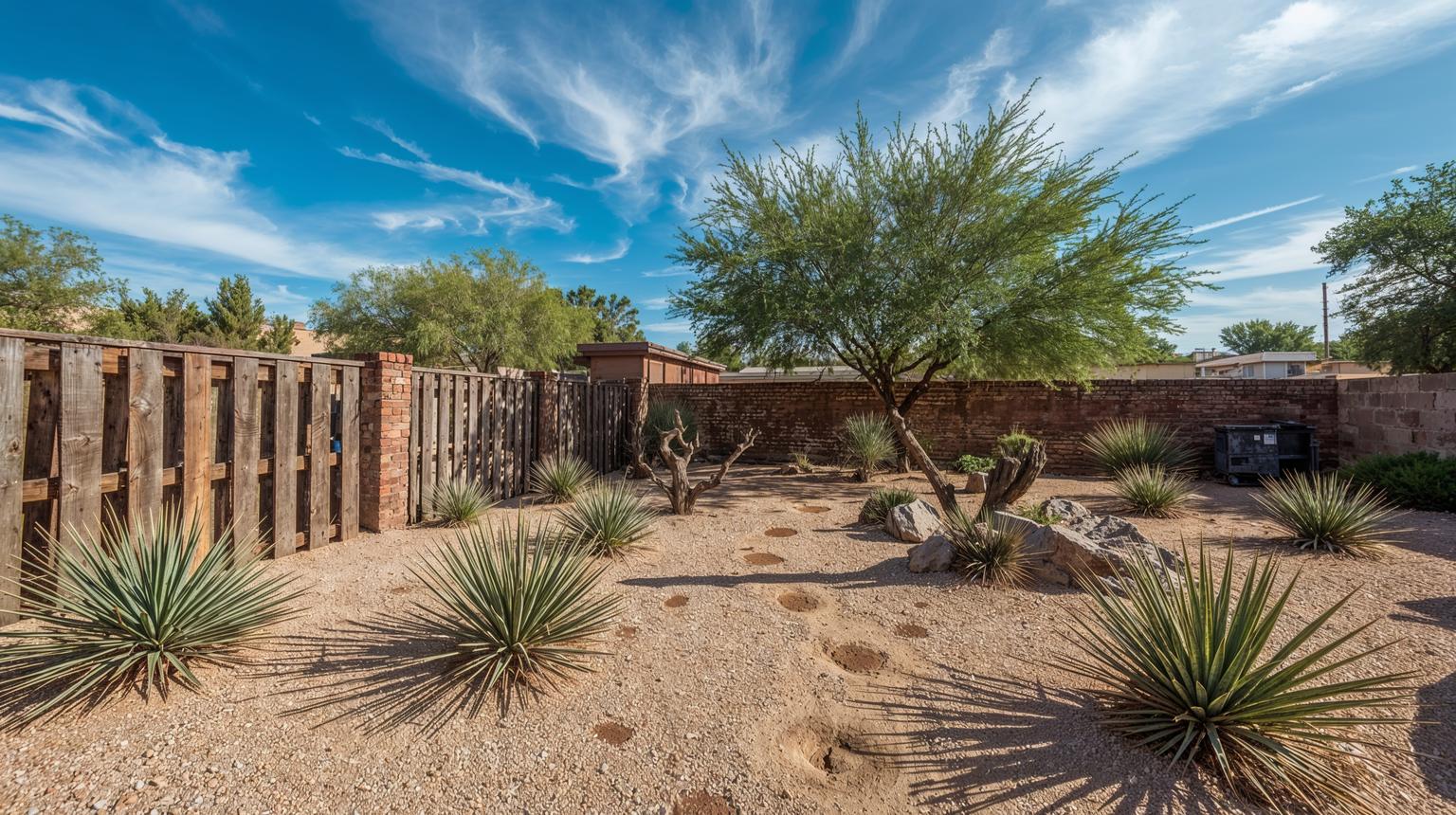
For front yard desert landscaping ideas on a budget, start where the curb view and entry path meet. Clear weeds, repair the path edge, install a small group of climate-suited plants, and mulch that defined bed. Finish this visible section before expanding across the lot.
Ask local suppliers for installed and pickup prices rather than relying on national price averages. Compare the same scope: removal, grading, edging, plants, irrigation work, and stone delivery. A low material quote can become expensive when hauling or drainage work is omitted.
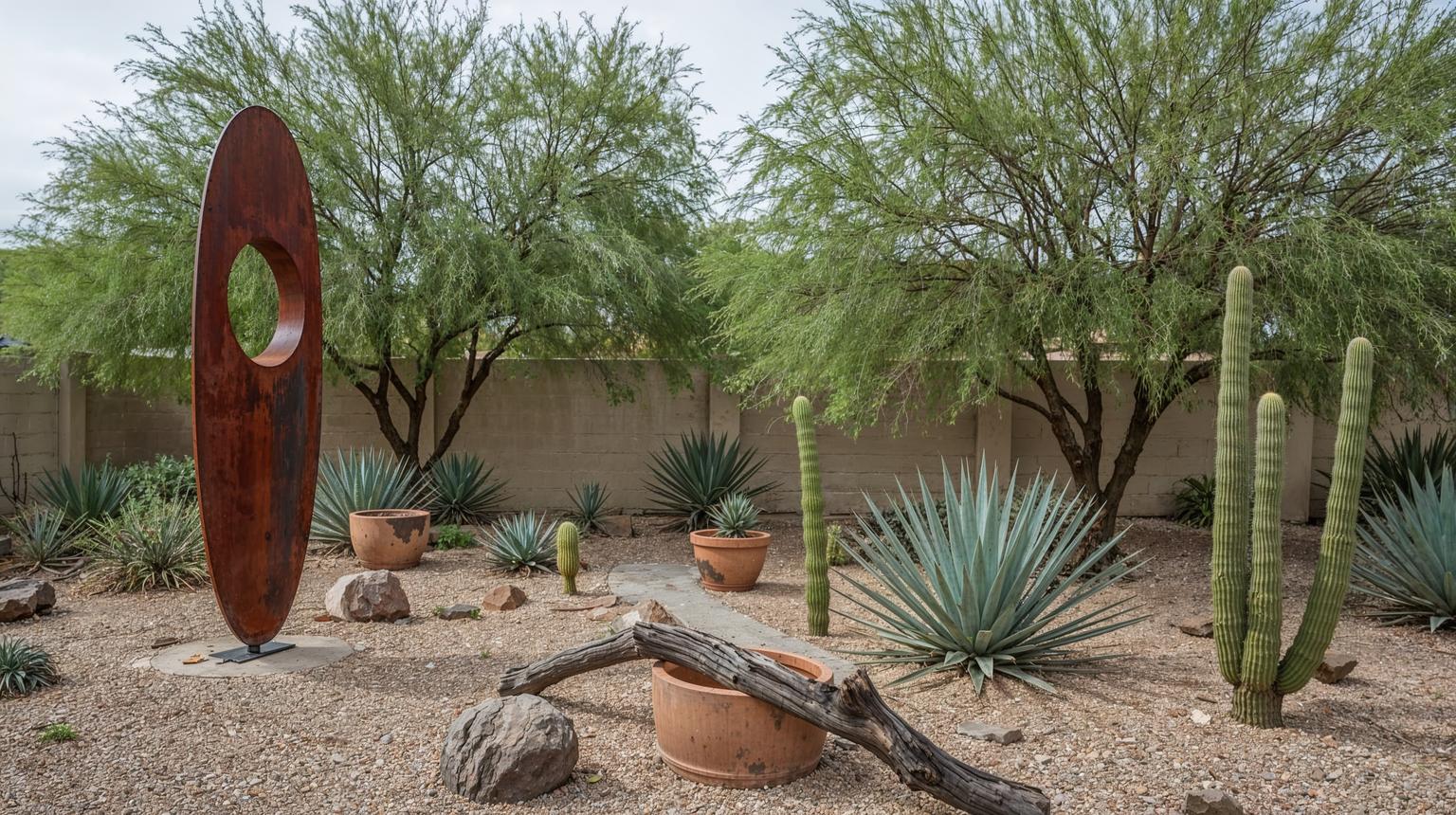
A strong agave or desert spoon can do the visual work of several decorative objects. Give it breathing room and repeat its color once in the stone, edging, or house trim. If a steel screen or planter is part of the composition, make sure it does not hide the entrance or crowd the plant as it matures.
Agave species vary widely in size, cold tolerance, and sharpness. Choose the exact species or cultivar with a local nursery, and place spiny varieties away from places where people pass or park.
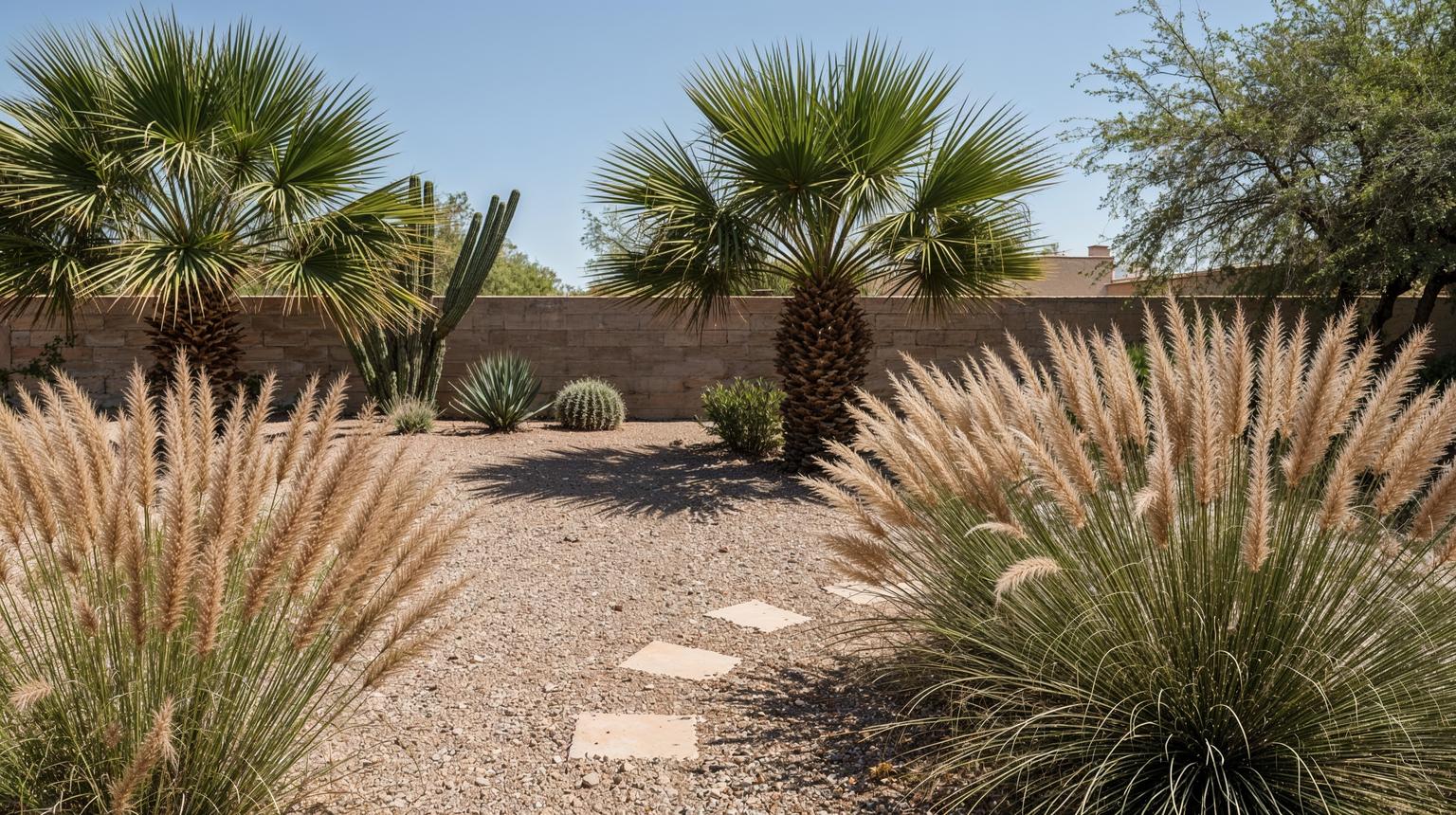
The photo shows one way to layer a palm, grasses, and low plants. That composition may suit some warm locations, but it is not a universal low-water recipe. A palm can need different irrigation and cold protection from nearby desert-adapted plants.
For a more regionally grounded version, consider a locally appropriate small tree or tall shrub above mid-height plants such as red yucca, then finish with a low flowering layer. Keep the taller plant far enough from windows, eaves, and service lines to accommodate its mature canopy.
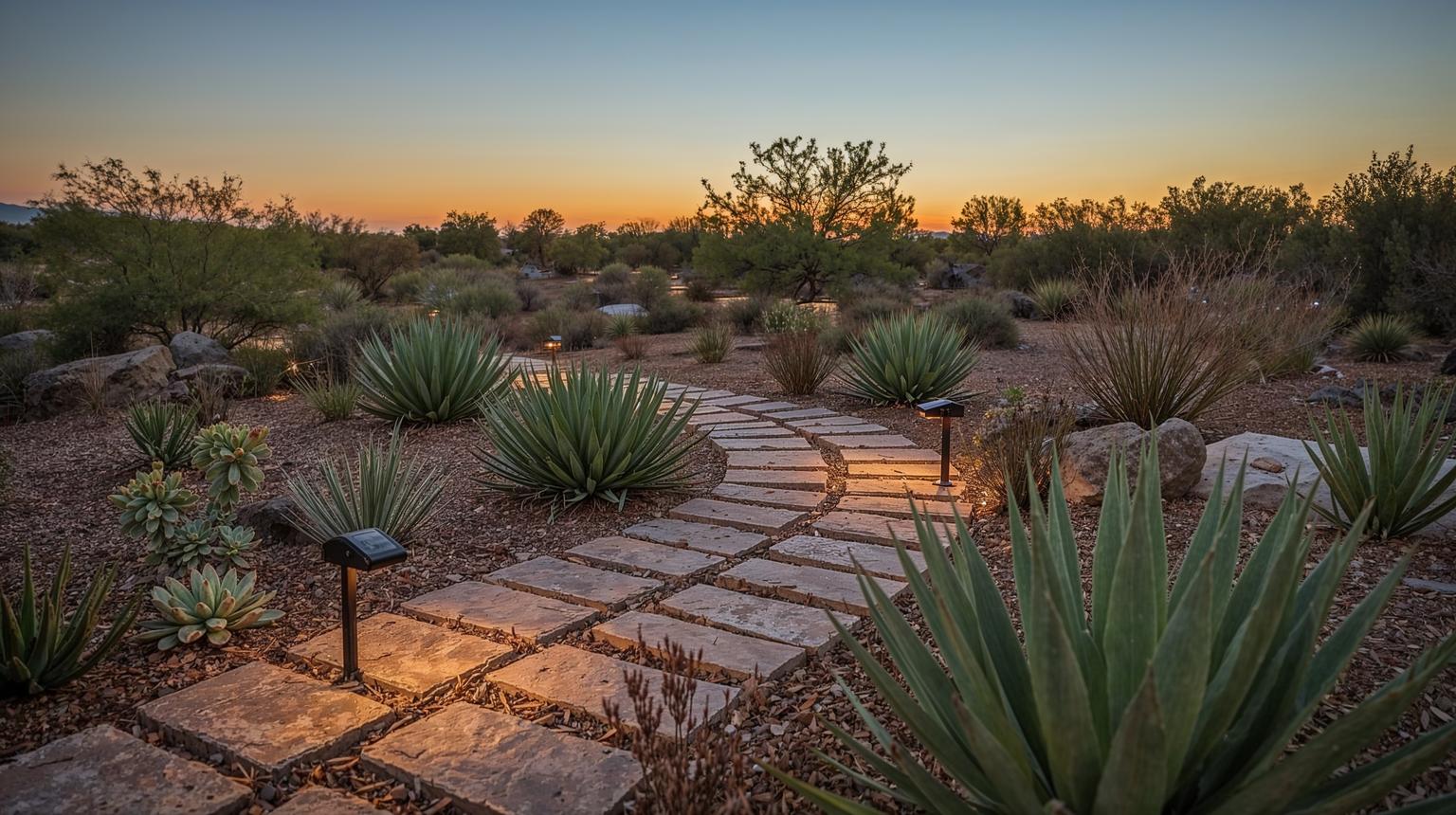
A gently curving path can soften a rectangular house, but it should still take people where they want to go. Keep the walking surface firm, even, and clear of overhanging plants. If the house has a direct route from the driveway to the door, a sweeping detour will probably become a shortcut through the gravel.
Choose edging that makes weeding and cleanup practical. Gravel can migrate onto paving, and leaf litter is more visible on a light stone surface. Low-maintenance desert landscaping still needs seasonal pruning, emitter checks, and some weed control.
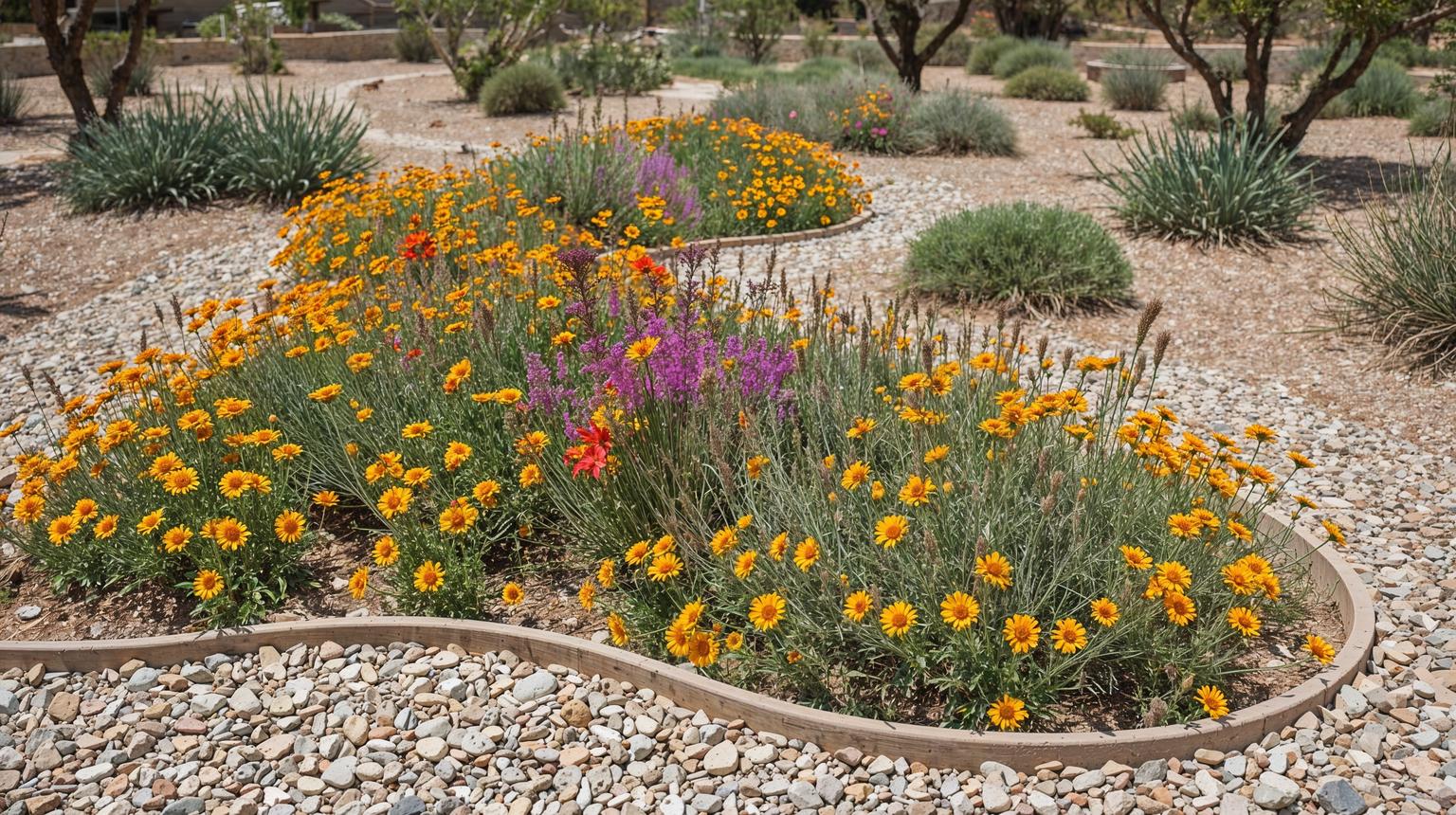
Flowers give a desert front yard a changing rhythm that a gravel-only scheme cannot provide. In suitable Southwest locations, brittlebush, desert marigold, penstemon, or red yucca can bring different colors and bloom periods. Check which species are appropriate locally and group them by water need rather than mixing every favorite into one irrigation zone.
The Arizona Municipal Water Users Association's plant combinations show how flowering plants, accents, and low-water species can work together in a real desert landscape. Use the examples as a design reference, then verify your own site's winter temperature and exposure.
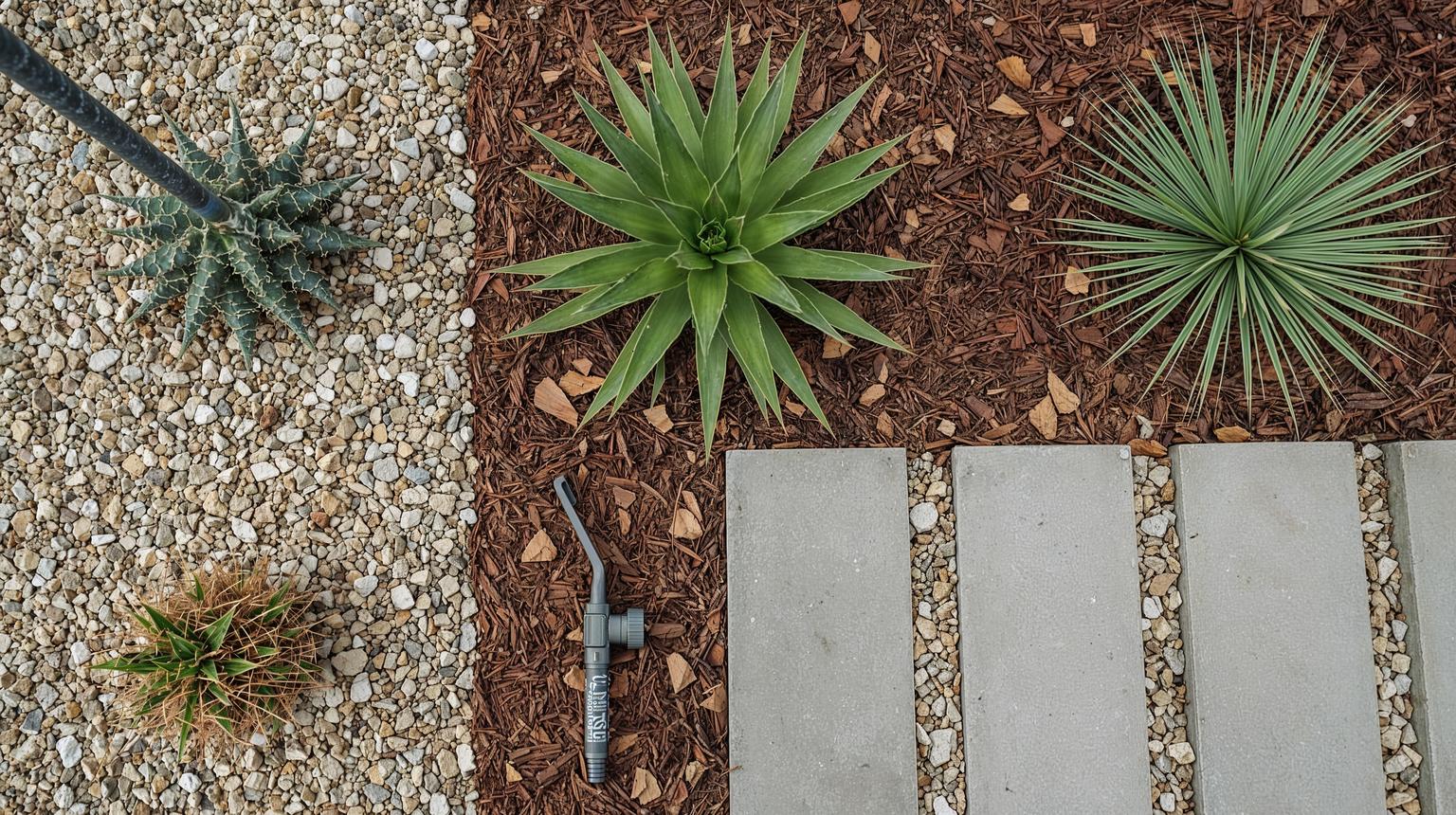
Xeriscaping is water-conscious landscape design, not a requirement to remove every plant. It combines appropriate plant selection, sensible soil and grading decisions, water-efficient irrigation, mulch, and maintenance. A gravel-covered yard with thirsty plants on the same sprinkler zone misses the point.
Group plants by water need and water new plants according to local establishment guidance. Mulch can help limit evaporation, but it should be used around plants rather than treated as a license to pave the entire yard in rock. The EPA WaterSense landscape guidance recommends choosing plants suited to local climate and soil and maintaining irrigation so water reaches the plants that need it.
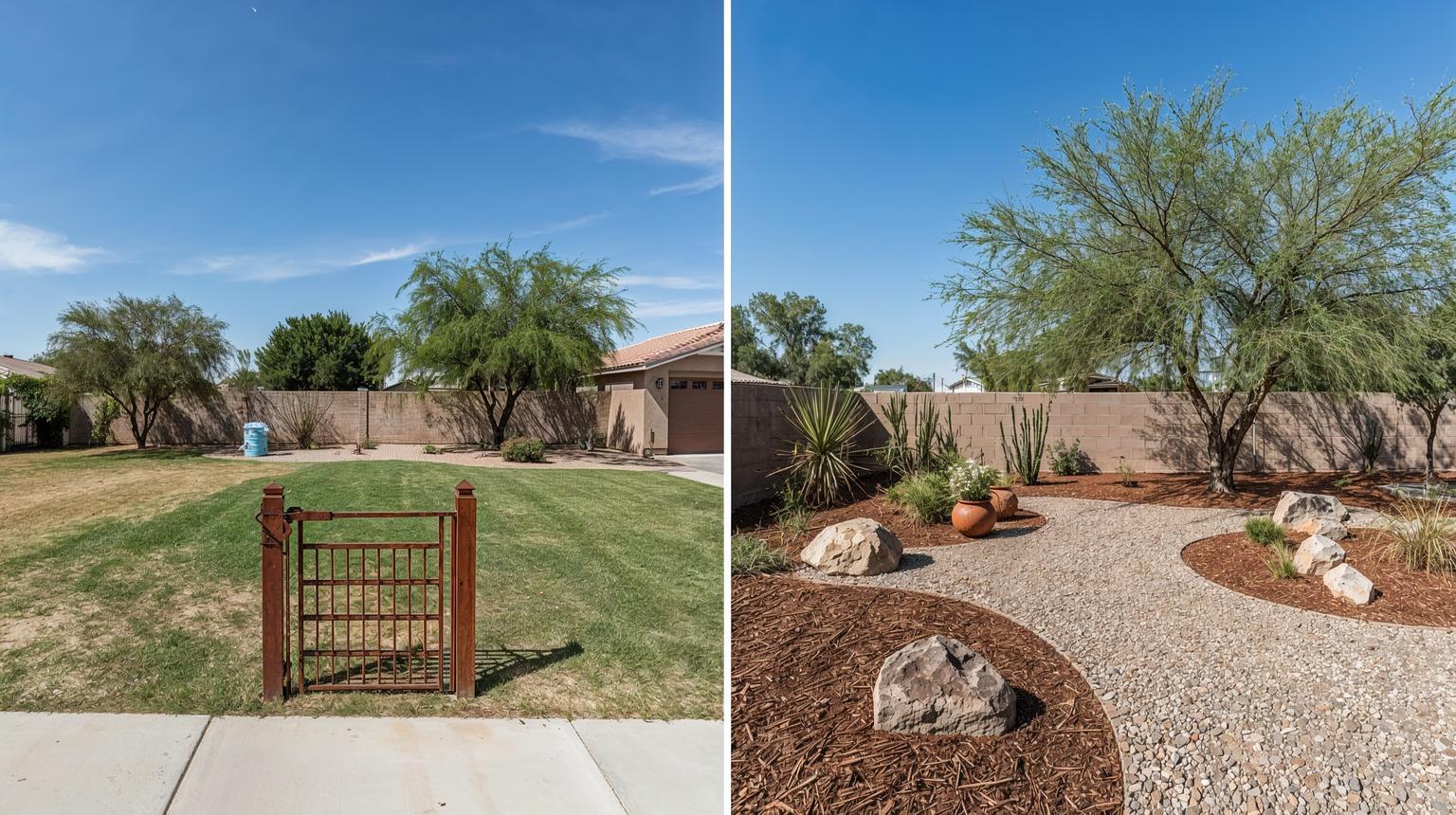
Measure only the area you actually plan to cover, excluding paths, plant openings, and existing beds that will stay. To estimate gravel volume in cubic yards, multiply the area in square feet by the planned depth in inches, then divide by 324. For example, 300 square feet at 2 inches needs about 1.85 cubic yards before the supplier's allowance for settling or waste. Confirm the right depth and material with a local supplier; the required weight depends on stone type and density.
Keep the budget in phases. Phase one can be drainage and the main path; phase two, a small set of well-placed plants and their irrigation; phase three, extra gravel or accents. This prevents a low-cost decorative finish from covering up a drainage problem or a poorly placed walkway.
Photographs can help compare layouts before any material is ordered. Paintit's landscape preview on your own yard photo can be used to test the path, plant groupings, and overall balance. Treat a generated image as a visual sketch, not a planting plan, grading survey, or construction specification.
If you are comparing software options for that early visual stage, the guide to AI landscape design tools explains the differences between tools before you commit to one workflow.
Keep a sound path, improve one visible planting zone first, and compare local material quotes on the same scope. Fewer appropriately sized plants often look better and cost less to maintain than many small specimens spread across the whole lot.
Keep a direct, accessible route to the door and use one focal plant with a compact supporting group. Limit the number of stone colors and check each plant's mature size before buying.
No. Gravel can suppress some weeds and reduce exposed soil, but the yard still needs plant care, irrigation checks, and periodic cleanup. Plant choice and layout have more influence on long-term work than the stone color.
There is no reliable single price for every lot. The biggest variables are site size, removal, grading, drainage, irrigation, access for deliveries, plant size, and local labor. Measure the proposed work, get comparable itemized local bids, and budget for the necessary groundwork before decorative extras.
Yes. Flowering plants, foliage, and stone can all supply color. Choose species that fit the local climate and group them by water need so color does not require an impractical irrigation schedule.