
7 min. reading
Neo Deco Paint Techniques: Creating Glamorous Geometric Walls

Yulii Cherevko
CEO paintit.ai
Page Contents:
- 1. What is Neo Deco?
- 2. The Allure of Geometric Patterns
- 3. Neo Deco Color Palettes & Finishes
- 4. Essential Tools & Paint Techniques
- 5. Applying Neo Deco Paint Techniques: Room by Room
- 6. Common Mistakes to Avoid
- 7. Stop Guessing, Start Visualizing
- 8. FAQ
- 9. Summary
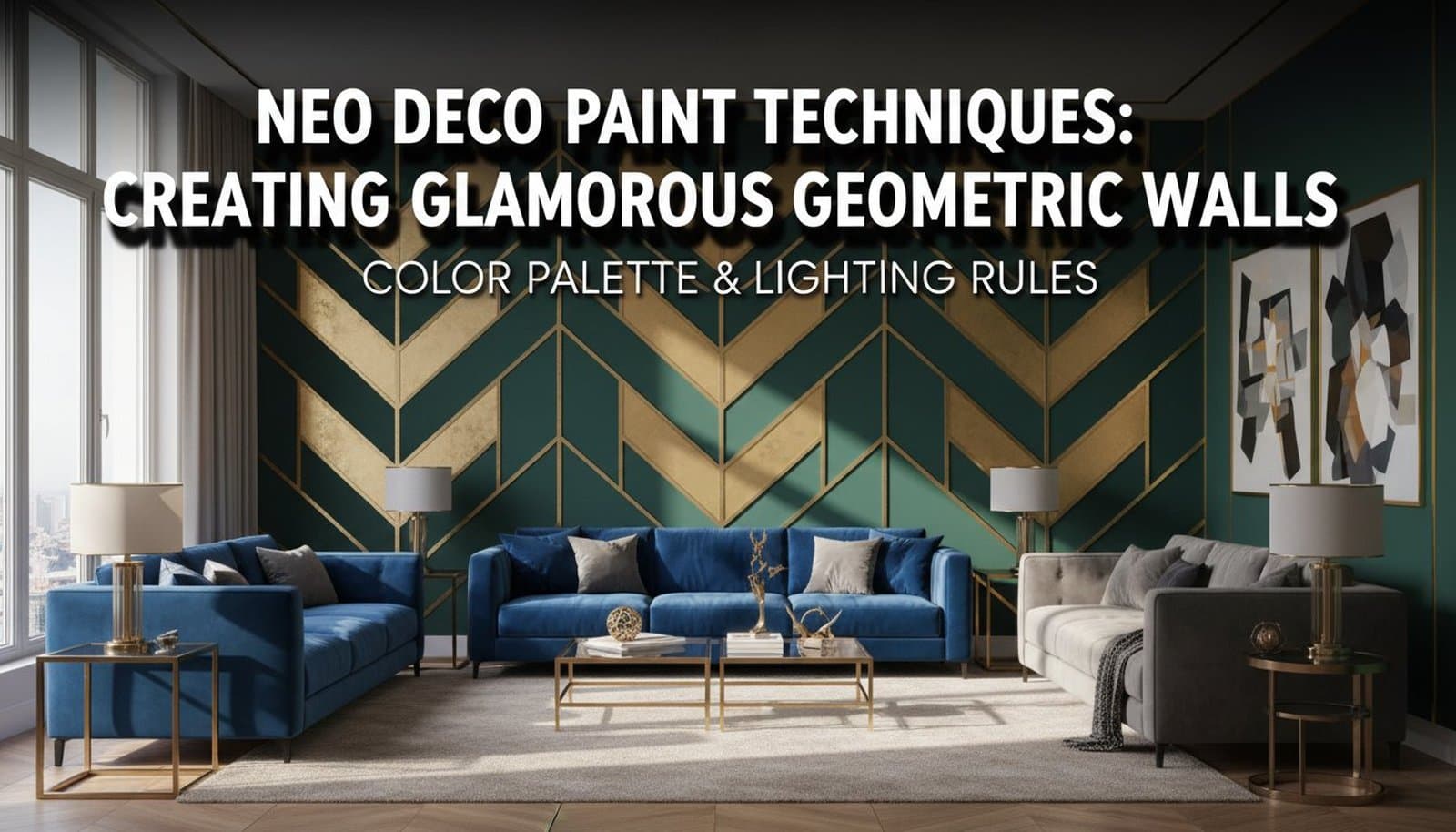
Infuse your home with timeless elegance by mastering Neo Deco paint techniques. This style breathes new life into the glamour of Art Deco, focusing on creating striking geometric walls that act as captivating focal points. Unlike historical revivals, Neo Deco offers a fresh perspective, blending bold patterns with luxurious finishes for a look that's both sophisticated and contemporary. Ready to transform your space? Explore how to achieve these glamorous geometric walls and visualize your dream design using the innovative tools at Paintit.ai.
Key Takeaways
Definition: Neo Deco is a modern interpretation of Art Deco, emphasizing geometric patterns and luxurious finishes for an updated vintage aesthetic.
Why it works: It creates visual drama, a sense of curated glamour, and a distinctive character that stands apart from typical trends.
Signature palette: High-contrast combinations of deep jewel tones (emerald, sapphire, ruby), rich neutrals (matte black, ivory, cream), and lustrous metallics (brushed gold, polished brass, shimmering silver).
Materials: Paint finishes like matte, satin, high-gloss lacquer, and specialized metallic paints are key to layering visual texture.
Lighting rule: Use ambient and accent lighting to highlight geometric patterns and metallic sheens, enhancing their reflective qualities.
Avoid: Overly complex patterns in small spaces, ignoring the room's scale, or using only a single paint finish, which can flatten the design.
What is Neo Deco?
Neo Deco is more than just a nod to the past; it's a sophisticated reinterpretation of the iconic Art Deco era, tailored for modern living. While it draws heavily on the geometric precision, opulent materials, and streamlined forms of the 1920s and 30s, Neo Deco eschews strict historical replication. Instead, it distills the essence of Art Deco glamour into a refined, often simplified aesthetic that feels current and approachable. This style celebrates clean lines, strong architectural forms, and a deliberate play between light and shadow, delivering a bold statement without overwhelming contemporary spaces.
The Allure of Geometric Patterns
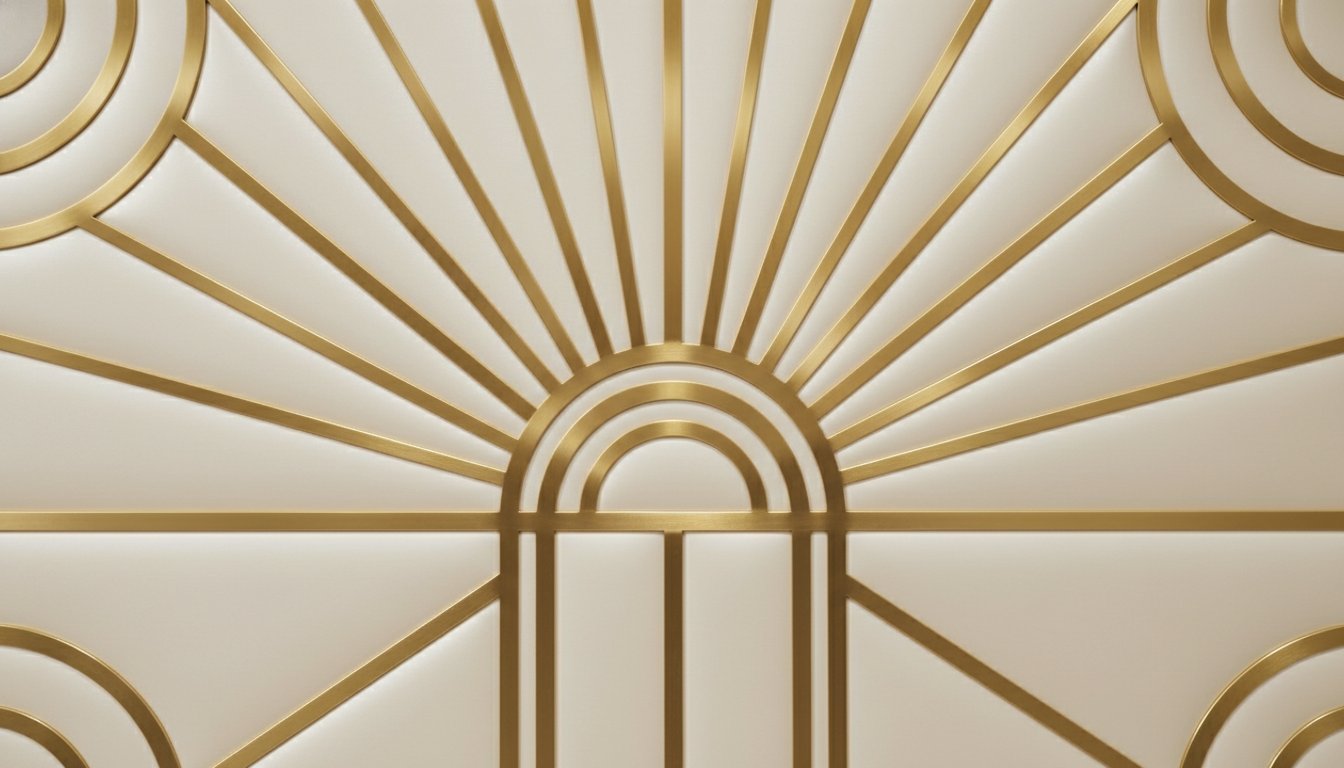
At the heart of the Neo Deco aesthetic are its distinctive geometric patterns. These aren't just random shapes; they are carefully chosen motifs that evoke a sense of order, rhythm, and sophisticated movement. Common patterns include sharp chevrons, dynamic zigzags, elegant sunbursts, stepped forms reminiscent of skyscrapers, and stylized fan motifs. Each pattern carries a visual weight, creating a compelling focal point that can elevate a plain wall into a piece of art. The power of these patterns lies in their ability to draw the eye, define space, and infuse a room with a sense of curated design.
Neo Deco Color Palettes & Finishes
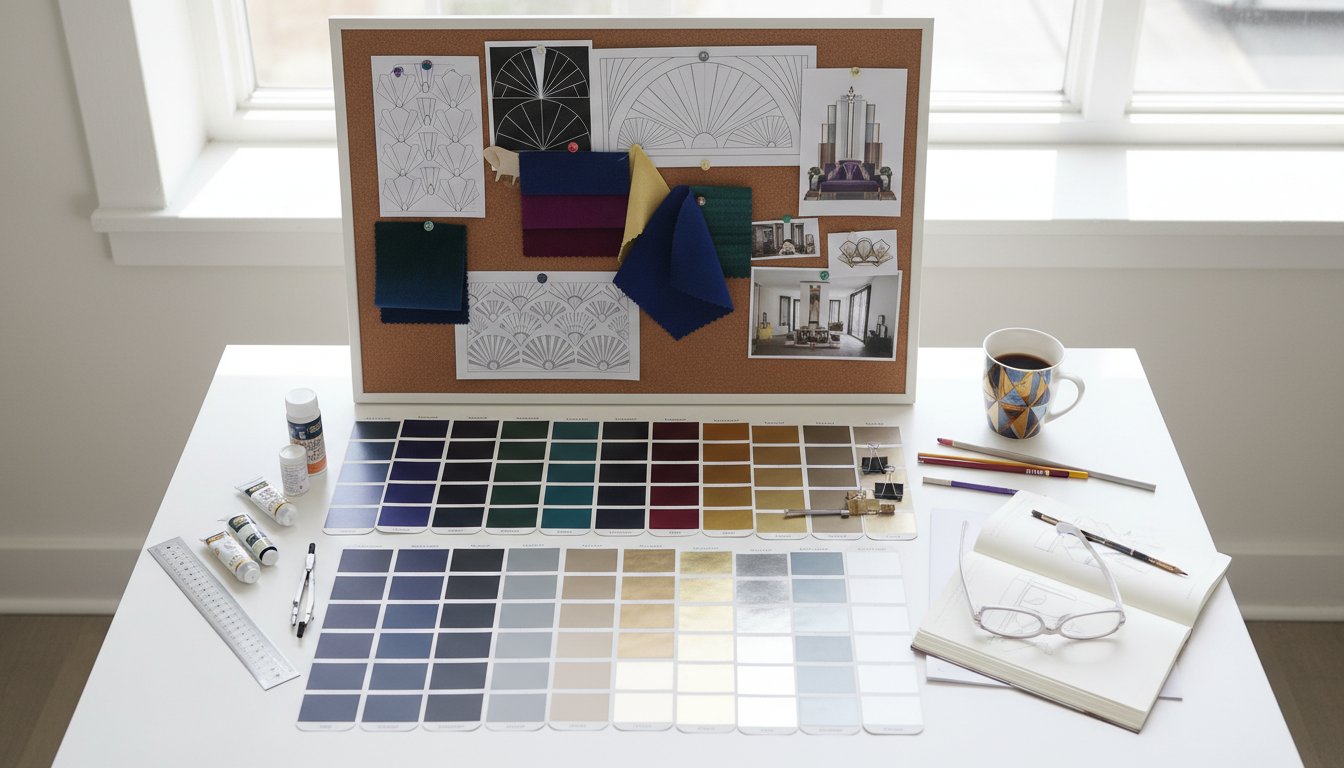
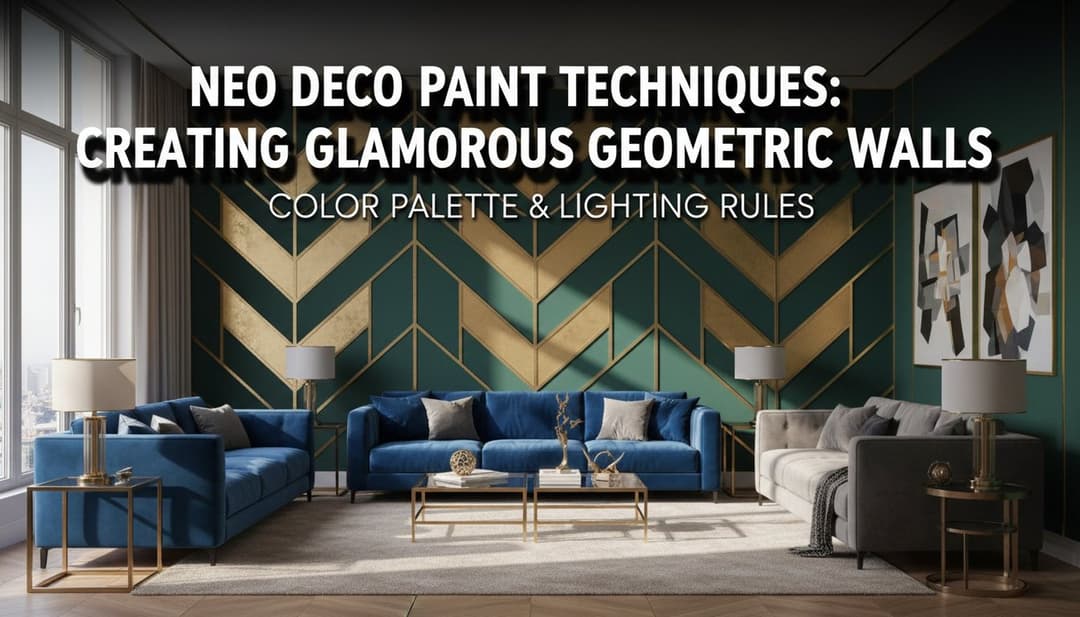
The impact of Neo Deco paint techniques hinges on a carefully selected palette and a thoughtful mix of finishes. The quintessential Neo Deco palette blends high-contrast elements: think deep jewel tones like emerald green, sapphire blue, or ruby red paired with rich, grounding neutrals such as a matte charcoal gray, warm cream, or crisp ivory. The true magic, however, comes from the strategic integration of metallics. Brushed gold, polished brass, antique bronze, and shimmering silver are not just accents; they are integral to defining geometric lines and creating a luxurious, reflective quality.
When selecting finishes, consider texture beyond touch. A matte base coat provides a velvety backdrop, absorbing light, while a satin finish offers a subtle sheen and durability. For true drama, high-gloss lacquered elements or specialized metallic paints reflect light, adding dimension and a palpable sense of luxury. The contrast between a deep matte wall and a sharp, high-gloss metallic line creates visual interest that is distinctly Neo Deco. Always test colors and finishes on a sample board to see how they interact under your room's specific lighting conditions.
| Element | What to Choose | Why it Works | Easy Mistake | Quick Fix |
|---|---|---|---|---|
| Color | Jewel tones, rich neutrals, metallics | Creates high contrast and luxury | Too many colors, overwhelming the eye | Stick to 2-3 main colors, with one metallic |
| Patterns | Chevrons, sunbursts, stepped forms, clean lines | Adds visual rhythm, defining Neo Deco character | Overly complex or small scale designs | Simplify motifs; scale up for impact |
| Finishes | Mix of matte, satin, high-gloss, metallic | Layers visual texture, reflects light | Using only one finish, flatness | Introduce a high-gloss or metallic accent |
| Placement | Accent wall, entryway, behind furniture | Defines focal points, enhances spatial flow | Random placement, unbalanced room | Focus on a single, impactful wall |
| Proportion | Varies with room size; larger for impact | Ensures harmony and avoids overwhelming space | Pattern too big or too small | Adjust motif size for room dimensions |
Essential Tools & Paint Techniques
Achieving crisp, glamorous geometric walls requires precision and the right tools. Beyond your chosen paints, gather high-quality painter's tape, a long level or laser level, a measuring tape, a sturdy ruler, and a chalk line for marking long, straight guides. You'll also need various paint brushes (angled brushes are excellent for clean lines), small foam rollers for smooth application, and painter's pyramids or sawhorses for working on boards.
The application process itself is key to professional results. Start by thoroughly cleaning and priming your wall if necessary, then apply your chosen base coat. Once fully dry, meticulously measure and mark your geometric design using your level and measuring tape. This step is critical; patience here pays dividends. Next, apply your painter's tape along your marked lines, ensuring each edge is pressed down firmly to prevent paint bleed. For an extra crisp edge, after applying the tape, paint a very thin layer of your base color along the tape's edge; this seals any gaps before you apply your pattern color. Finally, apply your accent colors or metallic paints. For optimal metallic sheen, two or three thin coats are often better than one thick one. The crucial final step is tape removal: carefully pull the tape while the paint is still slightly wet (or fully dry, depending on paint type and desired effect), pulling at a 45-degree angle away from the painted line.
Applying Neo Deco Paint Techniques: Room by Room
Integrating Neo Deco paint techniques into your home requires tailoring the scale and drama to each specific space. To help you explore possibilities before lifting a brush, consider using Paintit.ai's AI Room Design tool to visualize different patterns and palettes in your actual room.
1. Entryway: Making a Grand First Impression
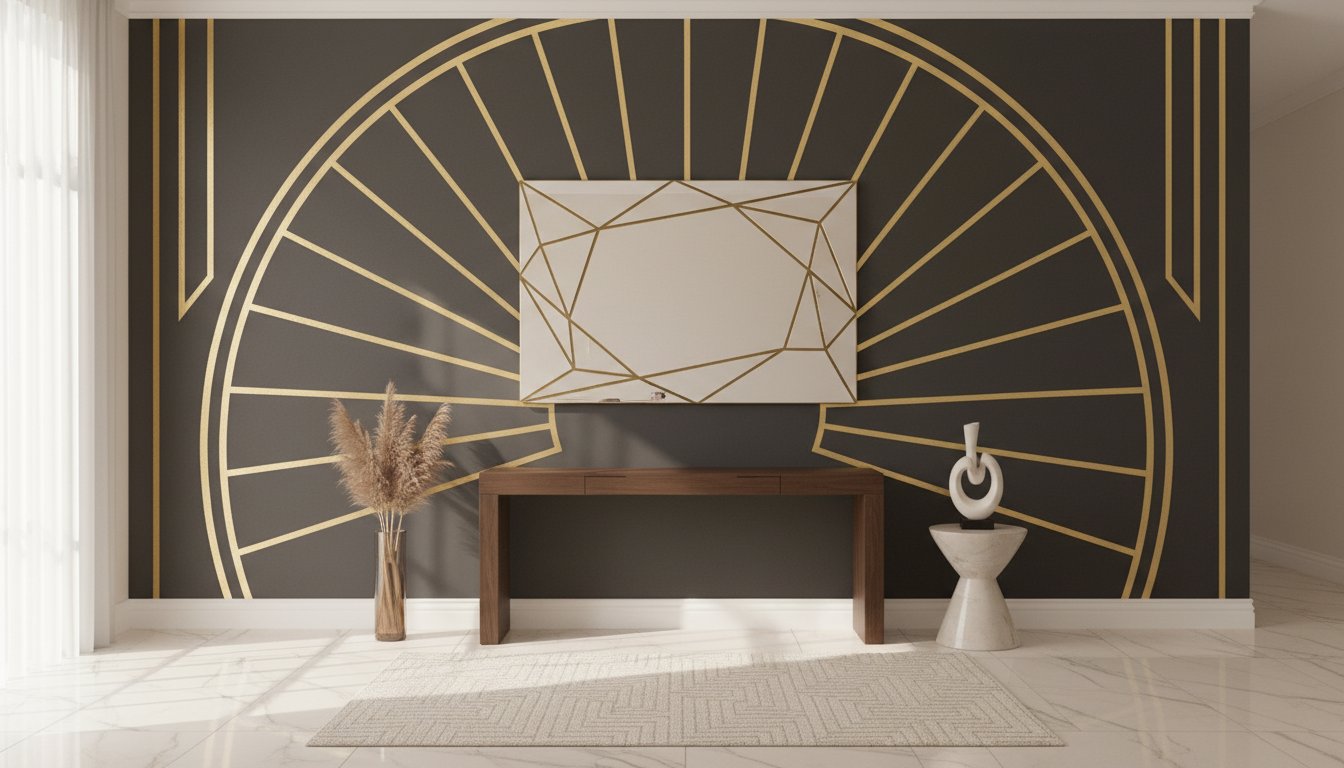
An entryway is the perfect stage for a bold Neo Deco statement. Aim for a high-contrast pattern, perhaps a large-scale sunburst motif in brushed gold against a deep matte navy blue or charcoal gray wall. This creates immediate visual impact. Focus the design on a single wall to avoid overwhelming a smaller space, allowing it to serve as a dramatic backdrop for a console table and a geometric mirror. End with a Paintit micro-action: Upload a photo of your entryway and generate variations of a large gold fan motif on a deep matte green wall.
2. Living Room: A Statement of Elegance
In the living room, a Neo Deco geometric feature wall can anchor the space behind a sofa or fireplace. Opt for repeating, interlocking patterns in a satin jewel tone like sapphire or ruby, accented with thin lines of polished brass. The play between the satin and metallic finishes adds depth and sophistication. Ensure the pattern scale is proportionate to the wall and room size, providing a luxurious backdrop without competing with other design elements. End with a Paintit micro-action: Upload a photo of your living room and experiment with a repeating stepped pattern in a satin emerald green with polished brass lines.
3. Dining Room: Sophisticated Entertaining
The dining room offers an opportunity for rich color and refined geometry. Consider a dramatic, deep teal or plum accent wall with a geometric pattern in a high-gloss finish, perhaps creating a subtle border or a panel effect. This luxurious look enhances the dining experience, making the room feel more intimate and glamorous. Layered lighting from a Deco-inspired chandelier will beautifully highlight the sheen of the paint. End with a Paintit micro-action: Upload a photo of your dining room and visualize a subtle geometric wainscoting effect using a deep plum and a high-gloss black.
4. Bedroom: A Chic Retreat
For the bedroom, soften the Neo Deco aesthetic to create a serene yet stylish sanctuary. Focus on an accent wall behind the bed, using a more muted palette like blush pink with rose gold geometric lines or a warm cream with subtle silver accents. Simple, repeating linear patterns or a soft chevron can add visual interest without being overly stimulating. The goal is understated glamour that promotes relaxation. End with a Paintit micro-action: Upload a photo of your bedroom and design a subtle geometric pattern behind the bed in a warm cream with delicate silver metallic accents.
5. Bathroom: A Touch of Deco Luxury
Even a small bathroom can benefit from Neo Deco elegance. Focus geometric patterns around the vanity mirror or create a bold stripe on one wall using moisture-resistant paints. Crisp whites or pale mint greens paired with chrome or polished nickel metallic lines evoke a fresh, luxurious spa-like feel. The reflective quality of the metallic paint will help bounce light around, making the space feel brighter and more expansive. End with a Paintit micro-action: Upload a photo of your bathroom and visualize a geometric accent around the vanity mirror using a crisp white and a subtle metallic chrome.
Common Mistakes to Avoid
Creating glamorous geometric walls is a rewarding project, but certain pitfalls can detract from the desired polished finish. Understanding these common mistakes and their fixes will help you achieve a truly professional result.
| Problem | Likely Cause | Fast Fix | Paintit Try-On Test |
|---|---|---|---|
| Fuzzy, bleeding lines | Low-quality tape, poor tape adhesion | Use painter's pyramids or sawhorses for working on boards. | Upload a wall photo, simulate taping errors, then visualize the crisp lines with proper tape application. |
| Overwhelming pattern | Too many motifs, inappropriate scale | Simplify pattern, increase negative space | Experiment with different pattern scales and densities on your wall to find the right balance. |
| Flat, one-dimensional look | Only one paint finish used | Introduce a contrasting finish (gloss/matte) | Test a geometric pattern with a matte base and high-gloss lines, then compare to an all-satin look. |
| Design feels out of place | Ignores room's existing decor or architecture | Align pattern with room's features | Upload your room, add a geometric wall, and try adjusting its orientation and proportion to fit the space. |
| Dull metallic accents | Poor lighting, insufficient coats | Enhance lighting, apply more thin coats | Visualize metallic accents under different simulated lighting conditions (warm vs. cool, direct vs. ambient). |
Stop Guessing, Start Visualizing
It's notoriously difficult to envision how a geometric pattern or a new color palette, especially with a metallic finish, will truly look on your walls from a small swatch or a Pinterest board. The interplay of your room's unique lighting, existing furniture, and spatial dimensions can drastically alter perception. Eliminate the guesswork and gain confidence in your design choices by leveraging Paintit.ai's AI Room Design tool.
Here's how to visualize your Neo Deco designs:
- Upload a photo: Snap a picture of the wall or room you plan to transform.
- Experiment with patterns: Apply various Neo Deco geometric patterns, from bold chevrons to delicate sunbursts.
- Test color palettes: Try different combinations of jewel tones, neutrals, and metallics.
- Compare finishes: See how matte, satin, high-gloss, and metallic paints look on your chosen design.
- Adjust scale: Easily modify the size and repetition of patterns to find the perfect balance for your space.
While digital previews offer invaluable insight, remember that real-world lighting and the subtle nuances of actual paint materials can still create slight variations. Use the tool as a powerful planning partner, not a definitive final rendering.
FAQ
What's the difference between Art Deco and Neo Deco paint techniques?
Art Deco refers to the historical style of the 1920s and 30s, characterized by lavish ornamentation and bold geometry. Neo Deco applies these foundational principles, such as geometric patterns and luxurious finishes, with a modern sensibility, often simplifying motifs and using contemporary color palettes to fit today's interiors.
Can I achieve metallic finishes with regular paint?
While some regular paints have a metallic sheen, true metallic finishes often require specialized metallic paints. These products contain fine metallic particles that uniquely reflect light, creating a richer, more authentic metallic effect compared to standard paints. Always look for paints specifically labeled as "metallic paint" for best results.
How do I ensure my geometric lines are perfectly straight?
Achieving perfectly straight lines involves a combination of precise measuring with a level or laser level, using high-quality painter's tape (like FrogTape or ScotchBlue with Edge-Lock technology), pressing the tape edges firmly to prevent bleed, and in some cases, sealing the tape edge with a thin layer of your base color before applying the accent color. Carefully removing the tape at the right time is also crucial.
Is Neo Deco suitable for small rooms?
Yes, Neo Deco can absolutely work in small rooms. The key is to simplify the geometric patterns, opt for lighter base colors to keep the space feeling open, and use metallic accents strategically to add glamour without overwhelming the room. Consider a single, impactful motif on an accent wall rather than an all-over pattern.
How long does a geometric paint design typically last?
With proper surface preparation, the use of quality paints, and a durable finish, a Neo Deco paint design can last as long as any other well-maintained interior paint job, typically 5-10 years. For high-traffic areas, selecting a scrubbable paint formulation or applying a clear, protective topcoat can enhance its longevity.
Summary
Neo Deco paint techniques offer a dynamic way to inject sophistication and glamour into any interior. By thoughtfully combining geometric patterns with a rich palette of deep jewel tones, luxurious neutrals, and shimmering metallic finishes, you can transform ordinary walls into captivating design statements. The style encourages a playful balance between matte and high-gloss textures, creating visual depth and a bespoke feel that elevates your home's aesthetic.
Whether you're crafting a dramatic entryway or a serene bedroom retreat, the principles of Neo Deco-precision, contrast, and elegant proportion-guide you to a stunning result. Remember to plan your design carefully, select high-quality materials, and always visualize your choices to ensure they harmonize with your unique space. Embark on your Neo Deco journey and discover more inspirational guides on the Paintit.ai Blog.
Trending
Is There an App to Remodel My Bathroom with Just a Photo?
How to Use Paintit.ai for Perfect Dopamine Decor Color Combinations
Virtual Staging AI: Top Alternatives & Competitors in 2026
How to Redesign a Living Room with Paintit.ai
How to Save, Compare and Organize Designs in Paintit Projects
Related articles
7 min read
Neo Deco Paint Techniques: Creating Glamorous Geometric Walls
Learn Neo Deco paint techniques for glamorous geometric walls. Explore palettes, finishes, and room-by-room tips — then visualize it all with Paintit.ai.
Yulii Cherevko
CEO paintit.ai

6 min read
Is There an App to Remodel My Bathroom with Just a Photo?
Upload a photo of your bathroom and see it redesigned instantly. Discover how AI bathroom remodel apps work and explore styles with Paintit.ai.
Yulii Cherevko
CEO paintit.ai
7 min read
How to Use Paintit.ai for Perfect Dopamine Decor Color Combinations
Discover dopamine decor color combinations that boost your mood. Explore 4 curated palettes and visualize bold designs in your own room with Paintit.ai.
Yulii Cherevko
CEO paintit.ai
8 min read
Virtual Staging AI: Top Alternatives & Competitors in 2026
Compare top Virtual Staging AI alternatives in 2026: Paintit.ai, Collov.ai, ReimagineHome and more. Find the right tool for your budget and workflow.
Yulii Cherevko
CEO paintit.ai
9 min read
How to Redesign a Living Room with Paintit.ai
Learn how to redesign a living room with Paintit.ai using better layout logic, stronger focal points, realistic furniture scale, cleaner prompts, and more professional comparison workflows
Yulii Cherevko
CEO paintit.ai

8 min read
How to Save, Compare and Organize Designs in Paintit Projects
Learn how to save, compare, and organize designs in Paintit Projects to manage versions better, structure multi-room work, review alternatives faster, and make clearer design decisions
Yulii Cherevko
CEO paintit.ai