7 min. reading
Best AI for Furniture Design: The Ultimate 2026 Pro Guide

Yulii Cherevko
CEO paintit.ai

Page Contents:
- 1. Key Takeaways
- 2. Introduction
- 3. Types of AI used in furniture design
- 4. Comparison of AI furniture design software (table)
- 5. Top AI furniture design tools in 2026
- 6. Detailed feature comparison
- 7. Professional tools for advanced users
- 8. Strategic recommendations (decision framework)
- 9. The ultimate hybrid workflow (step-by-step)
- 10. Managing expectations: current AI limitations
- 11. FAQ
- 12. Conclusion
Key Takeaways
- AI is transforming furniture design, enabling novel forms and efficient production from ideation to optimization.
- The best AI for furniture design leverages generative design, AI-assisted 3D modeling, and advanced visualization.
- Generative design algorithms explore countless possibilities based on user-defined constraints, pushing creative boundaries.
- Paintit.ai is a powerful tool for rapidly generating and visualizing furniture concepts, bridging sketches to 3D models.
- Integrating AI tools complements traditional CAD workflows, accelerating concept iteration and rendering.
- Human designers remain crucial for strategic vision, aesthetic curation, and final refinement of AI-generated designs.
Introduction
The landscape of furniture design is rapidly evolving, with artificial intelligence emerging as a powerful ally for creators. Leveraging AI for furniture design isn't just about automating tasks; it's about unlocking unprecedented creativity, enabling the exploration of complex forms, and optimizing designs for both aesthetics and function. Whether you're a seasoned professional or exploring new design frontiers, understanding these tools is crucial. Explore how Paintit.ai and other AI solutions can revolutionize your design process, from initial concept sketches to final 3D visualizations, allowing you to bring innovative furniture ideas to life faster and more effectively than ever before.
We included these competitors: RoomGPT, Reimagine Home, Planner 5D, Collov, Decorilla, Interior AI, and Havenly.
Types of AI used in furniture design
AI's application in furniture design spans several key areas, each contributing to different stages of the creative and production process:
- Generative Design: This technique uses AI algorithms to explore numerous design options based on defined constraints such as material, cost, and performance. Designers input parameters, and the AI generates a vast array of potential solutions, often leading to novel and complex geometries that humans might not conceive.
- AI-Powered Concept Generation: From a simple sketch or text prompt, AI can rapidly convert initial ideas into 3D models, offering various styles and forms. This significantly accelerates the ideation phase, allowing designers to visualize concepts instantly.
- Parametric Design: While not purely AI, AI enhances parametric tools by suggesting optimal parameters or variations. This allows for the creation of highly customizable and adaptable furniture pieces, where dimensions, materials, and features can be easily adjusted.
- AI-Assisted 3D Modeling & Rendering: AI improves the efficiency and realism of 3D modeling and rendering. It can automate texture mapping, material simulation, and lighting setups, generating high-fidelity visualizations much faster than traditional methods. Advances in AI enable faster and more accurate creation of 3D models directly from sketches or images, streamlining the initial design phase.
- Optimization for Ergonomics & Sustainability: AI can analyze designs for human comfort, safety, and efficiency (ergonomics), and optimize for minimal material waste, suggesting eco-friendly materials and designs for disassembly and recycling. Intelligent systems can analyze designs to minimize material usage and reduce manufacturing waste, contributing to environmental sustainability.
Comparison of AI furniture design software (table)
| Tool Name | Primary Focus | Key AI Feature(s) | Best For |
|---|---|---|---|
| Paintit.ai | Interior & Furniture Visualization | AI Concept Generation, Style Transfer | Rapid ideation, concept visualization, material testing |
| RoomGPT | Room Redesign & Visualization | Image-to-room, style application | Homeowners, quick room style exploration |
| Reimagine Home | Interior Design Ideas | AI-driven mood boards, furniture suggestions | Design enthusiasts, creating interior concepts |
| Planner 5D | 2D/3D Floor Plans & Interiors | AI layout suggestions, furniture library | Space planning, detailed interior design |
| Collov | AI Interior Design | Style recommendations, product matching | Personalized interior design, shopping integration |
| Decorilla | Online Interior Design Service | AI-assisted designer matching | Full-service design with AI support |
| Interior AI | AI Room Decorator | Style generation, redecorating ideas | Quick visual overhauls, style experiments |
| Havenly | Online Interior Design Service | Designer curation with AI tools | Guided interior design projects |
Top AI furniture design tools in 2026
Paintit.ai - Rapid concept visualization & iteration
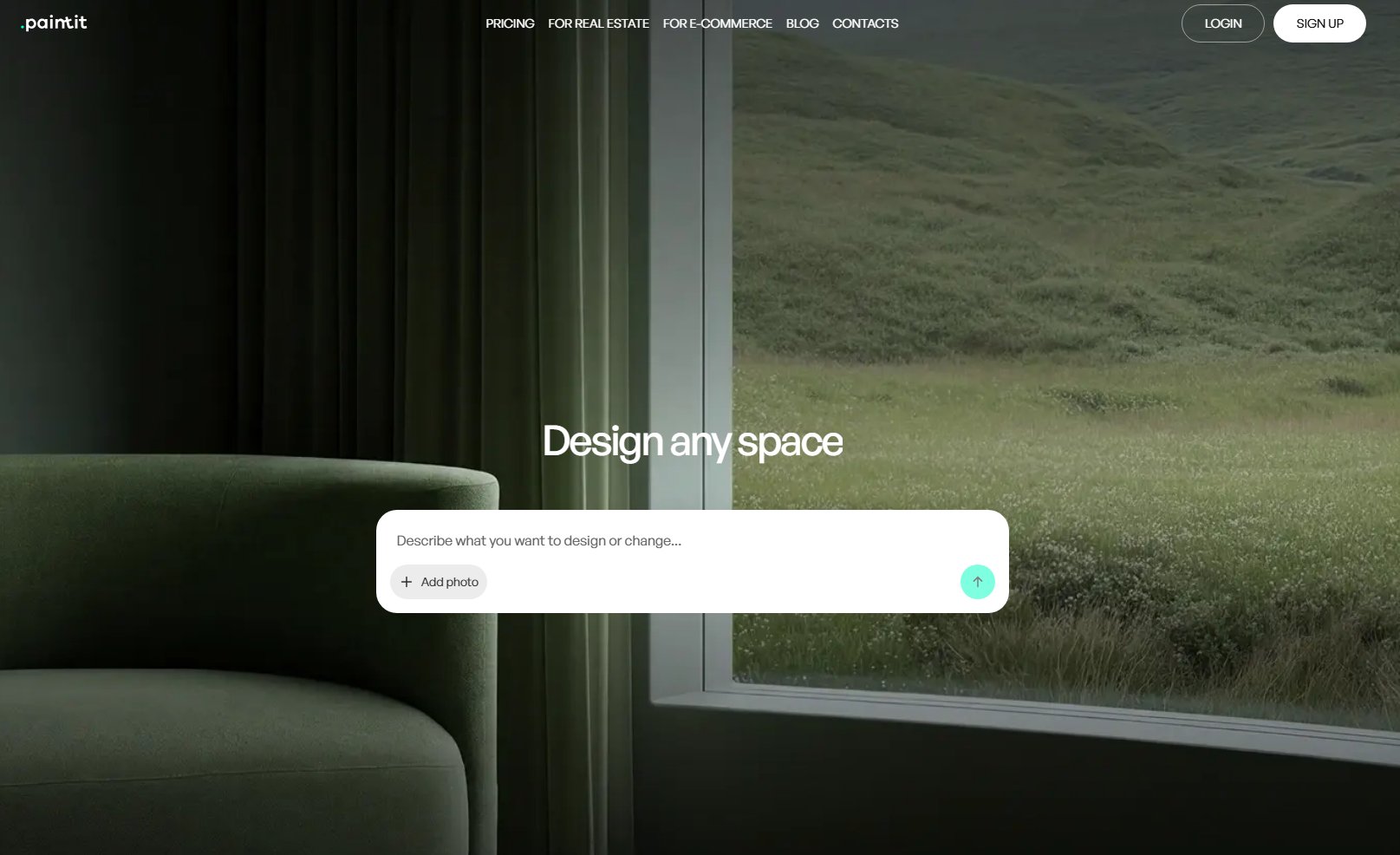
Paintit.ai stands out as a versatile AI tool for furniture design, particularly for its ability to transform initial ideas into tangible visuals. It's perfect for exploring diverse forms and bridging the gap between inspiration and a 3D output. You can upload a sketch or a mood board image of a desired furniture concept-for instance, a futuristic armchair. Using the AI Concept Generator, you can then create multiple 3D model variations, experiment with different material finishes like matte black steel versus natural oak, and test various color palettes such as deep navy blue versus burnt orange upholstery. This allows for rapid iteration and visualization of unique design elements, streamlining the initial creative process.
RoomGPT - Quick room style exploration
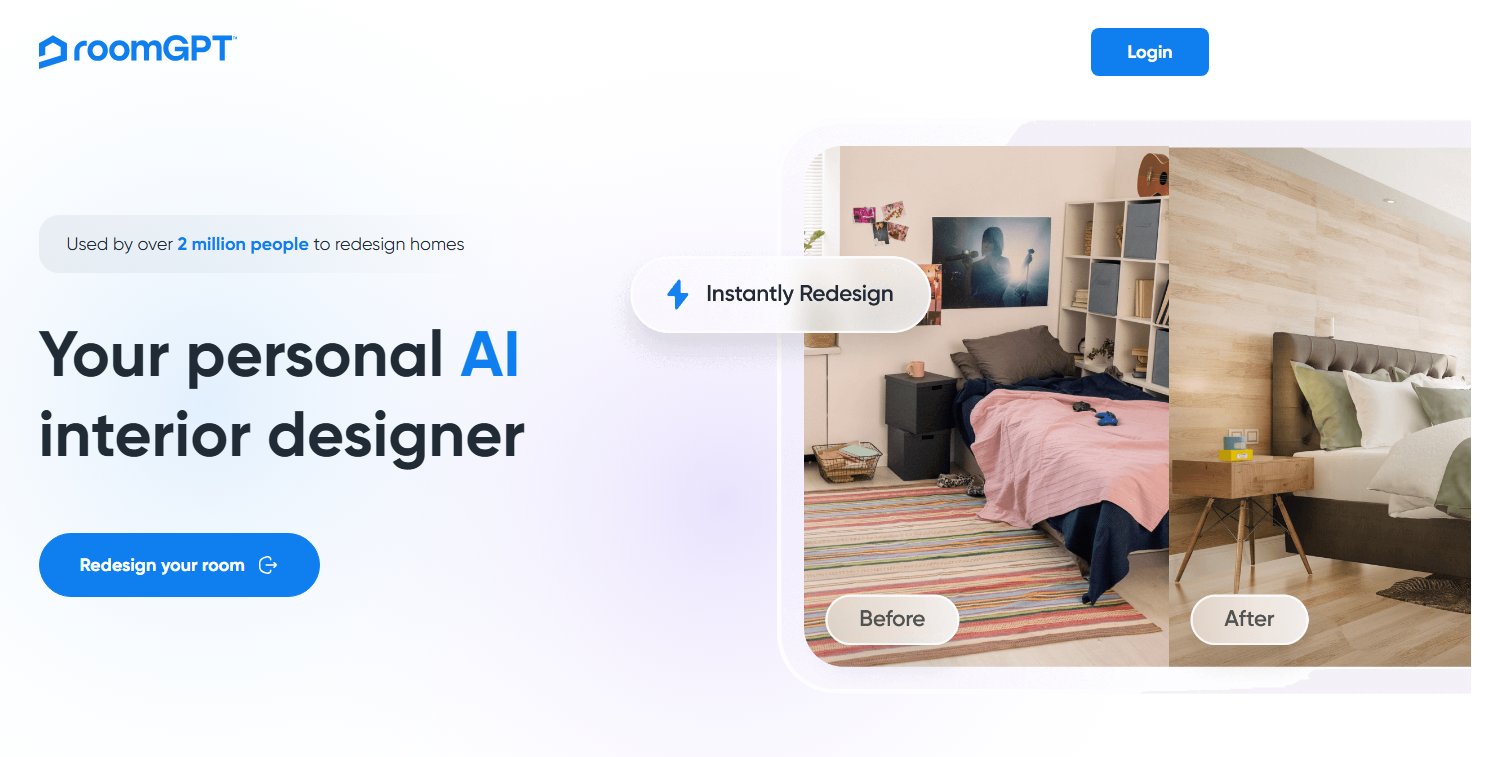
RoomGPT focuses on interior visualization, allowing users to upload a photo of their room and instantly apply different design styles. While primarily a best AI app for furniture design for room-scale ideas, it can give you a quick sense of how different furniture styles would look in an existing space, offering inspiration for specific pieces within a broader context.
Reimagine Home - Interior design ideas with AI

Reimagine Home is an AI-powered furniture design tool that generates interior design concepts and mood boards based on user preferences. It can suggest furniture pieces and arrangements, helping designers and homeowners visualize potential layouts and styles. This tool is valuable for getting broad aesthetic directions, though it's less focused on the granular creation of individual furniture pieces.
Planner 5D - Detailed floor plans and furniture layout

Planner 5D offers robust 2D/3D floor planning capabilities with an extensive furniture library. Its AI can assist with layout suggestions, making it a good AI furniture modeling tool for space planning and arranging existing or conceptual furniture within a room. It helps in understanding scale and placement, though the generative aspects for new furniture designs are more limited.
Collov - Personalized design and product matching
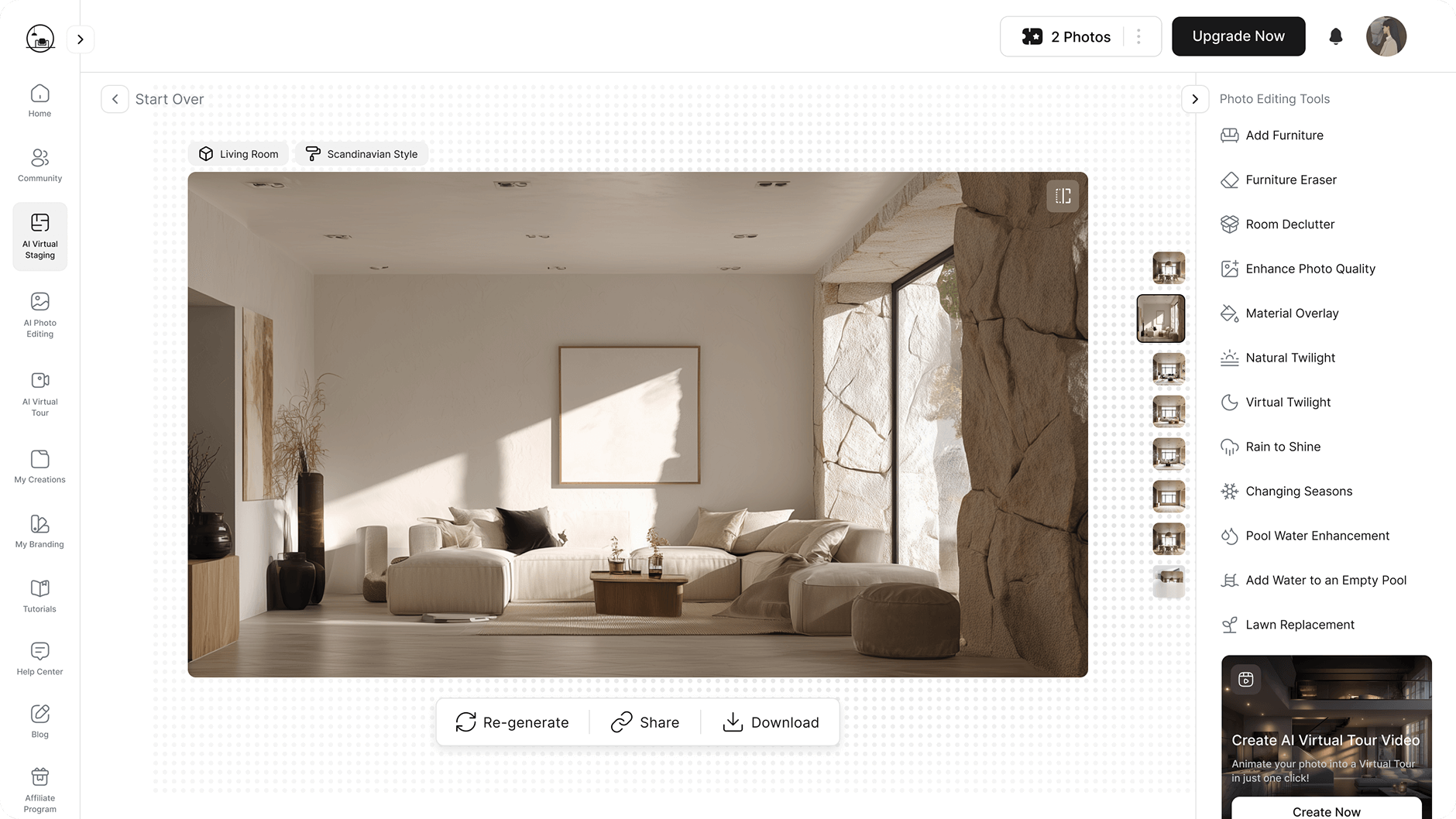
Collov uses AI to provide personalized interior design recommendations and can match furniture pieces to a user's style preferences. This custom furniture AI tool can help in sourcing or suggesting specific types of furniture that fit a generated aesthetic, bridging the gap between AI concepts and purchasable items.
Other notable mentions:
- Decorilla: An online interior design service that uses AI to match clients with suitable designers, providing a human-led but AI-assisted design experience for furniture selection.
- Interior AI: Focuses on quick room redecorations and style generations, useful for exploring how different furniture arrangements or styles might look without committing to a full design.
- Havenly: Another online interior design platform that combines designer expertise with AI tools to help clients select and integrate furniture into their homes.
Detailed feature comparison
| Feature / Tool | Paintit.ai | RoomGPT | Reimagine Home | Planner 5D | Collov | Decorilla | Interior AI | Havenly |
|---|---|---|---|---|---|---|---|---|
| Generative Design | High | Low | Medium | Low | Medium | Low | Low | Low |
| Image-to-3D Model | High | N/A | N/A | N/A | N/A | N/A | N/A | N/A |
| Text-to-3D Concept | High | N/A | N/A | N/A | N/A | N/A | N/A | N/A |
| Style Transfer | High | Medium | High | Low | High | Medium | High | Medium |
| Material Simulation | High | Low | Medium | Medium | Medium | Medium | Low | Medium |
| 2D/3D Floor Planning | Low | Low | Low | High | Medium | Medium | Low | Medium |
| Furniture Library | Medium | Low | Medium | High | High | High | Medium | High |
| Design Optimization | Medium | Low | Low | Low | Low | Low | Low | Low |
| Prototyping Export | Medium | Low | Low | Medium | Low | Low | Low | Low |
| AI Personalization | High | Medium | High | Medium | High | High | Medium | High |
Professional tools for advanced users
For advanced users like architects, professional furniture designers, and manufacturers, AI integrates with more robust CAD and 3D modeling software. Tools that offer strong interoperability with industry-standard formats (e.g., .obj, .fbx, .step) are crucial. This allows for AI-generated furniture design concepts to be refined, engineered, and prepared for manufacturing.
Many professional solutions leverage sophisticated generative design algorithms to explore optimal structural forms, material efficiency, and ergonomic considerations. This involves defining specific constraints and allowing AI to compute thousands of design iterations that meet those criteria. The output might be a lightweight chair structure or a cabinet system optimized for minimal material waste. Incorporating an AI Architecture Generator in the workflow, for example, can also help align furniture concepts with the structural and aesthetic considerations of an entire building, ensuring cohesion.
Strategic recommendations (decision framework)
Choosing the right AI furniture design generator depends heavily on your specific needs:
- For rapid ideation and visualization: If your primary goal is to quickly generate diverse furniture concepts, explore different styles, and visualize materials, tools like Paintit.ai's AI Concept Generator are ideal.
- For interior space planning: If you need to arrange furniture, test layouts, and visualize entire rooms, platforms like Planner 5D or Reimagine Home offer strong capabilities.
- For advanced structural and material optimization: For professionals focusing on engineering, sustainability, and manufacturability, look for AI tools that integrate with CAD software and offer generative design capabilities for performance optimization.
- For personalized style recommendations: If you need help discovering furniture pieces that match a specific aesthetic or integrate with existing decor, services like Collov or Havenly can be beneficial.
- What to Check Before Buying:
- AI Capabilities: Does it support image-to-3D, text-to-3D, or advanced generative features?
- Integration: Can it export to standard CAD formats (e.g., .obj, .fbx, .step)?
- Customization: How much control do you have over parameters, materials, and styles?
- Output Quality: Are the generated models detailed enough for professional use?
- User Interface: Is it intuitive for your workflow?
- Cost: Understand subscription models, perpetual licenses, or credit systems.
The ultimate hybrid workflow (step-by-step)
The most effective approach to AI-powered furniture design combines AI's strengths with human creativity and traditional design software.
- Define Design Goals: Clearly articulate the furniture's purpose, style, and any specific constraints (e.g., dimensions, materials, ergonomic requirements).
- AI Concept Generation: Use a best AI furniture design generator like Paintit.ai to brainstorm and generate initial forms and styles. Experiment with text prompts ("minimalist oak dining chair with curved back") or upload mood board images.
- Refinement & CAD Integration: Select promising AI concepts. Export these initial 3D models and import them into your preferred CAD software (e.g., Rhino, Fusion 360) for detailed refinement. This is where human design sensibility, engineering knowledge, and manufacturing considerations come into play.
- Material Selection & Optimization: Choose appropriate materials, potentially informed by AI suggestions for sustainability or performance. Use CAD tools to refine joinery and structural integrity.
- Prototyping & Visualization: Create physical prototypes using 3D printing or CNC machining for smaller components, or digital prototypes for full-scale assessment. Use AI rendering tools, like Paintit.ai's AI Rendering, to create highly realistic visualizations for client presentations, marketing, or design reviews.
- Manufacture & Review: Prepare the final design for manufacturing. Continuously review and iterate based on feedback and performance testing.
Managing expectations: current AI limitations
While generative AI for furniture design offers immense potential, it's essential to manage expectations:
- Practicality vs. Aesthetics: AI can generate aesthetically pleasing forms, but the practicality, structural integrity, and manufacturing feasibility often require significant human oversight and refinement.
- Contextual Understanding: AI tools may struggle with nuanced contextual understanding-for example, how a specific piece of furniture will interact with an entire interior ecosystem, or the subtle ergonomics required for diverse human body types. Human designers provide this crucial contextual intelligence.
- Originality: While AI generates novel forms, true originality often comes from a deep understanding of design history, cultural context, and human needs, which AI currently processes as data patterns rather than inherent understanding.
- Cost and Accessibility: Advanced generative design software can be complex and costly. While more user-friendly AI apps for furniture design are emerging, professional integration still requires skill and investment.
- Paintit.ai's limitations: Paintit.ai excels at concept generation and visualization. However, for deep engineering analysis, manufacturing optimization, or producing highly complex assemblies, you would typically export the generated concepts into specialized CAD software for further refinement and structural validation.
FAQ
Q: What is the best AI for furniture design in 2026?
A: The "best" AI depends on your specific needs. For rapid concept generation and visualization, Paintit.ai is highly effective. For detailed interior planning, Planner 5D is strong. For advanced generative design and engineering, integrating AI with professional CAD software is key.
Q: How to generate furniture designs with AI?
A: You can generate designs with AI by using text prompts (describing the furniture), uploading sketches or mood boards, or by setting specific parameters for generative design algorithms. The AI then produces various design concepts for you to refine.
Q: Can AI design custom cabinets or sofas?
A: Yes, AI can design custom cabinets, sofas, and other furniture. By defining parameters such as dimensions, style, materials, and functional requirements, you can use AI tools to generate tailored designs and variations.
Q: Is there a free AI furniture design generator?
A: Some platforms offer free trials or limited free versions of their AI furniture design generators. These often provide basic functionalities for concept generation and visualization, allowing users to experiment before committing to a paid subscription.
Conclusion
The best AI for furniture design in 2026 isn't a single tool, but a suite of intelligent assistants that augment human creativity and efficiency. From generating innovative forms and optimizing for sustainability to rapidly visualizing complex concepts, AI empowers designers to push boundaries like never before. It accelerates the ideation process, streamlines visualization, and helps optimize for both aesthetics and practical considerations.
Ultimately, AI serves as a powerful co-creator, allowing designers to explore vast possibilities and refine their visions with greater precision and speed. The future of furniture design is intelligent, collaborative, and more innovative than ever, with AI playing an indispensable role in shaping the spaces we inhabit. Embrace these tools to elevate your design process and bring truly unique furniture concepts to life.
Trending
Challenges and Limitations of Integrating AI into Architectural Design
7 Best Styldod Alternatives & Competitors in 2026: Full Review
The Next Gen of Smart Sales: Integrating Lighting Catalogs with Agentic AI and Paintit.ai
Looking for HomeByMe Alternatives? Top AI Tools for Instant 3D Design & Rendering
Best AI Bathroom Design App: Visualize Your Sanctuary in Seconds
Related articles

7 min read
Best AI for Furniture Design: The Ultimate 2026 Pro Guide
Discover the best AI for furniture design in 2026. Compare Paintit.ai, Planner 5D, and more to optimize your 3D modeling, ideation, and sustainable workflows
Yulii Cherevko
CEO paintit.ai

7 min read
Challenges and Limitations of Integrating AI into Architectural Design
Explore the limitations of AI in architecture: from algorithmic bias and the 'black box' problem to BIM integration hurdles and evolving ethical legal risks
Yulii Cherevko
CEO paintit.ai

8 min read
7 Best Styldod Alternatives & Competitors in 2026: Full Review
Discover the top Styldod alternatives for AI virtual staging in 2026. Compare Paintit.ai, Collov, and more to find the best tool for photorealistic property design
Yulii Cherevko
CEO paintit.ai

5 min read
The Next Gen of Smart Sales: Integrating Lighting Catalogs with Agentic AI and Paintit.ai
Discover how Agentic AI and Paintit.ai transform lighting sales. Enhance personalization, reduce returns, and automate catalogs for the next gen of retail.
Yulii Cherevko
CEO paintit.ai

8 min read
Looking for HomeByMe Alternatives? Top AI Tools for Instant 3D Design & Rendering
Searching for a HomeByMe alternative? Explore the best AI-powered tools for instant interior design and photorealistic rendering. Find your perfect fit with Paintit.ai.
Yulii Cherevko
CEO paintit.ai