
6 min. reading
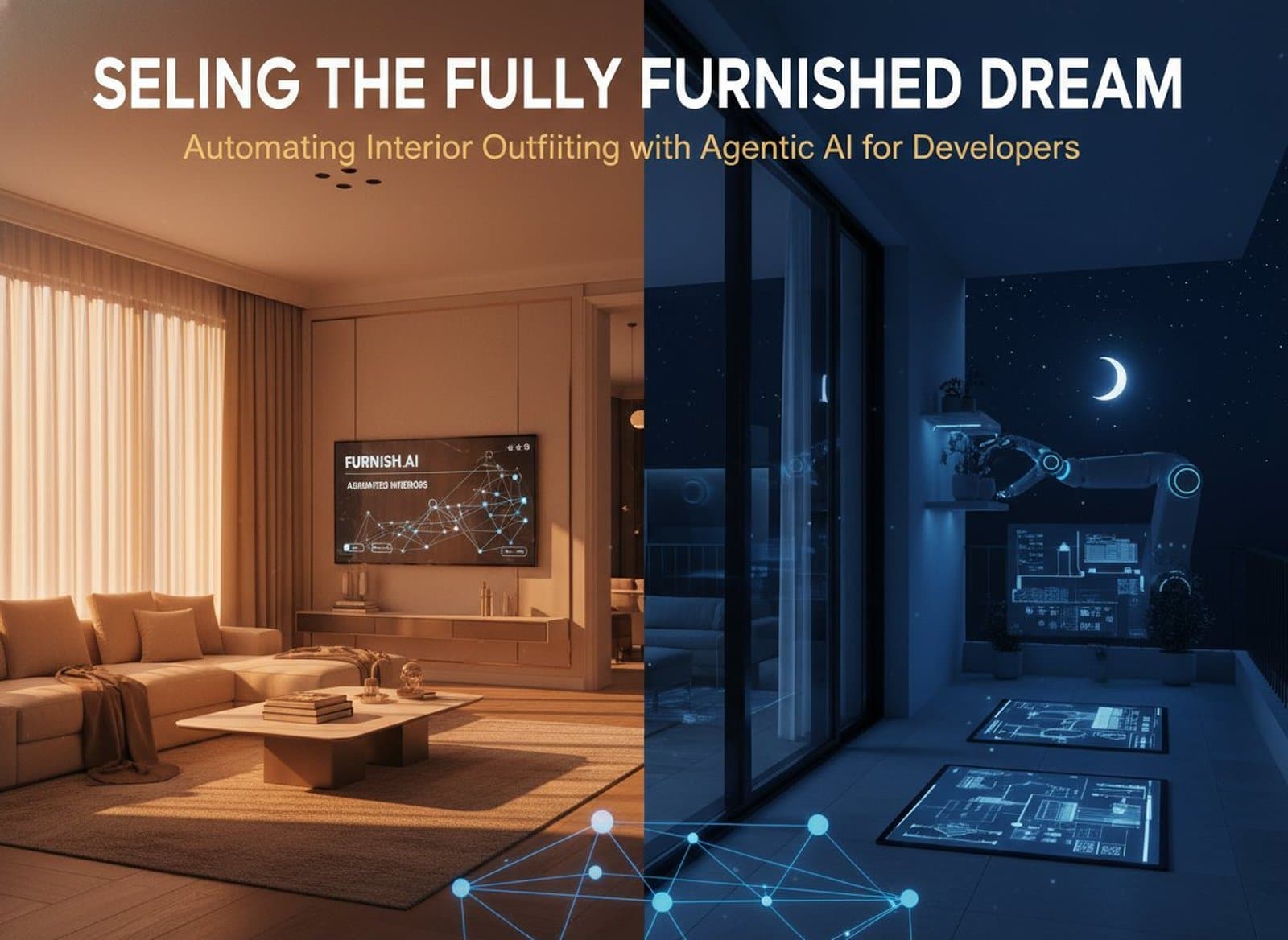
Selling the Fully Furnished Dream: Automating Interior Outfitting with Agentic AI for Developers

Yulii Cherevko
CEO paintit.ai
Page Contents:
- 1. The Developer's Imperative: Efficiency from Concept to Closing
- 2. What is Agentic AI in Property Development?
- 3. AI-Driven Turnkey Apartment Solutions: Capabilities for Scale
- 4. Curating Appeal: AI's Role in Defining Property Aesthetics
- 5. Integrating AI into Your Development Workflow
- 6. The Paintit.ai Platform: Bridging AI and Design Reality
- 7. Navigating Proptech Automation Trends 2026 and Beyond
- 8. Common Questions on Agentic AI for Property Developers
Selling a property, especially in multi-unit developments, increasingly hinges on presenting a fully realized vision. Buyers and renters want to walk into a space and immediately envision their lives there, not grapple with an empty shell. This demand for a "furnished dream" creates both opportunity and significant operational overhead for real estate developers.
Historically, outfitting multiple properties has been a slow, costly, and resource-intensive process, involving manual design, procurement, and staging. Scaling interior design for multi-unit developments across various price points and demographics tests even the most robust teams. The challenge is clear: how to deliver aspirational, market-ready interiors efficiently and cost-effectively.
The answer lies in Automating Interior Outfitting with Agentic AI for Real Estate Developers. This isn't just about faster rendering; it’s about autonomous, intelligent systems that manage the end-to-end process, from aesthetic curation to procurement, significantly increasing real estate ROI via autonomous outfitting. Explore how Paintit.ai provides the tools to bring this vision to life.
Key Takeaways
- Agentic AI vs. Generative AI: Unlike tools that only generate images, agentic AI acts as an autonomous partner that plans, executes, and adapts to market data.
- Operational Efficiency: Automation eliminates bottlenecks in manual design and procurement, reducing time-on-market.
- Scalability: Developers can outfit multi-unit developments at scale with consistent quality across diverse price points.
- ROI Optimization: Data-driven designs align with buyer demographics to maximize sales potential and rental yields.
- Paintit.ai Integration: Our platform bridges the gap between abstract AI concepts and photorealistic, marketable visualizations.
The Developer's Imperative: Efficiency from Concept to Closing
Real estate development operates on tight margins and even tighter timelines. Every week a unit sits unappealing or unfinished is a week of lost revenue. The conventional approach to interior outfitting — hiring designers, coordinating contractors, sourcing furniture, and managing logistics — is a bottleneck. It’s susceptible to human error, supply chain delays, and subjective design choices that may miss market trends.
Proptech automation trends 2026 point towards solutions that eliminate these friction points. Developers need to transform properties from blueprints to furnished reality with AI, not just for luxury units, but for entire portfolios. This requires a system that can understand constraints, learn from market data, and execute complex tasks with minimal human intervention.
The goal is clear: reduce property time-on-market with AI design, ensuring each unit is not only aesthetically pleasing but strategically optimized for its target demographic and pricing tier. The solution must provide cost-effective interior outfitting at scale without compromising on quality or appeal.
What is Agentic AI in Property Development?
Agentic AI marks a significant evolution beyond simple generative AI. While generative AI creates new content (like images or text) based on prompts, an agentic AI system takes this a step further. It acts as an autonomous agent, capable of understanding complex goals, planning multi-step actions, executing those actions, learning from outcomes, and adapting its strategy to achieve the objective.
For real estate, this means more than just generating a pretty render. An agentic AI doesn't just show you a Scandinavian living room; it designs one based on local market data, selects furniture and finishes from a database, optimizes the layout for traffic flow and accessibility, and can even suggest procurement pathways.
Beyond Static Renders: The Intelligence Layer
Traditional AI visualization tools offer immense value, allowing developers to see potential designs quickly. Agentic AI adds an intelligence layer: it operates with intent. It can analyze floor plans, demographic data, historical sales figures, and even local competitor designs to propose interior schemes that are not only visually appealing but strategically aligned with sales objectives. This makes it an invaluable asset for fully furnished property sales automation.
Learning, Adapting, and Executing at Scale
The power of agentic AI lies in its ability to learn and adapt. If a certain design style proves particularly popular in one development, the AI can incorporate those learnings into future projects. It can identify patterns in buyer feedback and adjust its proposals. This continuous optimization is critical for scaling interior design for multi-unit developments, allowing for consistent quality and market relevance across hundreds or thousands of units.
AI-Driven Turnkey Apartment Solutions: Capabilities for Scale
The promise of agentic AI for real estate developers extends to building comprehensive, AI-driven turnkey apartment solutions. This involves a suite of capabilities that automate virtually every aspect of interior outfitting.
Dynamic Market-Responsive Design Generation
Agentic AI can process vast amounts of market data – from local demographics and average income to prevailing aesthetic trends and competitor offerings. It uses this intelligence to generate design proposals that are hyper-targeted to specific buyer segments. Want to outfit a building for young tech professionals? The AI can propose a sleek, minimalist aesthetic with integrated smart home features. Targeting families? It can design a durable, child-friendly space with ample storage. This capability reduces the guesswork and manual research traditionally required.
Autonomous Procurement & Resource Optimization
Beyond design, agentic AI can automate aspects of procurement. Based on the approved designs and a pre-defined budget, it can identify suitable furniture, fixtures, and materials from integrated supplier databases. This includes checking inventory, comparing prices, and even suggesting alternatives if an item is out of stock. This autonomous procurement for real estate assets drastically streamlines the supply chain, minimizes delays, and ensures cost-effective sourcing.
Virtual Staging & Pre-Visualization for Rapid Sales
Before a single piece of furniture is ordered, agentic AI facilitates advanced virtual staging and pre-visualization. High-fidelity renders and interactive virtual tours, generated directly from the AI's designs, allow prospective buyers to experience the fully furnished space. This AI-powered home staging for developers accelerates pre-sales, gathers early feedback, and allows for adjustments before significant investment in physical staging. AI virtual staging tools simplify this process, making it accessible and efficient.
Curating Appeal: AI's Role in Defining Property Aesthetics
One of the most compelling applications of agentic AI is its ability to curate specific design styles at scale, ensuring consistent quality and market appeal across numerous units. By leveraging an AI Concept Generator, developers can explore diverse aesthetic approaches, each optimized for specific demographics or property types.
AI-Driven Scandinavian Simplicity for Urban Condos
For urban developments targeting young professionals, agentic AI can generate designs emphasizing clean lines, natural light, and functional minimalism. It will select light wood tones, muted color palettes (whites, grays, soft blues), and multi-functional furniture, creating an airy, uncluttered feel. The AI ensures that even with a minimalist approach, the space remains warm and inviting, avoiding sterility by suggesting soft textiles and carefully placed accent pieces.
AI-Optimized Modern Farmhouse for Suburban Townhomes
In suburban markets, the AI can blend rustic charm with contemporary comfort. It selects warm neutrals, introduces shiplap or board-and-batten accents, and specifies comfortable, family-friendly furnishings. Details like farmhouse-style lighting and a mix of natural and painted wood are curated to avoid clichés, striking a balance between cozy appeal and modern sophistication.
AI-Generated Coastal Retreat for Resort-Style Apartments
For properties designed for leisure or rental income, agentic AI can evoke a serene, vacation-like atmosphere. It focuses on crisp whites, sandy beiges, and soft blues, complemented by natural textures like rattan and jute. The AI optimizes for natural light, suggesting breezy layouts and subtle nautical or beach-inspired decor that exudes relaxation without being overtly themed.
AI-Crafted Industrial Loft for Urban Conversions
When converting old industrial spaces, the AI can celebrate exposed architectural elements—brick, concrete, ductwork. It selects robust, utilitarian furniture, a palette of grays, charcoals, and brick reds, and statement industrial lighting. The challenge of making these spaces feel inviting is met by the AI’s suggestions for warming elements like leather upholstery, plush rugs, and strategic lighting.
AI-Generated Minimalist Zen for High-End Residences
For luxury properties, agentic AI can create spaces of understated elegance and tranquility. It focuses on extreme simplicity, natural, high-quality materials (stone, fine wood veneers), and a harmonious, muted color scheme. The AI ensures the space feels serene and expansive, not empty, by meticulously curating every element and integrating subtle, indirect lighting to enhance depth.
AI-Curated Biophilic Design for Wellness-Focused Developments
Addressing the growing demand for wellness, the AI can integrate natural elements and patterns to promote well-being. This includes optimizing for natural light, integrating living walls or abundant plant life, and using natural materials like wood, stone, and bamboo. The AI designs spaces that feel connected to nature, promoting a calming and creative environment.
AI-Generated Luxury Transitional for Upscale Urban Living
For discerning urban buyers, the AI can fuse classic and contemporary styles into a timeless, sophisticated aesthetic. It balances traditional architectural details with modern furnishings, using rich neutrals, deep jewel tones, and metallic accents. The AI ensures a cohesive flow, layering lighting and selecting high-quality materials like polished marble and plush velvets for an elevated, refined feel.
AI-Designed Smart Home Integration for Tech-Savvy Apartments
For properties targeting tech-forward residents, agentic AI designs living spaces where technology is seamlessly integrated. It specifies centralized smart home systems, hidden charging ports, and dynamic LED lighting. The AI focuses on sleek, modern aesthetics, ensuring technology enhances convenience without feeling intrusive, optimizing for a truly future-ready living experience.
{IMAGE:section3}
Integrating AI into Your Development Workflow
The true power of agentic AI for developers lies in its seamless integration into the existing development lifecycle. It's not a replacement for human expertise but an intelligent accelerator that augments human capabilities.
From Blueprints to Furnished Reality with AI
The integration typically begins at the earliest stages. Developers input architectural plans, site specifications, budget constraints, and target demographic profiles into an AI platform. The agentic AI then autonomously generates multiple interior design concepts, complete with material palettes, furniture layouts, and even procurement lists. These concepts can be visualized instantly, allowing developers to review, refine, and select optimal designs in a fraction of the time. This rapid iteration allows for a smooth transition from blueprints to furnished reality with AI.
Autonomous Procurement for Real Estate Assets: A Closer Look
Once a design is approved, the AI takes over the specification process. It can output detailed bills of materials (BOMs) and direct procurement requests. For example, if a developer needs 500 units furnished in a "Modern Farmhouse" style, the AI can generate the specific order lists for furniture, fixtures, and finishes, ensuring consistency and adherence to budget. This automated furniture procurement for developers reduces manual data entry, minimizes errors, and leverages bulk purchasing efficiencies.
The Paintit.ai Platform: Bridging AI and Design Reality
At Paintit.ai for Property Development, we provide the practical tools that make agentic AI a tangible asset for developers. Our platform bridges the gap between AI-generated concepts and the detailed visualization needed for confident decision-making and marketing.
We empower developers to upload existing blueprints or empty room photos and apply AI-driven design principles. From generating hyper-realistic renders of AI-curated interiors to allowing real-time material and furniture swaps, Paintit.ai transforms abstract AI concepts into concrete, marketable visuals. This allows for rapid iteration, precise aesthetic control, and the ability to showcase fully furnished units long before physical construction or staging begins.
Navigating Proptech Automation Trends 2026 and Beyond
The adoption of agentic AI is a cornerstone of proptech automation trends 2026. Developers who embrace this technology will gain a significant competitive advantage. It’s not just about immediate cost savings, but about future-proofing operations, building more resilient supply chains, and consistently delivering properties that resonate deeply with market demand.
The future of real estate development involves increasingly intelligent systems that learn, adapt, and execute. From integrating architectural plans with agentic commerce to predictive maintenance of outfitting, AI will continue to optimize every aspect of the property lifecycle. This evolution means developers can focus on strategy and innovation, while the AI handles the complex, repetitive tasks of interior outfitting.
Common Questions on Agentic AI for Property Developers
Developers often have specific questions about integrating such advanced technology into their operations.
How does agentic AI differ from traditional design tools?
Traditional interior design software for developers are tools that require human input for every design decision. Agentic AI, however, functions as an intelligent partner. It autonomously generates designs, makes decisions based on learned data and defined goals, and can even plan procurement, reducing the need for constant human oversight. Think of it as moving from an advanced drawing board to an intelligent, self-guiding design consultant.
Can agentic AI adapt to local market and demographic shifts?
Yes, highly sophisticated agentic AI can be trained on extensive datasets that include demographic shifts, local sales data, competitor analysis, and even social sentiment. This allows it to predict and cater to specific buyer preferences within a geographical area, ensuring automated interior outfitting for properties remains relevant and appealing.
What ROI or time savings can developers expect?
While exact figures depend on project scale and complexity, developers can anticipate significant time savings. Rapid design generation and refinement can reduce the design-to-market timeline by weeks or even months. The ROI is driven by faster sales/leasing cycles, reduced operational overhead (design fees, procurement management), and potentially higher property values due to optimized, market-aligned interiors.
How does it integrate with existing development processes?
Integration typically involves using AI platforms that can ingest existing architectural plans (CAD files, floor plans) and output data compatible with project management and procurement systems. The process moves from initial data input, through AI-generated concepts and human-assisted refinement, to AI-informed specifications. AI room design tools are a practical starting point for visualization and refinement.
Can AI handle complex building codes or accessibility?
Basic AI can flag potential non-compliance, but complex building codes and nuanced accessibility requirements still necessitate human oversight and expert validation. While agentic AI is rapidly evolving to include compliance modules, it's crucial to verify their capabilities for specific regions and always incorporate professional review to ensure full adherence.
The fully furnished dream is no longer a luxury; it’s a market expectation. Automating Interior Outfitting with Agentic AI for Real Estate Developers is the strategic advantage that streamlines operations, elevates design, and fundamentally transforms how properties are brought to market. By leveraging AI to understand market dynamics, curate perfect aesthetics, and automate the intricate process of outfitting, developers can unlock unprecedented efficiency and secure a stronger competitive position. Embracing agentic AI means increasing real estate ROI via autonomous outfitting, ensuring every unit is not just built, but intelligently designed to sell.
Trending
Looking for BoxBrownie Alternatives? Top AI Tools for Instant Virtual Staging
Best AI for Furniture Design: The Ultimate 2026 Pro Guide
Challenges and Limitations of Integrating AI into Architectural Design
7 Best Styldod Alternatives & Competitors in 2026: Full Review
The Next Gen of Smart Sales: Integrating Lighting Catalogs with Agentic AI and Paintit.ai
Related articles
6 min read
Selling the Fully Furnished Dream: Automating Interior Outfitting with Agentic AI for Developers
Learn how agentic AI and Paintit.ai automate interior design for developers. Scale outfitting, increase ROI, and reduce property time-on-market effectively
Yulii Cherevko
CEO paintit.ai
11 min read
Looking for BoxBrownie Alternatives? Top AI Tools for Instant Virtual Staging
Discover the best BoxBrownie alternatives for 2026. Compare AI virtual staging tools like Paintit.ai for instant photo enhancement and photorealistic rendering
Yulii Cherevko
CEO paintit.ai
7 min read
Best AI for Furniture Design: The Ultimate 2026 Pro Guide
Discover the best AI for furniture design in 2026. Compare Paintit.ai, Planner 5D, and more to optimize your 3D modeling, ideation, and sustainable workflows
Yulii Cherevko
CEO paintit.ai
7 min read
Challenges and Limitations of Integrating AI into Architectural Design
Explore the limitations of AI in architecture: from algorithmic bias and the 'black box' problem to BIM integration hurdles and evolving ethical legal risks
Yulii Cherevko
CEO paintit.ai
8 min read
7 Best Styldod Alternatives & Competitors in 2026: Full Review
Discover the top Styldod alternatives for AI virtual staging in 2026. Compare Paintit.ai, Collov, and more to find the best tool for photorealistic property design
Yulii Cherevko
CEO paintit.ai
5 min read
The Next Gen of Smart Sales: Integrating Lighting Catalogs with Agentic AI and Paintit.ai
Discover how Agentic AI and Paintit.ai transform lighting sales. Enhance personalization, reduce returns, and automate catalogs for the next gen of retail.
Yulii Cherevko
CEO paintit.ai