
Designing a 1960s Living - Room: Mid-Century Modern Vibes
Ever walked into a space and felt that unmistakable cool, effortless vibe of a 1960s living room? Maybe you're drawn to the sleek lines, the bold colors, or the playful patterns that defined an era of optimism and innovation. It’s more than just furniture - it’s a feeling. How do you capture that distinct spirit without making it feel like a museum?
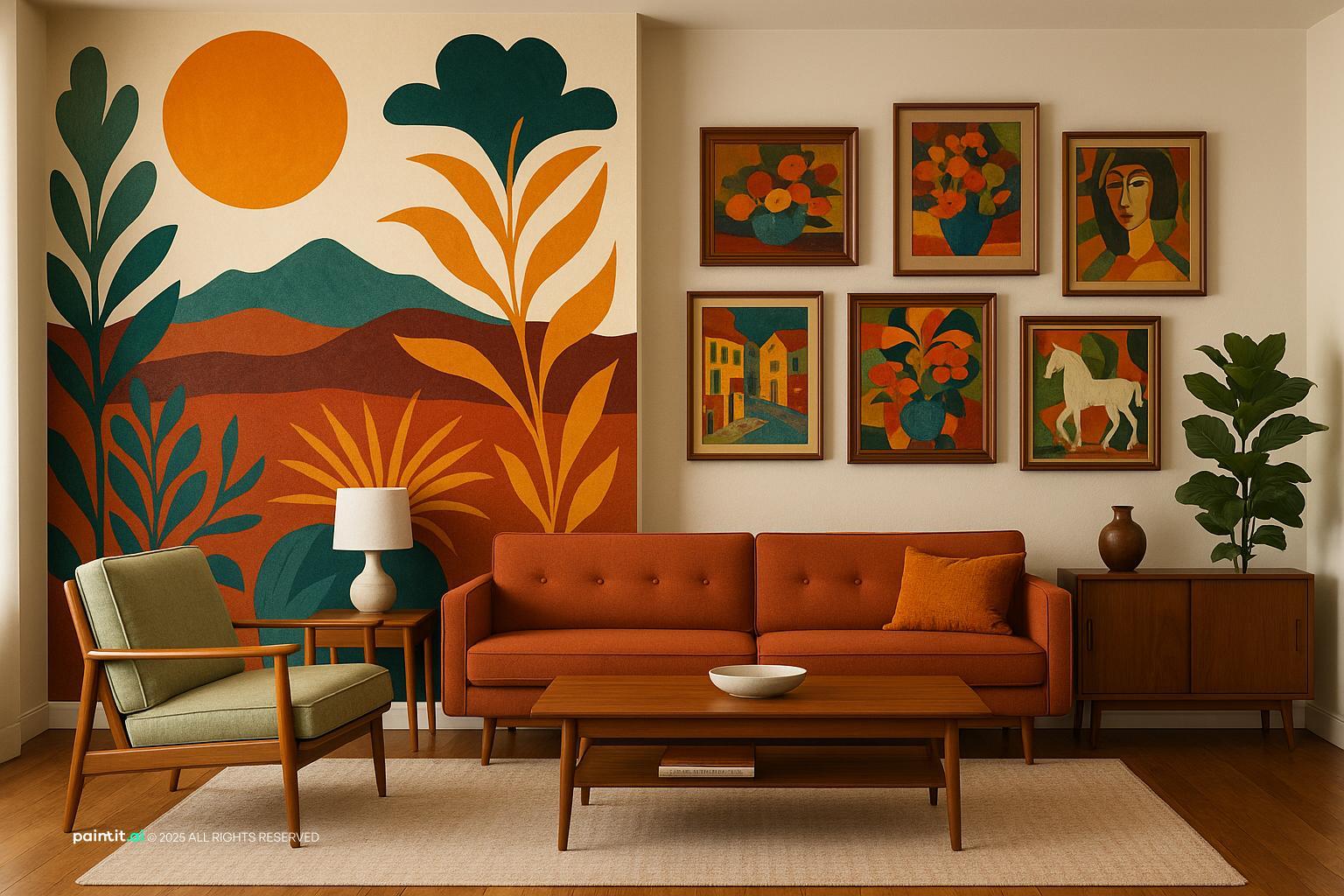
Essential Tips for Crafting Your Perfect 1960s living room
Stunning Examples of 14 Ways to Infuse That Iconic 1960s Living Room Vibe into Your Home
-
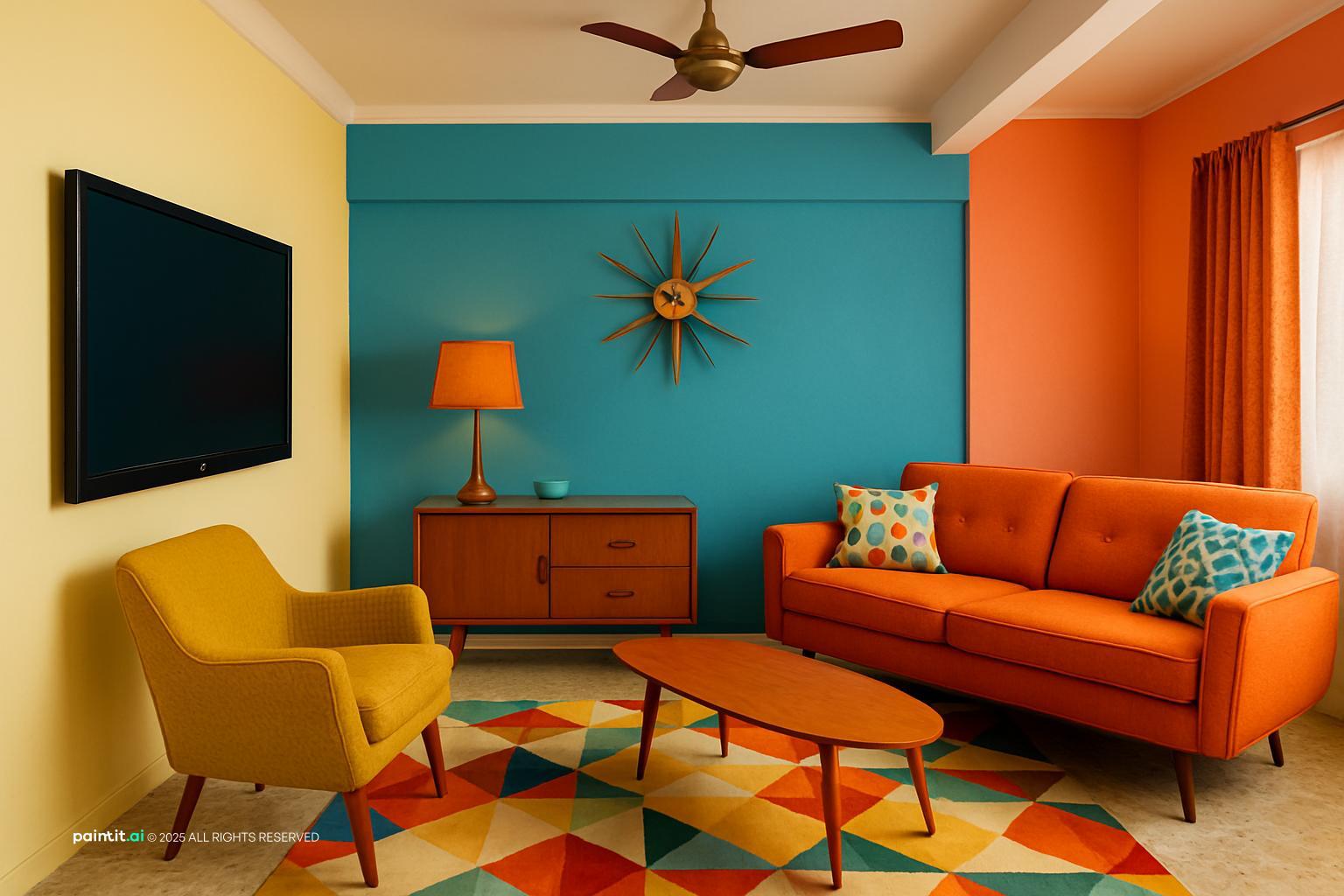
Alright, so you're ready to really dig into making your space sing with that unmistakable mid-century charm. We've pulled together some ideas that balance the era's bold aesthetic with everyday functionality. It’s about creating a space that feels lived-in, not just looked at, and we’re here to help you nail that authentic 1960s style living room.
-
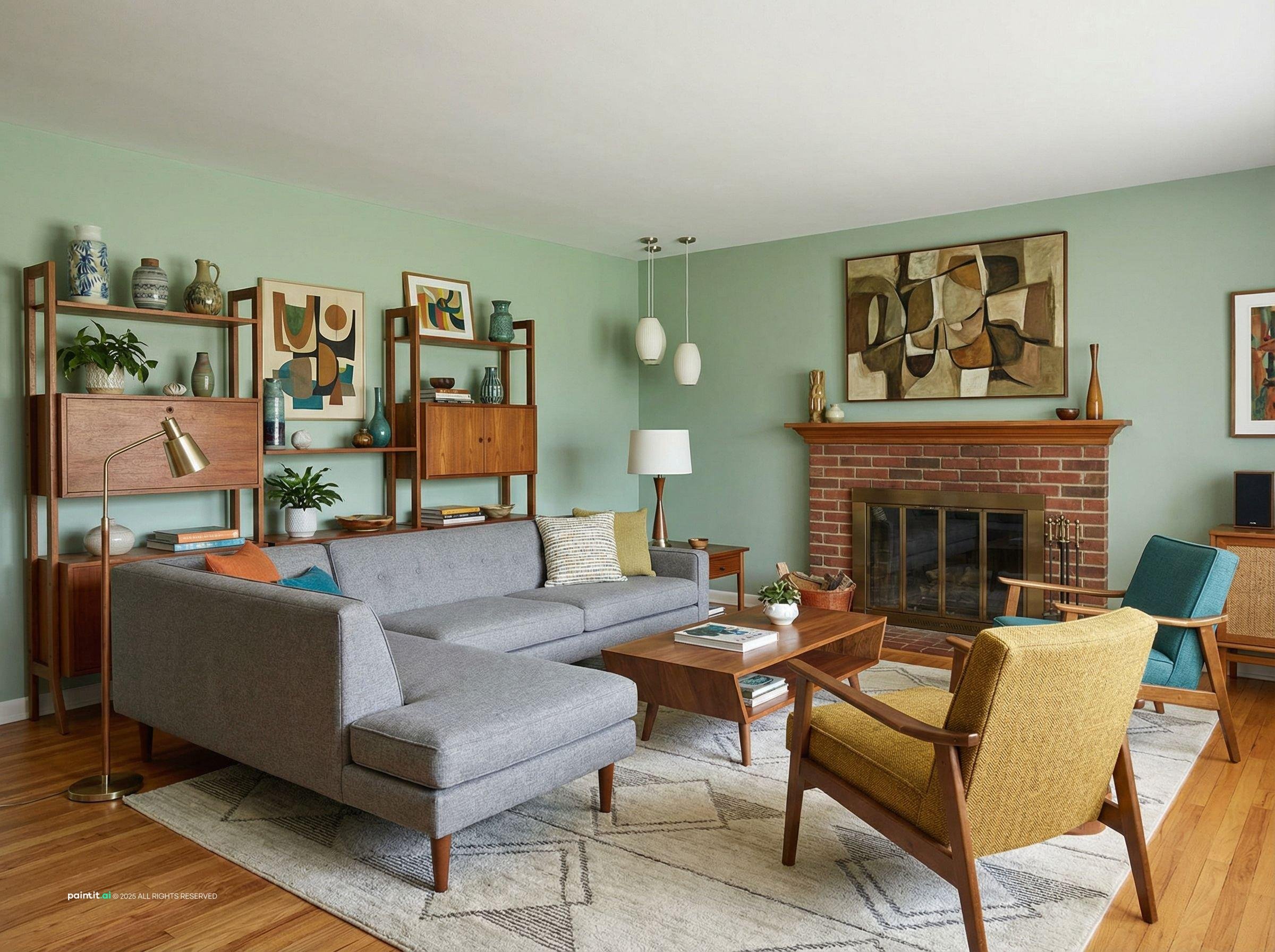
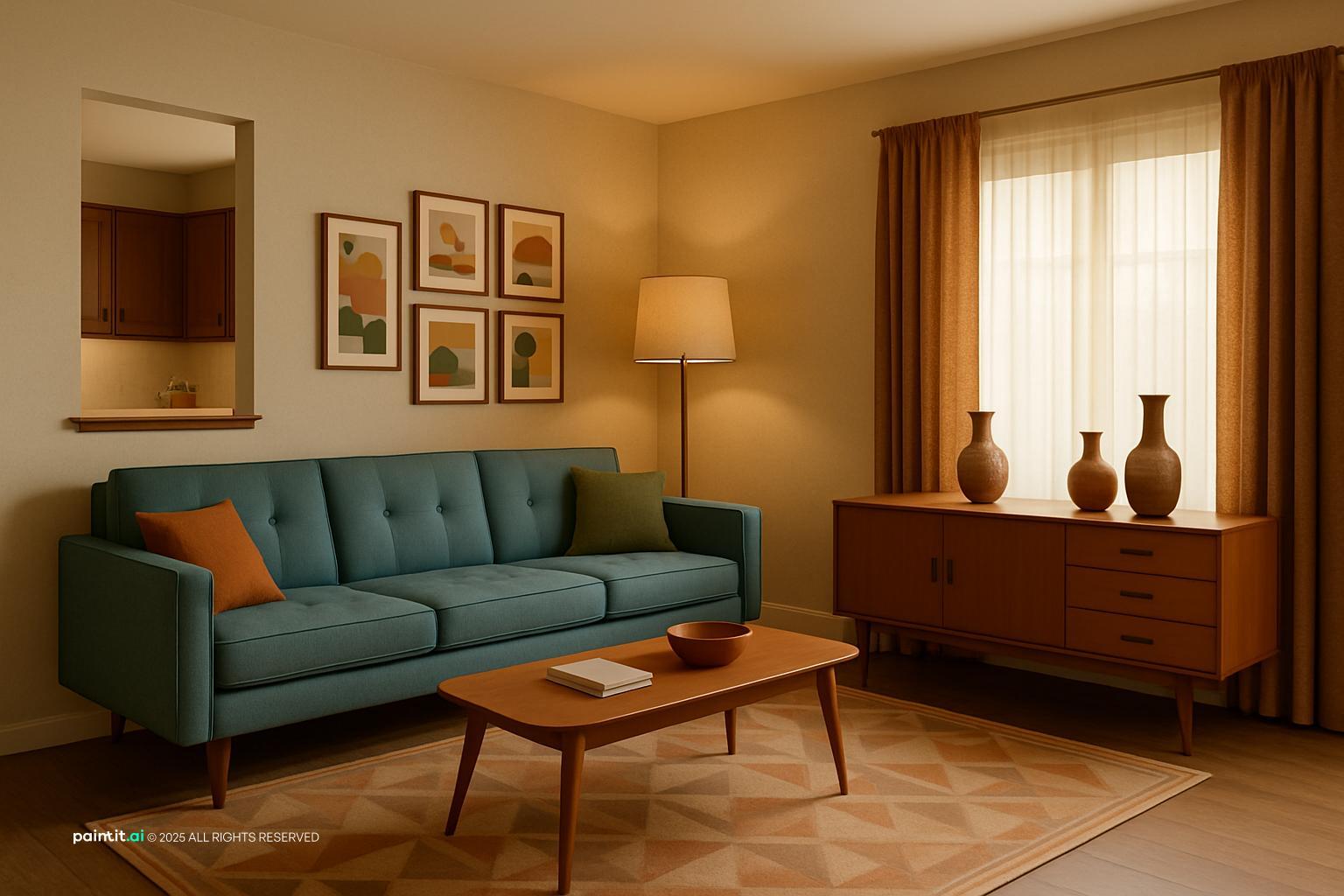
This is often the anchor of any truly great 60's living room. Think about the way these pieces invite you to sink in, offering a relaxed yet sophisticated presence. It’s a design choice that speaks to comfort without sacrificing an ounce of style, a hallmark of a typical 1960s living room.
-
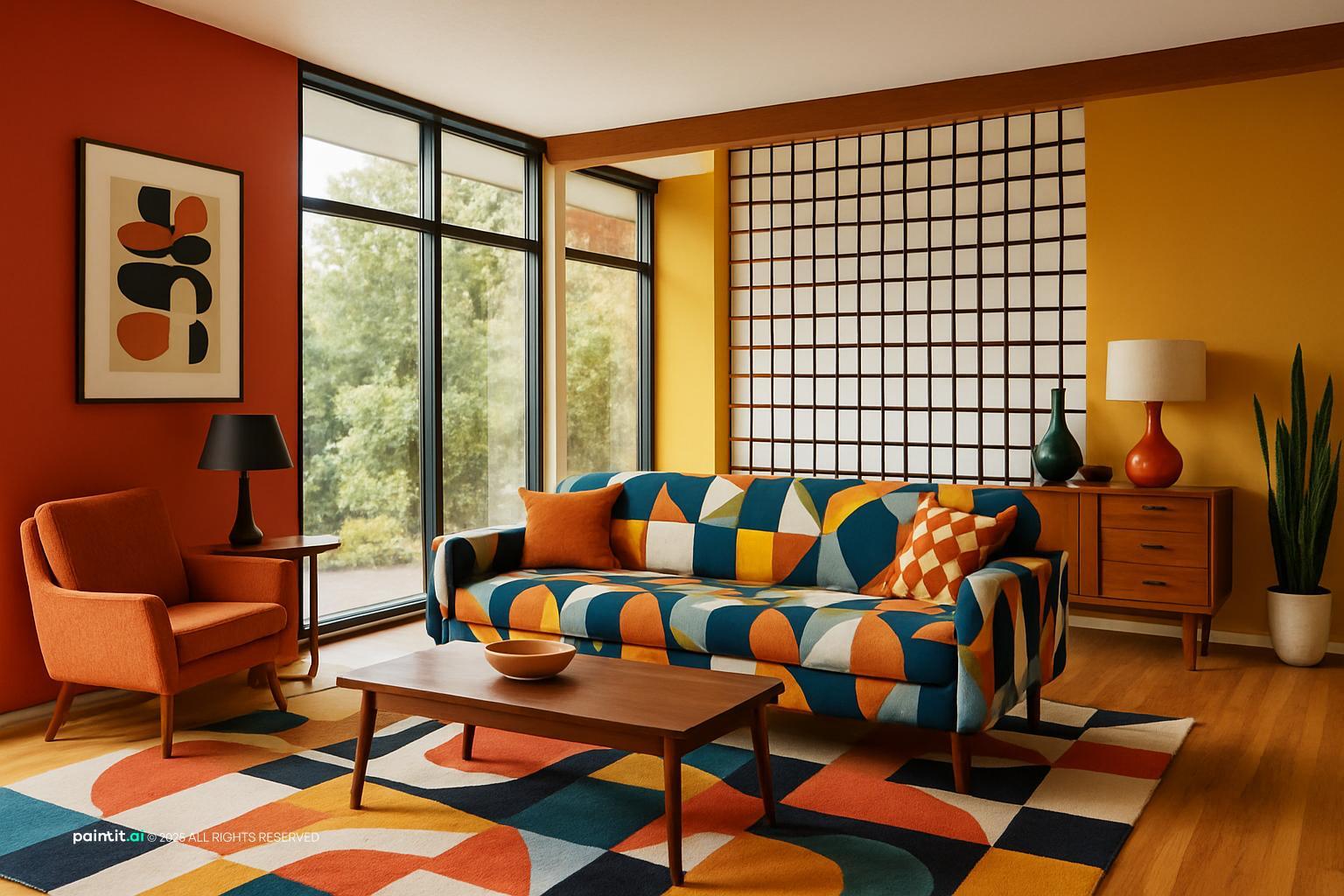
Look for a sofa with clean lines, often a single long cushion, and perhaps some subtle tufting on the back. Upholstery in a rich velvet or a textured wool works wonders. Consider a piece by Adrian Pearsall or a similar silhouette; the scale is key here, often lower to the ground than modern counterparts.
-
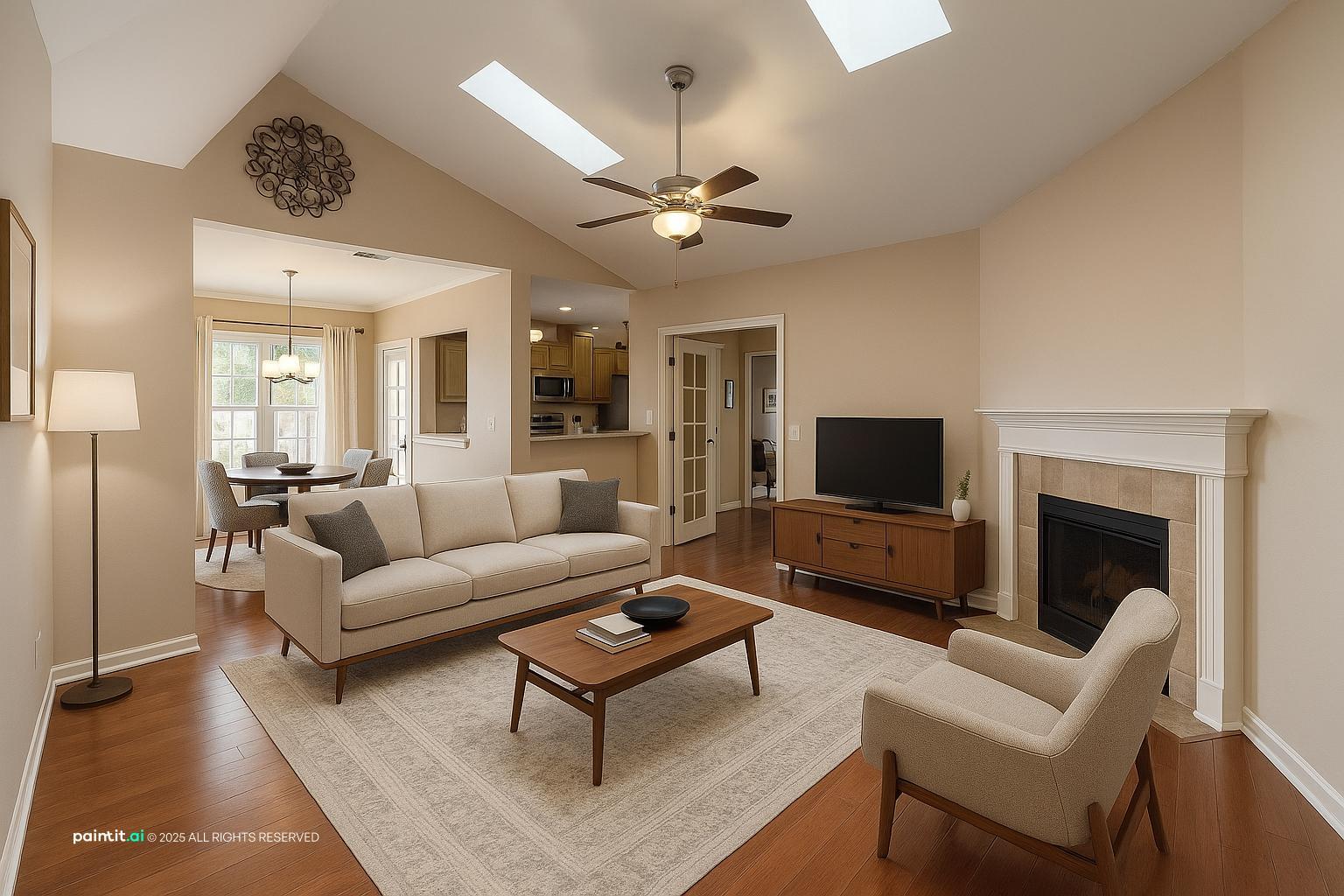
Pro Tip: To achieve this effect, try pairing a vibrant sofa with more subdued accent chairs to let it truly shine.
-
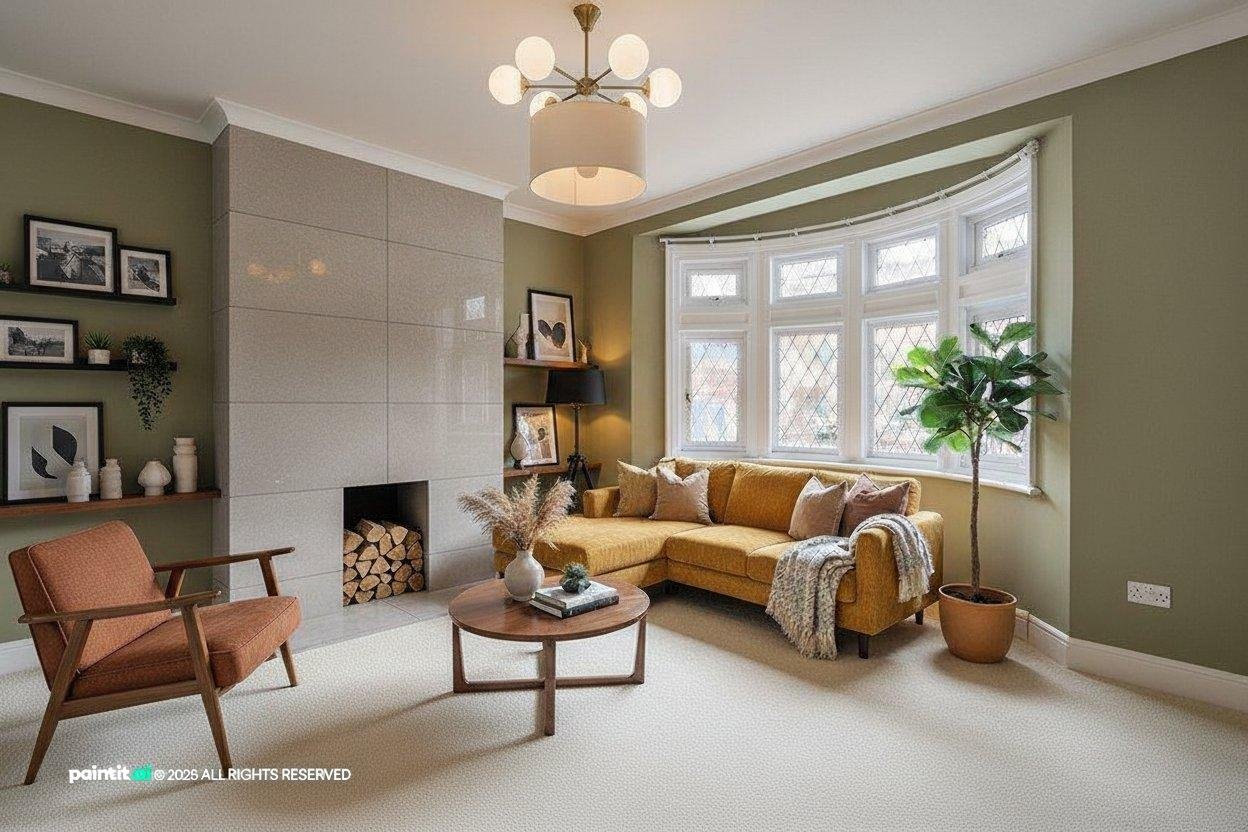
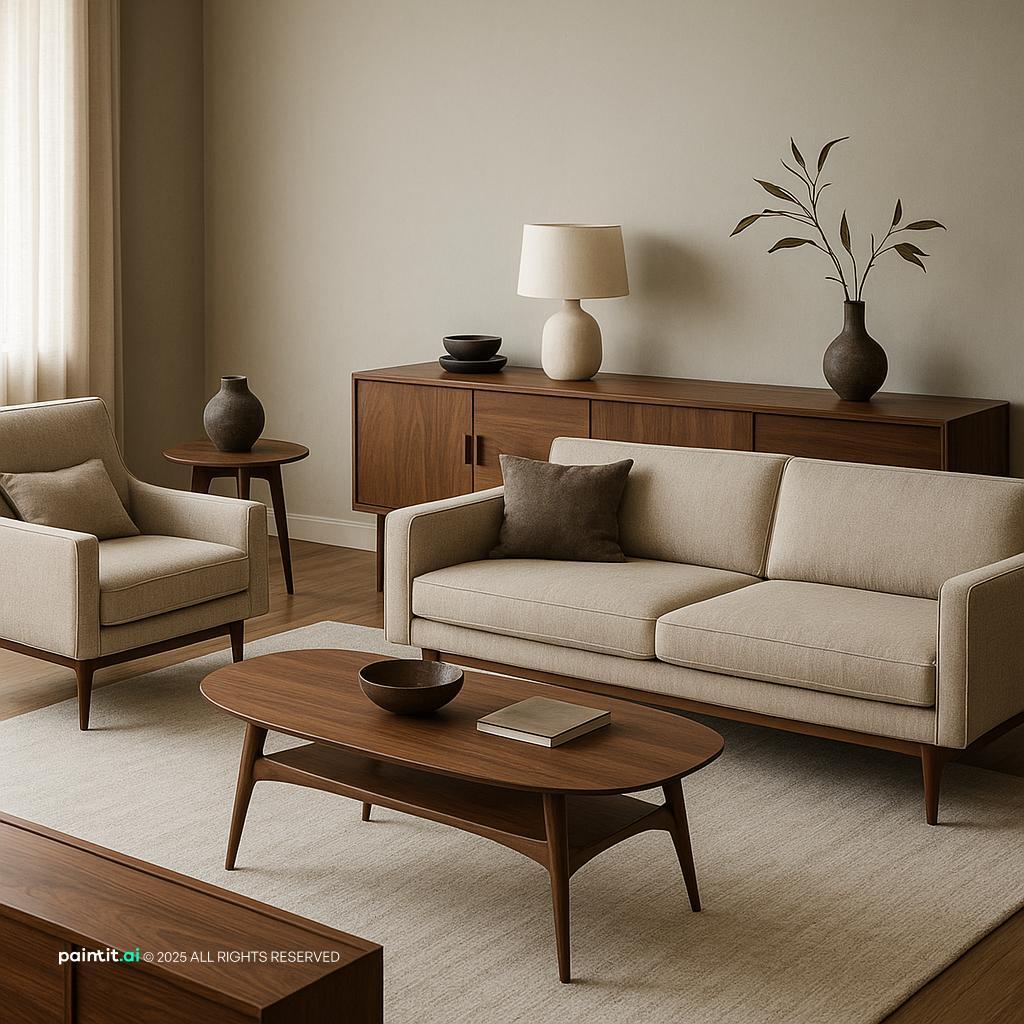
Nothing screams mid-century 1960s living room quite like the warm, rich tones of teak and walnut. These woods were the stars of the era, bringing a natural elegance and durability to furniture. There’s a timeless quality to them that feels both grounded and incredibly chic.
-
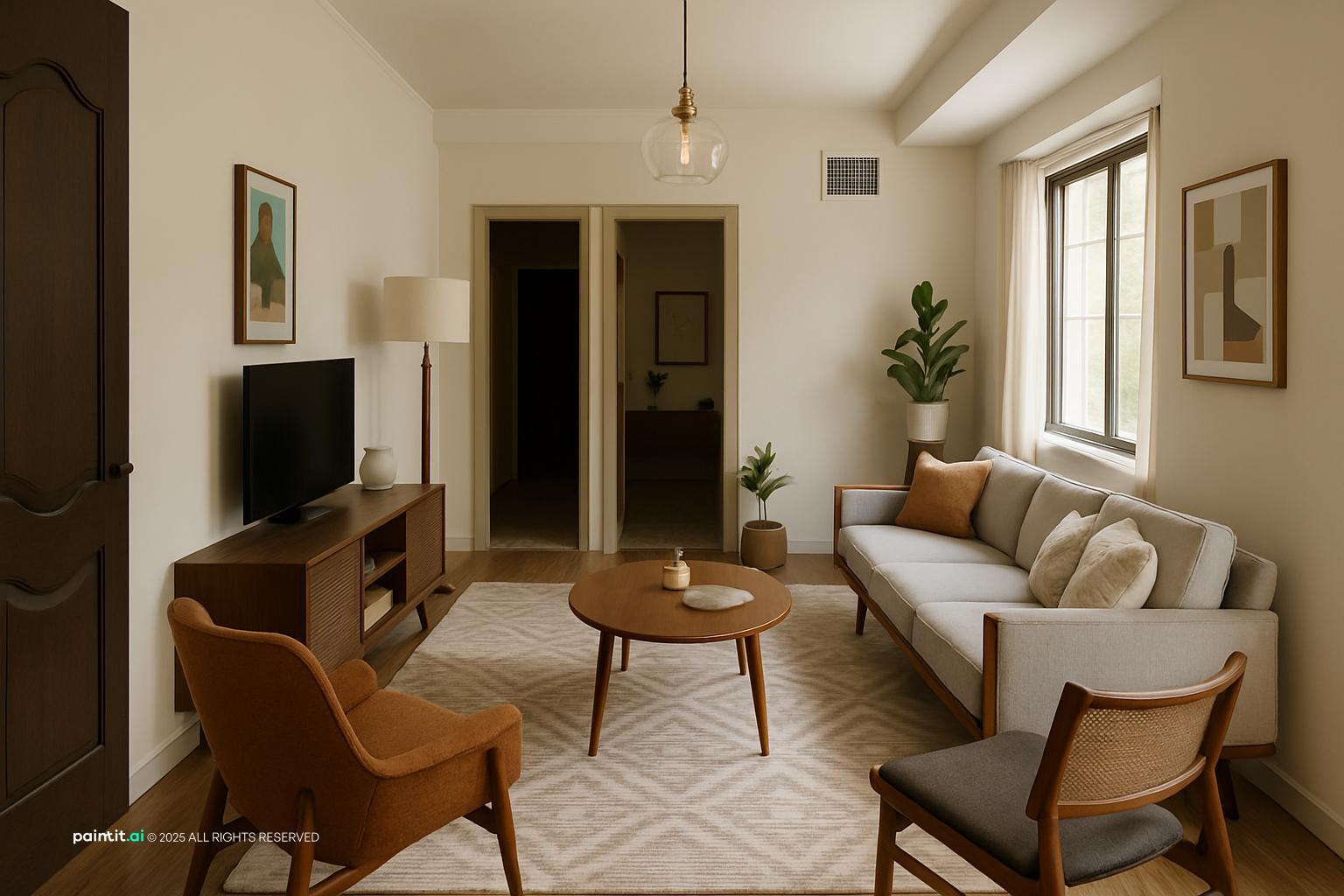
Incorporate a sleek teak sideboard or a walnut coffee table. Think about pieces with tapered legs and minimal ornamentation. A wall-mounted shelving unit in walnut can provide both storage and a display for your curated objects. The grain of these woods adds a subtle texture that’s hard to replicate.
-
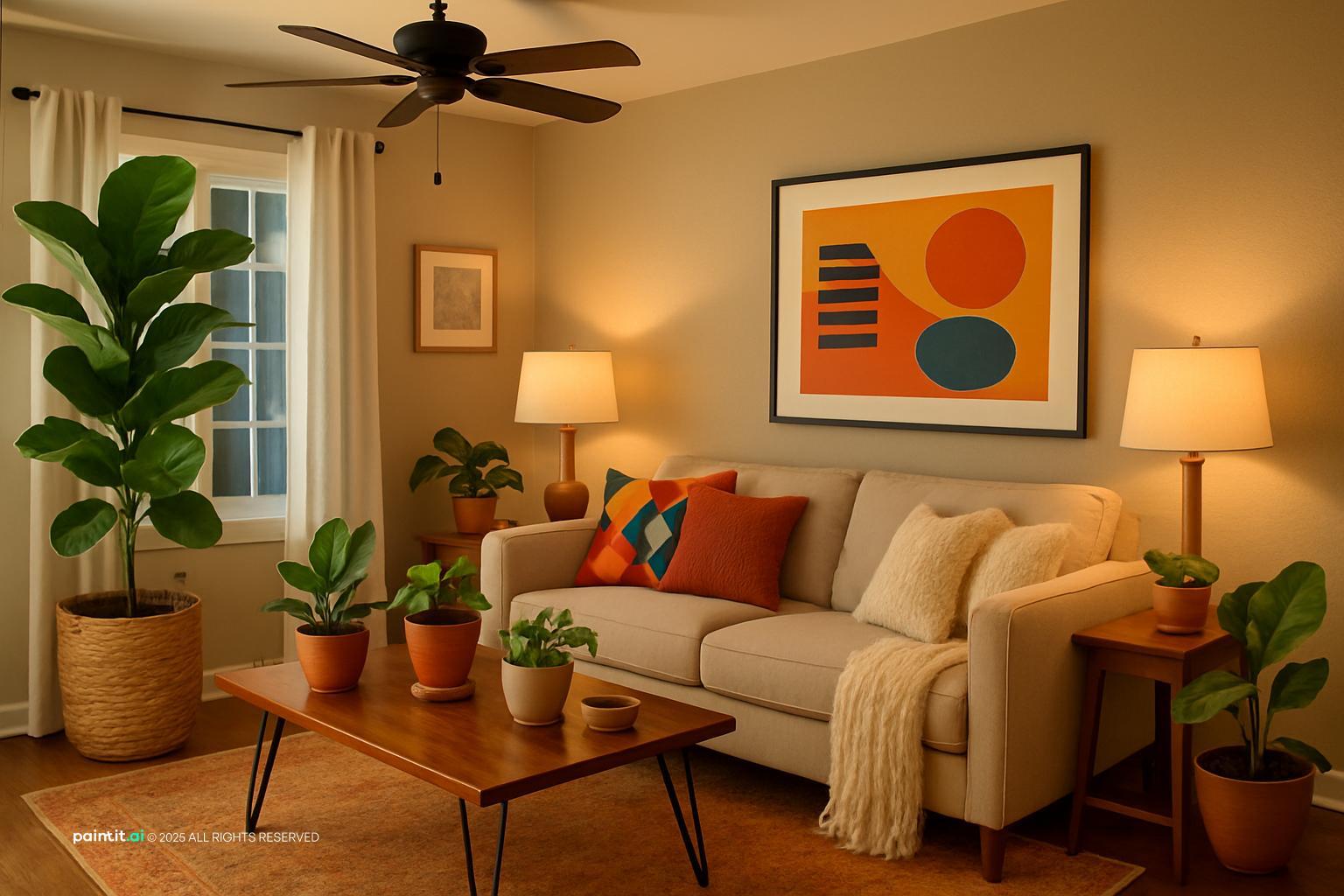
Pro Tip: To achieve this effect, try mixing different wood tones subtly; a darker walnut can ground a lighter teak piece beautifully.
-
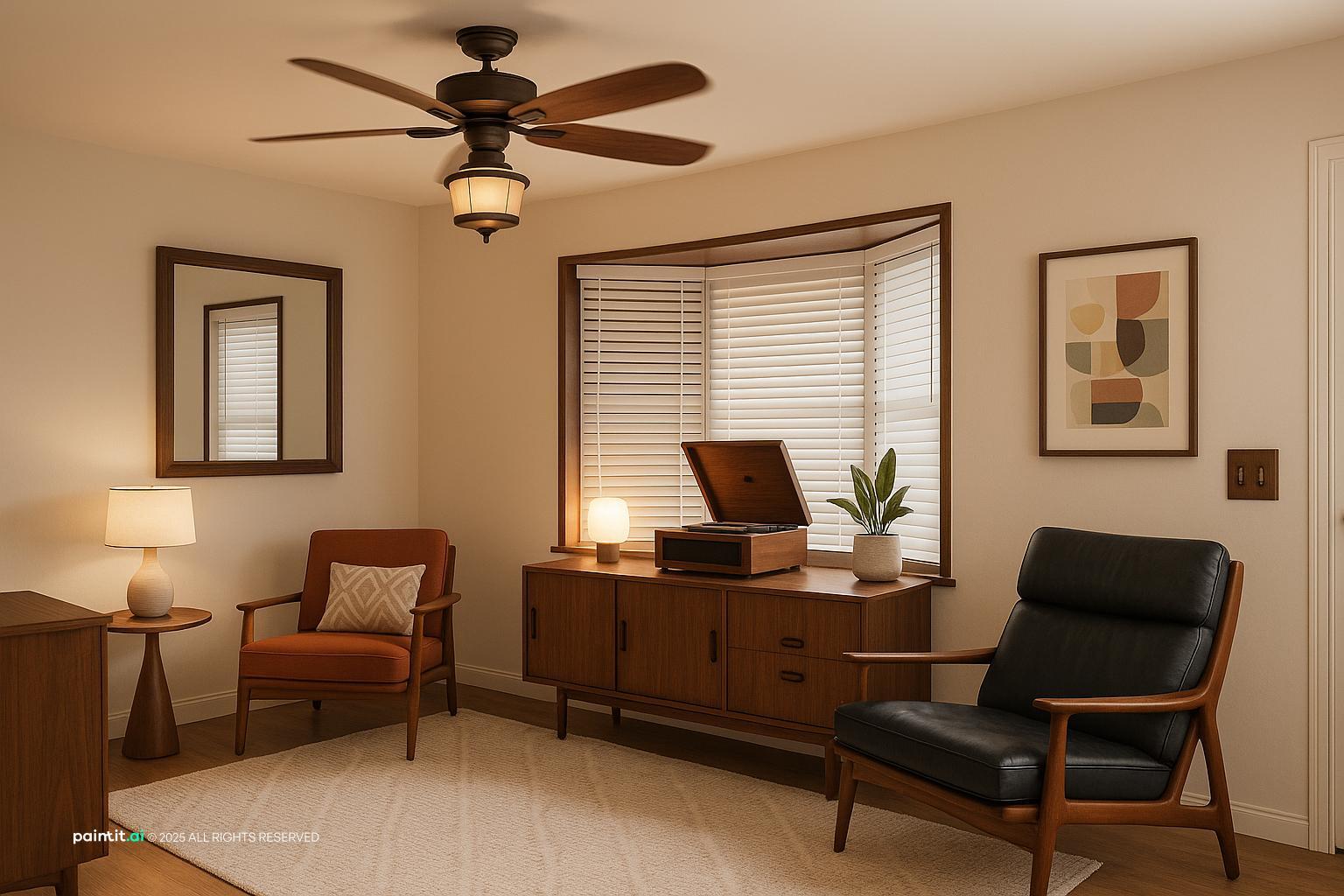
The 1960s were all about playful geometry, a visual language that brought energy and a sense of forward-thinking design. These patterns can transform a space, adding a dynamic layer without overwhelming the eye, making any 1960's living room feel vibrant.
-
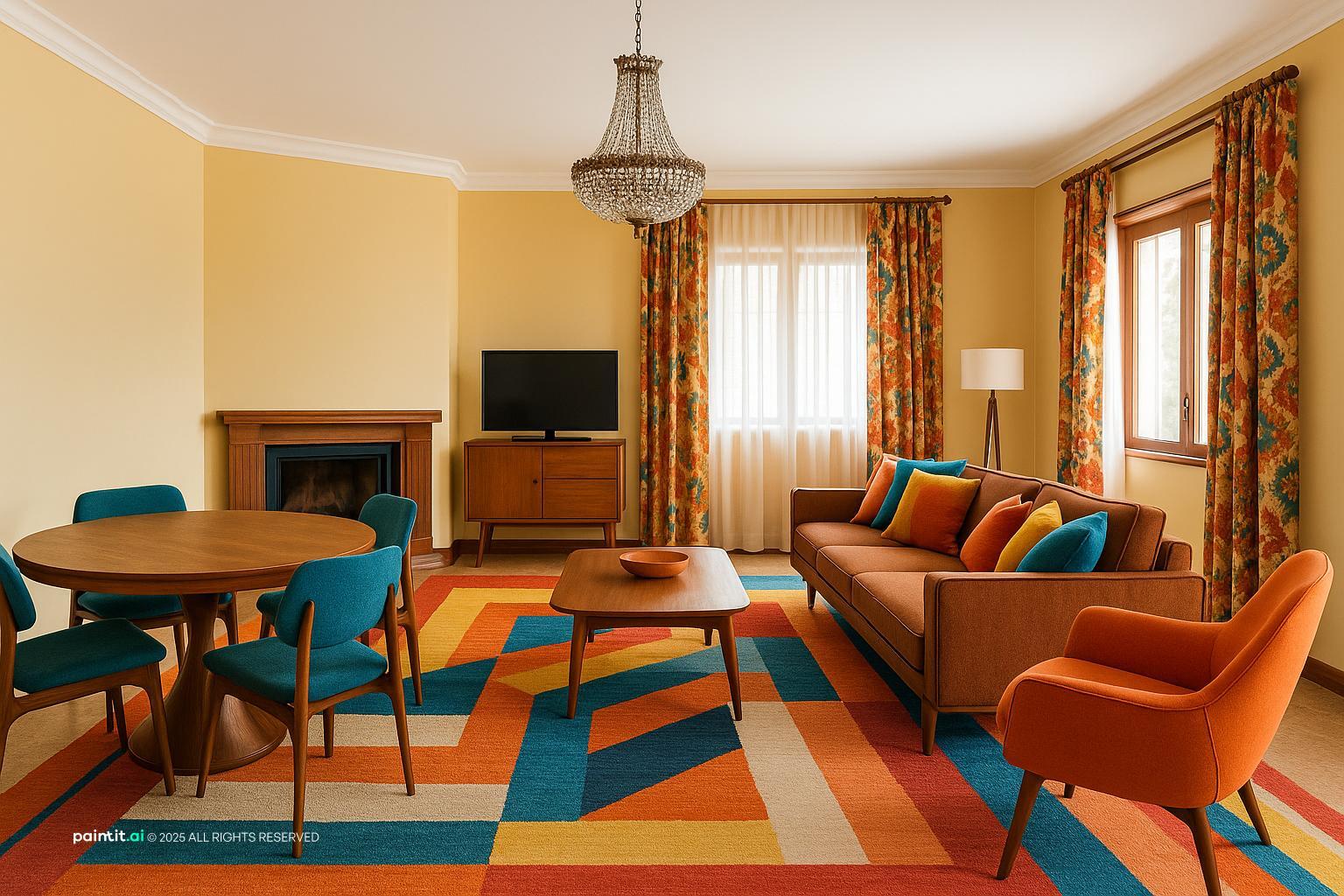
Introduce these patterns through a large area rug, throw pillows, or even a statement wallpaper on an accent wall. Think circles, squares, and abstract forms in contrasting colors. A vintage 60s living room often featured bold textiles; look for fabrics from Marimekko or similar graphic prints.
-
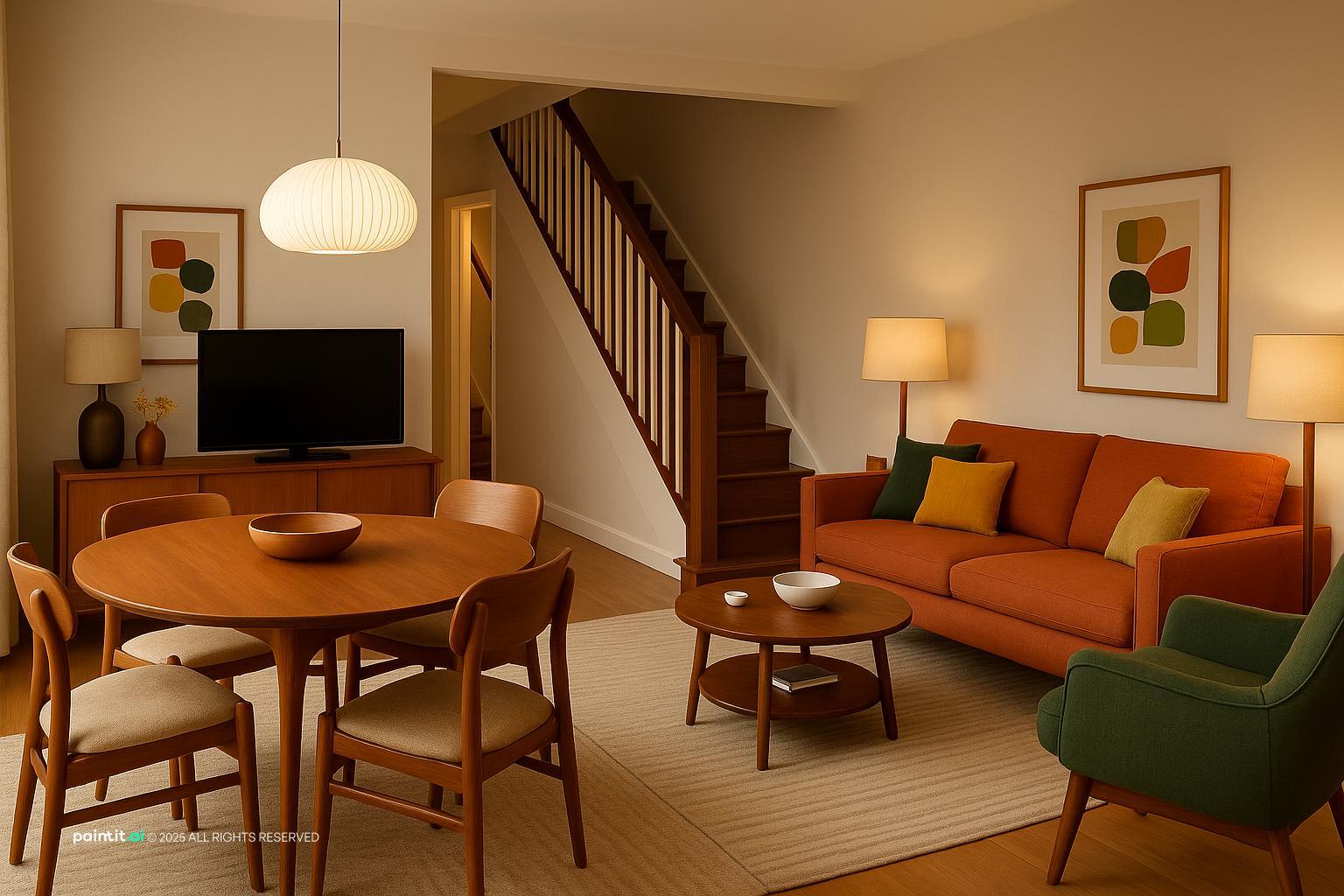
Pro Tip: To achieve this effect, try balancing a bold patterned rug with solid-colored upholstery to avoid visual clutter.
-
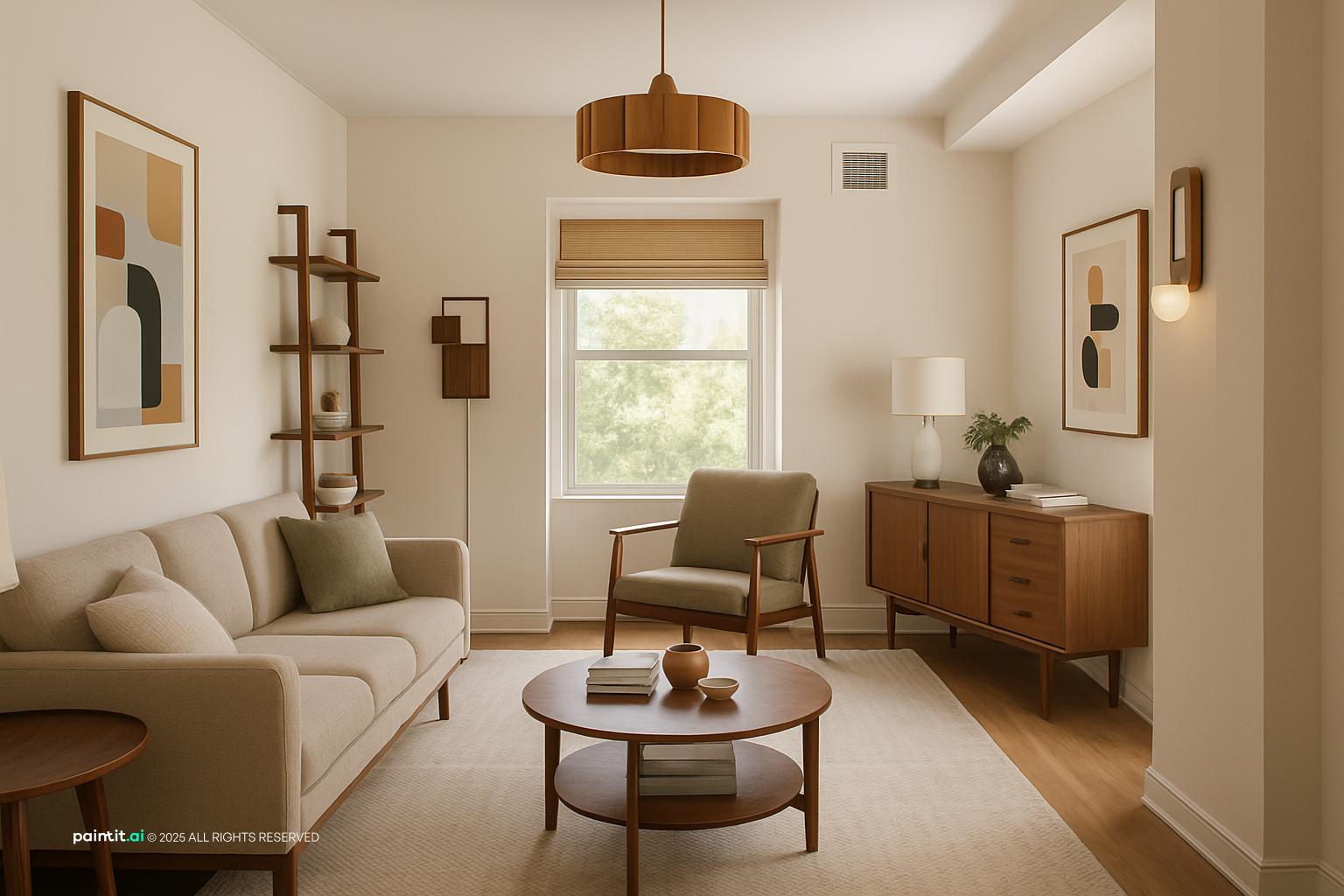
Lighting in a retro 60s living room wasn't just functional; it was sculptural art. These pieces became focal points, radiating both light and undeniable style. They truly capture the optimism and space-age fascination of the decade.
-
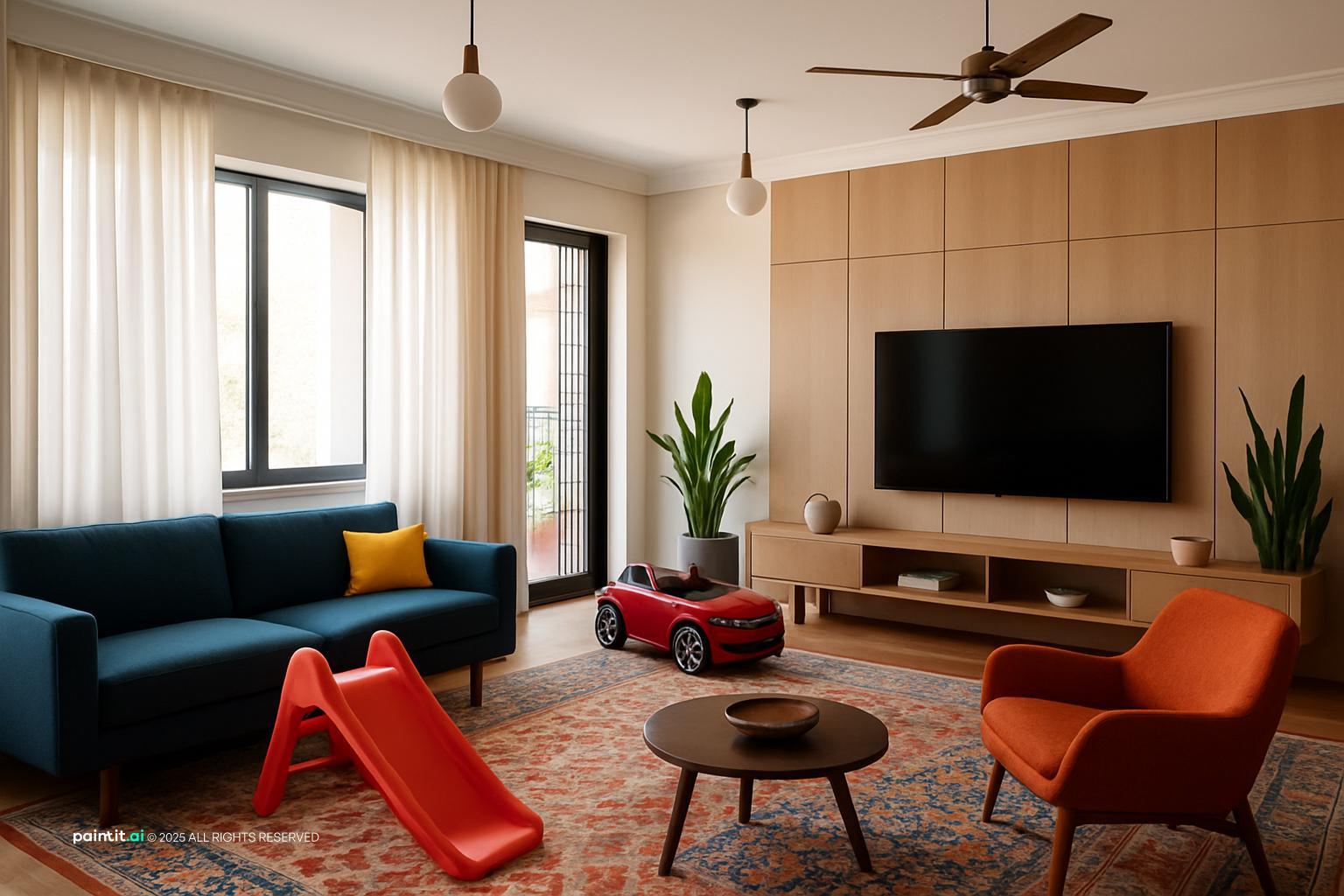
A Sputnik chandelier, with its radiating arms and multiple bulbs, makes an incredible ceiling fixture. For floor lighting, an arc lamp, often with a large dome shade, provides ambient light and a dramatic curve. Look for brushed brass or chrome finishes to complete the look.
-
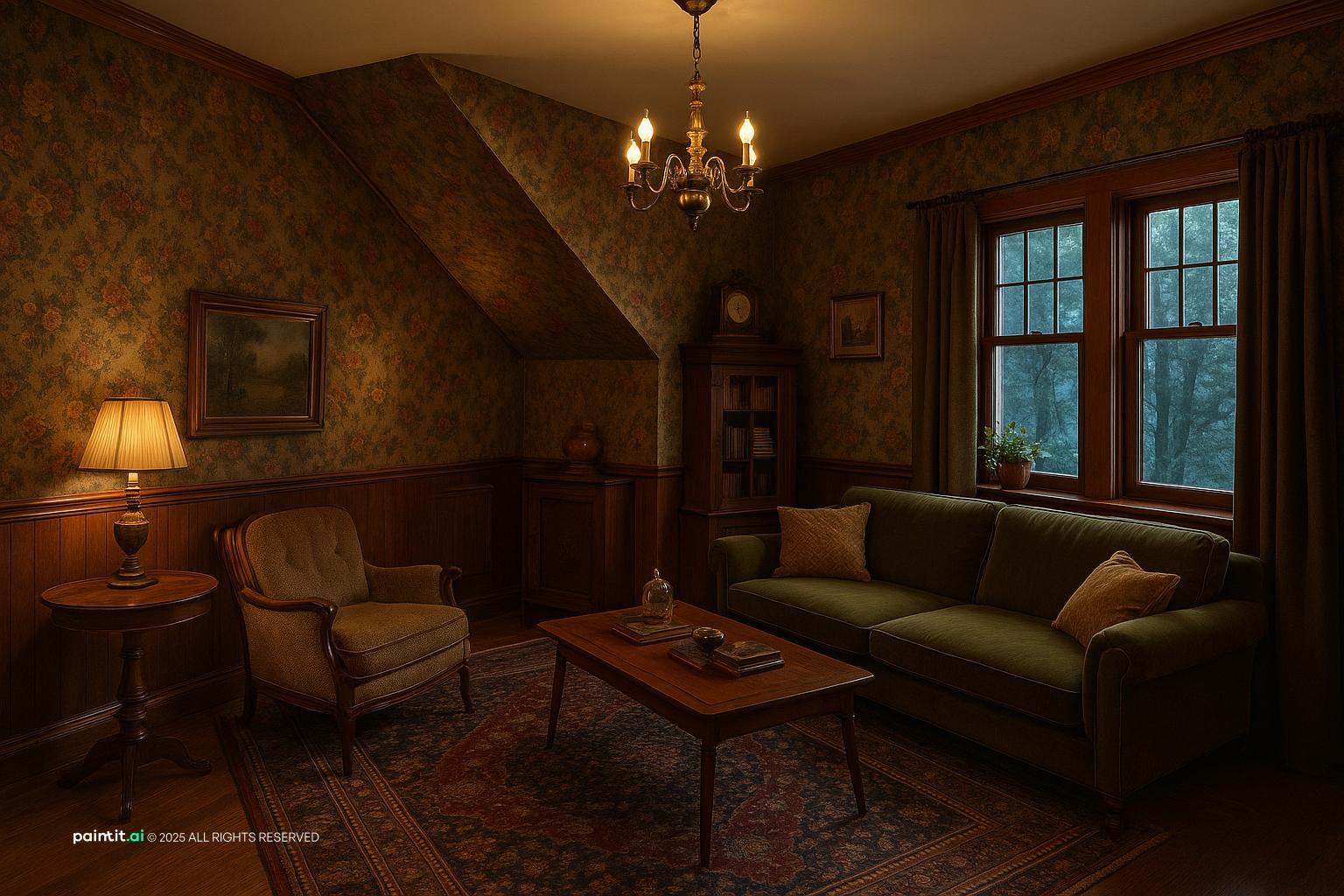
Pro Tip: To achieve this effect, try using dimmer switches to control the mood and highlight the lamp's sculptural form.
-
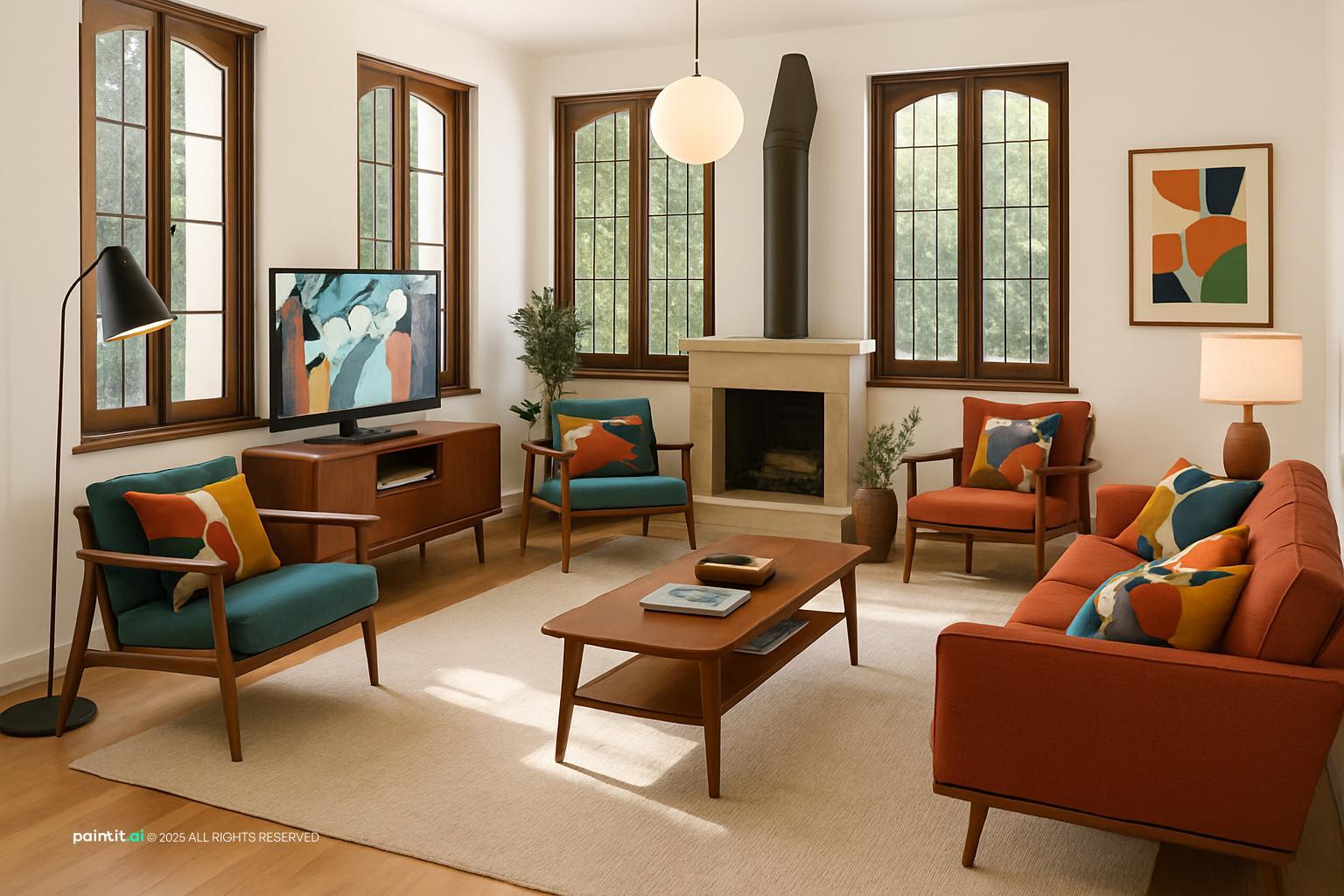
The idea of built-in or modular storage was huge in a 1960s living room. It was about efficiency, clean lines, and a place for everything. These pieces offered a seamless look, often becoming part of the architecture itself.
-
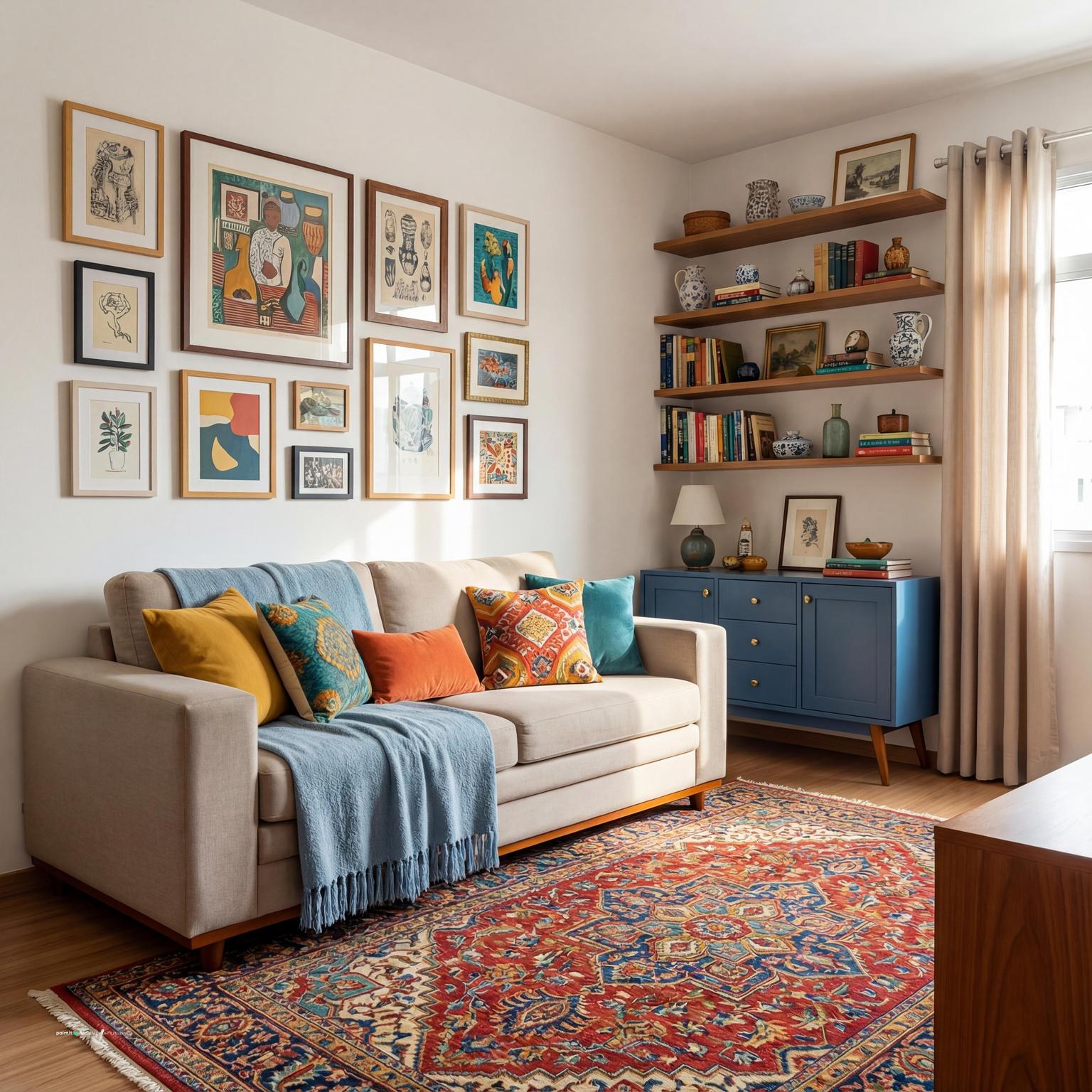
A long, low credenza in teak or walnut is perfect for housing media or displaying art. Consider a modular wall unit with open shelving and closed cabinets for a more comprehensive storage solution. These pieces keep clutter at bay, which is essential for that sleek mid-century aesthetic.
-
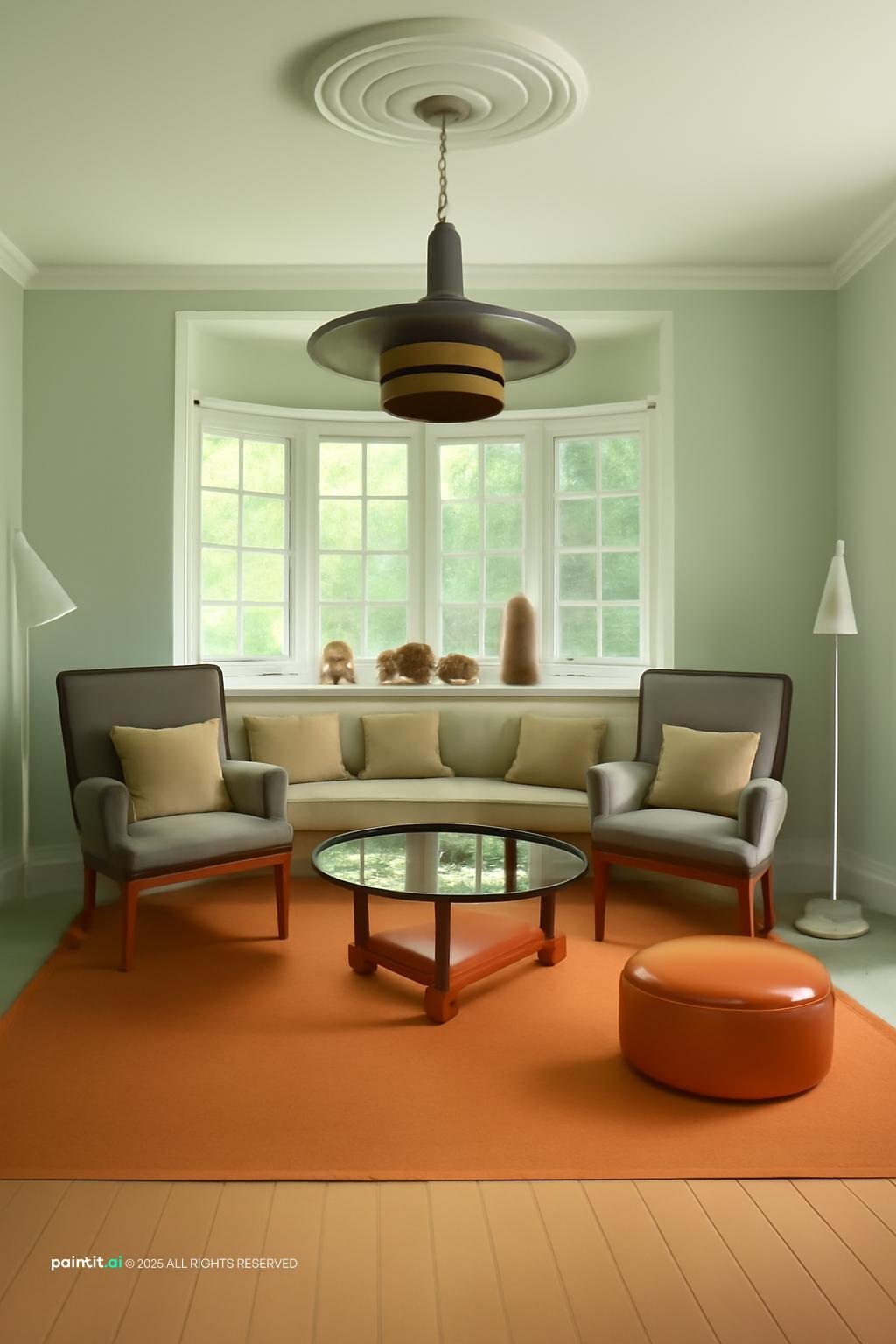
Pro Tip: To achieve this effect, try styling open shelves with a mix of books, ceramic vases, and a few well-chosen decorative objects.
-
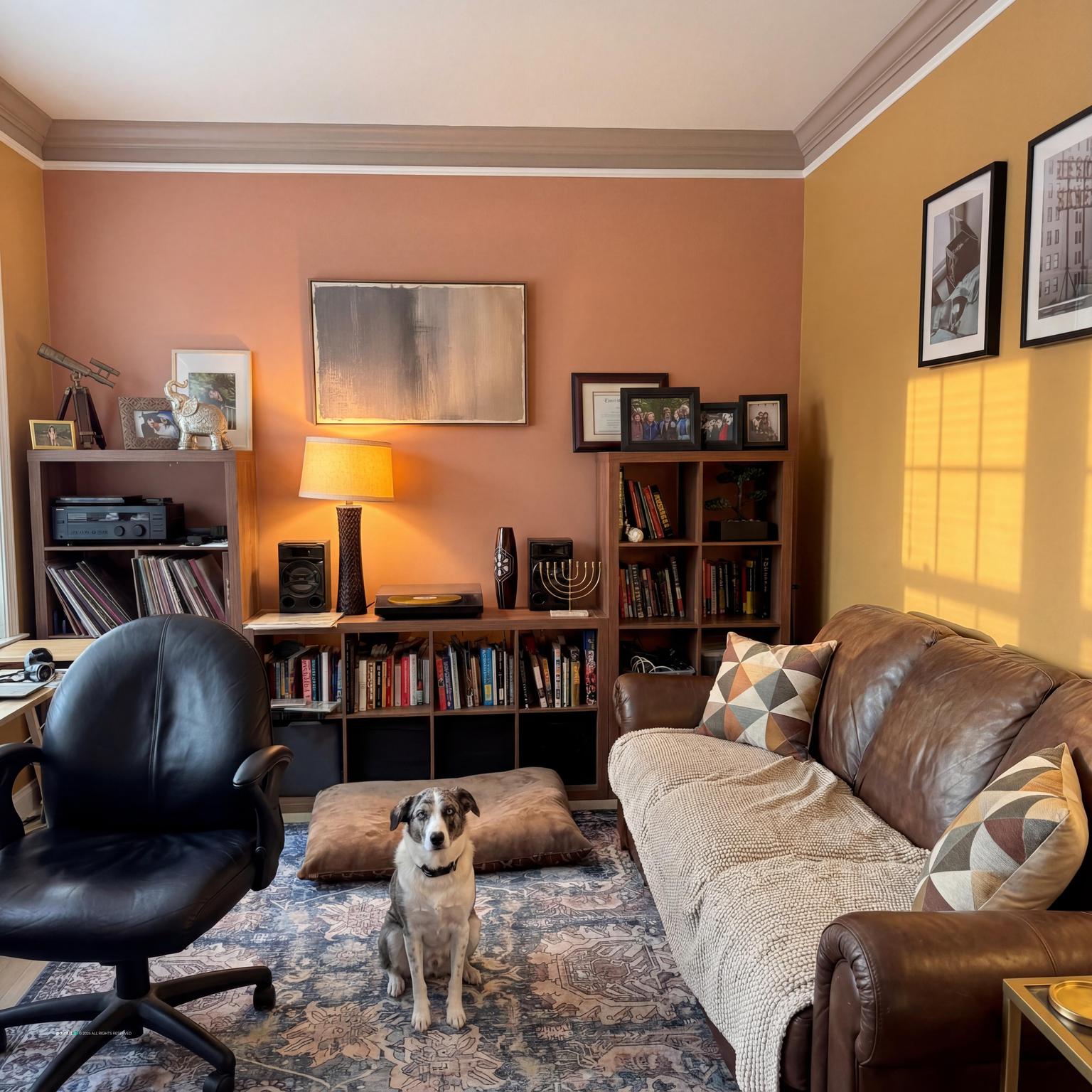
Art in the 60s was bold, often abstract, and sometimes a little rebellious. It reflected the changing times and brought a burst of color and intellectual curiosity into the home. A 1960s living room felt incomplete without some thought-provoking pieces.
-
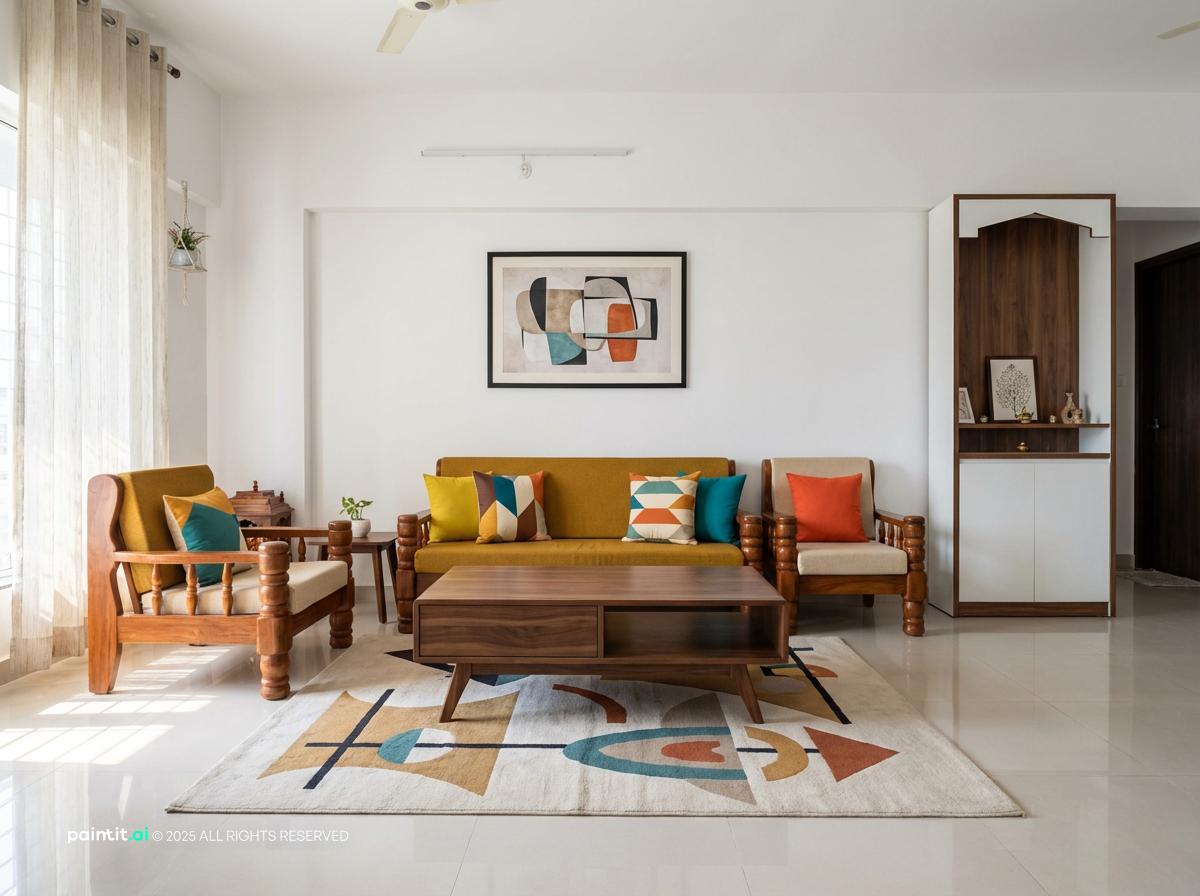
Hang a large abstract painting with geometric forms or vibrant color blocks. Think about artists like Frank Stella or Helen Frankenthaler for inspiration. Pop art prints, like those by Andy Warhol or Roy Lichtenstein, also fit perfectly, adding a playful, iconic touch.
-
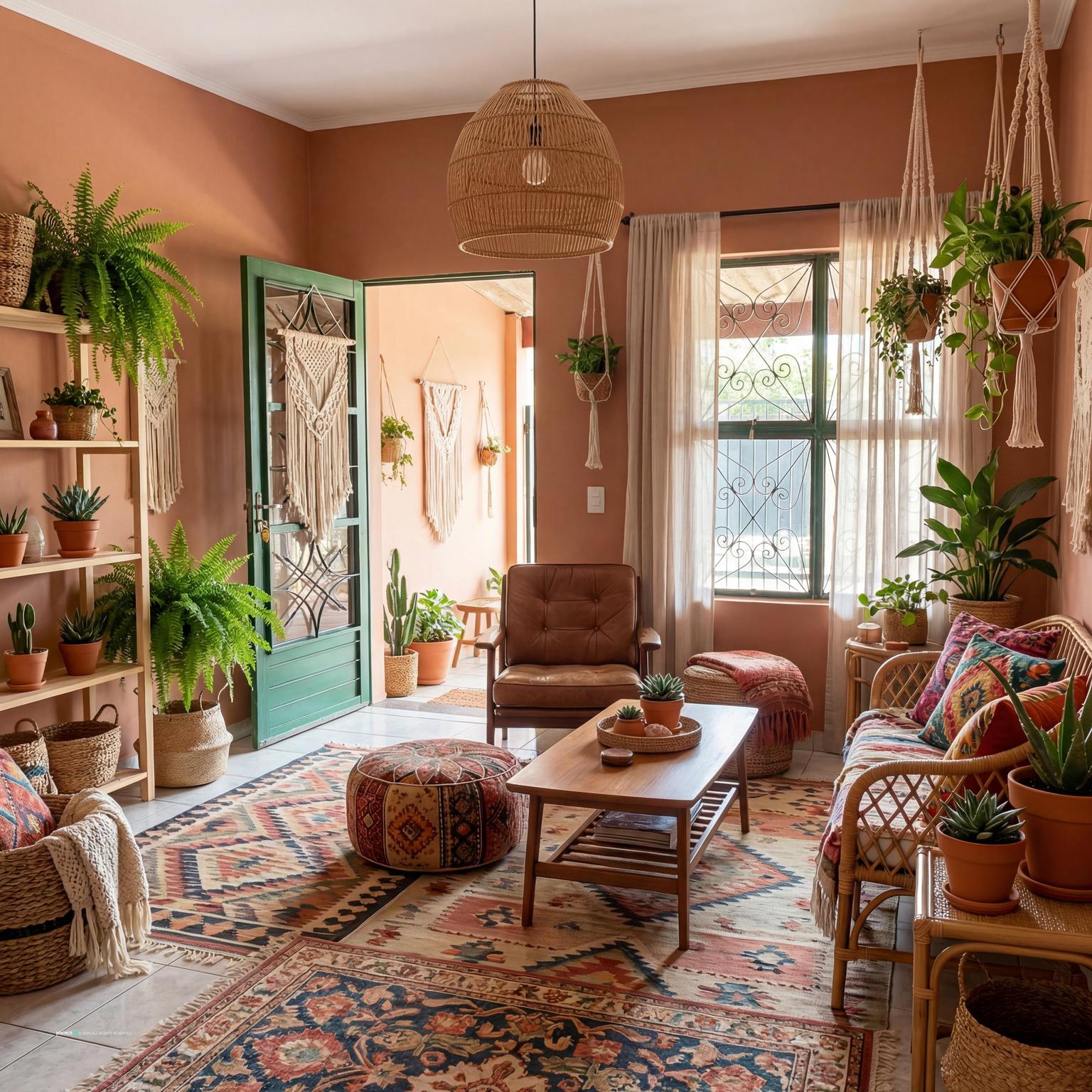
Pro Tip: To achieve this effect, try framing prints simply in thin black or natural wood frames to let the art speak for itself.
-
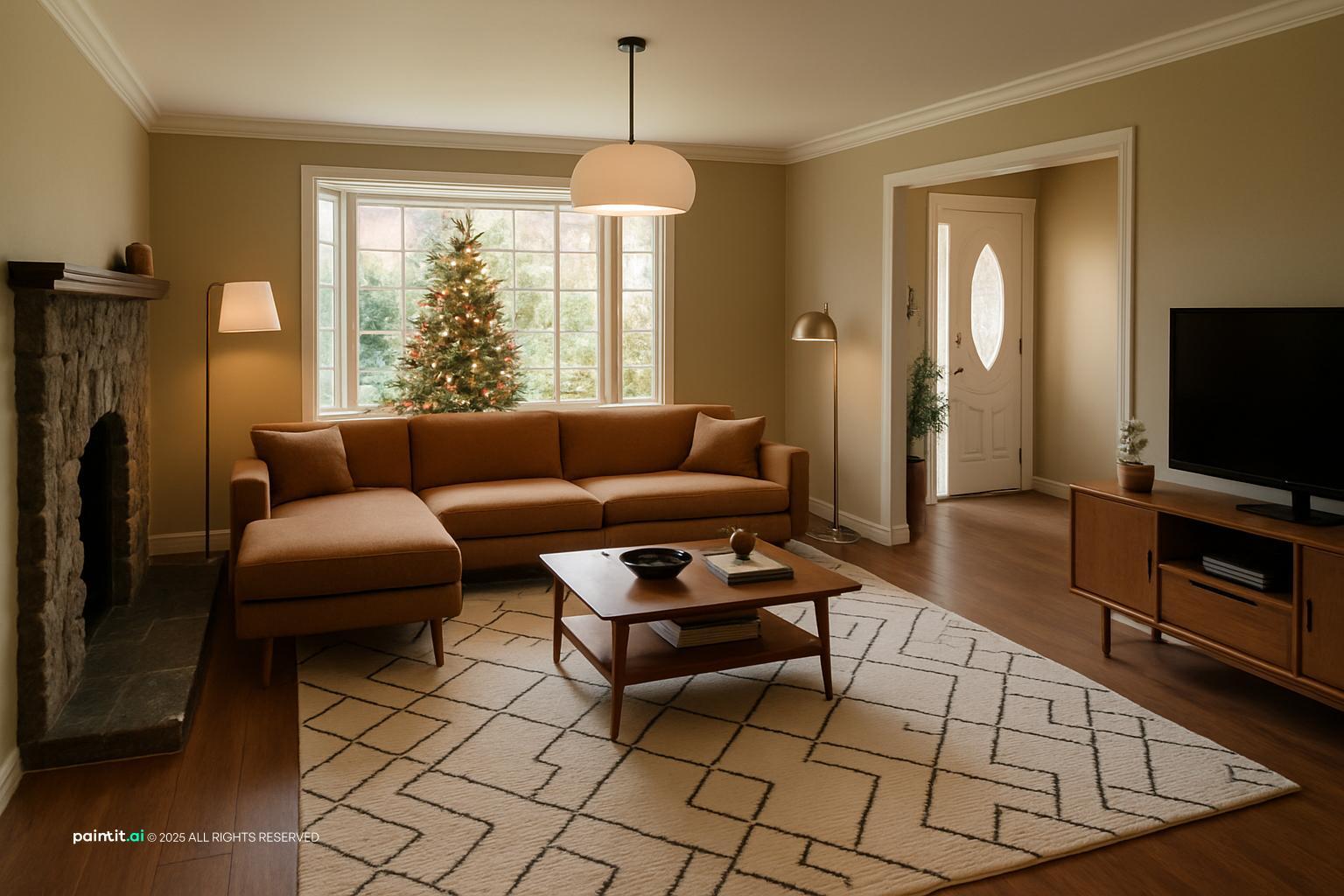
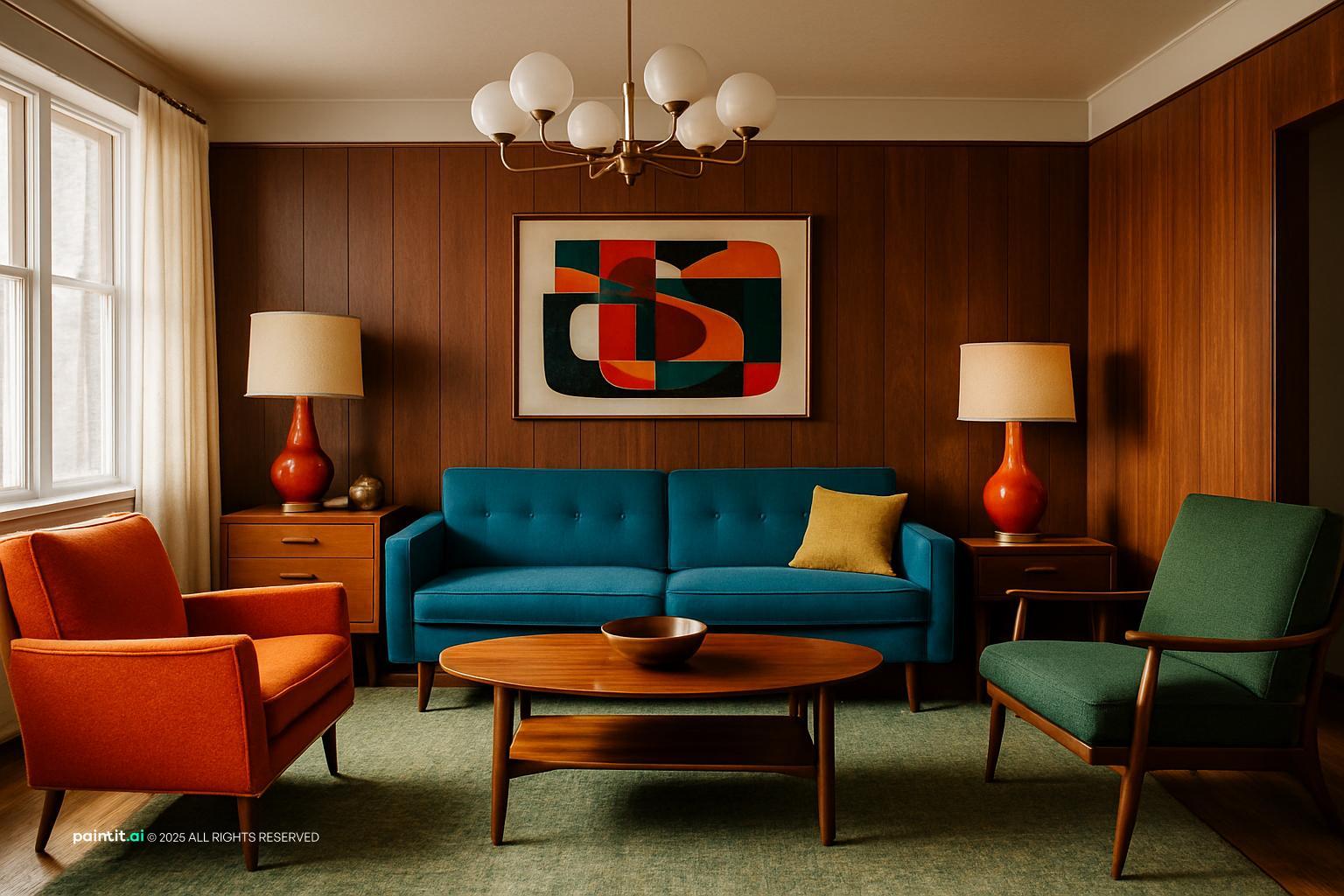
The colors of the 1960s were distinct: earthy yet vibrant, often paired with crisp neutrals. It wasn't just about individual colors, but how they played together, creating a specific mood that defined the era's interiors. A retro 60s living room often embraced these hues fearlessly.
-
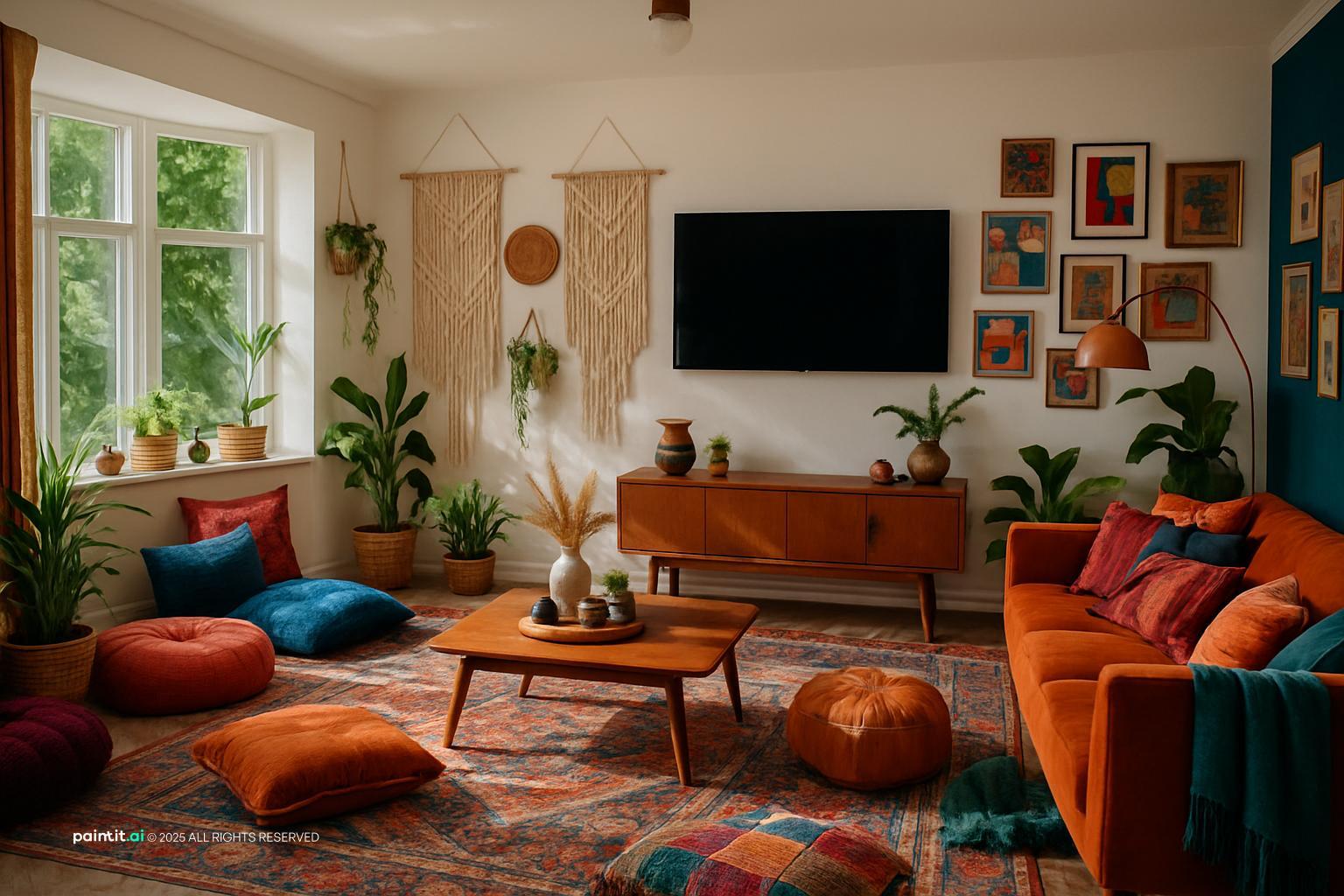
Embrace shades like avocado green, mustard yellow, burnt orange, and deep teal. Pair these with neutrals like crisp white, charcoal grey, or warm beige. You might use a dominant color on a sofa and then echo it in smaller accents like throw pillows or a ceramic lamp base.
-
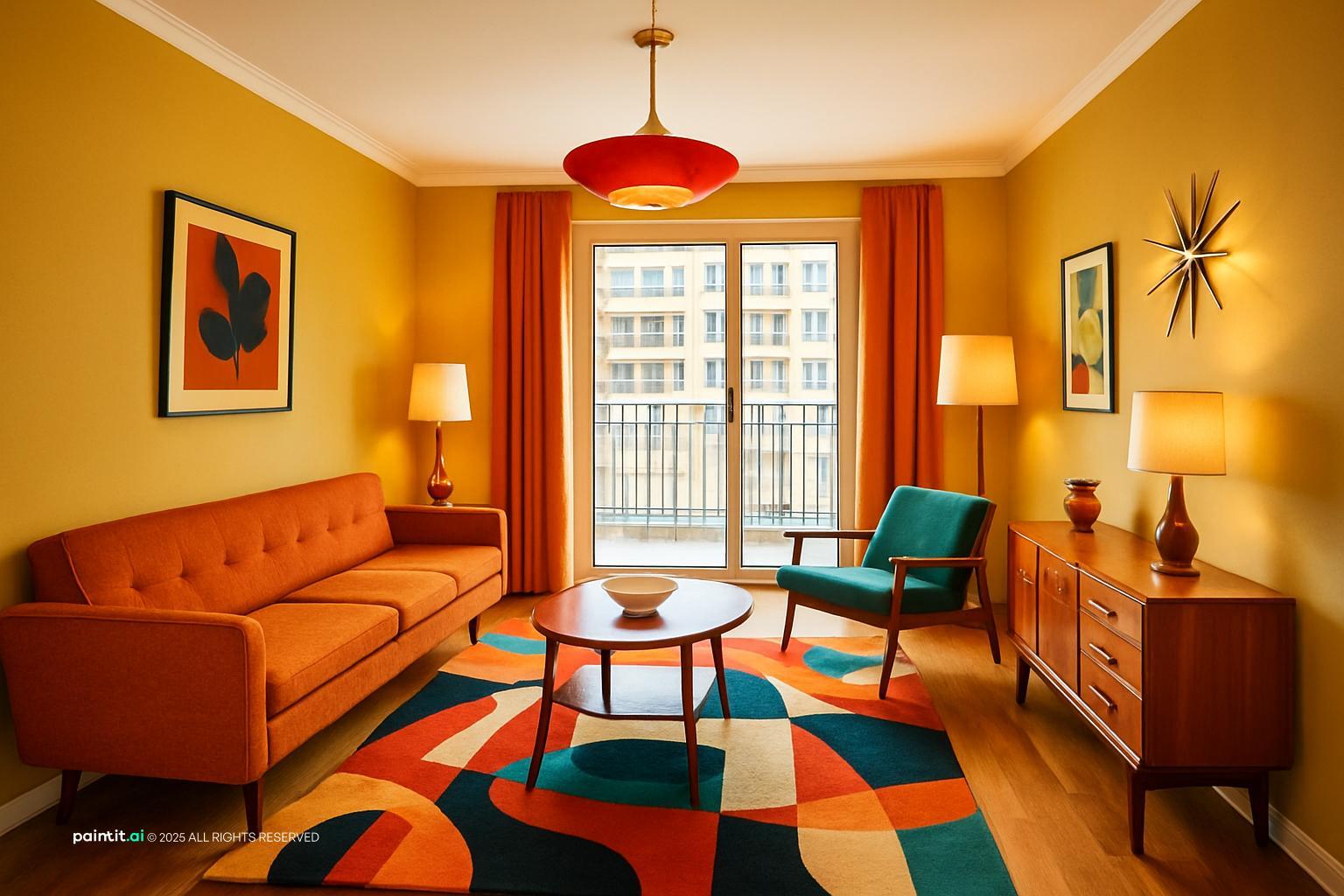
Pro Tip: To achieve this effect, try using a 60/30/10 rule: 60% neutral, 30% main color, 10% accent color for balance.
-
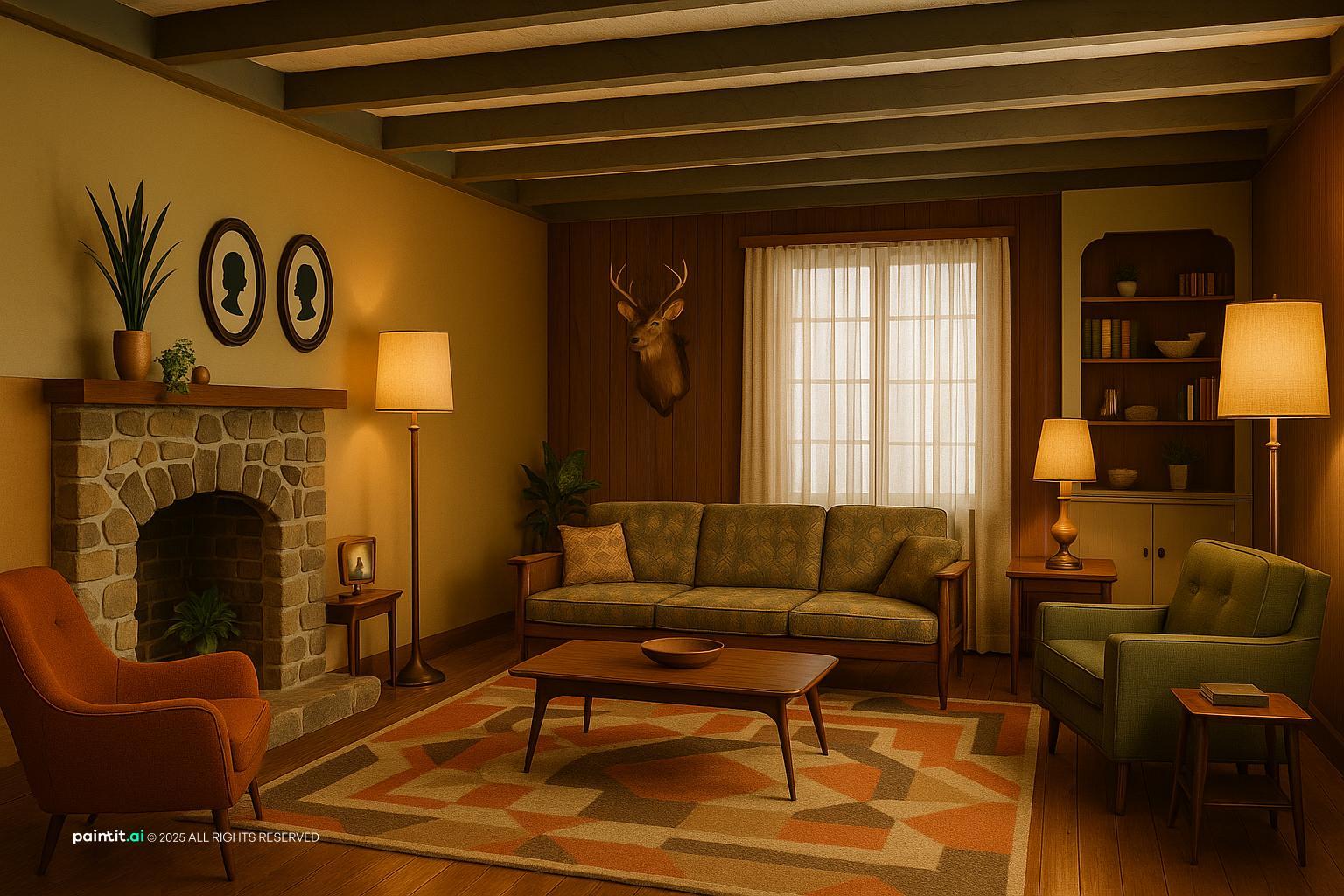
Entertaining was a big part of 60s culture, and the bar cart was its stylish ambassador. It wasn't just practical; it was a statement piece, signaling a home ready for cocktails and conversation. A 60's living room often featured one prominently.
-
Choose a bar cart in brass, chrome, or a dark wood, perhaps with ribbed glass shelves. Stock it with vintage glassware, a few classic spirits, and a shaker. It becomes a functional display, inviting guests to mix a drink and relax. Don't forget a small ice bucket and some swizzle sticks.
-
Pro Tip: To achieve this effect, try adding a small, framed piece of art or a decorative plant on the top shelf for extra flair.
-
Tactile elements were crucial in a 1960s living room, adding depth and a sense of comfort. From plush carpets to smooth upholstery, texture made a space feel inviting and rich. It’s about engaging more than just your sight.
-
Consider a low-pile shag rug in a muted tone for warmth underfoot. Upholster an armchair in a rich velvet or a durable wool bouclé. Even ribbed glass on a cabinet or a ceramic vase can add a subtle, interesting texture. These elements layer together to create a cozy yet sophisticated environment.
-
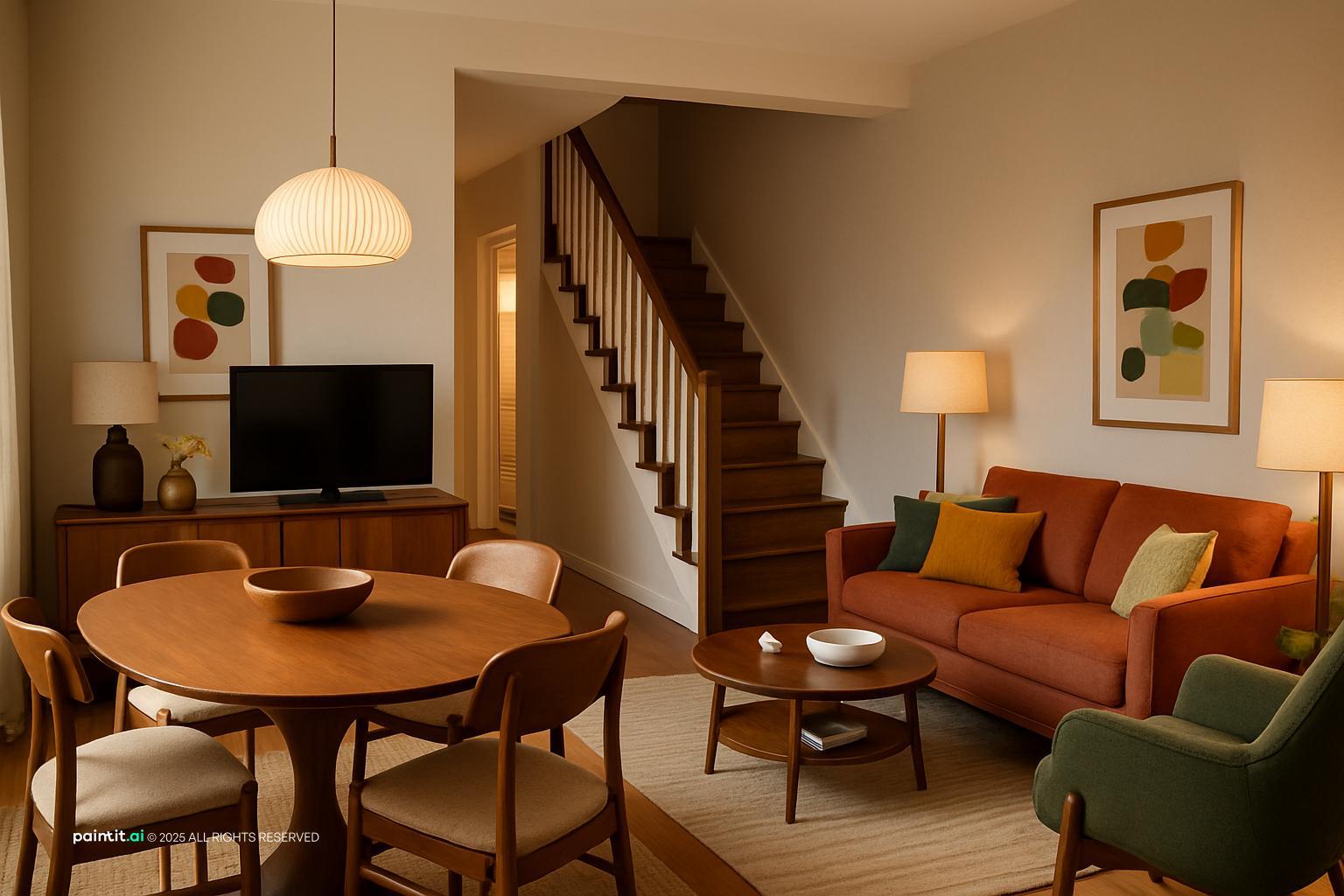
Pro Tip: To achieve this effect, try combining at least three different textures in varying degrees of softness to create depth.
-
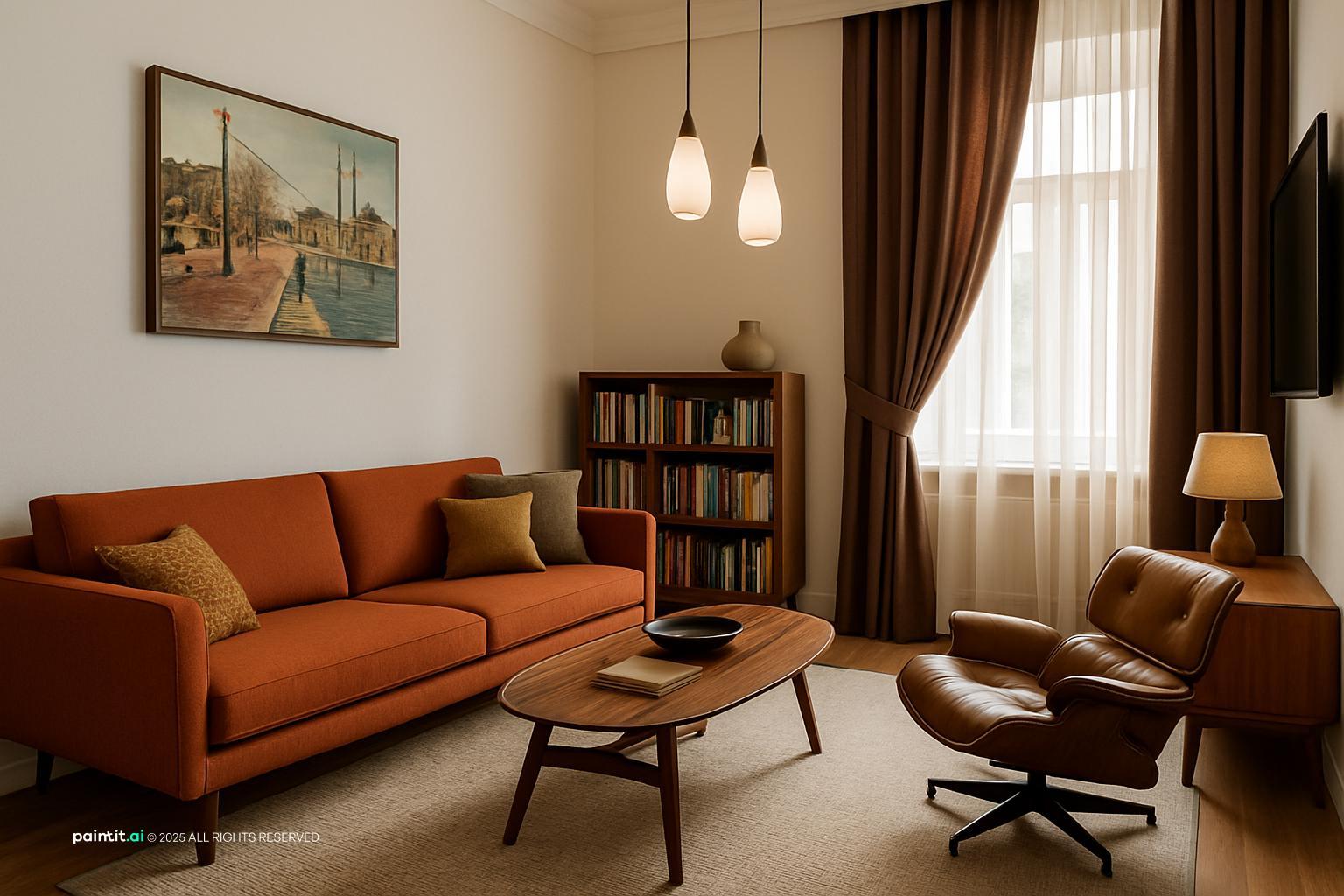
Bringing the outdoors in was a significant trend, and large, sculptural plants were perfect for softening the clean lines of mid-century furniture. They add life, color, and a touch of organic beauty to any 1960's living room.
-
Place a tall Monstera deliciosa or a Fiddle Leaf Fig in a corner, perhaps in a simple ceramic or woven planter. A snake plant or a ZZ plant can sit on a credenza. The greenery provides a natural contrast to the wood and bold colors, creating a fresh, vibrant atmosphere.
-
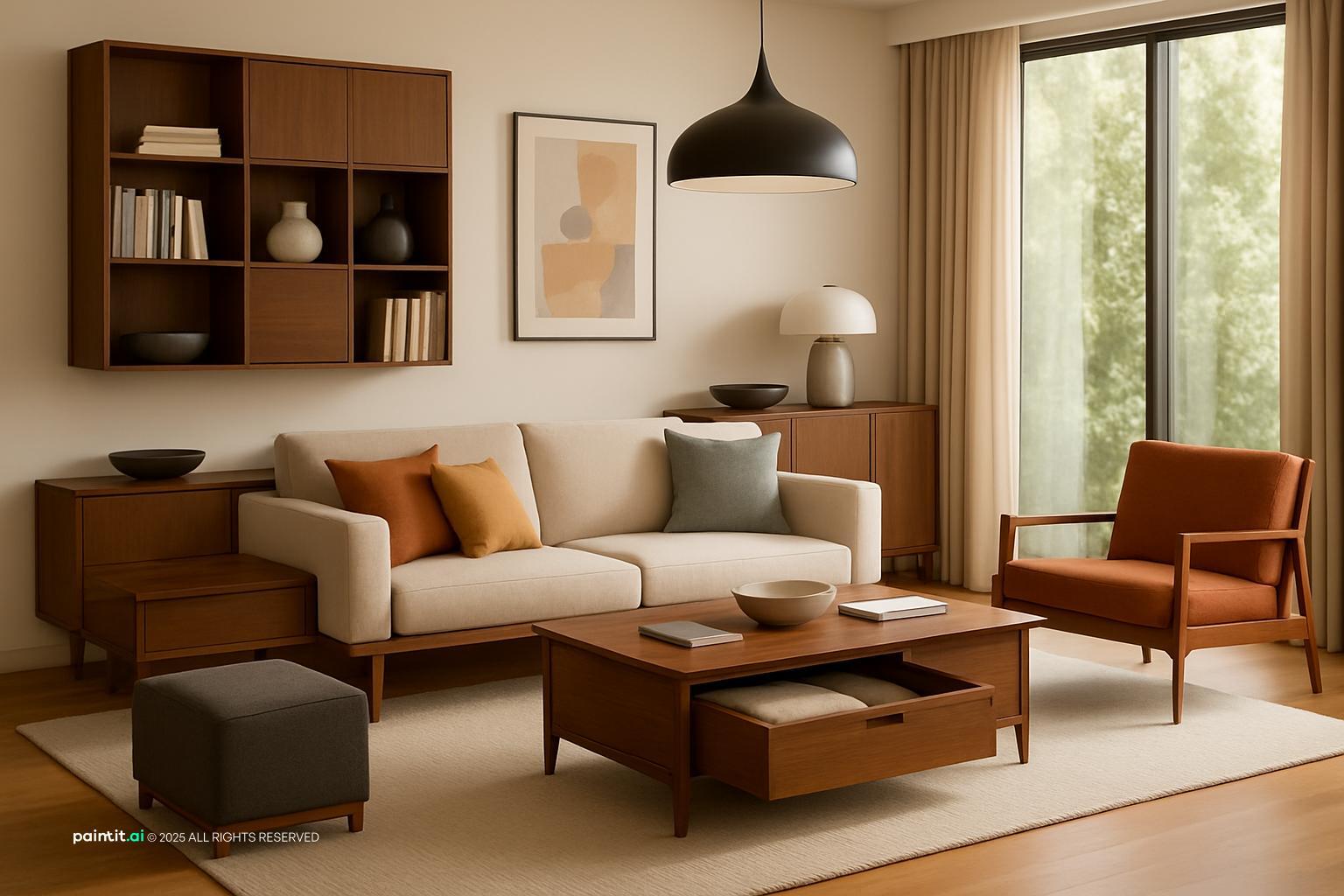
Pro Tip: To achieve this effect, try using planters that complement your furniture's material, like a terracotta pot with a teak stand.
-
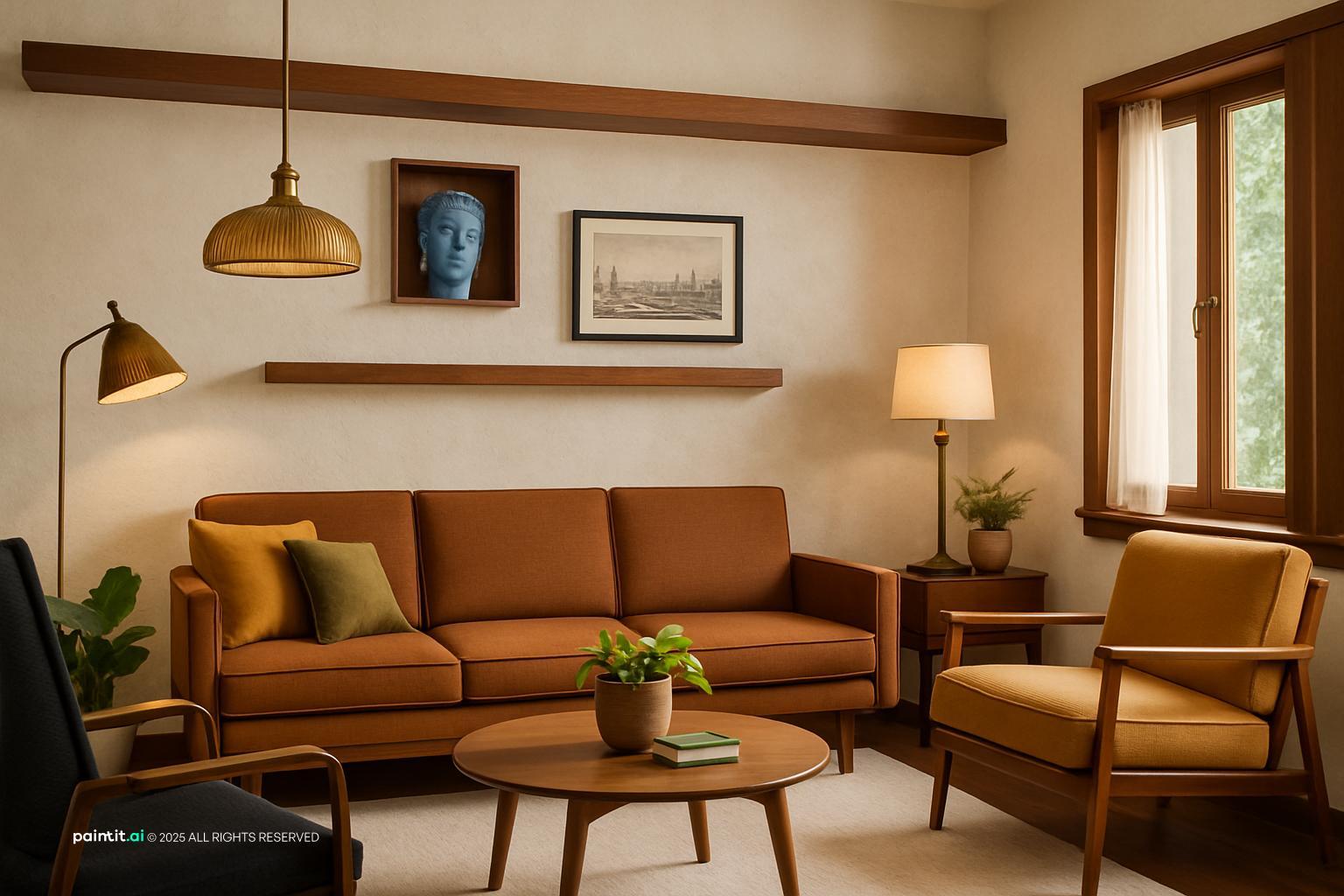
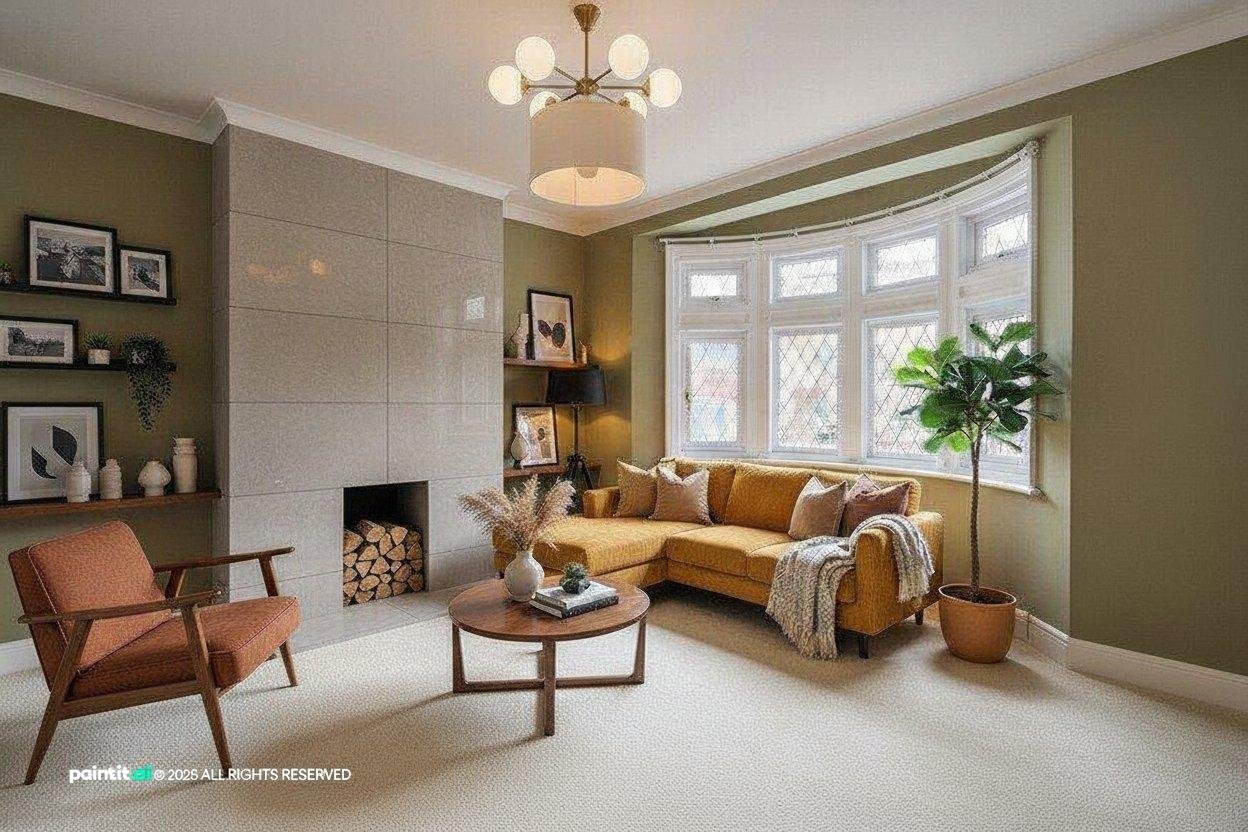
Many homes from the era featured a fireplace, often designed with a distinct mid-century flair. It served as a natural gathering point, grounding the space and adding architectural interest. A typical 1960s living room often centered around this feature.
-
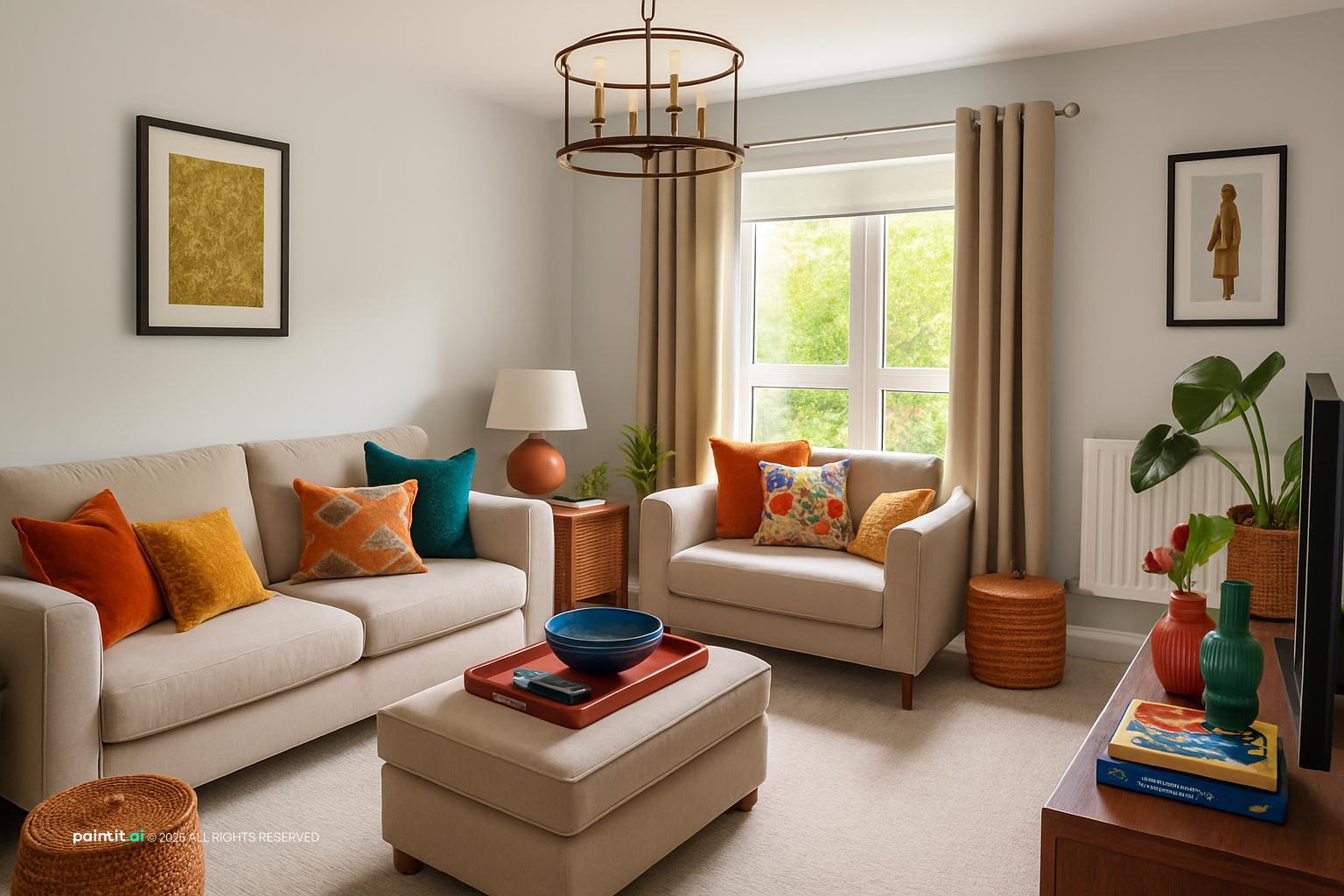
If you have an existing fireplace, consider updating its facade with stacked stone, a minimalist plaster finish, or even a bold tile. A floating hearth in concrete or a dark wood can also enhance the look. Keep the mantel decor simple: a few ceramic pieces or a single piece of art.
-
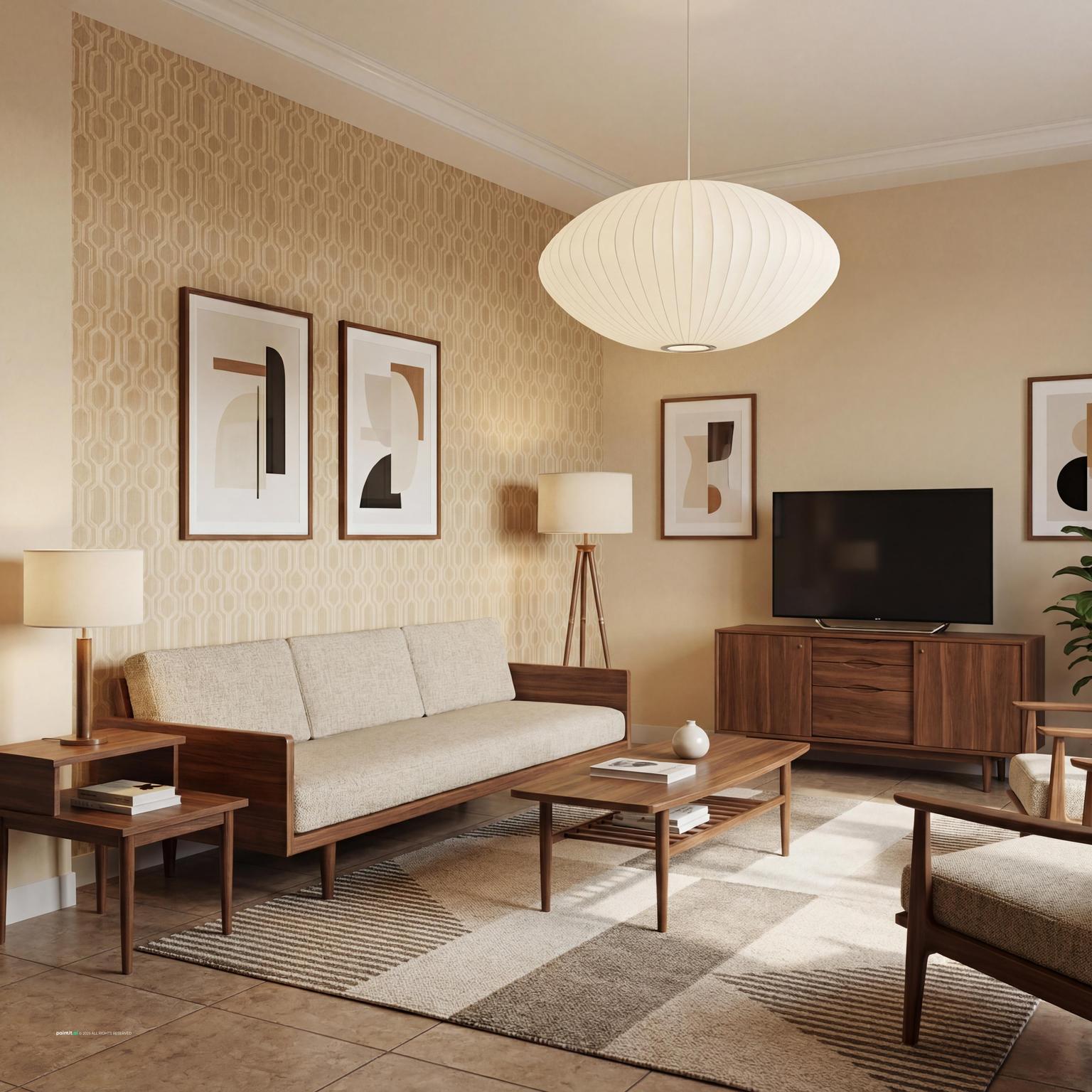
Pro Tip: To achieve this effect, try painting the fireplace surround a contrasting color to make it pop against the wall.
-
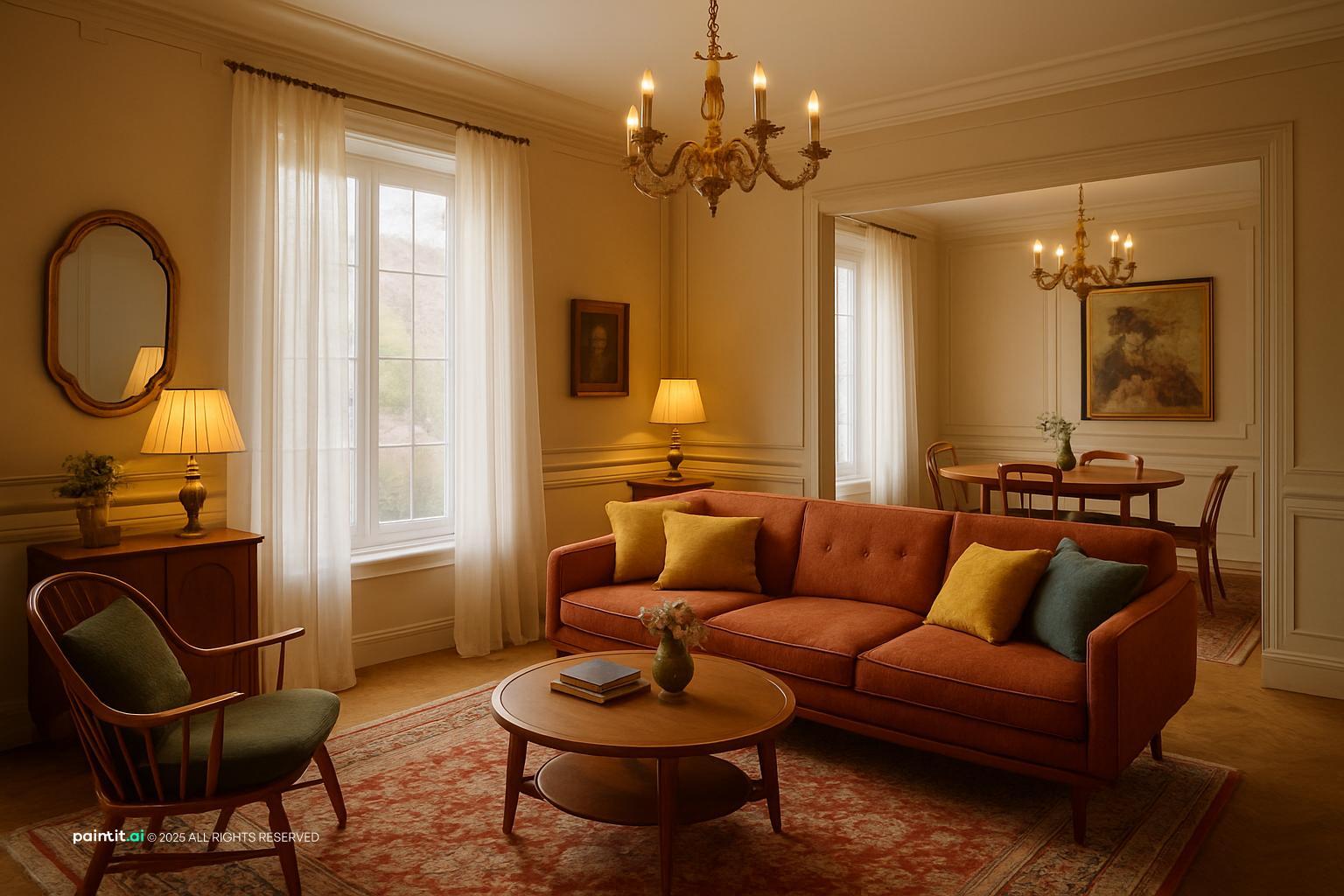
The coffee table was more than just a place for drinks; it was a curated display of interests and aesthetics. A carefully arranged collection of books and objects speaks volumes about the homeowner and adds a personal touch to a vintage 60s living room.
-
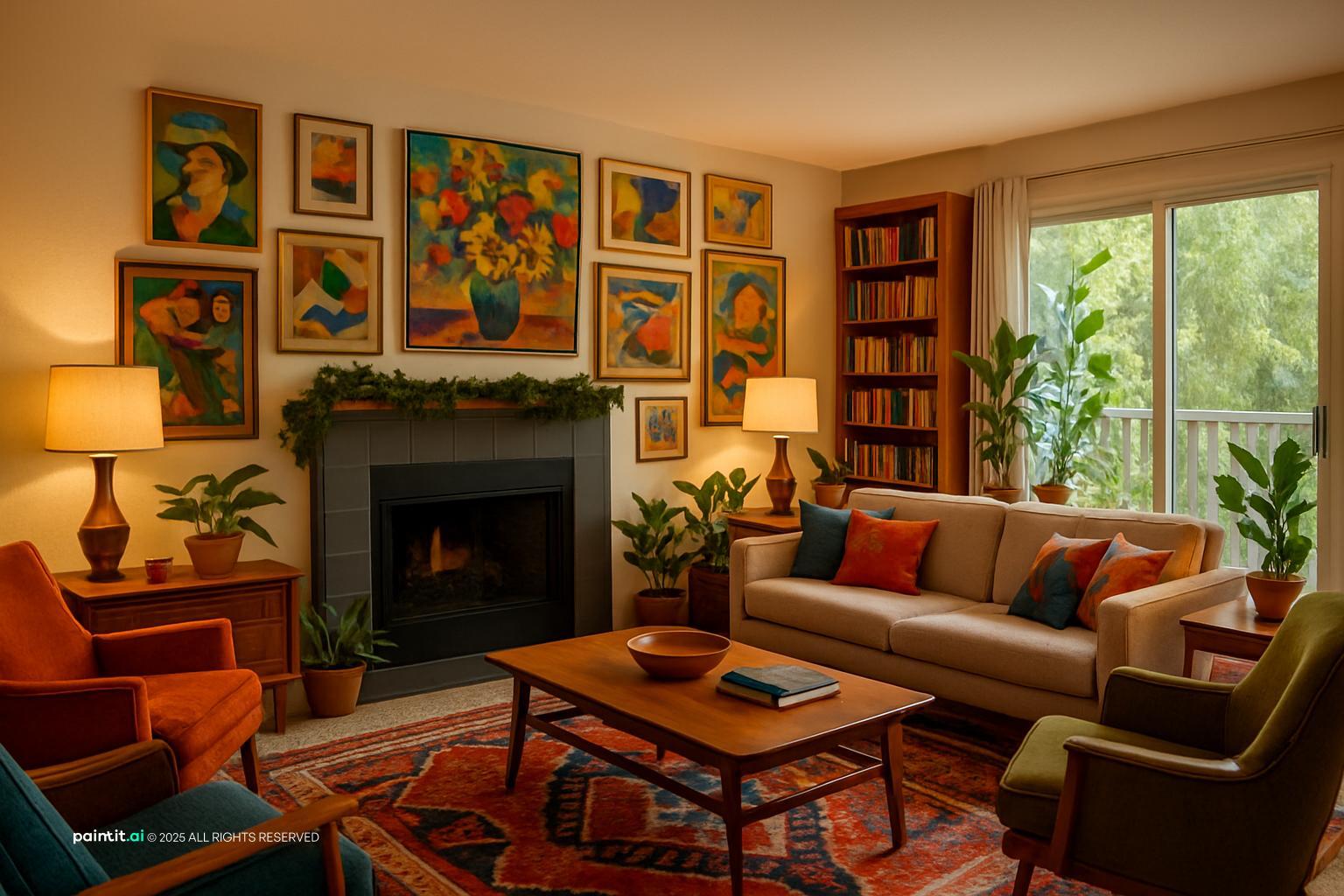
Stack a few oversized art or design books. Add a sculptural ceramic bowl, a small, interesting object (perhaps a vintage ashtray, even if you don't smoke), and a coaster set. The key is thoughtful arrangement, not clutter. It should feel intentional and inviting.
-
Pro Tip: To achieve this effect, try grouping items in odd numbers (e.g., three or five) for a more visually appealing arrangement.
-
While open-plan living gained traction, the 1960s still valued defining different areas within a larger space. It was about creating a sense of flow while ensuring each zone had its purpose. This approach makes a 1960s style living room feel both expansive and intimate.
-
Use a large area rug to delineate the main seating area. A credenza or a low bookshelf can act as a soft divider between the living room and a dining or study nook. The furniture itself, through its arrangement, guides the eye and defines pathways without needing walls.
-
Pro Tip: To achieve this effect, try placing a console table behind a sofa to create a subtle barrier and extra surface space.
-
Music was integral to the 1960s, and the record player was often a cherished piece of furniture. Creating a dedicated space for music not only adds a nostalgic touch but also invites a different kind of interaction with your living room. It's a truly authentic touch for a mid century 1960s living room.
-
Set up a vintage record player on a small credenza or a dedicated media console. Display a selection of your favorite vinyl records on a wall-mounted shelf or in a stylish storage crate. Add a comfortable armchair nearby, perhaps a low-slung lounge chair, for listening sessions. It’s about creating a moment.
-
Pro Tip: To achieve this effect, try incorporating a small, focused task lamp near the record player for easy browsing of your collection.
The Soul of a 1960s Living Room: A Deep Dive into Mid-Century Magic to Life with Paintit.ai
-
Stepping into a truly authentic 1960s living room, you feel it immediately—that blend of optimism and grounded comfort. It’s more than just a collection of pieces; it’s a carefully orchestrated mood. We’ve spent years seeing how these elements come together, and the truth is, it’s all about balance and intention. Forget sterile museum vibes; we’re talking about a space that feels lived-in, vibrant, and effortlessly cool, a proper 60's living room.
-
The signature color story for a 1960s living room often starts with a base of warm neutrals like off-white or a soft charcoal grey. Then, we layer in those iconic, earthy-yet-vibrant tones: think avocado green, a rich mustard yellow, or a deep, moody teal. A punch of burnt orange or even a playful pop of primary color acts as the perfect accent, tying the whole retro 60s living room together without overwhelming the eye. It’s about creating depth, not just a splash.
-
Nothing says mid century 1960s living room quite like the rich, inviting grains of teak and walnut. These woods anchor the space, bringing a natural warmth and a sense of enduring quality. We love seeing them paired with the subtle gleam of brushed brass or chrome, often in lighting or bar carts. For textiles, a plush wool or a luxurious velvet on upholstery adds a tactile softness, making the space feel incredibly inviting and cozy. It's about a sophisticated comfort.
-
For a truly authentic 1960s living room, start with a low-slung, tufted sofa—it’s the heart of the room, inviting you to relax. Pair it with a sleek, tapered-leg coffee table, often in teak or walnut, keeping the lines clean and unobtrusive. An iconic armchair, perhaps a sculptural lounge chair, completes the seating arrangement, offering both comfort and a distinct design statement. Proportions are key; everything feels grounded, never overly tall or bulky.
-
Lighting in a 60's living room isn't just functional; it's a form of art. Ambient light often comes from a dramatic Sputnik chandelier or a sweeping arc lamp, casting a soft, overall glow. For task lighting, a stylish table lamp on a credenza provides focused illumination, perfect for reading. Accent lighting, perhaps from a small, sculptural lamp, highlights artwork or a prized collection. The goal is layers of light, creating an atmosphere that shifts with your mood, making any vintage 60s living room feel dynamic.
-
Decorating a 1960s style living room means thoughtful curation, not clutter. We often apply the 3-5-7 rule here: group three items on a coffee table—maybe a stack of art books, a ceramic bowl, and a small, interesting object. On a credenza, five items might include a larger plant, a framed abstract print, a couple of ceramic vases, and a unique sculpture. For a larger wall, seven elements could be a mix of framed art pieces and wall-mounted shelves with small, curated objects. Large, leafy indoor plants, like a Monstera, soften the clean lines, bringing life and an organic touch. It’s about creating visual interest without overwhelming the senses, ensuring every piece in your typical 1960s living room feels intentional.
Paintit.ai reveals the secret to perfect 1960s living room layouts Design Ideas
Achieving that perfect 1960s living room feel means harmonizing vibrant colors with sleek, period-specific furniture; it’s a delicate art. We know the challenge of imagining a mustard yellow sofa alongside a geometric rug. Paintit.ai lets you instantly see these combinations, swapping out elements—from Sputnik lamps to abstract art—to ensure your vintage 60s living room sings. No more guesswork. See your vision, then create it.
FAQ
-
The typical 1960s living room was a fascinating blend of evolving modernism and a burgeoning counter-culture aesthetic. We saw a clear shift from the more rigid lines of the 1950s into something softer, more playful, yet still incredibly functional. Think clean-lined furniture, often in teak or rosewood, paired with bold, geometric patterns on textiles. It wasn't just about the furniture; the overall vibe was one of optimism, a space for entertaining, for listening to records, for living. A true 1960's living room often featured a low-slung sofa, perhaps a statement armchair, and certainly a credenza or sideboard.
-
To really nail that mid century 1960s living room vibe, we suggest starting with a foundation of natural wood tones—teak, walnut, or even a lighter oak. Then, layer in specific, iconic pieces. A genuine Eames Lounge Chair, or a well-preserved Saarinen Womb Chair, immediately anchors the space. Don't shy away from color; mustard yellows, avocado greens, and burnt oranges were staples. We've seen this work best when you balance these vibrant hues with neutral walls, allowing the furniture and art to truly sing. The truth is, it’s about curating a collection, not just buying a set.
-
The color palettes for a 60's retro living room were wonderfully diverse, moving from earthy and organic to bright and psychedelic. Early in the decade, we often saw sophisticated, muted tones: olive green, mustard yellow, burnt orange, and various shades of brown, often paired with cream or off-white. As the decade progressed, especially towards the latter half, bolder, more vibrant colors emerged. Think fuchsia, electric blue, lime green, and even metallics. A lava lamp, for instance, wasn't just a novelty; it was a statement piece, reflecting the era's adventurous spirit. It sounds simple, but most people forget to consider how lighting impacts these colors.
-
Essential furniture in a vintage 60s living room leaned heavily into functionality and sleek design. We're talking about low-profile sofas with exposed wooden frames, often upholstered in wool or textured fabrics. Credenzas and sideboards were paramount for storage and displaying art or a record player. Coffee tables were typically rectangular or oval, made from wood, glass, or even a combination. Iconic pieces like the Egg Chair or Ball Chair by Eero Aarnio became synonymous with a forward-thinking 1960s living room. The focus was on clean lines, often elevated on slender legs, creating an airy feel.
-
Absolutely. One common pitfall when creating a 1960s style living room is overdoing it, turning a curated space into a themed museum. We've seen homes where every single item screams "60s," losing that effortless cool. Another mistake is neglecting texture; a truly authentic 60's living room wasn't just about color, but also about the interplay of shag rugs, velvet upholstery, and smooth wood. Don't forget the lighting; harsh overhead lights can kill the mood. Instead, opt for multiple light sources—floor lamps, table lamps, even a Sputnik chandelier—to create a warm, inviting glow. It’s about balance, always.