8 min. reading

Yulii Cherevko
CEO paintit.ai
Key takeaways
A desert front yard done well stops traffic. Done poorly, it's gravel and a cactus someone planted too close to the path.
The difference comes down to planning: choosing plants suited to your specific hardiness zone, combining textures deliberately, and knowing which materials hold up to 110°F summers without looking beaten up by August. This guide covers nine front yard desert landscaping ideas that work across the Southwest — from Phoenix and Tucson to Albuquerque and Las Vegas — with specific plant names, rough material costs, and the design details that separate a maintained desert yard from a neglected one.
According to the EPA's WaterSense program, landscape irrigation accounts for nearly one-third of all residential water use in the United States. In dry Western climates, that share climbs above 60% during summer months. The case for switching to desert landscaping isn't just aesthetic — for most homeowners in the Southwest, it's a practical response to rising water rates and prolonged regional drought.
Most desert landscaping mistakes happen before the first plant goes in. Three things determine whether a yard looks intentional or just sun-blasted.
Map your yard's sun patterns before buying anything. Most cacti and agave thrive with 6–8 hours of direct sun daily — standard across USDA Hardiness Zones 9–11, which covers most of Arizona, Nevada, Southern California, and parts of Texas and New Mexico. Shaded areas near the house or beneath overhangs suit shade-tolerant succulents like aloe vera, desert spoon (Dasylirion wheeleri), or haworthia better than full-sun specimens. Getting this wrong means sunburned plants in exposed spots or slow, struggling growth where more light was needed. Spend a day marking sun and shade zones on a rough sketch before selecting any plants.
Desert plants rot in standing water. Even drought-tolerant species develop root rot quickly in compacted clay or soil that holds moisture after rain. Before planting, amend heavy soil with coarse sand, crushed granite, or perlite to improve drainage. A 2–3 inch gravel sub-base under planted areas helps further. On flat lots, grade slightly away from the foundation — a 1–2% slope redirects stormwater runoff without creating visible unevenness. Get drainage right and most desert plants take care of themselves. Get it wrong and you'll be replacing dead specimens every spring.
Full desert landscaping typically runs $5–$20 per square foot installed, depending on plant density and local labor rates. A 1,500 sq ft front yard averages $8,000–$18,000 professionally installed. DIY cuts that by 40–60%. The most practical approach: complete hardscape first (gravel, edging, irrigation lines) before adding plants. Most desert species establish faster than expected once drainage is right — you're not required to finish everything at once. Phasing over two or three seasons keeps individual project costs manageable.
These nine ideas span a range of styles and budgets. Several can be combined — a dry creek bed running through a wildflower planting, or sculptural elements anchoring an otherwise minimalist layout.
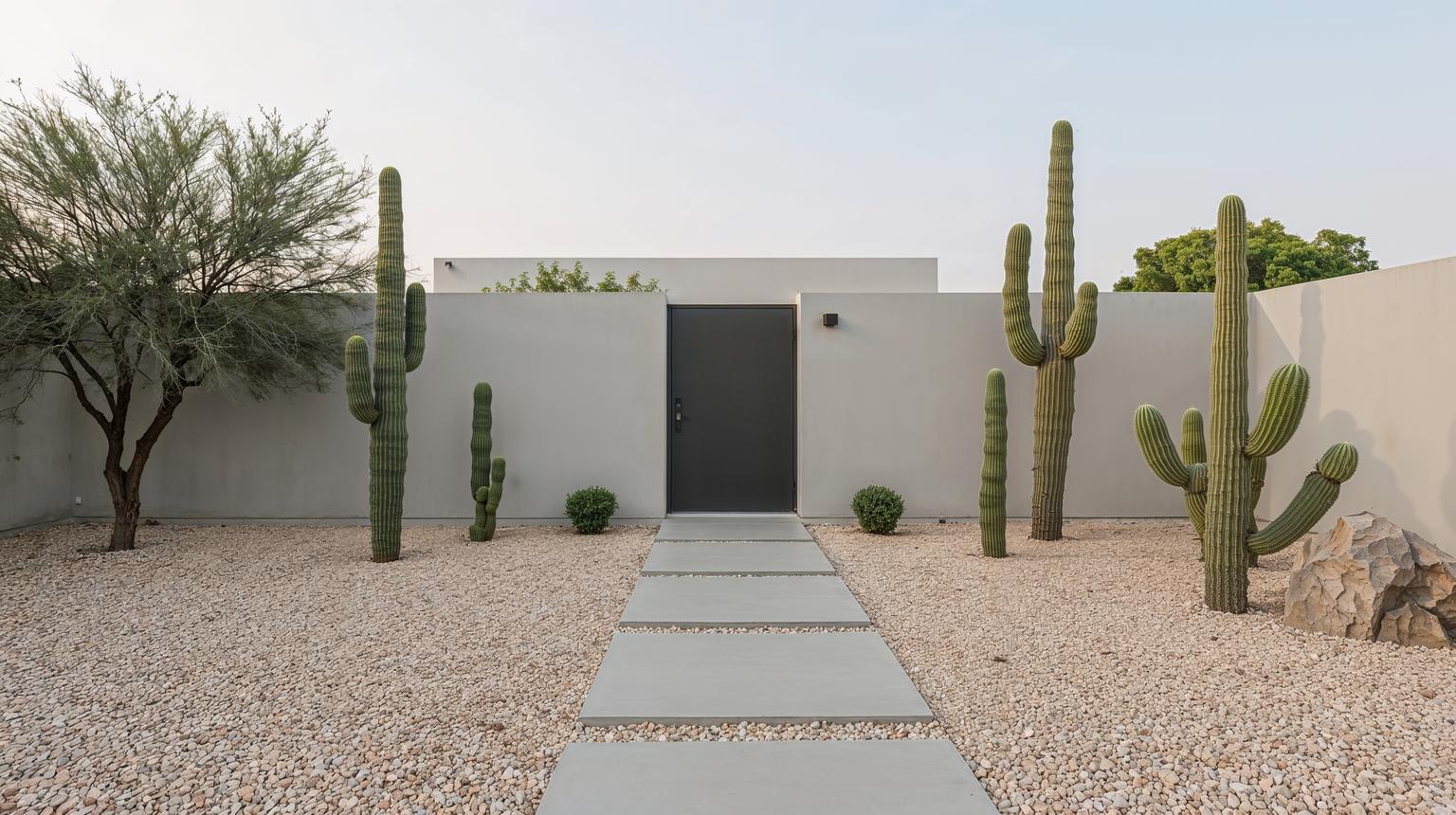
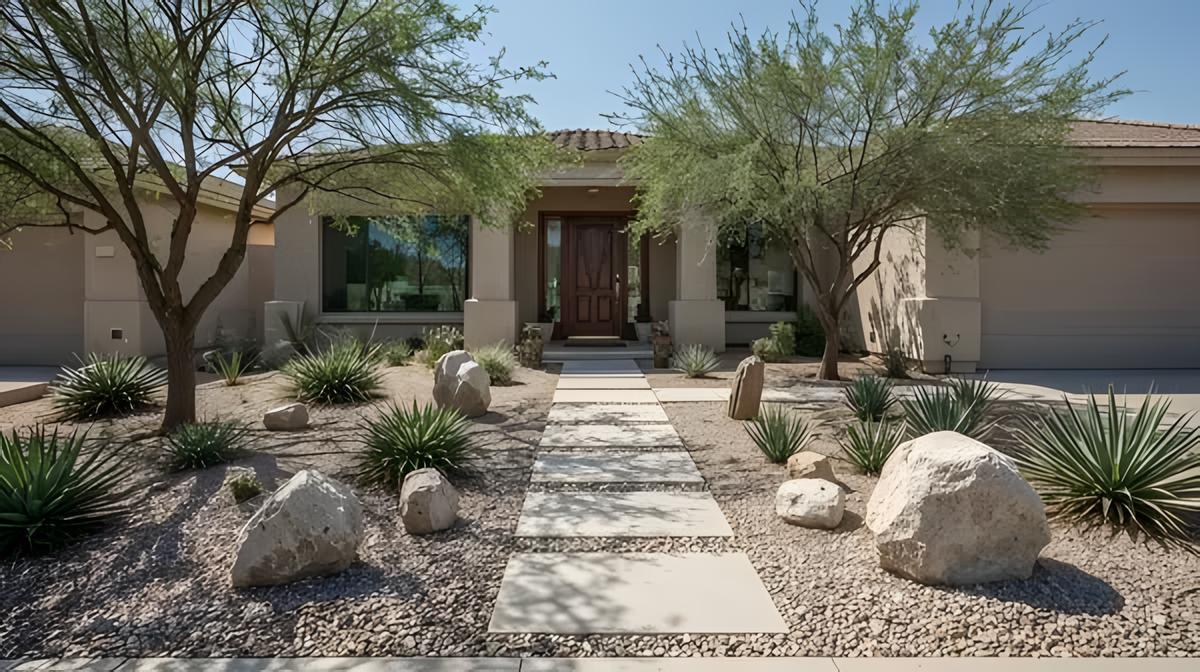
The minimalist desert yard works through restraint: one or two plant species, placed at deliberate intervals across concrete pavers and decomposed granite. Golden barrel cactus (Echinocactus grusonii) is a natural anchor — slow-growing, perfectly spherical, and visually strong at any scale. Blue agave (Agave tequilana) or desert spoon provides height variation without adding visual noise.
Steel edging keeps lines sharp between planted zones and walking surfaces. Charcoal or buff-toned decomposed granite reads as intentional rather than leftover fill. This style runs $12–$18 per square foot installed — above average because of precise edging and quality pavers — but ongoing maintenance drops to nearly zero. No trimming, no seasonal replanting, and drip irrigation servicing only a handful of plant positions.
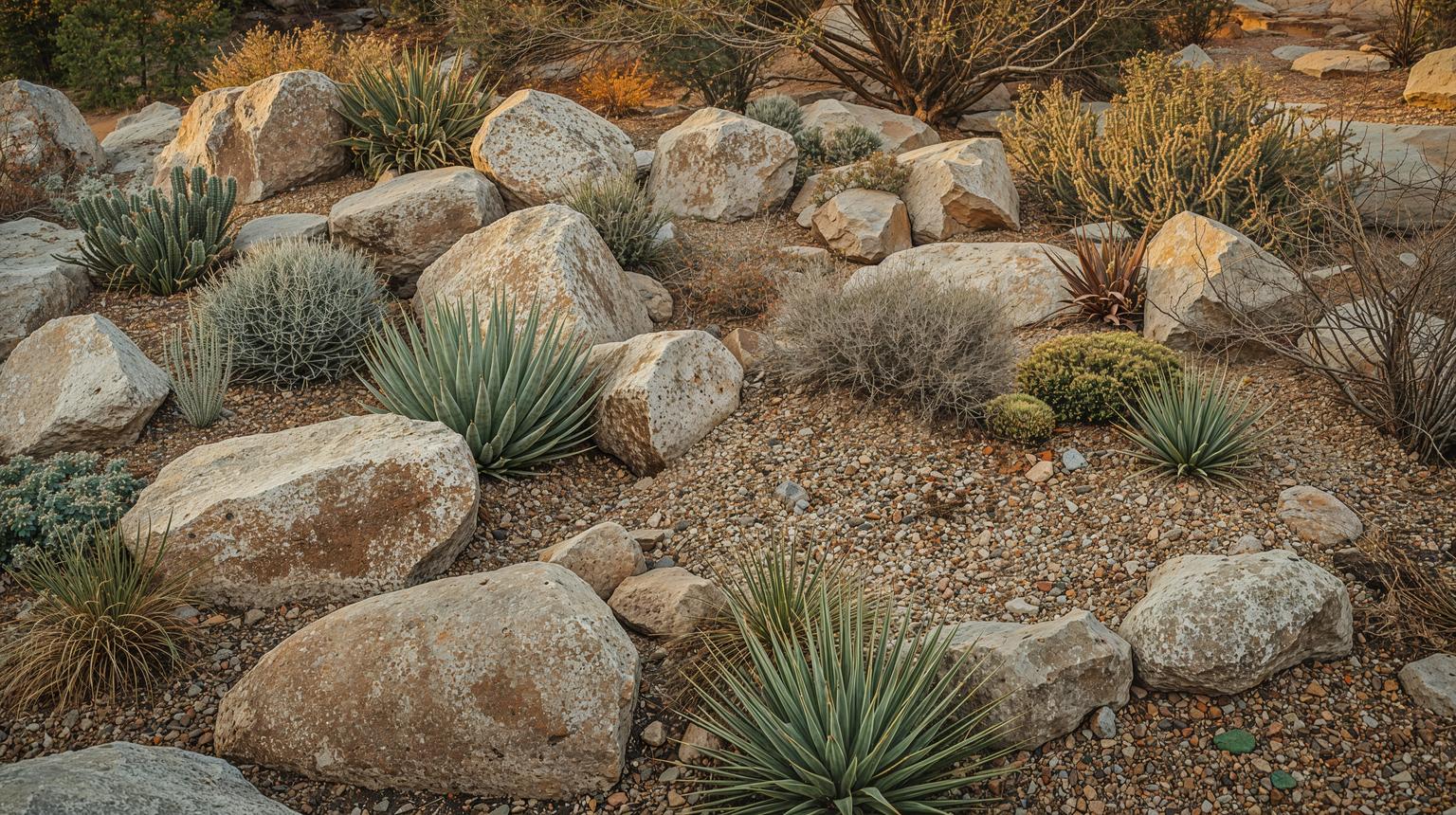
A well-built rock garden layers texture across three scales: large boulders (24–36 inch diameter) as anchors, mid-size river rocks as filler, and fine gravel as the base. Plants go in pockets between rocks rather than in rows. Echeveria and sedum work at ground level; prickly pear or cholla provides mid-height drama; a saguaro or tall agave gives the vertical accent that ties everything together.
Slope the garden slightly so boulders appear to emerge from the grade naturally rather than sitting on flat ground. Solar uplights mounted behind large boulders create strong shadow play at night — one of those design moves that genuinely looks better after dark than during the day. This style handles sloped or uneven front yards better than most options, turning difficult terrain into a design feature.
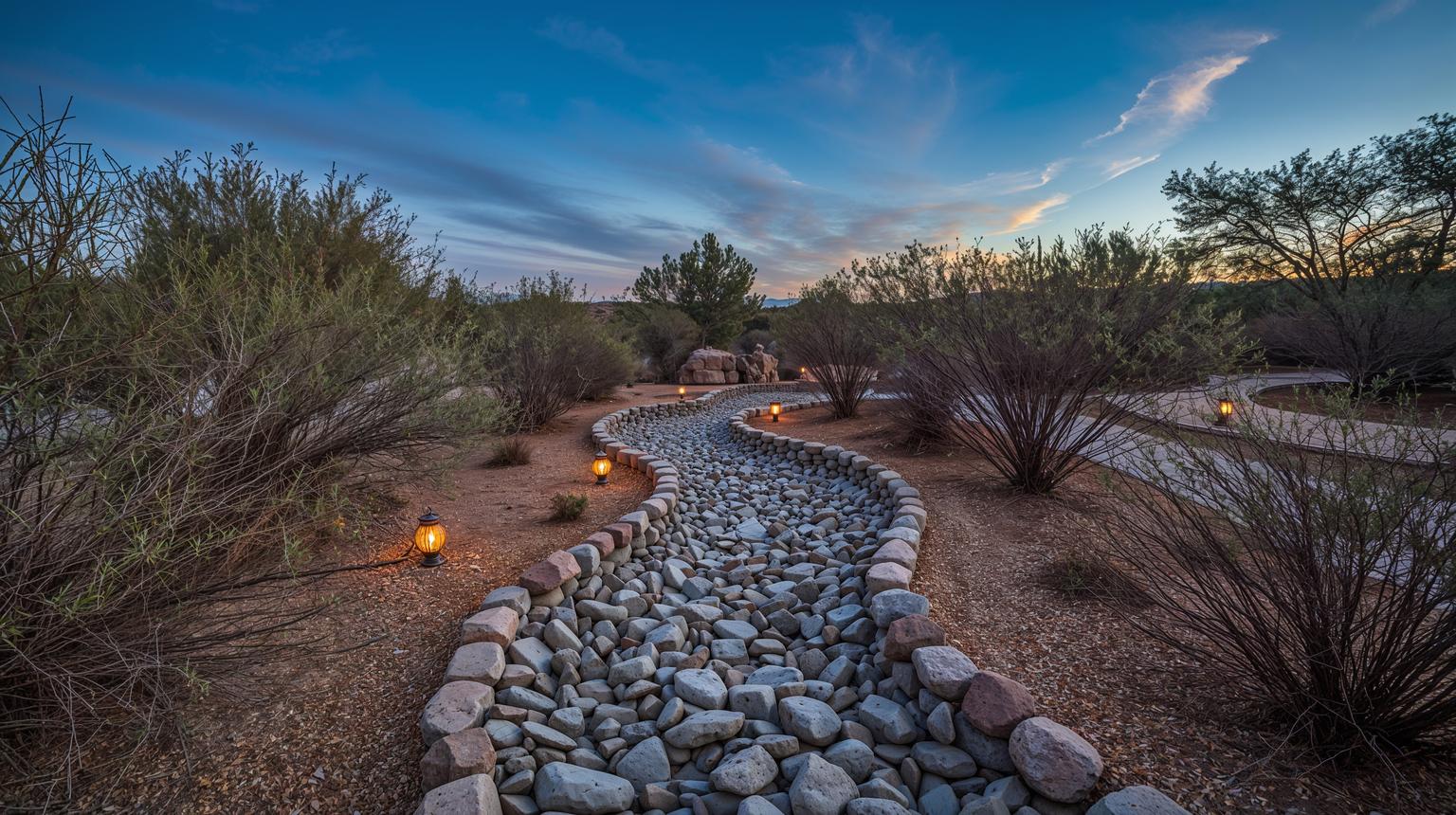
A dry creek bed solves two problems at once: it redirects stormwater runoff and creates a natural-looking line of movement through the yard. Build the channel with large river rocks (4–8 inches) on the edges transitioning to smaller stones in the center, mimicking how water actually shapes a creek bed. The result reads as natural rather than constructed.
Red yucca (Hesperaloe parviflora) planted along the banks handles the transition between the creek and surrounding planting better than most species — soft enough to frame the hard rock without visually competing with it. Desert willow (Chilopsis linearis) works for spots needing height nearby. The creek can connect from the street to a planted catchment basin near the house, functioning as both drainage infrastructure and the yard's primary design element. When paired with updated front deck and entryway design, a dry creek gives the entire front of the house a cohesive, planned quality.
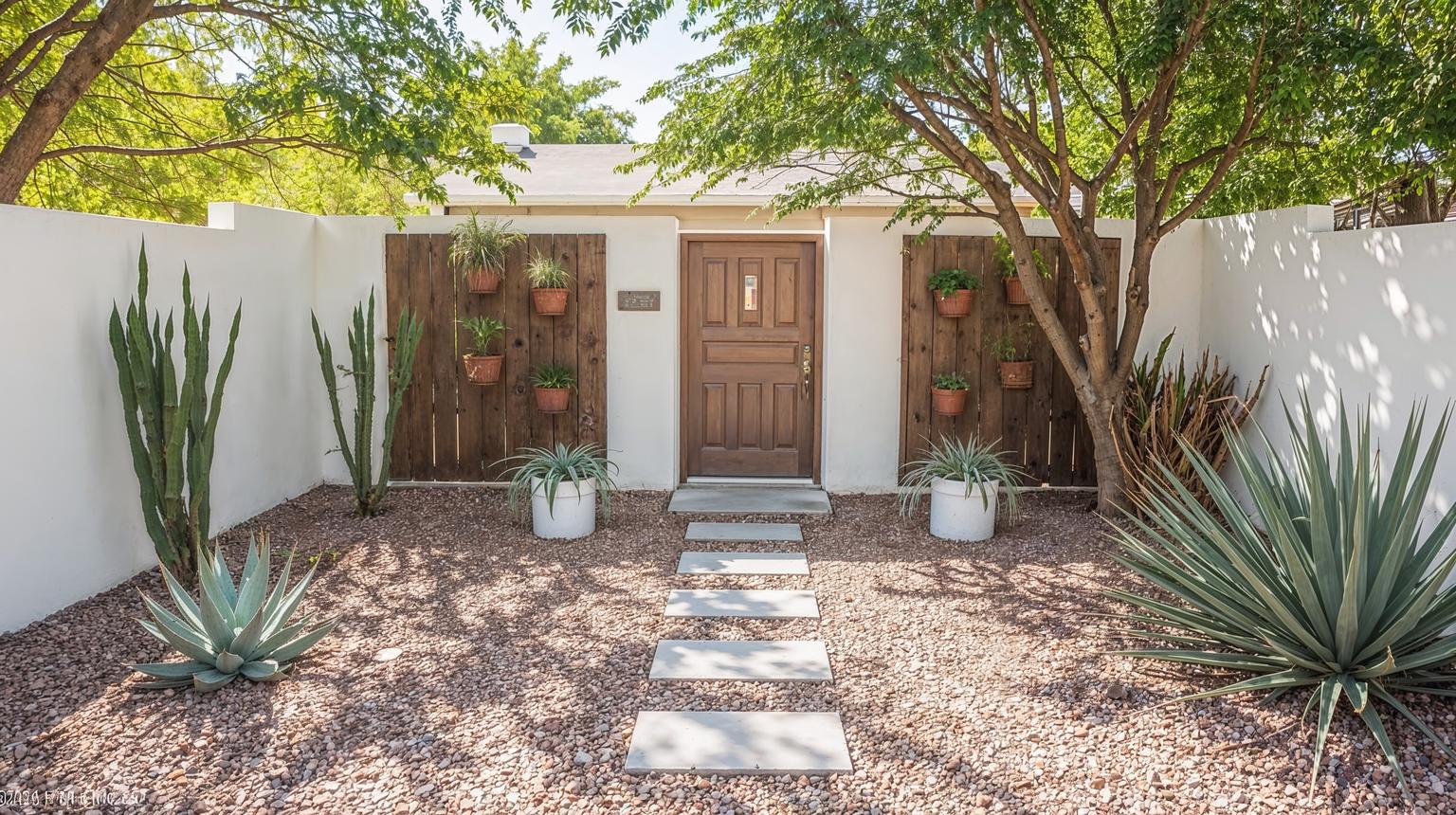
Small front yards benefit from vertical thinking. Wall-mounted planters with succulents like hens-and-chicks (Sempervivum) or string of pearls add planting area without consuming ground space. A narrow flagstone path — two or three pavers wide — creates movement and depth in a tight space. Light-colored gravel (white marble chips or pale decomposed granite) reflects heat and makes small areas read as larger than they are.
Container gardens work especially well when space is limited: a cluster of three differently-sized terracotta pots with agave, echeveria, and a small barrel cactus functions as a focal point without permanent planting. In confined yards, consistency matters more than variety — two well-chosen elements repeated cleanly outperform seven mismatched ones scattered around. For more on integrating desert plantings with the front entry, see porch and curb appeal ideas that work alongside desert-style yards.
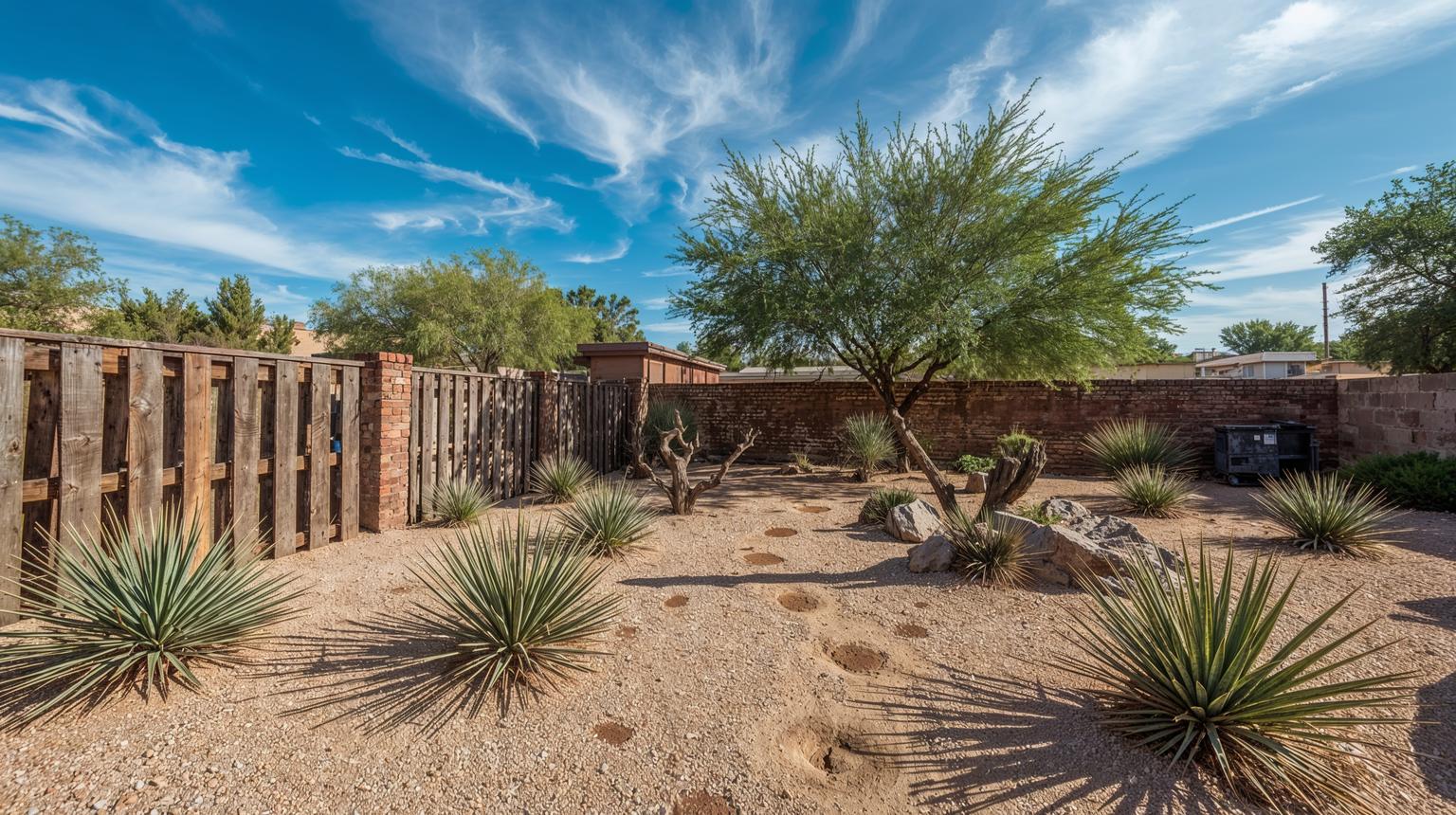
Replacing grass with decomposed granite is the highest-impact, lowest-cost change in desert landscaping. Material runs $40–$70 per ton; a 1,000 sq ft front yard at 3-inch depth needs 5–7 tons, putting material cost at $200–$490. Installation adds $1–$2 per square foot if you hire it out, but decomposed granite is one of the more DIY-accessible landscaping projects — it requires a shovel, a tamper, and an afternoon.
For plants, buy from a local native nursery. In Arizona, Nevada, and New Mexico, established agave, yucca, and desert marigold are regularly available for $8–$25 per plant — cheaper and far better suited to local soil and climate than big-box alternatives. A basic drip kit costs $50–$100 for a front yard setup and pays back quickly in reduced water bills. Mulch plant bases at 3–4 inch depth to cut watering frequency roughly in half through the first season.
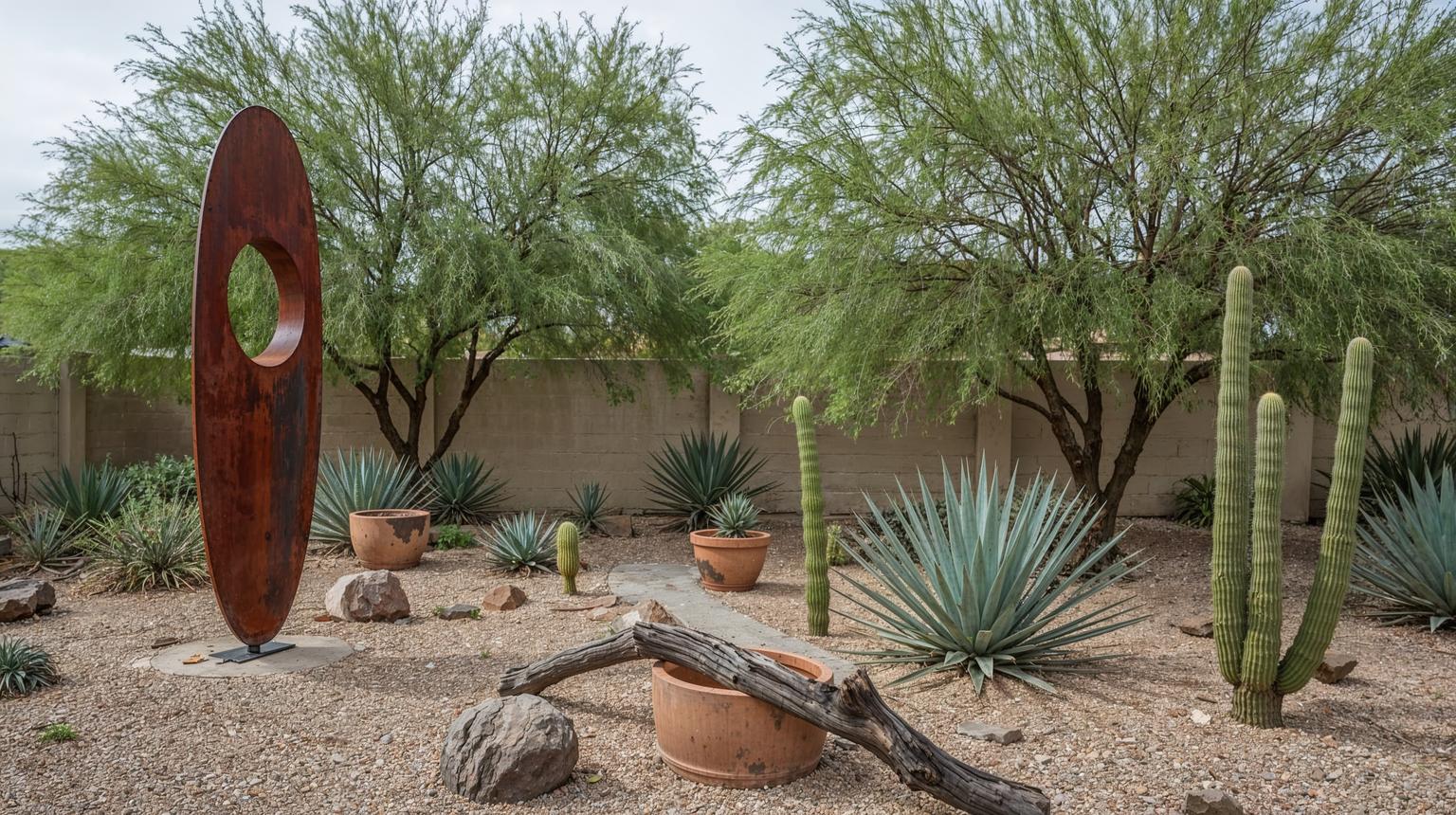
Sculptural elements — corten steel panels, rusted driftwood, hand-thrown terracotta pots — give a desert yard a designed quality that plants alone don't achieve. The key is using them as anchors rather than accessories. One large corten steel screen or a grouping of three textured boulders reads as intentional; six small decorative pieces scattered across gravel reads as collected clutter.
Agave americana (century plant) pairs well with strong sculptural pieces — its scale is large enough to hold its own against metal or stone, and the blue-green color contrasts effectively against both. Blue fescue grass (Festuca glauca) at the base softens the transition between hard surfaces and planted areas. For outdoor furniture and landscape elements that work in desert climates, material choice matters: concrete, powder-coated steel, and natural stone hold up in extreme heat where wood and resin don't.
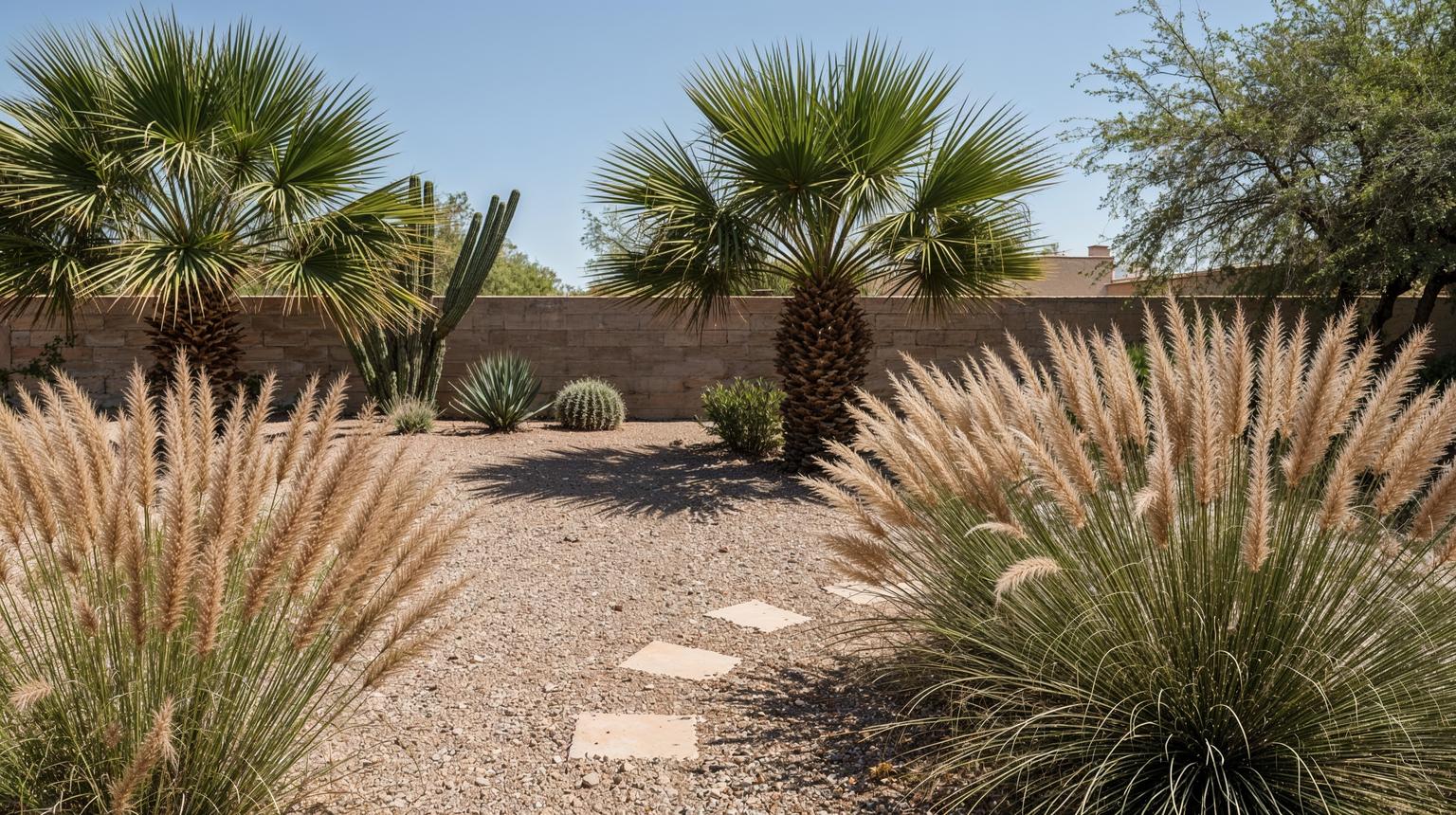
This combination addresses one of the most common problems in desert landscaping: everything sitting at roughly the same height. Pygmy date palms (Phoenix roebelenii) or Mediterranean fan palms (Chamaerops humilis) reach 10–20 feet at maturity, providing a vertical layer that most desert front yards lack. Below them, pink muhly grass (Muhlenbergia capillaris) or deer grass (Muhlenbergia rigens) creates soft mid-height movement — visually opposite to the structural weight of nearby cacti and agave.
The principle is deliberate contrast: the fluid motion of grass against the static mass of stone or succulent. Plant grasses in tight groupings of 7–12 plants rather than as individual specimens. Mass planting creates the swaying movement effect; isolated plants just look sparse. Both species are hardy to Zones 8–9, drought-tolerant after establishment, and need only one cutback annually in late winter.
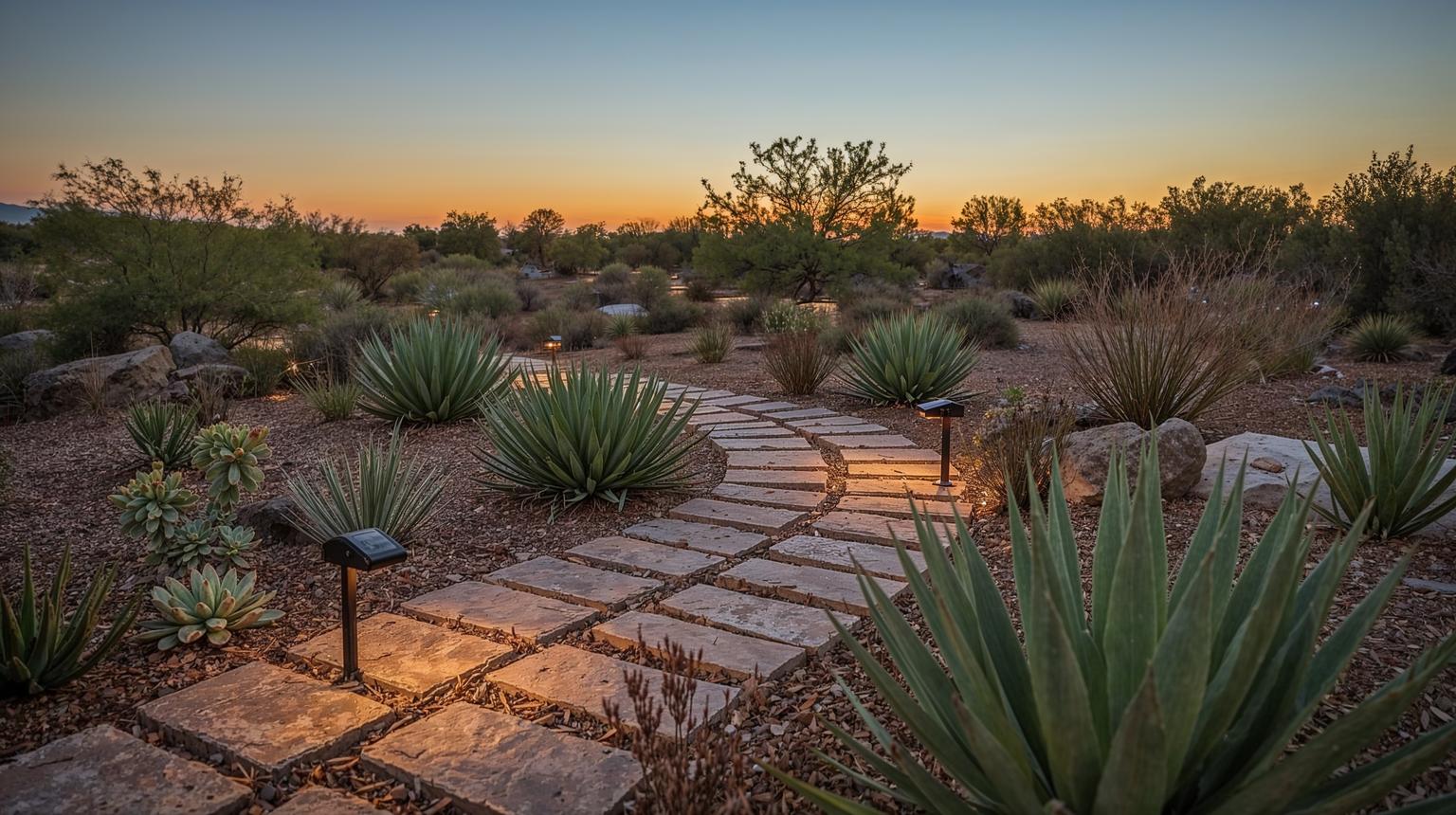
A well-designed pathway does more than connect the street to the door — it structures the entire yard. Flagstone, decomposed granite, or recycled concrete pavers set in a slight curve change the feel entirely compared to a straight line: they invite the eye forward and make surrounding planting look arranged rather than random.
Border the path with low-growing succulents: sedum, ice plant (Delosperma cooperi), or creeping thyme where temperatures allow. These stay compact, don't encroach on the walking surface, and fill gaps between pavers gradually without replanting. Solar stake lights along the path edge extend usability after dark and add a layer of visual interest at night. Decomposed granite paths cost $3–$6 per square foot installed — the cheapest paved option that still looks considered rather than improvised.
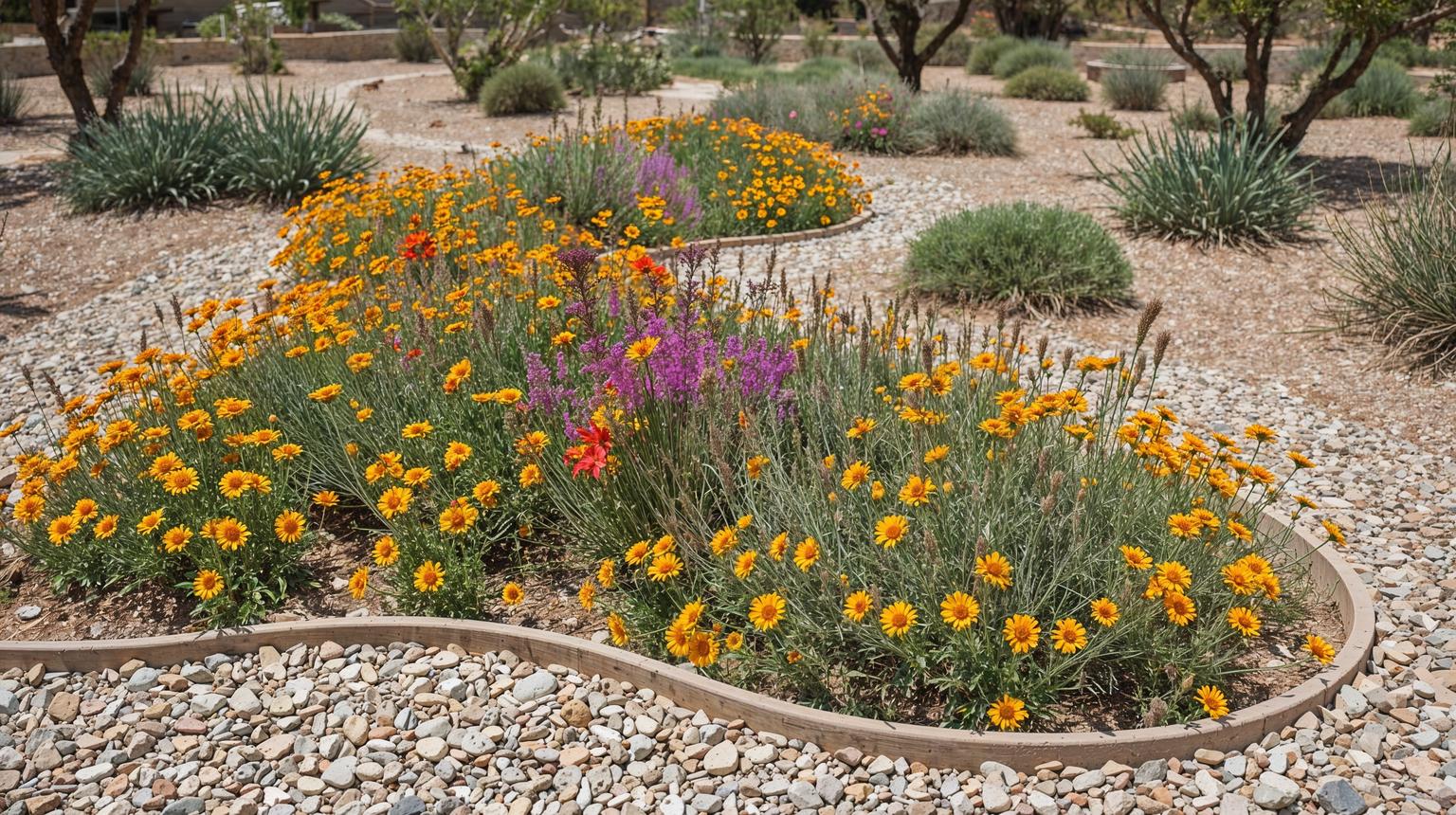
A purely gray-and-green desert yard is calming but static. Drought-tolerant wildflowers fix this without significant maintenance. Brittlebush (Encelia farinosa) blooms yellow from February through May across the Sonoran Desert and needs no irrigation once established. Firecracker penstemon (Penstemon eatonii) produces red spikes in spring and draws hummingbirds reliably. Desert marigold (Baileya multiradiata) repeats throughout the warm season rather than peaking once.
Plant in drifts rather than as individual specimens. A mass of 12–15 brittlebush grouped together creates the visual impact that 12 plants spread two feet apart never achieves. A concentrated wildflower drift placed adjacent to solid gravel or rock generates more contrast than the same plants scattered everywhere. All three species support pollinators and meet every xeriscape standard: no supplemental water after the first season. The same plant palette translates well beyond the front yard — see our guide to AI landscape design solutions for backyards for extending this approach further.
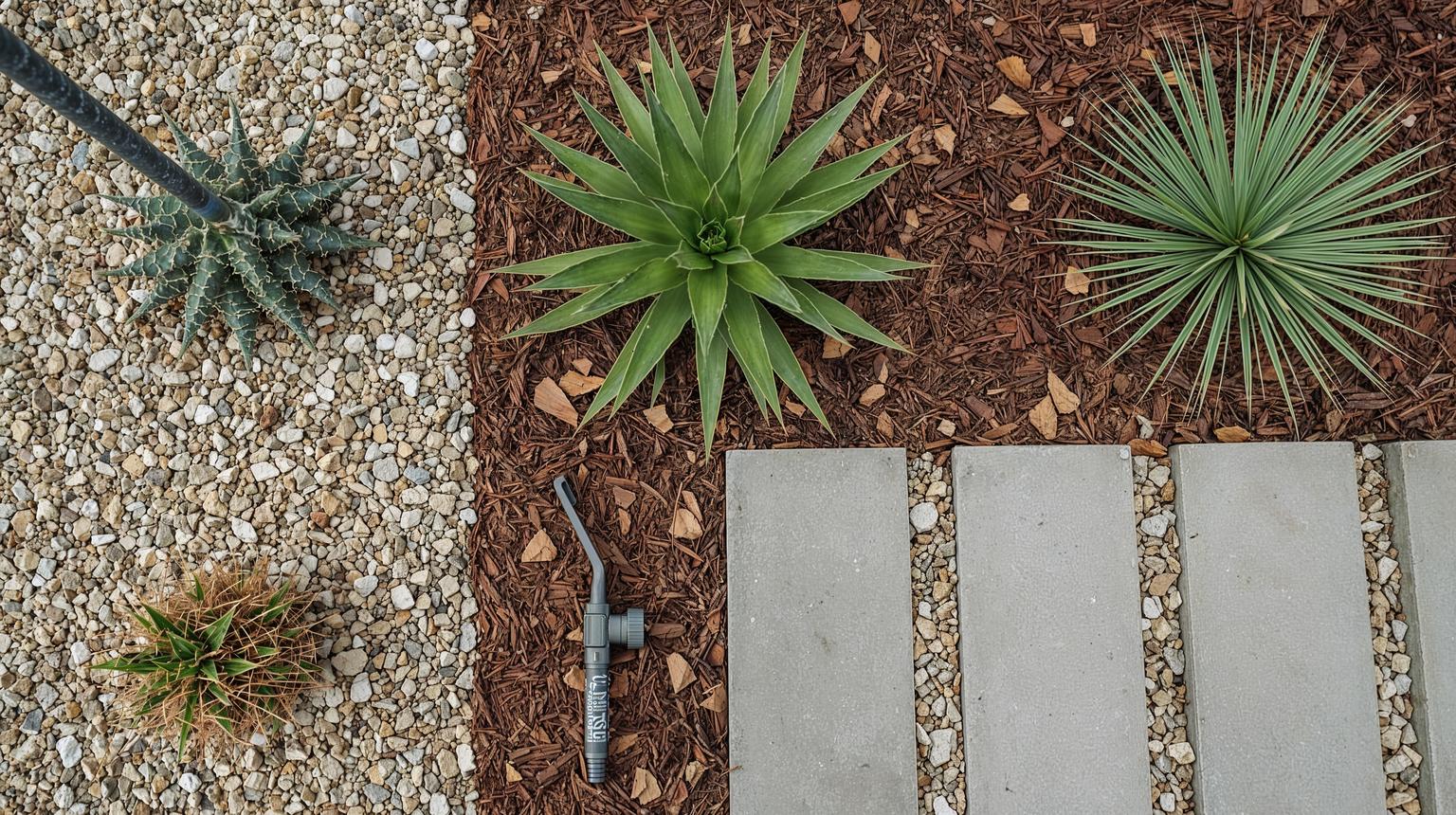
Xeriscape is often misread as "zero-scape" — just gravel with nothing living. It isn't. Developed by Denver Water in 1981, xeriscaping is a structured approach to landscape design built on seven principles: planning and design, soil improvement, practical turf areas, appropriate plant selection, efficient irrigation, mulching, and appropriate maintenance.
The practical difference from generic desert landscaping is precision. In a xeriscape design, plants are grouped by water need — a concept called hydrozoning — so high-water species aren't irrigated on the same schedule as drought-tolerant ones. Irrigation is calibrated to deliver water directly to root zones with minimal surface evaporation. Water utilities across the Southwest, including Las Vegas Valley Water District and Tucson Water, report average savings of 50–75% when households replace conventional lawns with a properly designed xeriscape system.
For front yards specifically: replace turf with decomposed granite or native ground cover, install a drip system with separate zones for different plant types, mulch planted areas at 3–4 inch depth, and select plants rated for your USDA zone. The visual result can range from minimalist to densely planted — the water savings come from the system design, not from making the yard look bare.
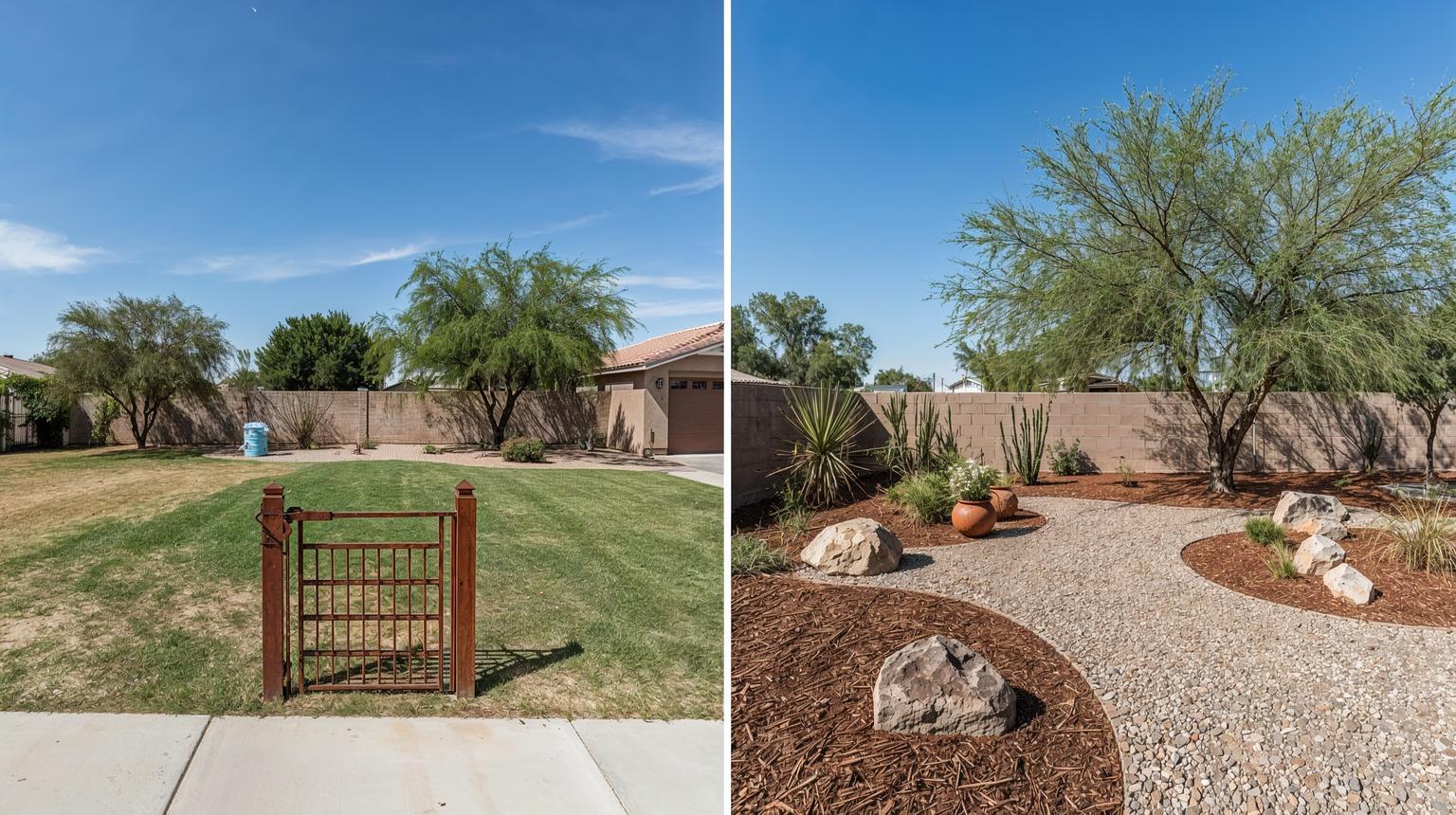
Desert landscaping costs real money upfront — but the ongoing savings are substantial. Households in Phoenix, Las Vegas, and Tucson replacing 1,000 sq ft of grass with desert landscaping typically report annual water savings of $300–$600, based on current municipal water rates in those cities. At that rate, a $3,000 DIY renovation pays back in 5–10 years, with lower maintenance costs from that point on.
The most cost-effective sequence for a budget desert front yard:
DIY the whole project and a 1,000 sq ft front yard comes in at $800–$2,000 in materials. Hire it out and expect $5,000–$10,000 for the same scope. The gravel and planting portions are genuinely accessible for a weekend project; irrigation layout benefits from professional help for anything beyond a few emitters.
One common overspend: specimen plants. A 6-foot saguaro costs $200–$500 at a nursery. A 2-foot specimen costs $20–$40 and reaches the same height in 8–12 years — while establishing better with less transplant stress.
One of the harder parts of desert landscaping is committing to hardscape colors — whether decomposed granite reads as warm gold or flat beige under your actual sun, whether a dark gravel overpowers the house, how three cactus species look together at scale. Getting this wrong after ordering 5 tons of material is expensive and frustrating to fix.
Paintit.ai's AI landscape design tool generates complete desert landscaping concepts you can iterate on before buying anything — useful if you're starting from a blank yard or want to compare several styles side by side. The home exterior design tool lets you test how different gravel tones and plant combinations look against your actual house facade. In our testing, the most common use case is catching a color mismatch before purchase: a gravel tone that clashes with the roof, or an agave variety that visually competes with a dark-painted exterior.
For a broader comparison of AI tools available for landscape planning, see our review of the best AI landscape design tools in 2026.
Well-designed desert landscaping genuinely requires less work than turf — but less doesn't mean zero. Here's what a realistic maintenance calendar looks like.
During the establishment period (first 2–3 months after planting), water deeply every 5–7 days. Once established, most desert plants need watering every 2–3 weeks in summer and can go 4–6 weeks between irrigations in winter. Deep and infrequent watering builds drought hardiness by encouraging deep root growth. A drip system on a seasonal timer handles this automatically — adjust timing in late spring and again in mid-fall.
Most desert plants need pruning once a year at most. Remove dead or damaged growth in early spring before the growing season starts. Trim anything that has outgrown its space or is encroaching on a pathway. Avoid over-pruning — the natural shape of agave, yucca, and most cacti is part of what makes them interesting, and heavy cutting disrupts the plant's energy reserves.
Decomposed granite and gravel settle over time. Top-dress every 2–3 years with a thin layer (1–2 inches) in spring to restore depth and weed suppression. Organic mulch around plants needs annual refreshing — its moisture-retention benefits drop significantly once it thins below 2 inches.
Check the drip system every month or two during the watering season. Emitters clog with mineral deposits and need occasional flushing; lines can be displaced by digging animals or foot traffic. A 10-minute walkthrough prevents the dead-plant discoveries that come from months of a misdirected emitter.
The best desert front yards aren't minimal by accident — they're minimal by design. Every element earns its place: the right plant in the right zone, hardscape materials chosen for durability and color coherence, irrigation that delivers water directly where it's needed. That upfront planning pays back through years of near-maintenance-free performance and consistently lower water bills.
Start with hardscape — drainage, edging, gravel coverage — before buying a single plant. Get soil drainage right. Then build the planted layer gradually, adding species proven for your specific zone rather than whatever looks compelling at the nursery in March. Desert front yards that age well almost always follow that sequence.
Replace grass with decomposed granite first — material costs $40–$70 per ton, and a 1,000 sq ft yard at 3-inch depth needs roughly 5 tons ($200–$490 in materials). Install a basic drip irrigation kit ($50–$100) before laying gravel, since retrofitting is difficult afterward. Then plant from a local native nursery where species are cheaper and better established for your climate than big-box options. A complete DIY desert front yard renovation typically runs $800–$2,000 in materials for a 1,000 sq ft space.
Agave (blue agave and century plant), golden barrel cactus, prickly pear, red yucca, and desert marigold are consistently reliable across Arizona's Zones 9–10. For grasses, pink muhly and deer grass handle extreme heat well and add textural contrast to harder structural plants. Brittlebush is the best option for seasonal color — it blooms yellow from February through May and needs no irrigation once established. All of these are widely available at Arizona native plant nurseries and substantially cheaper than buying from general garden centers.
Xeriscape is a specific, water-efficient design method developed by Denver Water in 1981. It applies seven principles: planning and design, soil improvement, practical turf areas, appropriate plant selection, efficient irrigation, mulching, and appropriate maintenance. Regular desert landscaping focuses mainly on plant selection — drought-tolerant species instead of turf. Xeriscape optimizes the entire system by grouping plants with similar water needs (hydrozoning), calibrating irrigation precisely, and mulching heavily to reduce evaporation. A properly designed xeriscape reduces landscape water use by 50–75% compared to a conventional lawn.
Professional desert landscaping typically runs $5–$20 per square foot installed, depending on design complexity, plant sizes, and local labor rates. A 1,500 sq ft front yard costs $8,000–$18,000 professionally installed. DIY reduces that by 40–60%. The biggest cost variables are specimen plants (mature saguaro and established palms are expensive) and whether irrigation installation is included in the quote. Gravel and edging are the most accessible DIY portions; drip irrigation layout benefits from professional installation for systems serving more than a few planting zones.
Yes. Small yards benefit from vertical approaches: wall-mounted succulent planters, container gardens that can be repositioned, and narrow flagstone paths that create depth. Light-colored gravel makes small spaces read as larger. For very small front yards (under 300 sq ft), a container cluster of three differently-sized pots with agave, echeveria, and a small barrel cactus is more effective than trying to plant every inch. Keep the plant palette consistent — two or three species repeated cleanly outperform seven different plants scattered without a clear plan.
Plant drought-tolerant wildflowers in drifts rather than as individual specimens. Brittlebush, firecracker penstemon, and desert marigold bloom without supplemental irrigation after establishment. Mass planting — 12 or more of the same species grouped together — creates the visual impact that individual plants spread across a yard don't achieve. For non-plant color, corten steel, colored pottery, and decorative boulders provide year-round interest without any water requirement. Avoid annuals unless you're committed to seasonal replanting — they need water and regular replacement, which works against the low-maintenance point of desert landscaping.
Yulii Cherevko
CEO paintit.ai