13 min. reading

Yulii Cherevko
CEO paintit.ai
Published: Updated:
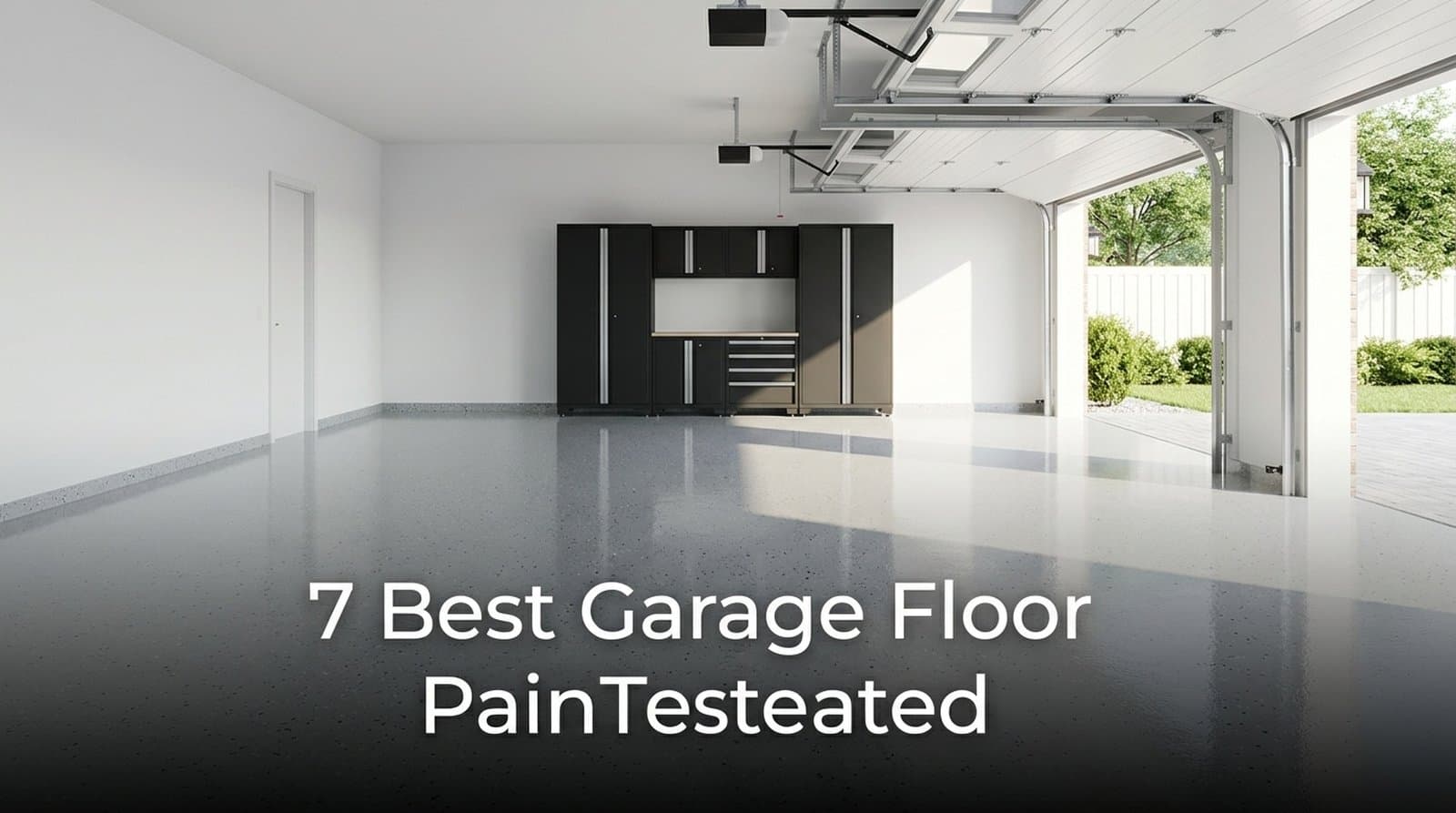
The best garage floor paint is a vehicle-rated product that suits your concrete and the time you can keep the car outside. Start with Rust-Oleum EpoxyShield if you want a two-part DIY epoxy, or compare BEHR, KILZ and Valspar if you prefer a ready-to-use paint. RockSolid offers a shorter published return-to-driving time; ArmorPoxy II is a more involved, layered system.
The guide retains the October 19, 2026 specification comparison, with selected manufacturer pages and EpoxyShield and KILZ technical sheets rechecked on November 4. These are document-based recommendations, not results from Paintit applying or testing the coatings. Confirm the instructions for the purchased product; illustrations show possible appearances, not performance evidence.
Finish illustrations show possible appearances, not evidence of a particular product's performance.
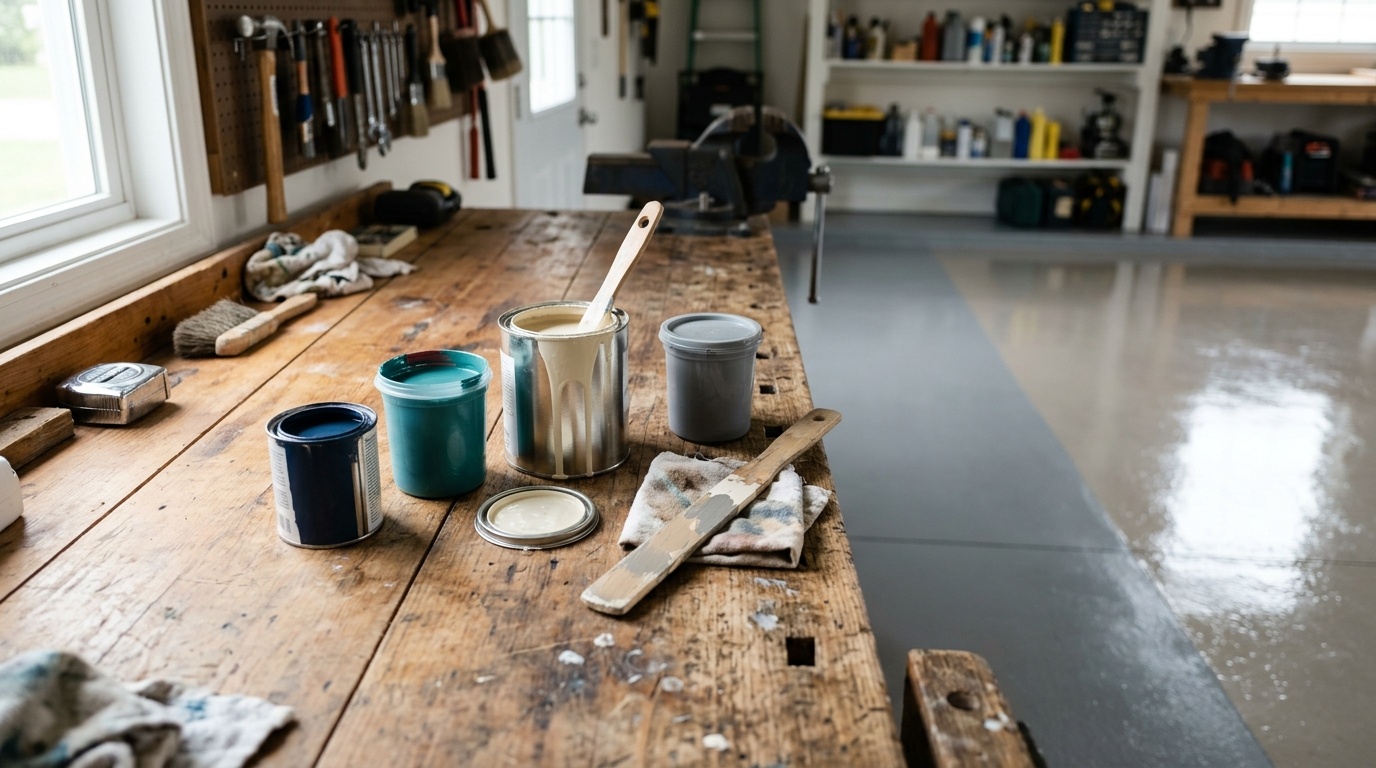
A one-part paint comes ready to stir and apply. It avoids the mixing clock of a resin-and-hardener kit and is easier to handle for an occasional DIY project. That convenience does not make it suitable for every slab, but neither does it mean all one-part products exclude cars: BEHR, KILZ and Valspar explicitly describe residential garage use and hot-tire resistance.
A two-part epoxy starts curing after you mix its components. You need the room prepared and a clear application sequence before that point. Choosing the best epoxy paint for garage floor use means comparing the complete system, including any primer and topcoat, rather than assuming every box marked epoxy has the same coverage or working time.
For repeated workshop use, ask about the particular fluids and loads involved. A rolling tool chest, a parked passenger car and a forklift are different requirements. For a sunny threshold or open carport, check exterior and UV suitability as well. An indoor coating should not extend onto an outdoor apron simply because the color matches.
These are six options for different installation preferences, not six products ranked by a common laboratory test. Return-to-driving figures are published manufacturer guidance, subject to the exact product, coat schedule, temperature and humidity. The instructions on your purchased kit take priority if its formulation or packaging differs.
| Product | Type | Published Coverage | Before Driving | Important Check |
|---|---|---|---|---|
| EpoxyShield water-based can kit | Two-part epoxy | About 250 sq ft at specified film build | 3 days | Match ESH-41 to the purchased kit |
| KILZ 1-Part Epoxy Acrylic | One-part residential paint | 300–500 sq ft/gal | 7 days | Tire areas may need annual touch-ups |
| ArmorPoxy II Job on a Pallet | Layered epoxy/topcoat system | Obtain current area and configuration quote | Confirm final-system instructions | Confirm the complete configuration |
| BEHR Premium 1-Part Epoxy | Ready-to-use floor paint | 300–500 sq ft/gal per matching TDS; confirm coats | 7 days | Confirm tint and required coats |
| RockSolid Polycuramine Garage Kit | Two-component polycuramine | 180 fl oz kit: up to 450–500 sq ft | 24 hours | Preparation time is additional |
| Valspar Concrete & Garage 1-Part Epoxy | Ready-to-use floor paint | 300–500 sq ft/gal per matching TDS; confirm coats | 5 days | Not an older two-part kit |
Keep parking time separate from drying to the touch, recoating and moving furniture back. Adding a clear topcoat can change the schedule. Count from the last applicable coat, not from the moment you start rolling the first one.
The ESH-41 can-kit sheet permits covered garages only and excludes sunny carports. It also distinguishes air, material and concrete temperature and dew-point conditions. Do not extend that coating onto a sunlit apron simply because the color matches.
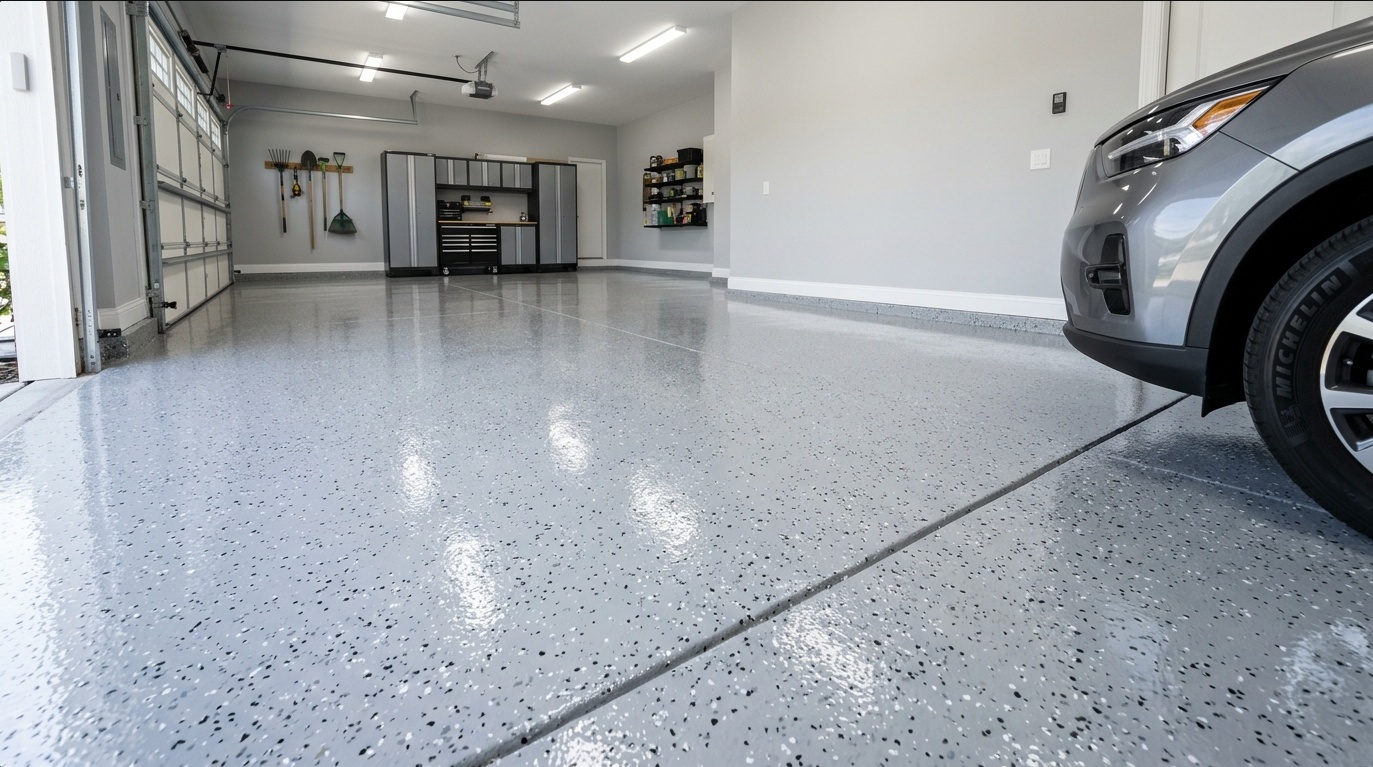
EpoxyShield is worth shortlisting if you want a mixed epoxy rather than a single-can paint. The ESH-41 sheet for the water-based can kits lists approximately 250 square feet at the recommended film thickness and 3 days before vehicle traffic under its stated conditions.
Do not transfer those figures to every product bearing the EpoxyShield name. A clear topcoat, a different package or a different formula needs its own instructions. Read the EpoxyShield can-kit technical sheet before scheduling the job; it also separates working time by temperature.
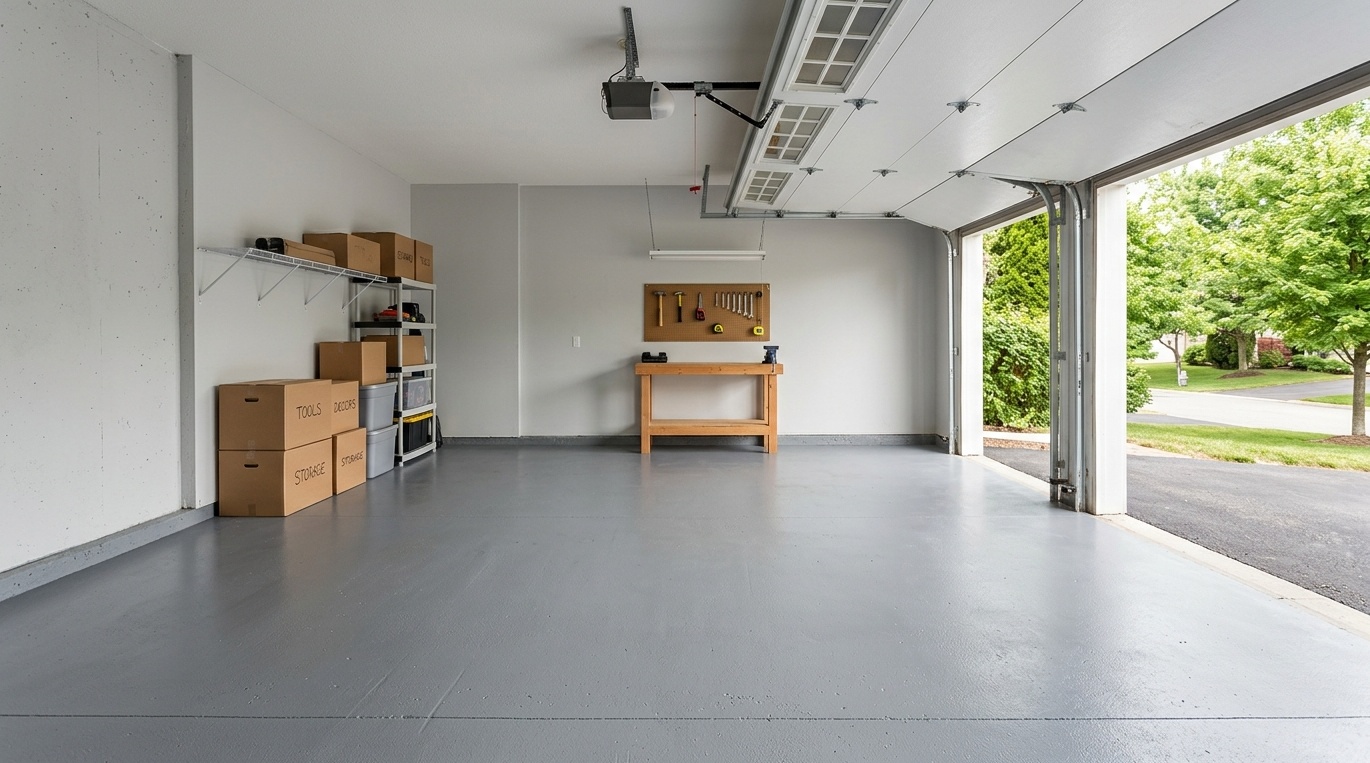
KILZ is an option when you want a single-component residential coating without measuring a separate hardener. Its Silver Gray and Slate Gray finishes provide a small, straightforward shortlist. The published coverage is 300–500 square feet per gallon, with lower coverage on rough concrete.
The KILZ floor-paint instructions require 7 days before automotive tires and warn that annual touch-ups may be needed in tire areas. They exclude hydrostatic pressure and forklift use. Treat this as a residential paint option, not an industrial floor specification.
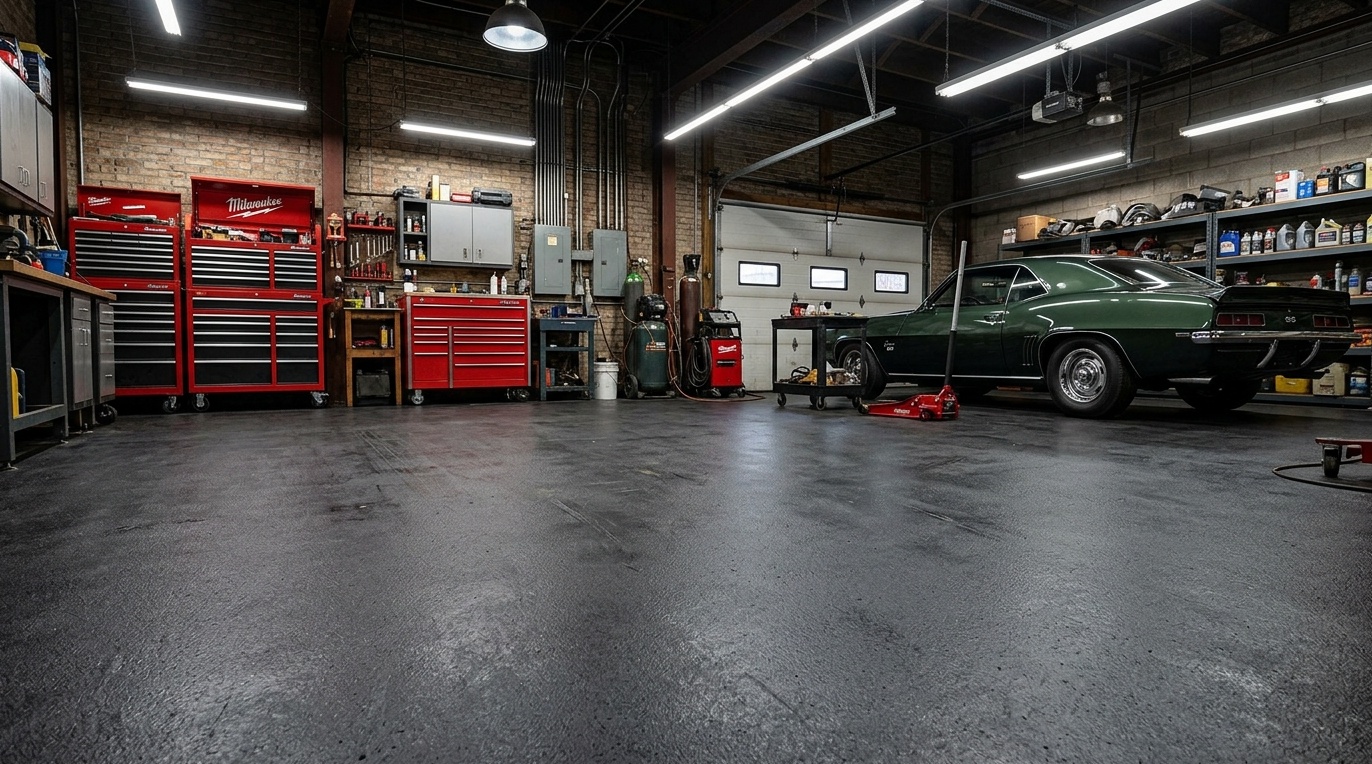
ArmorPoxy II Job on a Pallet combines a color coat and protective topcoat rather than only a single-can paint. Specify the complete configuration and obtain written return-to-vehicle guidance for its final coat. Do not transfer a cure schedule from another ArmorPoxy kit.
Obtain the current order minimum, included tools, topcoat configuration and delivered quote from the supplier. Low- and standard-VOC options can require different safety and application planning; a per-square-foot headline is not the whole project cost.
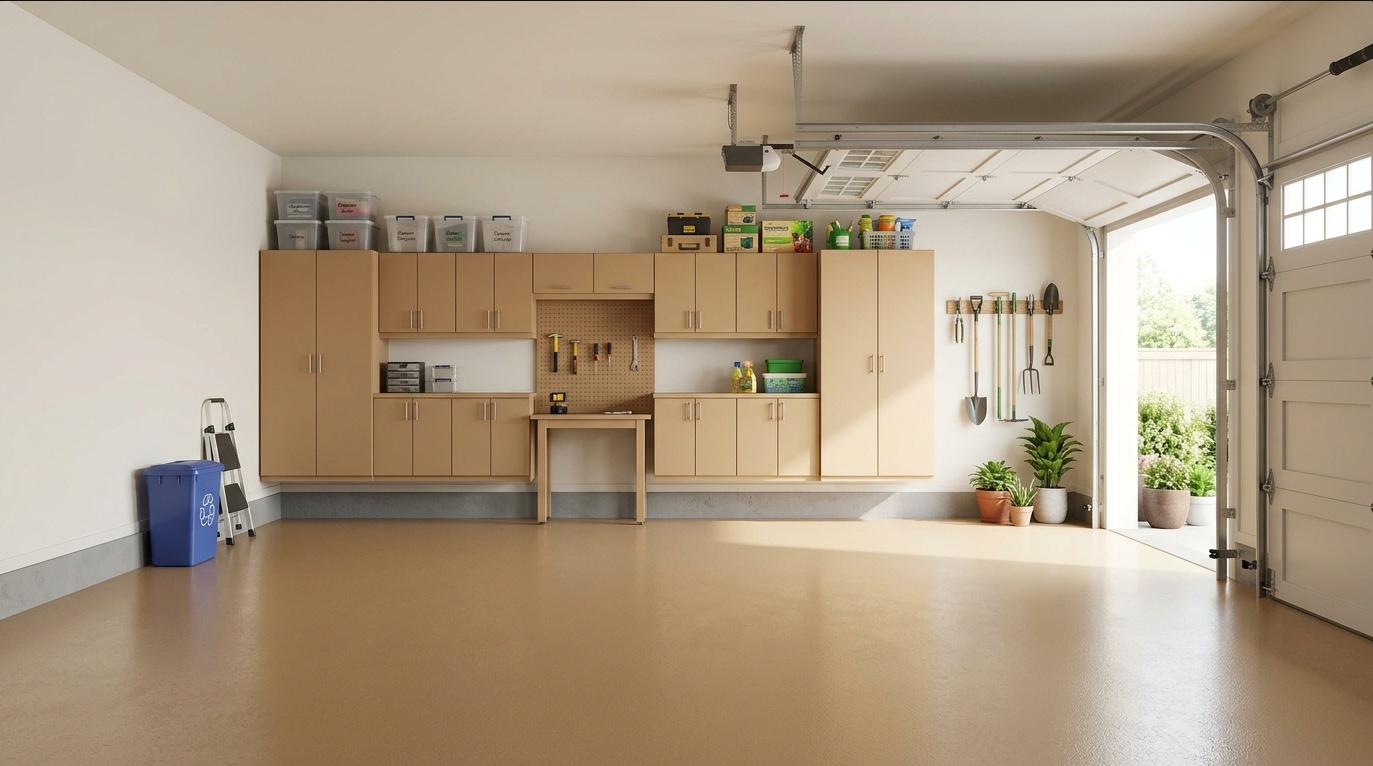
BEHR Premium Concrete & Garage Self-Priming 1-Part Epoxy is a single-component coating with an acrylic/epoxy resin. The No. 900 technical sheet lists 300–500 square feet per gallon on eligible prepared concrete. Confirm the exact tint, formula and required coat schedule rather than transferring a wall-paint color into a floor specification.
Self-priming does not mean preparation-free. The BEHR automotive-traffic guidance says to allow 7 days before tires and notes that tire areas may need annual touch-ups. A dry-looking floor the next morning is not ready for your car. Confirm that the chosen tint is available in this floor coating, not merely in an unrelated BEHR wall-paint line.

RockSolid Polycuramine Garage Floor Coating is worth comparing when parking downtime is a major constraint and you want a high-gloss finish. Rust-Oleum lists walking in 8–10 hours and driving in 24 hours. Those are different milestones, and neither includes the time spent preparing and drying the concrete beforehand.
The RockSolid kit-size and coverage details distinguish the 90-fluid-ounce one-car kit from the 180-fluid-ounce 2.5-car kit. The latter covers up to 450–500 square feet. Check the actual floor area and kit instructions; the words two-car garage are not a measurement. Polycuramine is the product's named chemistry, not a reason to call it polyaspartic.
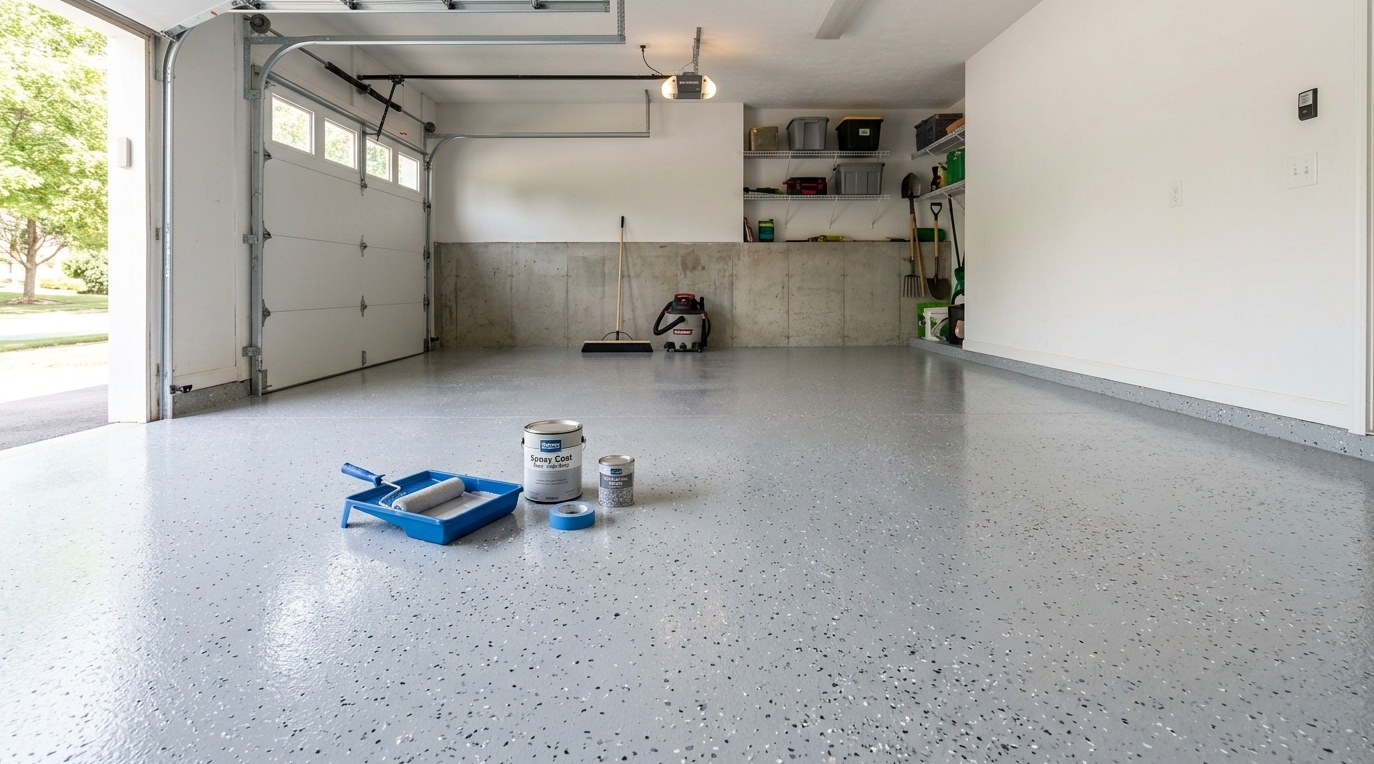
The current Valspar product is a one-part residential concrete paint, not a mixed epoxy kit. Its website lists 350–500 square feet per gallon, while the Ultra White-base product data sheet lists 300–500. Use the matching purchased-product sheet and a conservative quantity. The PDS recommends two coats for most applications and 5 days before vehicle traffic under stated conditions.
Two coats are recommended for most applications, and the manufacturer lists 5 days before vehicle traffic. Check the Valspar coating and application details for your base and product number. Do not assume that an older Valspar two-part kit description refers to this formula, or that every Valspar color is available at every retailer.
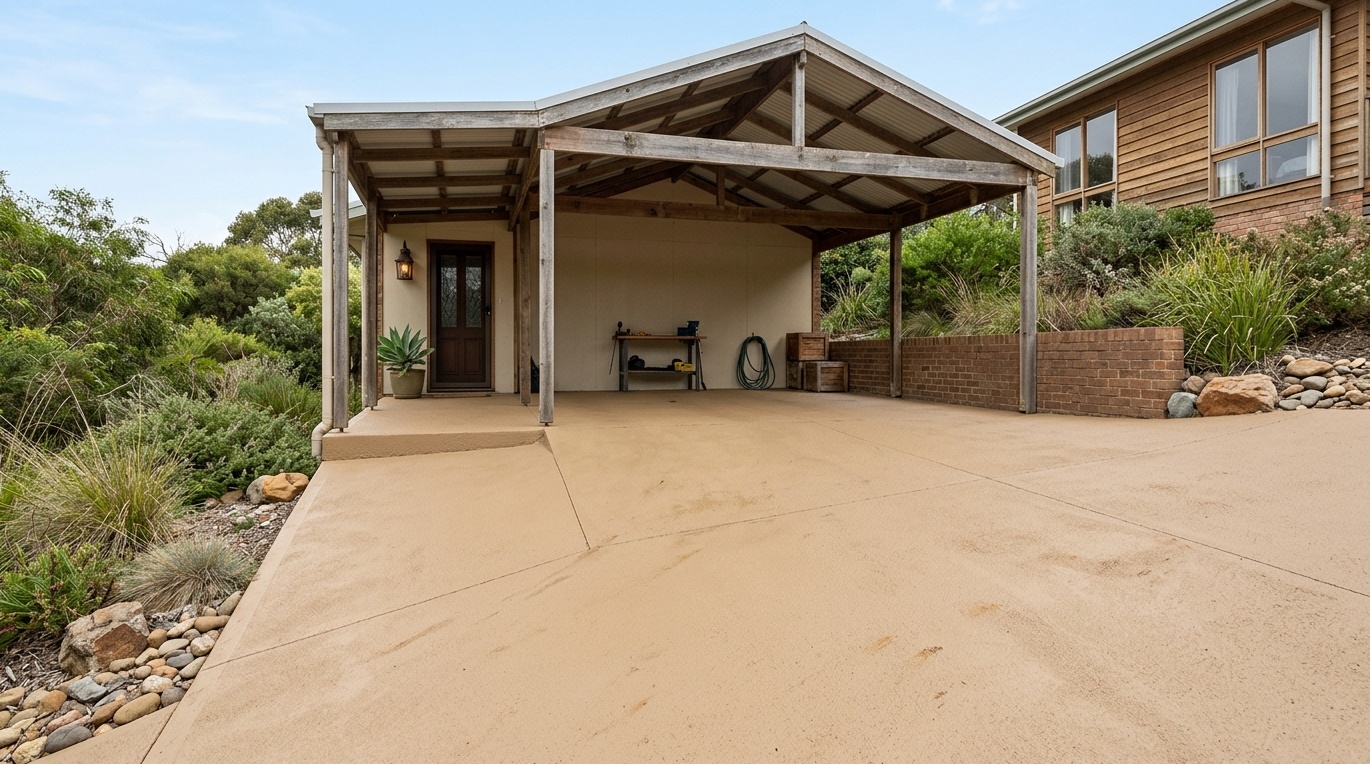
A textured appearance in a photograph cannot establish slip resistance. Decorative flakes, a satin sheen and a traction additive serve different purposes. If rain, snow or a wet car will bring water onto the surface, ask the coating supplier which additive and loading rate belong in the specified system.
Rust-Oleum's EpoxyShield sheet warns that a coated surface can become slippery when wet and describes compatible anti-skid options. Follow the chosen product's directions instead of stirring household sand into an unspecified paint. Extra texture can also make cleaning harder, so consider the walking route as well as the parking bays.
For an open carport, require written vehicle-use and exterior approval for the exact product. A coating sold for pool decks or pedestrian concrete is not automatically suitable under tires. Check sun exposure, drainage and the condition of the slab before choosing a texture or shade.
Measure the coated area rather than buying by the number of cars the garage holds. A 20-by-22-foot floor is 440 square feet. If the selected coating requires two coats, that is 880 square feet of coat coverage before accounting for porosity, waste or a separate primer.
BEHR’s current No. 900 technical sheet gives 300–500 square feet per gallon. For 880 square feet of coat coverage, that is 880 ÷ 500 to 880 ÷ 300, or 1.76–2.93 gallons. Planning at the lower coverage and rounding up gives three one-gallon containers before losses. Use the data sheet for the purchased formula; product-page ranges may differ.
A kit whose stated coverage describes a complete single-coat application uses a different calculation. Do not double its quantity just because a different brand recommends two coats. Equally, do not stretch a kit beyond its stated area to avoid buying another box.
Compare quotes using the same scope: coating quantity, compatible primer and topcoat, cleaner, repairs, tools, traction additive and preparation equipment. Add the cost of keeping cars and stored items outside. For a one-week parking constraint, a seven-day vehicle wait after coating leaves no room for preparation delays.
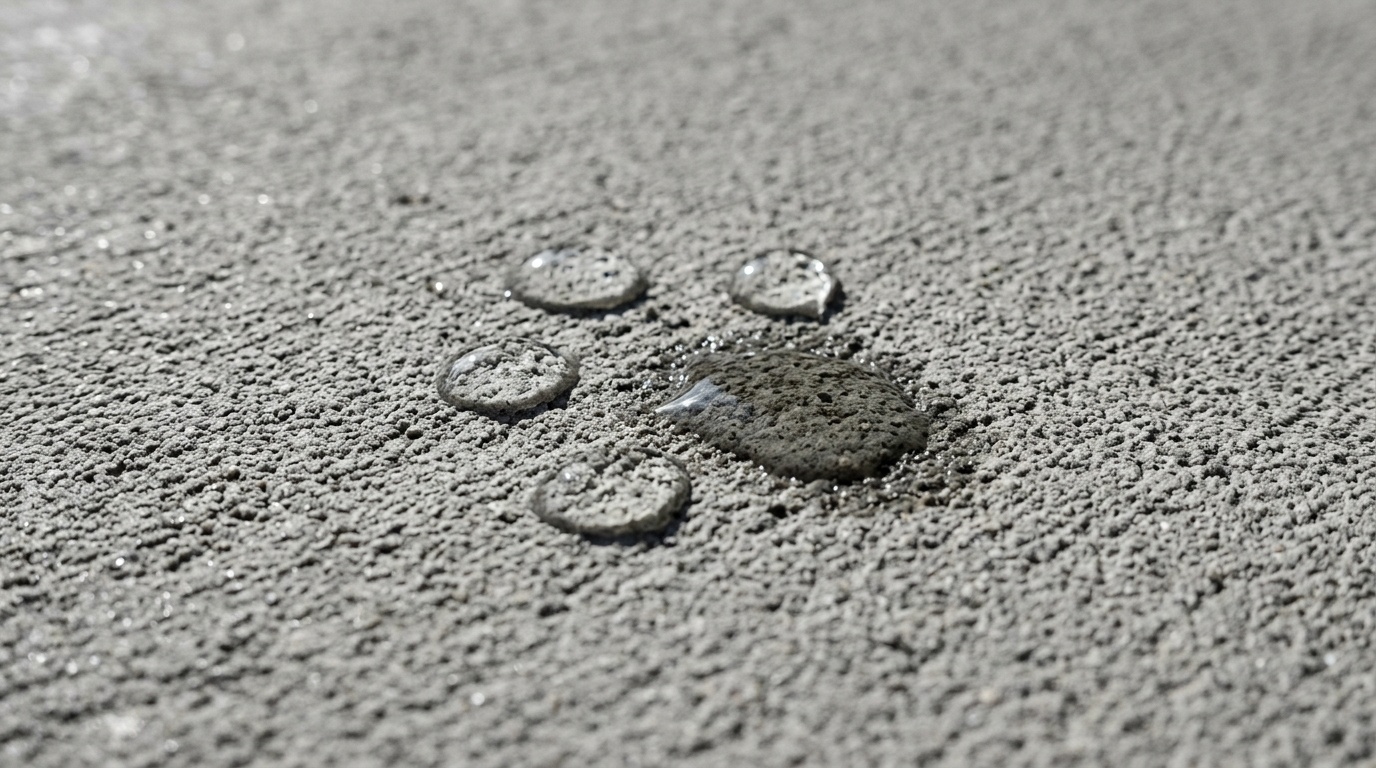
The most durable garage floor paint on paper can still fail over weak concrete or an unsuitable existing finish. Make the product choice conditional on these checks:
Write the coating date and earliest permitted parking date on the garage door or another visible reminder. Keep the exact product label and batch details. That is more useful during a later repair than remembering that you used a gray epoxy.
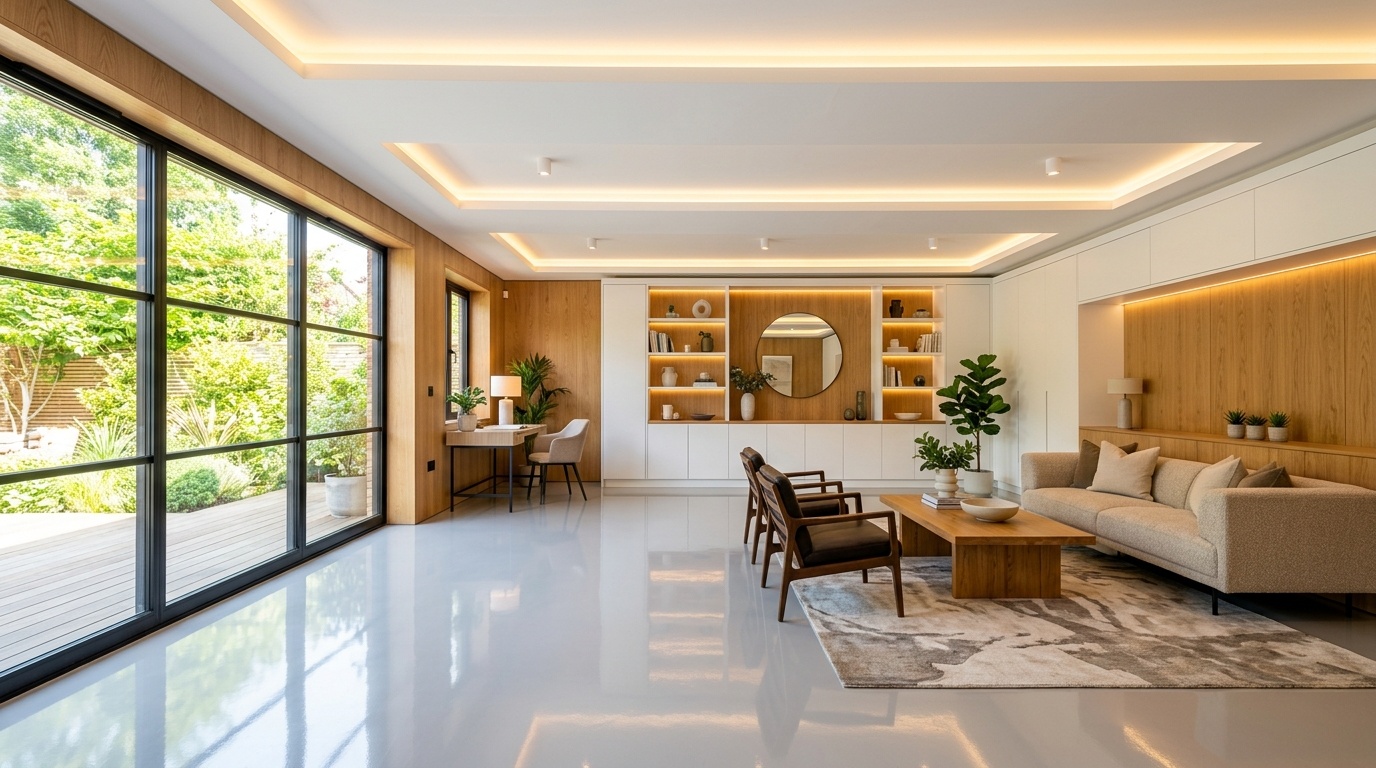
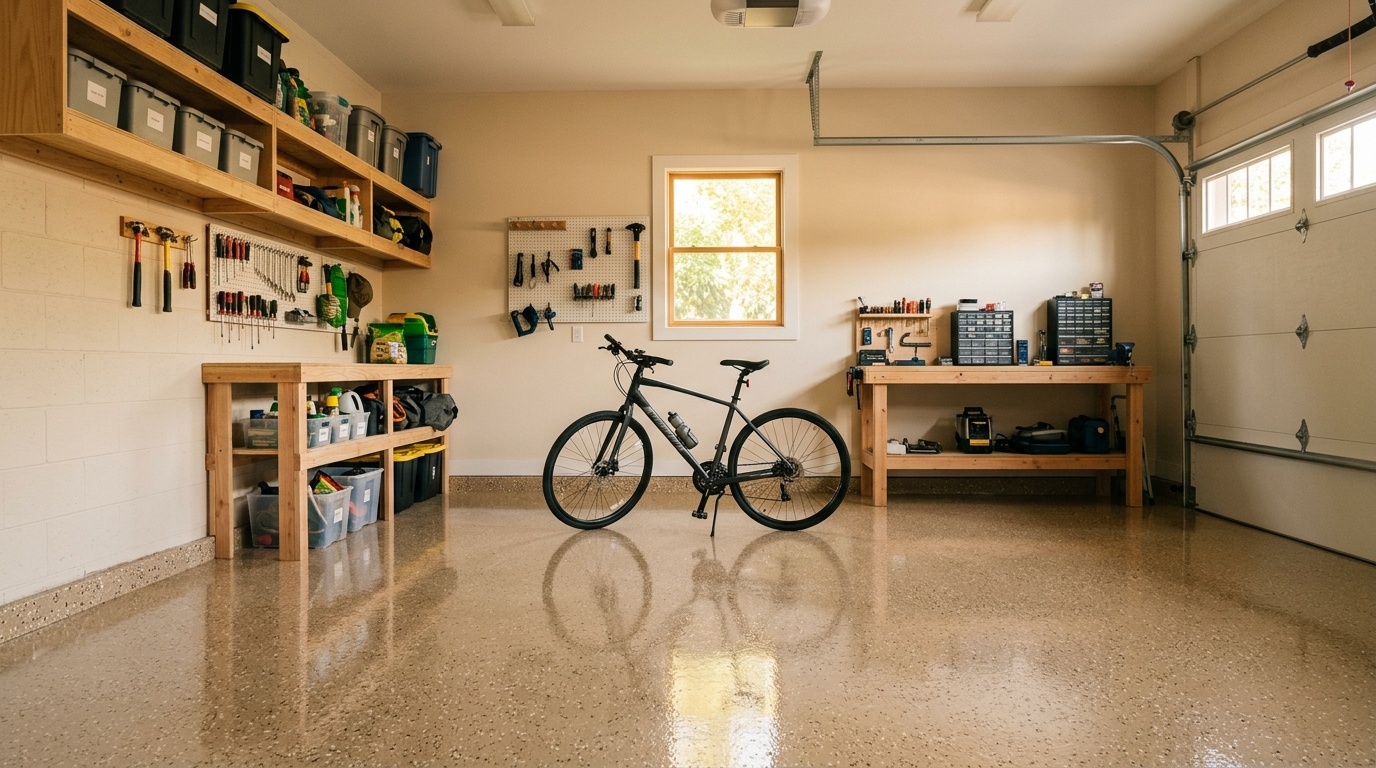
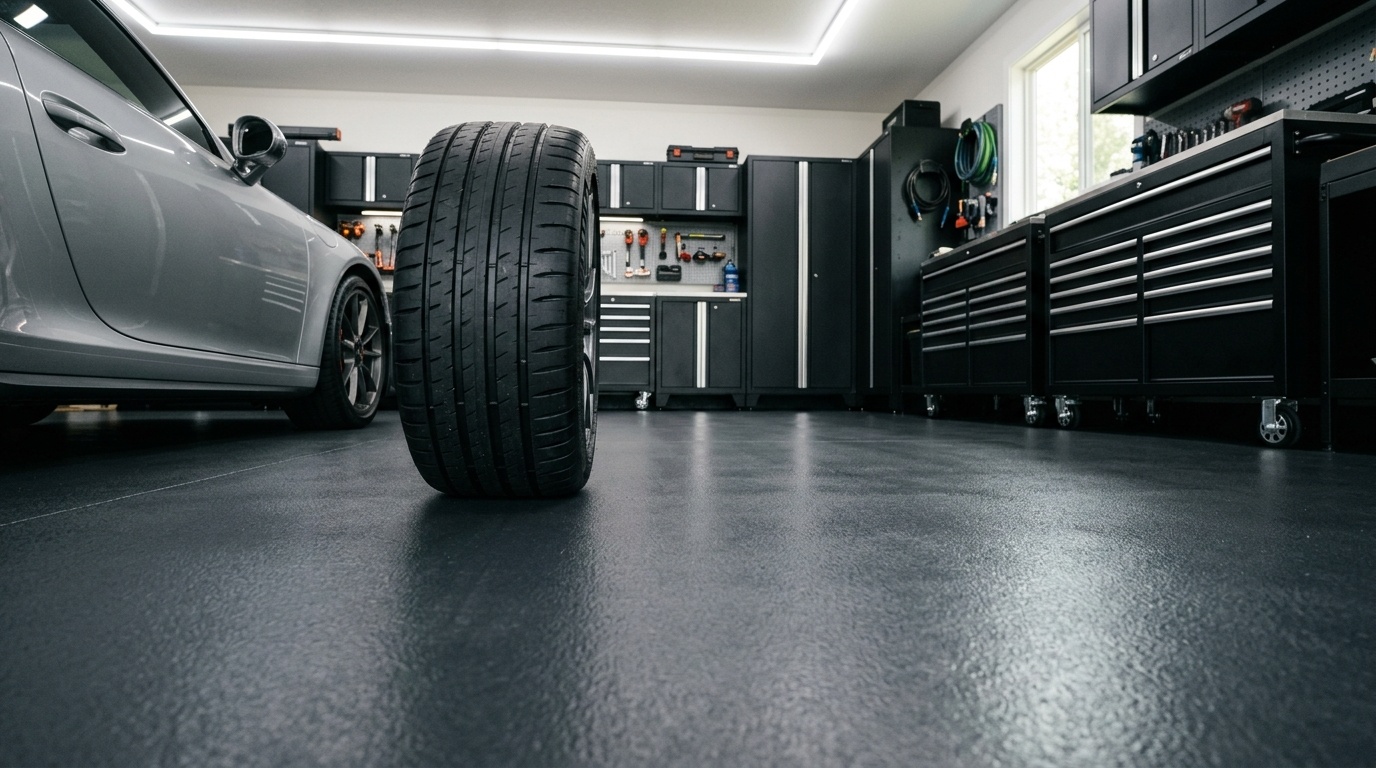
A light gray floor can make the garage feel more open, but tire marks may stand out. Tan can work with wood shelving and warm walls. Charcoal can sit comfortably beside black cabinets, while making small dark parts harder to spot. Check the finish under your existing lights and near the open door.
Use the photo-based flooring comparison to explore that visual choice. Start with the same source photograph for each version and name the floor as the area to change. Then inspect whether the generated image has also changed the cabinets, door opening or lighting. A visual proposal is not a verified coating sample.
For a garage that also holds a workbench or gym, check garage layouts with parking and work zones before removing everything for coating. Keep a usable route to doors and storage, and measure clearances separately from any AI image.
If the floor shortlist changes your wall-color choice, Paintit also lets you search paint catalogs from Behr, Benjamin Moore, Dulux, Nippon Paint and Sherwin-Williams by name, code or HEX. Catalog selection does not establish that a wall color is available in a particular floor-coating formula. Confirm the coating tint and examine physical samples before purchasing.
Shortlist a vehicle-rated two-part epoxy such as EpoxyShield if you can manage the preparation and mixing. Compare ready-to-use BEHR, KILZ or Valspar when simpler application matters more, while allowing their full parking wait and possible touch-ups. There is no winner independent of slab condition, the complete coating system and installation quality.
No. A one-part vehicle-rated paint may be enough for a residential garage where you accept its maintenance requirements. Two-part products have a mixing and working-time commitment. For a commercial workshop, choose by the complete system's documented loads and chemical exposure rather than treating every retail epoxy kit as industrial grade.
Only after the exact product and complete coating system permit vehicle traffic under suitable curing conditions. Touch-dry and foot-traffic times are not parking approval. Additional topcoats can change the return date; obtain written instructions for the final system.
Do not coat over loose material. Establish why the finish is peeling, remove unsound areas and check the new system's compatibility with anything that remains. Moisture or contamination may need treatment before coating is possible. The correct preparation could differ from that for clean, bare concrete; a thicker topcoat does not repair a weak bond underneath.
Use a product specifically intended for the floor and its traffic. A matching color name does not make interior wall paint suitable for tires, spills or abrasion. Keep color selection separate from coating selection, and check the exact formula even when both products come from the same manufacturer.
The best garage floor paint is the one you can prepare for, apply and allow to cure correctly. Narrow the physical specification first, compare the floor's appearance with the existing garage, then buy the required quantity and leave enough time before parking.