We use essential cookies to make our site work. With your consent, we may also use non-essential cookies to improve user experience, personalize content, and analyze website traffic. For these reasons, we may share your site usage data with our social media and analytics partners. By clicking “Accept,“ you agree to our website's cookie use as described in our Cookie Policy. You can change your cookie settings at any time on your browser preferences.
  • Sobre nosotros
  • Precios
  • Blog
  • Contacto
  • Programa de afiliados
AiEi

Productos

  • Para diseñadores de interiores
  • Para e-commerce
  • Para inmobiliarias

Herramientas

Generador de arquitectura con IA
Generador de conceptos con IA
Diseño exterior con IA
Generador de casas con IA
Pintor de casas con IA
Diseño de paisajes con IA
Renderizado con IA
Diseño de habitaciones con IA
Herramienta de diseño exterior de casas
Home staging virtual con IA
Remodelación de baños con IA
Generador de planos con IA
Generador de muebles con IA
Colocación de muebles con IA
Renovación exterior de viviendas
Visualizador de colores de pintura con IA
Remodelación de cocinas con IA
Visualizador de alfombras con IA
Mejora de fotos inmobiliarias
  • Términos de servicio
  • Política de privacidad
  • Confianza
Logo
Paintit.ai - herramienta gratuita de diseño de interiores con IA

© 2026

Apoya a Ucrania
PAINTITAI LTD, 52 Leytonstone road, London, E15 1SQ, UK
Paintit.ai - ai home design free
  • Precios
  • Sobre nosotros
  • Blog
  • Contacto
/Blogs/Awkward Living Room Layouts
AI interior designIdeas
20 may 2026

5 min. reading

Awkward Living Room Layout Ideas: Solutions for Every Tricky Space 

avatar-blog

Yulii Cherevko

CEO paintit.ai

Share
  • ChatGPT
  • Perplexity
  • Claude
  • Grok
  • Google AI
Awkward Living Room Layout Ideas: Solutions for Every Tricky Space

Page [break] Contents: 

  • 1. What Defines an Awkward Living Room Layout?
  • 2. The Design Logic: Creating Flow in a Flawed Space
  • 3. Solutions for Common Awkward Layouts
  • 4. Common Mistakes in Awkward Layouts (And How to Fix Them)
  • 5. Stop Guessing, Start Visualizing
  • 6. FAQ
  • 7. Summary

That strange corner, the awkwardly placed fireplace, or the room that feels more like a hallway—we've all felt the frustration of a weird living room layout. Trying to find functional and beautiful awkward living room layout ideas can feel like solving an impossible puzzle. The worry about buying a sofa that won’t fit, or creating a space that feels cluttered instead of cohesive, is very real. But what if you could stop guessing and start seeing? With a tool like Paintit.AI, you simply upload a photo of your actual space. Then, you can test every layout idea instantly, ensuring your plan truly works before you even think about moving furniture.

Key Takeaways

  • Definition: An awkward living room is simply a space with architectural challenges – think odd angles, too many doorways, a narrow shape, or a misplaced focal point that makes furniture arrangement tricky.
  • How to approach it: Fixing these layouts means creating clear zones, establishing smart traffic paths, and using furniture to define the space, not just fill it.
  • Color Palette: Stick to light, neutral colors (soft whites, light grays, warm beiges) to bring a sense of unity and openness. Introduce accent colors thoughtfully within your defined zones.
  • Key Materials: Focus on multi-functional furniture, pieces with visible legs (they create visual space), large area rugs to anchor your zones, and mirrors to reflect light and add depth.
  • Lighting Strategy: Layer your lighting: ambient (overhead), task (for reading), and accent (for art). This helps define zones and diverts attention from architectural quirks.
  • What to Avoid: Don't push all furniture against the walls, don't use oversized pieces that block natural flow, and never ignore the room's natural focal points (or lack thereof).

What Defines an Awkward Living Room Layout?

An awkward room layout isn't just about its size; it's about its geometry and how people move through it. These rooms often defy the standard "sofa opposite the TV" formula, creating unique challenges that can disrupt the rhythm of a home. Based on Paintit.AI user data, we often see people struggling with a few common culprits. It could be a diagonal wall that throws off symmetry, a room so long and narrow it feels like a corridor, or an open-plan space lacking clear definition. The real issue usually comes down to a conflict between the room's architecture and how you want to use it, making furniture placement and traffic flow tough to resolve.

These challenges naturally lead to some common design anxieties. "Will that sectional I love actually work?" or "How do I create a cozy conversation area without blocking the path to the kitchen?" These are real questions. And this is exactly why visualizing solutions in your own space is so incredibly important.

The Design Logic: Creating Flow in a Flawed Space

The key to solving any awkward room layout is to stop fighting its architecture and instead, start working with it. Forget trying to force a conventional setup. Focus on three core principles: zones, flow, and focal points. A well-designed space, no matter its shape, always feels intuitive to move through.

Principle What to Choose Why It Works Common Mistake Quick Fix
Zoning Large area rugs, modular sectionals, open-backed shelving. Creates "rooms within a room" to assign function to different areas (e.g., a reading nook, a conversation pit). Treating the entire space as one single functional area. Use a rug to anchor your main seating area, visually separating it.
Traffic Flow Furniture with legs, rounded pieces (coffee tables, chairs). Aim for at least 3 feet of clearance for main walkways. Leggy furniture allows light and sightlines to pass underneath. Placing furniture in a way that creates bottlenecks or forces awkward paths. "Float" your sofa away from the wall to create a path behind it.
Focal Point A fireplace, a large window, a major piece of art, or a media unit. Gives the room a center of gravity and a natural place for furniture to orient towards. Having competing focal points (e.g., a TV and fireplace on different walls). Choose one dominant focal point and arrange the primary seating around it.

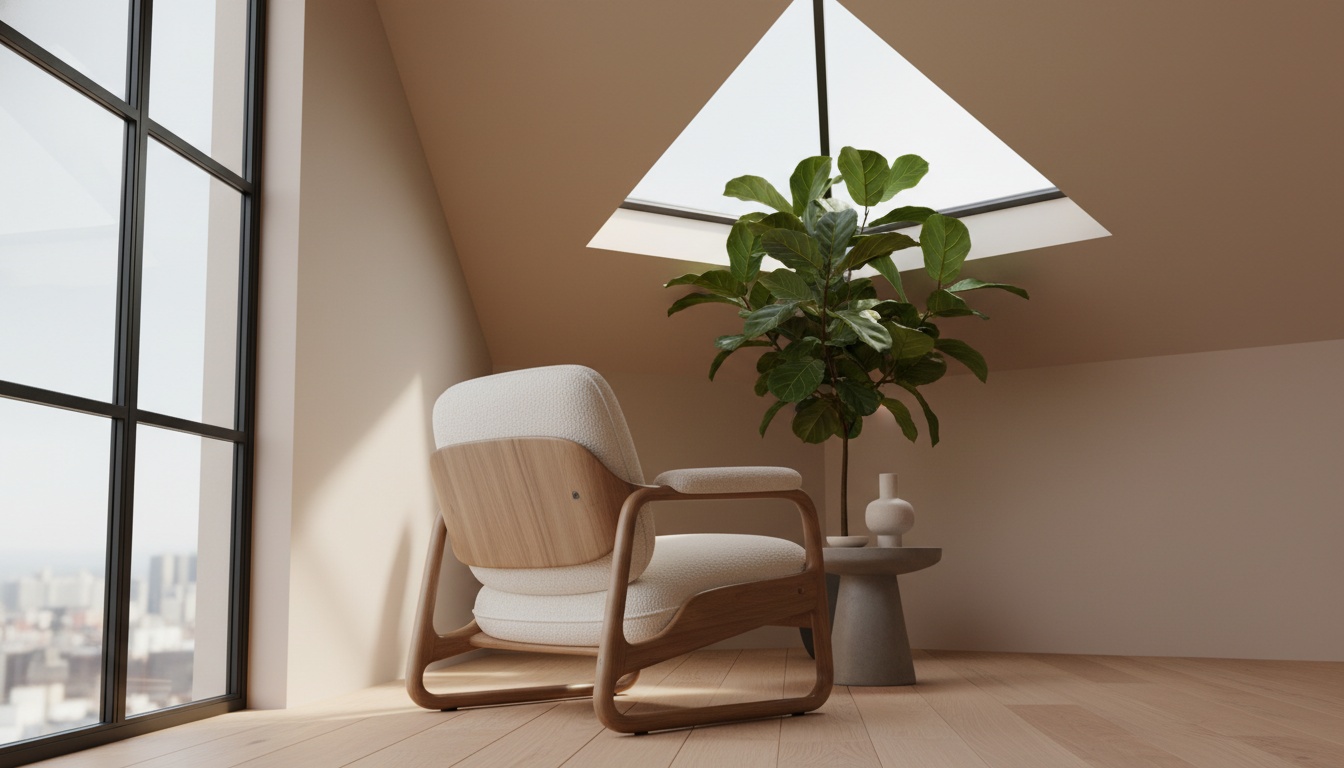
By applying these principles, you can bring order to even a weird living room and make it feel intentional. It's about creating a visual language that guides you through the space seamlessly. You can see how these foundational ideas translate into real designs by testing them virtually.
section1

Solutions for Common Awkward Layouts

Every odd shaped living room layout has a solution. The trick isn't to fight it, but to identify the core problem and apply a targeted strategy. Here are some of the most common challenges we see, and practical ideas to solve them.
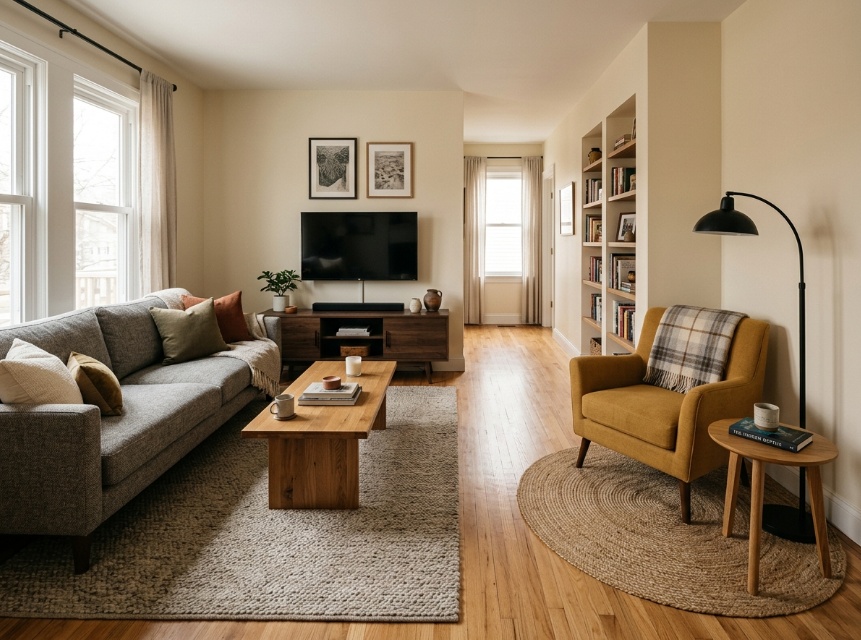
1. The Long, Narrow Living Room

Long narrow living room divided into two zones — main sofa seating area  and a cozy reading nook with armchair, each anchored by a separate rug

This is one of the challenges we hear about most often. The main goal here is to avoid that "bowling alley" effect, where all your furniture lines up against the long walls.
  • What it is: Simply put, a room that’s much longer than it is wide.
  • Why it works: Breaking the room into two or three distinct zones stops your eye from seeing it as one long corridor. It makes the space feel bigger and more inviting.
  • How to execute: Use a large sofa to anchor a primary seating area in one half. In the other, create a secondary zone – perhaps a cozy reading nook with an armchair and lamp, or a compact desk area. Use rugs of different shapes or sizes to clearly define each zone. This is a classic case for exploring long awkward living room layout ideas.
  • Paintit.AI Action: Upload a photo of your room and ask the AI to "create a main seating area and a separate reading nook" to instantly see how the space divides.

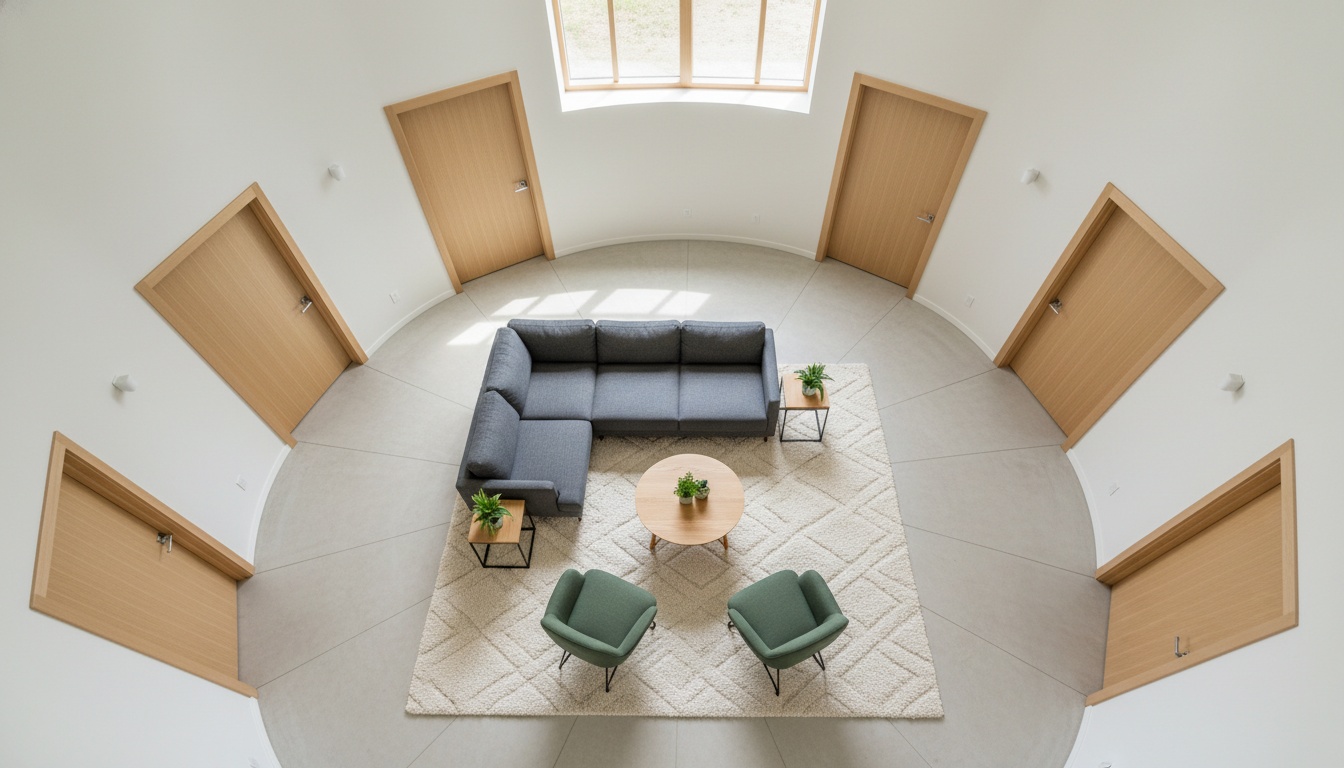
2. The Room with Too Many Doors or Windows

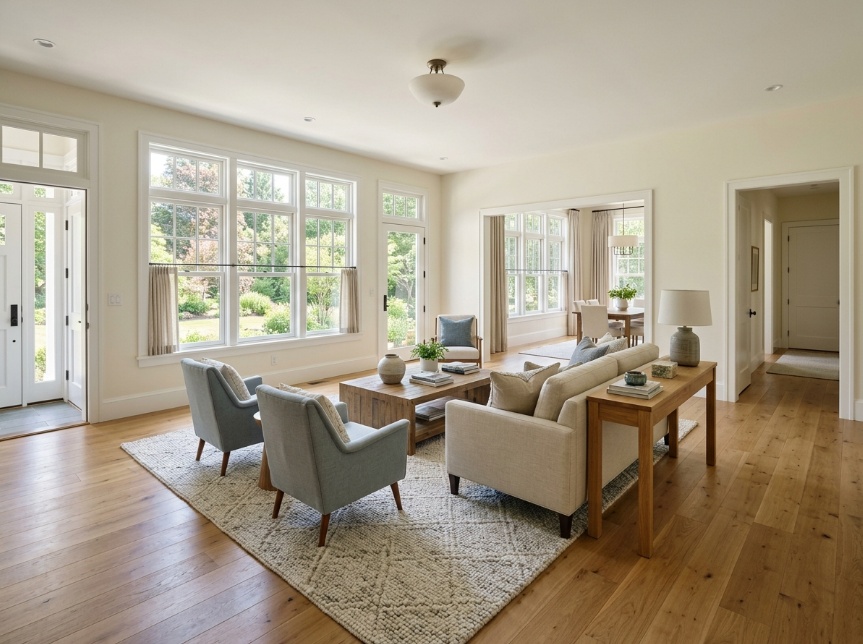
Living room with multiple doors and windows solved by floating furniture  arrangement centered on a large area rug with clear pathways around it

When walls are interrupted by multiple entry points, finding a solid stretch for furniture becomes genuinely tough.
  • What it is: A room featuring three or more doors, or large windows that significantly limit available wall space.
  • Why it works: "Floating" furniture away from the walls creates its own functional island and naturally directs traffic flow around it.
  • How to execute: Bring your sofa and chairs into the center of the room, grounding them on a large area rug. Consider a slim console table behind the sofa; it can define an entryway or boundary. This ensures clear, seamless pathways to all doors.
  • Paintit.AI Action: Try generating a "floating furniture arrangement centered on an area rug" to instantly see if it opens up your traffic paths.

3. The Diagonal or L-Shaped Living Room

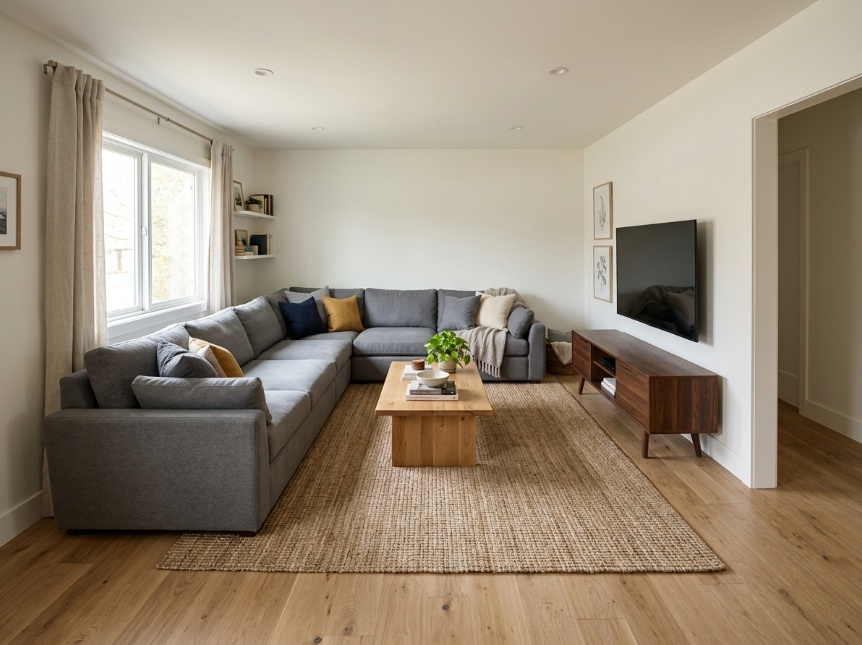
L-shaped living room with large sectional sofa placed in the corner  unifying both legs of the L-shape into one cohesive conversation zone

An angled wall or an L-shape can really make a room feel disjointed. The good news? The solution is usually to either lean into that angle or use your furniture to square it off.
  • What it is: A room that has non-90-degree angles or an L-shaped footprint.
  • Why it works: A diagonal couch living room arrangement can make an angled wall feel completely intentional. On the flip side, using a sectional can help clearly define the corner of an L-shape.
  • How to execute: If you're tackling a diagonal living room layout, consider placing your sofa or a pair of chairs parallel to the angled wall. For an L-shape, a large sectional placed precisely in the corner can unify the two legs of the "L," creating one generous, cozy conversation zone.
  • Paintit.AI Action: Test a "sofa placed diagonally against the slanted wall" versus a "large L-shaped sectional in the corner" to see which creates a better flow and feels more balanced in your space.

4. The Small Awkward Living Room Layout

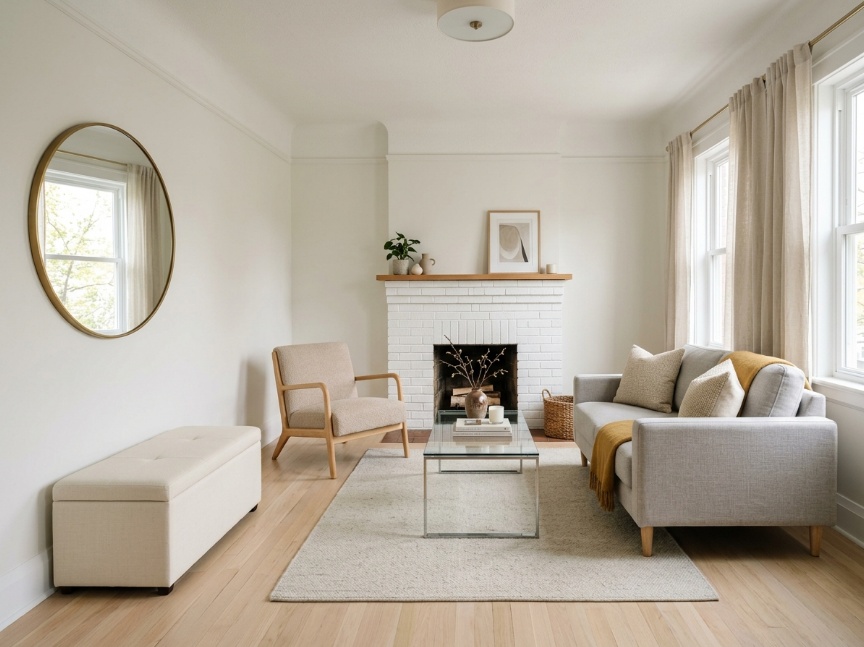
Small awkward living room with off-center fireplace solved using  apartment-sized loveseat, glass coffee table, and large mirror for light

When space is tight and the layout is tricky, every single piece of furniture needs to be strategic.
  • What it is: A smaller room that comes with an additional challenge, like an off-center fireplace or an awkward nook.
  • Why it works: The secret is using appropriately scaled, multi-functional furniture and reflective surfaces. This maximizes both function and the perception of space.
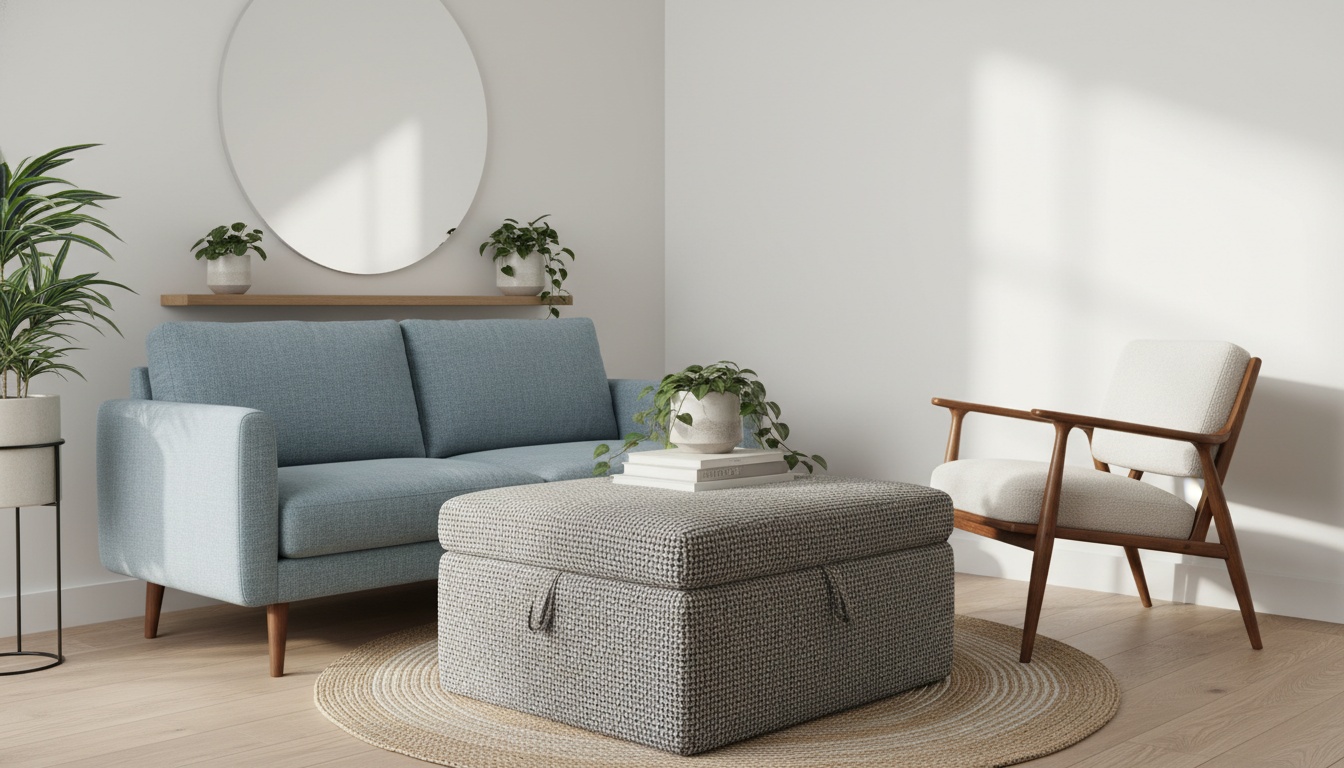
  • How to execute: Choose an apartment-sized sofa or a loveseat over a bulky sectional. Go for ottomans with hidden storage and a coffee table with a glass or mirrored top. Placing a large mirror on the wall opposite a window will bounce light around beautifully. You can discover more layout options for your specific living room with an AI-powered design tool.
  • Paintit.AI Action: Prompt the AI to "furnish this small room with apartment-sized furniture and a large mirror" to quickly visualize the impact on space.

Common Mistakes in Awkward Layouts (And How to Fix Them)

section2

It’s surprisingly easy to fall into common traps when you’re dealing with a weird living room layout. Often, our first instincts lead us to solutions that actually make the problem worse. Here’s a quick diagnostic table to help you identify and fix these issues. At Paintit.AI, we've observed that many users can proactively avoid these common pitfalls by simply visualizing a few alternatives first.

Problem Likely Cause Fast Fix Paintit Try-On Test
The "Furniture Line-Up" Pushing all furniture against the walls, creating a sterile, empty center. Float your main sofa off the wall by at least a few inches to create breathing room. "Arrange my current furniture in the center of the room on a large rug."
Blocked Pathways Oversized furniture or poor placement creating bottlenecks. Swap a bulky coffee table for two smaller side tables or a slim oval-shaped one. "Replace my coffee table with two small nesting tables."
Ignoring the Flaw Trying to pretend an awkward angle or off-center element doesn't exist. Make the awkward feature a focal point. Place a unique chair or a tall plant in the odd corner. "Add a tall fiddle leaf fig plant and an accent chair to this empty corner."
Poor Scale Using a tiny rug in a large space or a massive sofa in a small one. The front legs of all main seating should be on the area rug. Ensure furniture fills the space without overwhelming it. "Show this room with a rug that is large enough for the front legs of the sofa and chairs."

Stop Guessing, Start Visualizing

Pinterest offers fantastic inspiration, but it won't show you how a diagonal couch will truly look next to your specific fireplace. That's the gap where design anxiety really thrives. In our analysis of Paintit.AI user prompts, we've found that while nearly 70% of users provide simple, keyword-style requests, less than 10% use more descriptive modifiers. For an awkward room layout, these details truly matter.

So, instead of just hoping it works, you get to actually see it. The process is simple and intuitive:

  1. Snap a photo of your living room.
  2. Upload it to Paintit.ai's virtual staging tool.
  3. Describe the layout you want to try. Be specific! For example: "Place a curved sofa facing the fireplace and add two armchairs to create a conversation zone. Keep my existing wall color."
  4. Refine the design. If the sofa feels too big, simply prompt again: "Make the sofa smaller and change it to a light gray bouclé fabric."

Here's the thing: for tricky spaces, being explicit makes all the difference. Our data shows only 0.7% of users use a keep_geometry command, but telling the AI to "keep the exact room structure unchanged" is absolutely crucial for getting a realistic preview in a room with unique architectural features.
section3

FAQ

How do I arrange furniture in a living room with no focal point?

If your room lacks a natural focal point—like a fireplace or a large window—you simply create one. You can achieve this with a large piece of art, a media console and TV, or even a striking accent wall using bold paint or wallpaper. Then, arrange your primary seating to face this new focal point. This gives the room a clear sense of purpose and direction.

What is the best furniture for a small awkward living room layout?

For a small awkward living room layout, look for multi-functional and visually lightweight pieces. This means ottomans with hidden storage, coffee tables with shelves, and sofas that have slim arms and visible legs (which always creates a sense of openness). Steer clear of heavy, dark, oversized furniture that will simply overwhelm the space.

How can I use rugs to fix an awkward living room layout?

Rugs are one of your absolute best tools for zoning. In a long room, use two separate rugs to clearly define a main seating area and a secondary spot, like a reading nook. In an L-shaped room, a large rug can beautifully unify the main corner. Always ensure the rug is big enough so that at least the front legs of your main furniture pieces are sitting on it.

Can a diagonal couch living room arrangement actually work?

Yes, absolutely! Placing furniture on an angle can genuinely soften a boxy room or complement an existing diagonal wall. A diagonal couch living room arrangement creates dynamic visual interest and can actually improve traffic flow by opening up corners. It's an unconventional, but highly effective, strategy for certain layouts, creating a unique and personal feel.

What's the biggest mistake people make with weird living room layouts?

The most common mistake when dealing with weird living room layouts is pushing all the furniture against the walls. This almost always exaggerates the room's awkward shape, stifles conversation flow, and creates a dead, empty space in the middle. Floating furniture away from the walls is often the first, and most impactful, change you can make.

Summary

Solving the puzzle of an awkward living room isn't about finding a magic formula; it's simply about understanding the principles of flow, zoning, and scale. By identifying the specific challenge your space presents—whether it’s a long and narrow shape, an odd angle, or too many doorways—you can apply targeted solutions that create both function and harmony. Instead of fighting your room’s unique character, you truly can learn to work with it.

The real key is moving from abstract ideas to concrete visuals. Don't just wonder if a floating sofa or a diagonal layout will work in your home. See it for yourself. By testing furniture placement odd shaped living room ideas in a realistic preview of your own space, you eliminate all the guesswork and anxiety. This iterative process of trying, tweaking, and refining is precisely how great design happens, especially in the most challenging of rooms. To see how this whole process works from start to finish, you can explore a detailed guide on designing your perfect living room layout with Paintit.ai.

Trending 

Ideas
5 min read
Wall Painting Ideas for Every Room: Colors, Techniques and Accent Wall Inspiration
Ideas
5 min read
3 Car Garage Plans: Types, Layouts and What to Consider Before You Build
AI interior design
5 min read
Living Room Furniture Layout Ideas: Rules, Examples and Common Mistakes
AI interior design
5 min read
Studio Apartment Ideas: How to Zone, Style and Make the Most of One Room
bedroom design inspiration
5 min read
15 Master Bedroom Layout Ideas That Actually Make Sense for Your Space

Related articles 

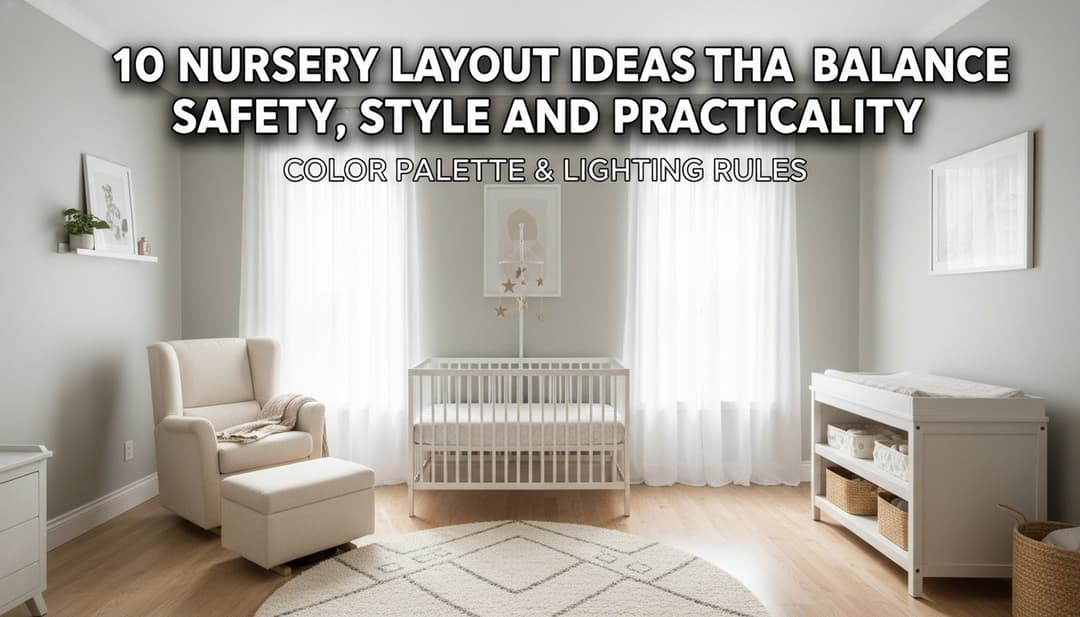
10 Nursery Layout Ideas That Balance Safety, Style and Practicality
AI interior designIdeas
1 june 2026

5 min read

10 Nursery Layout Ideas That Balance Safety, Style and Practicality

Design a safe, stylish, practical nursery. Explore 10 layout ideas, learn furniture placement, zones, and avoid mistakes. Visualize your space today.

avatar-blog

Yulii Cherevko

CEO paintit.ai

Wall Painting Ideas for Every Room: Colors, Techniques and Accent Wall Inspiration
Ideasai wall paint
29 may 2026

5 min read

Wall Painting Ideas for Every Room: Colors, Techniques and Accent Wall Inspiration

Explore creative wall painting ideas, techniques like accent walls & ombre effects for any room. Learn how AI visualization transforms your space with confidence. Try Paintit.ai!

avatar-blog

Yulii Cherevko

CEO paintit.ai

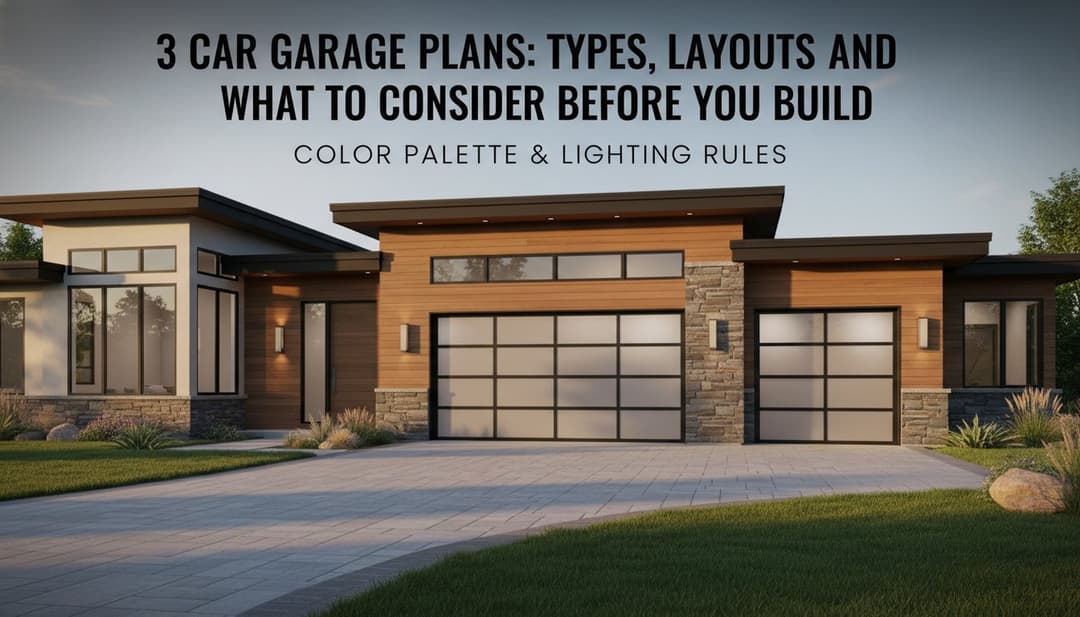
3 Car Garage Plans: Types, Layouts and What to Consider Before You Build
Ideas
28 may 2026

5 min read

3 Car Garage Plans: Types, Layouts and What to Consider Before You Build

Explore 3 car garage plans, design ideas, & functional layouts. Learn to choose attached vs. detached, popular styles, & maximize space before building. Visualize your dream garage with Paintit.ai.

avatar-blog

Yulii Cherevko

CEO paintit.ai

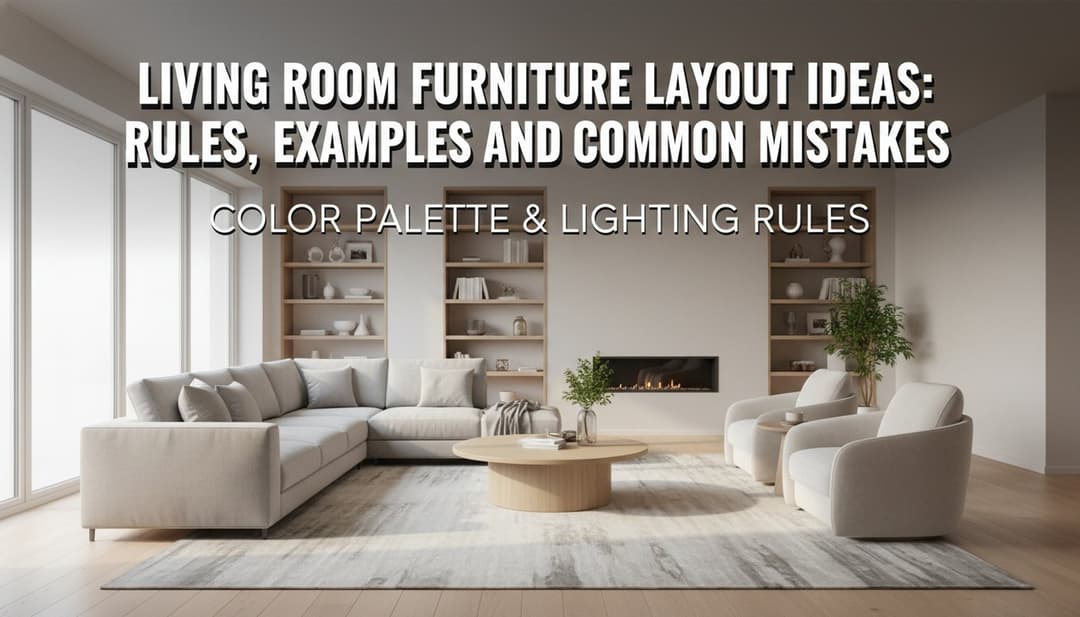
Living Room Furniture Layout Ideas: Rules, Examples and Common Mistakes
AI interior designIdeas
26 may 2026

5 min read

Living Room Furniture Layout Ideas: Rules, Examples and Common Mistakes

Optimize your living room furniture layout! Learn rules, examples, and common mistakes to create a functional, inviting space. Visualize your space today.

avatar-blog

Yulii Cherevko

CEO paintit.ai

Studio Apartment Ideas: How to Zone, Style and Make the Most of One Room
AI interior designIdeas
25 may 2026

5 min read

Studio Apartment Ideas: How to Zone, Style and Make the Most of One Room

Unlock your studio apartment's potential! Learn how to zone, style, and maximize your small space with smart design ideas, multi-functional furniture, and cohesive palettes. Try Paintit.ai.

avatar-blog

Yulii Cherevko

CEO paintit.ai

15 Master Bedroom Layout Ideas That Actually Make Sense for Your Space
bedroom design inspirationAI interior designIdeas
22 may 2026

5 min read

15 Master Bedroom Layout Ideas That Actually Make Sense for Your Space

Discover 15 master bedroom layout ideas tailored for your space. Learn to optimize flow, scale, and function, avoid design mistakes, and visualize your ideal room. Try Paintit.ai

avatar-blog

Yulii Cherevko

CEO paintit.ai