12 min. reading

Yulii Cherevko
CEO paintit.ai
Published:

What color cabinets go with brown floors? Warm white, greige, muted green and navy are useful starting points. White gives a dark floor clear contrast; greige creates a quieter transition; green or blue introduces color. Natural wood also works when the cabinet finish is visibly different from the flooring. The right choice depends on the floor's undertone and the countertops you plan to keep.
Look at the brown in your own kitchen before choosing from an inspiration photo. A honey-colored plank, a red-brown tile and an espresso-stained floor need different comparisons. You can keep the floor and still change the kitchen's appearance substantially, without treating every brown surface as the same color.
Brown flooring has two separate qualities to judge: its depth and its undertone. Depth is the difference between a pale tan floor and dark chocolate brown. Undertone is the red, yellow, orange or gray you notice within that brown. A floor can be dark and golden, or light and ashy. Stain and finish can change the appearance of the same wood species, so the species name alone cannot choose your cabinet color.
Place a cabinet sample near a representative area of the floor, not just its palest or darkest plank. Check it beside an unprinted white sheet to help notice color differences, then remove the sheet and look at the complete room. For brown tile, include the grout in the comparison; a large grid of cool gray grout can affect the scheme even when the tile itself looks warm.
| Existing Floor | Cabinet Colors to Compare | Countertop Direction | Main Check |
|---|---|---|---|
| Light brown or honey-toned | Warm white, muted green, navy, warm taupe | Pale neutral stone or a quieter solid surface | Very creamy paint may exaggerate yellow in the flooring |
| Medium neutral brown | Off-white, greige, sage, blue, contrasting wood | Use the existing counter's undertone to narrow the choice | Similar cabinet and floor browns can merge into one block |
| Dark brown or espresso | Warm white, light greige, pale wood; navy or charcoal for a darker scheme | A light counter can separate dark cabinets from dark flooring | Check tall cabinet runs and corners that receive little daylight |
| Reddish brown or russet | Soft off-white, warm taupe, muted olive, deep blue | Start with a cream or neutral sample that suits the counter | Green can make the red in the floor more noticeable |
| Gray-brown or weathered brown | Soft white, restrained gray, gray-green, navy | Compare the actual gray or white in the counter | A gray paint with a violet cast may differ from the floor's gray |
These are comparison palettes, not rules that every warm floor needs warm paint. Cooler blue cabinetry can look deliberate beside orange-toned wood. The question is whether you like the contrast when the floor, cabinet door and counter are visible together.
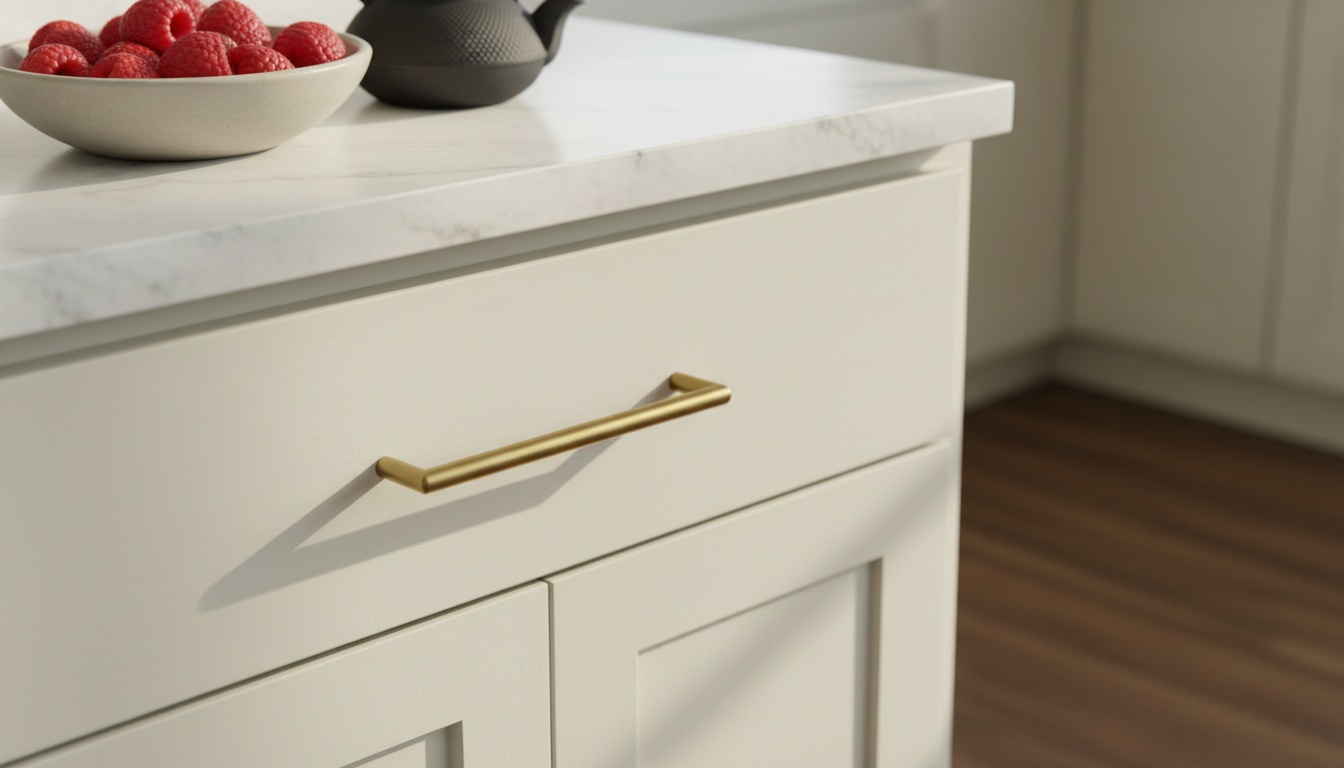
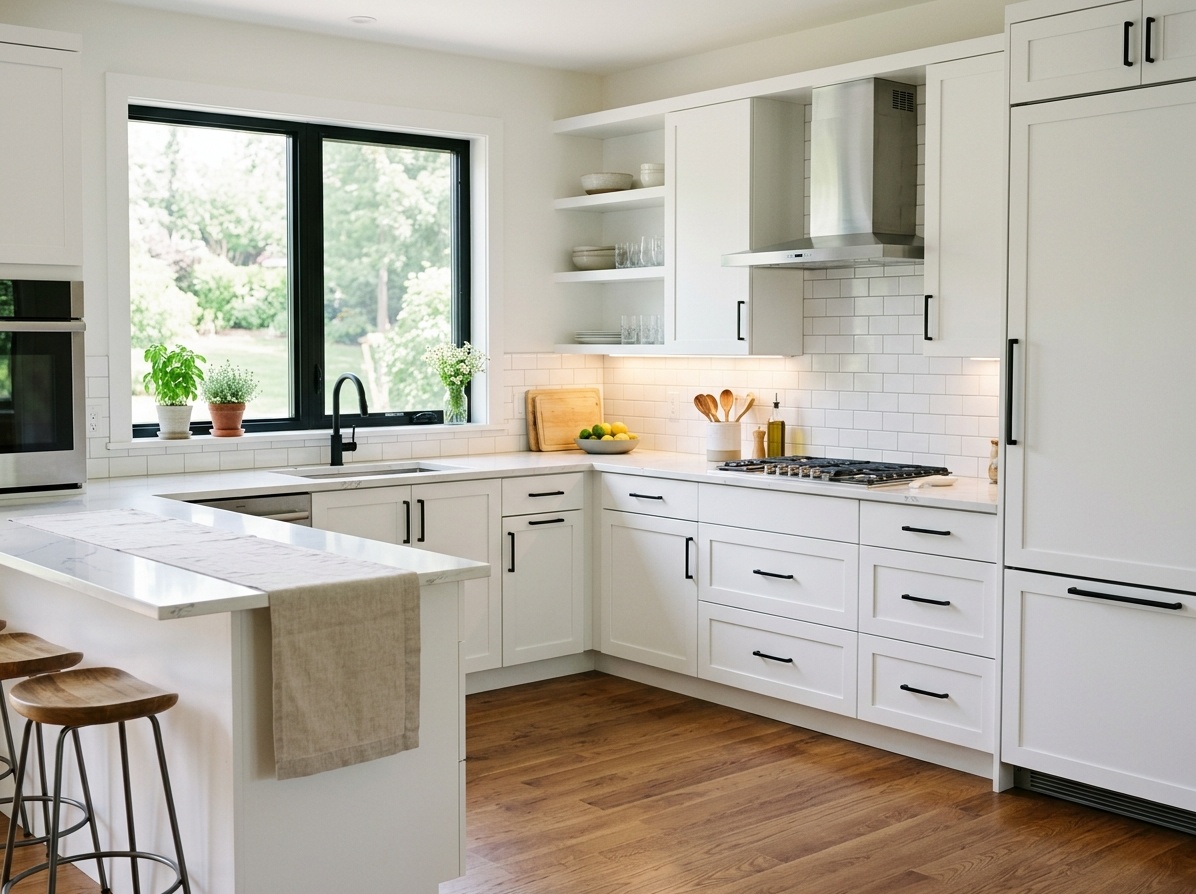
White cabinets with brown floors give you a clear separation between the cabinetry and the floor. For an espresso floor, compare a soft white and a slightly warmer off-white before deciding how sharp that contrast should be. For honey-colored flooring, check that a creamy white does not make the whole room look yellower than you intended.
The countertop often decides which white belongs in the kitchen. A warm ivory door beside a very cool white counter may look yellow, while a stark white cabinet can make cream-colored stone look dingy. Hold both whites beside the actual counter edge and backsplash. If you are keeping white appliances or trim, include those surfaces too.
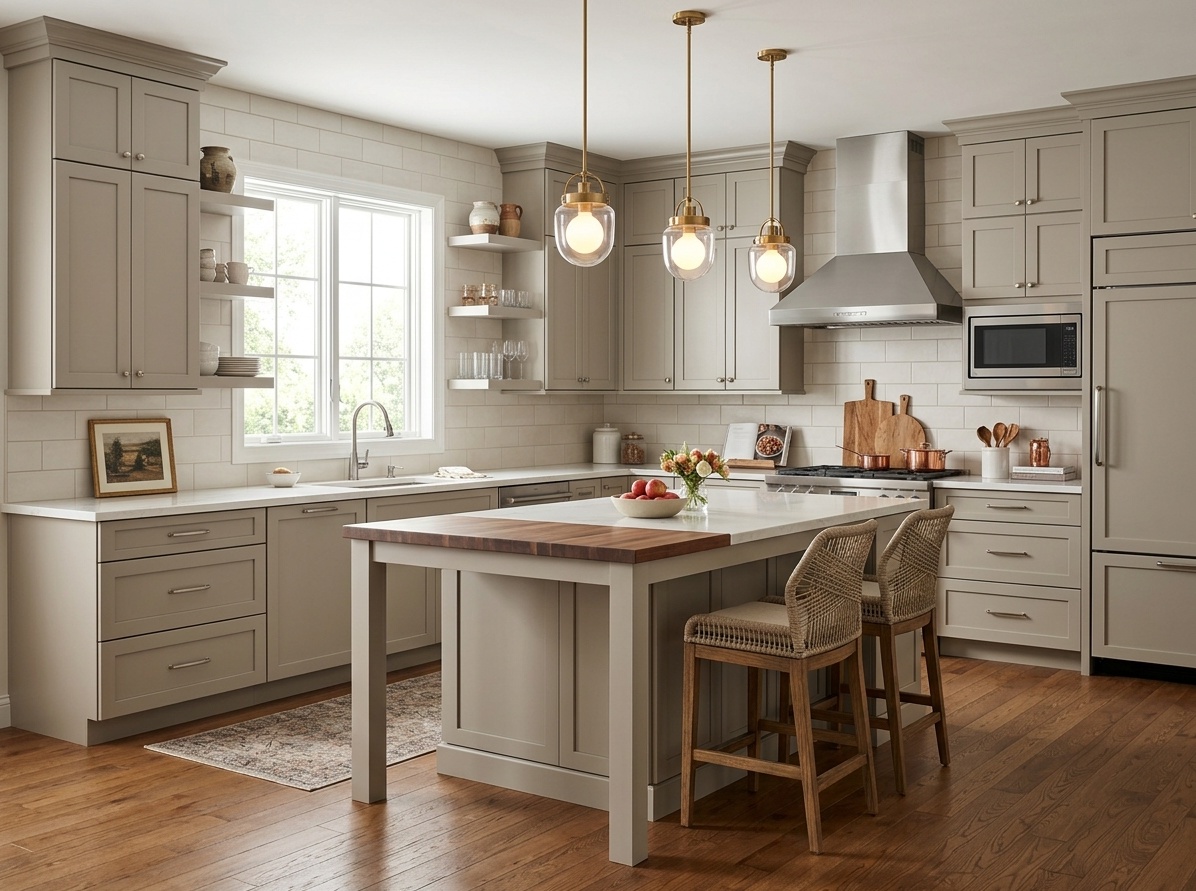
Greige is a useful alternative when white feels too bright against a medium brown floor. Its mix of gray and beige can give the cabinet doors a distinct color while keeping the room restrained. Warm taupe is another option, especially when the existing counter has beige or brown flecks you want to retain.
Compare several samples within that family. Some greiges look green, others pink or violet under particular lighting. A label such as "warm gray" cannot tell you which one works with your floor. For a kitchen with brown floors and a busy granite counter, start with the quieter color already present in the stone rather than introducing another strong undertone.

Gray cabinets with brown floors can work when their undertones suit the surrounding finishes. A pale gray beside neutral or gray-brown flooring gives a different effect from a blue-gray beside red oak. Compare both if you want a cooler kitchen; you may prefer the contrast rather than a close match.
Keep an eye on the junction between the lower doors and floor. In a kitchen with brown floors, a middle-value gray cabinet and a similarly dark floor can look flat even when their undertones agree. A lighter cabinet, a different island color or a more distinct countertop can separate the surfaces. Changing the handles alone will not fix a cabinet color that looks wrong beside the stone.

Sage green cabinets introduce color without the intensity of a bright green. Compare a grayer sage with a warmer olive if your floor has a golden cast. A pale counter and a simple backsplash can leave the wood grain and cabinet color as the main features, rather than adding another competing pattern.
With reddish brown floors, green creates a stronger contrast. That may be exactly what you like, but it can also make the red in the wood more noticeable. Try a muted sample rather than assuming any earthy green will soften the flooring. If the color feels too strong across all the doors, keep the perimeter neutral and use green on the island.
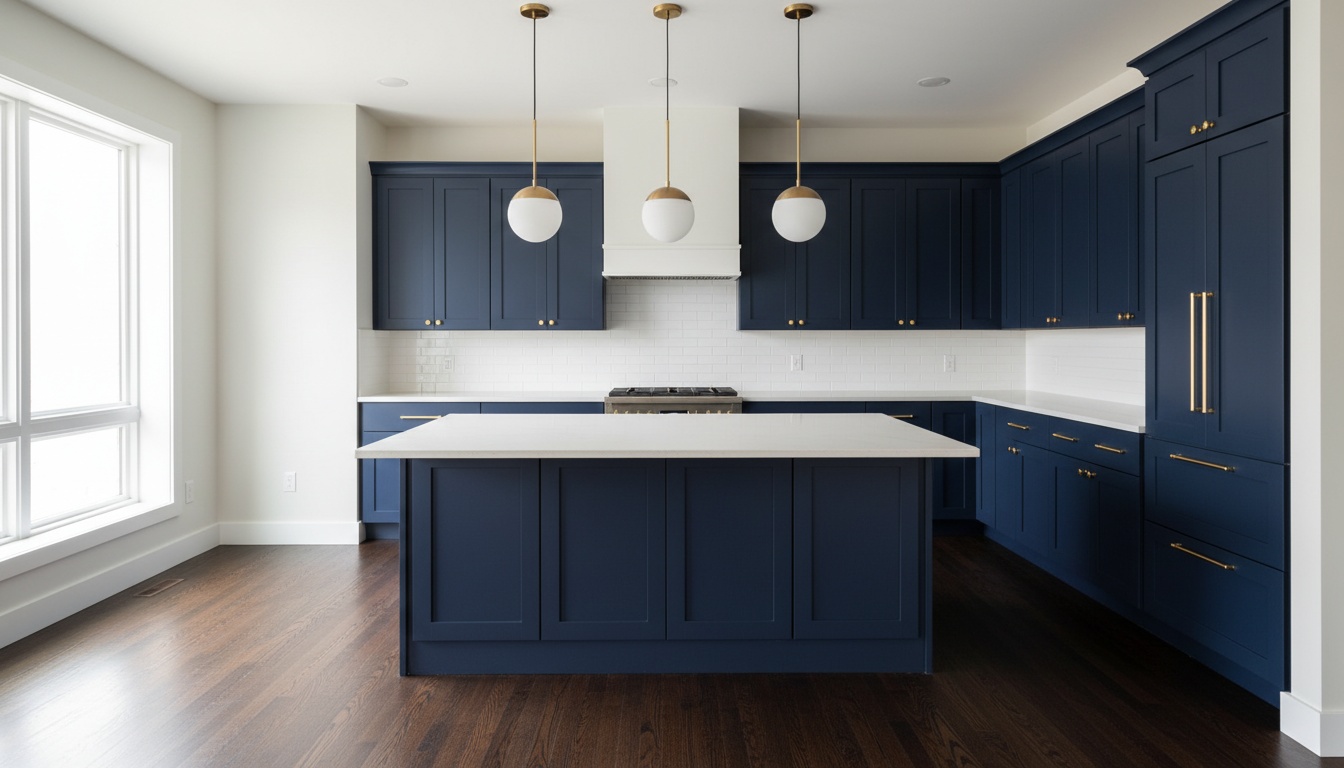
Navy cabinets add a strong color beside brown flooring while remaining less vivid than cobalt or royal blue. With a dark brown kitchen floor, a white or pale counter keeps the cabinet run from merging with the flooring. Check the tall pantry units too: a large dark surface at eye level can change the room more than a single dark island.
For a honey-brown floor, navy produces a noticeable blue-and-gold contrast. Keep the backsplash quieter if the floor already has strong grain or knots. For a brighter version of the palette, compare royal blue cabinet and island combinations before settling on a nearly black blue.
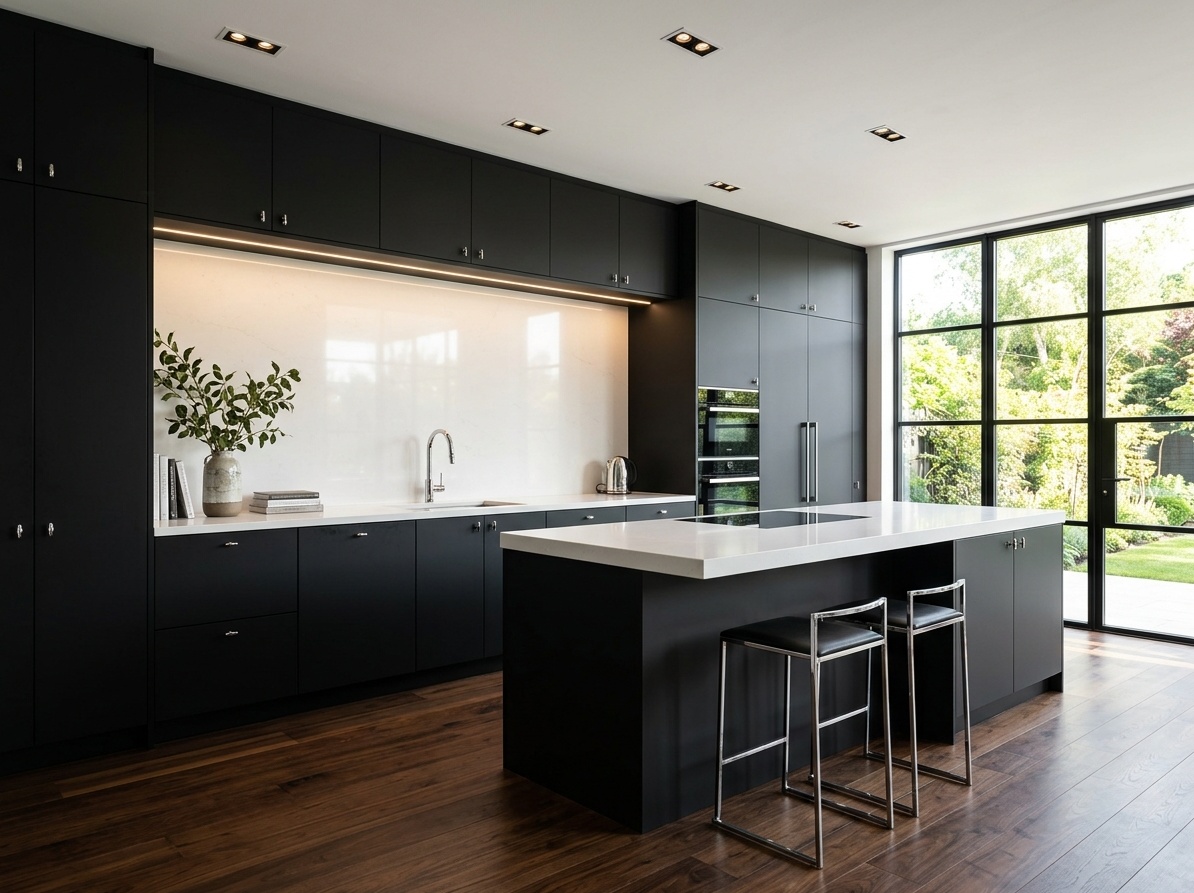
Black cabinets with dark brown floors create a deliberately dark lower half of the room. A light counter, visible backsplash and adequate lighting help distinguish the surfaces. This is a different goal from making a dim kitchen look brighter. Preview the complete view from the doorway before choosing black for every door.
Charcoal gives you another comparison, but it is not automatically a neutral match. A blue charcoal can look quite different from a brown-based one. Choose the finish for cleaning and durability as well as appearance; matte paint does not automatically hide fingerprints or withstand daily wiping better than another sheen.
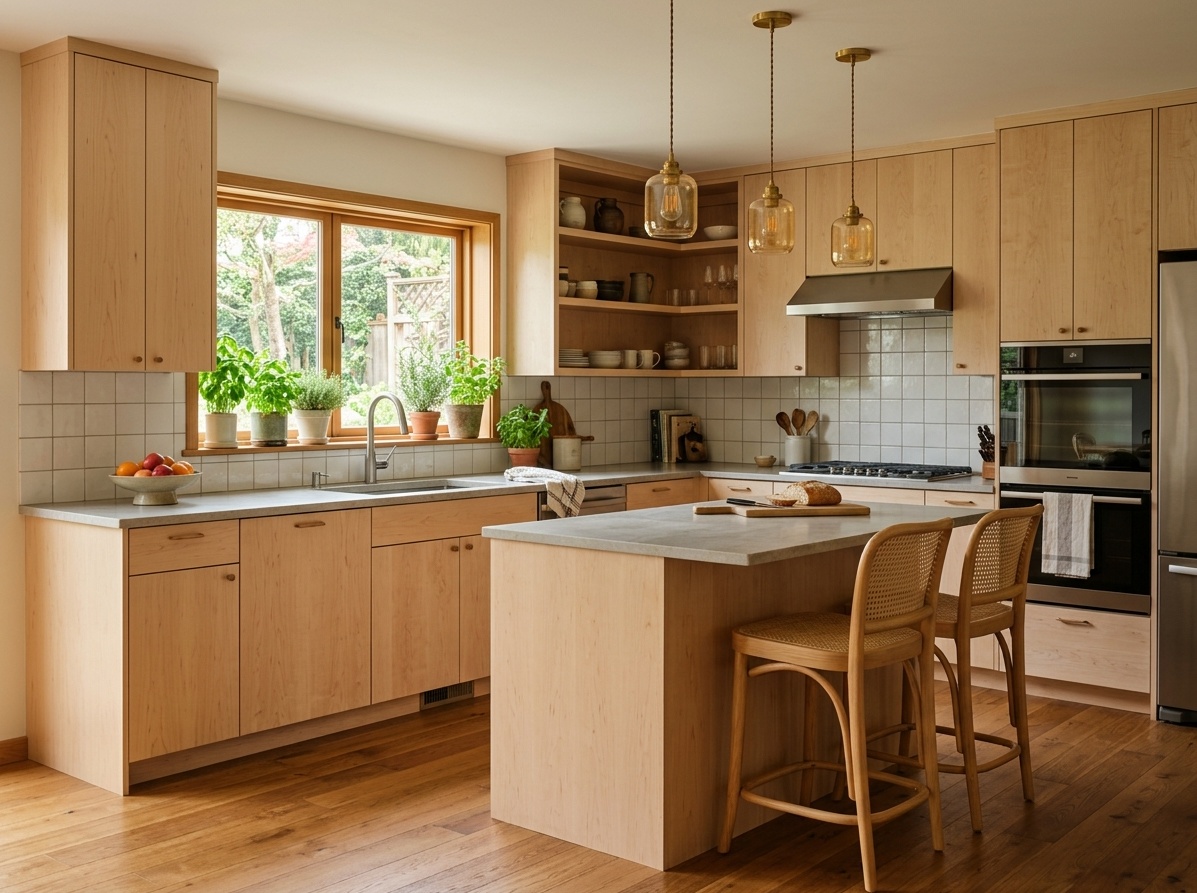
Wood cabinets can work with brown floors when the two finishes look intentional together. Light wood cabinets with dark wood floors give an obvious contrast. With medium brown flooring, compare a paler cabinet stain or a darker wood rather than trying to match the floor from a small photograph.
You do not need an exact two-shade difference. Wood varies within each board and cabinet front, so a numeric shade rule is hard to apply. Compare actual samples for undertone, grain and depth. If the combination feels too uniform, a painted island or a pale countertop can create separation without replacing either wood surface.
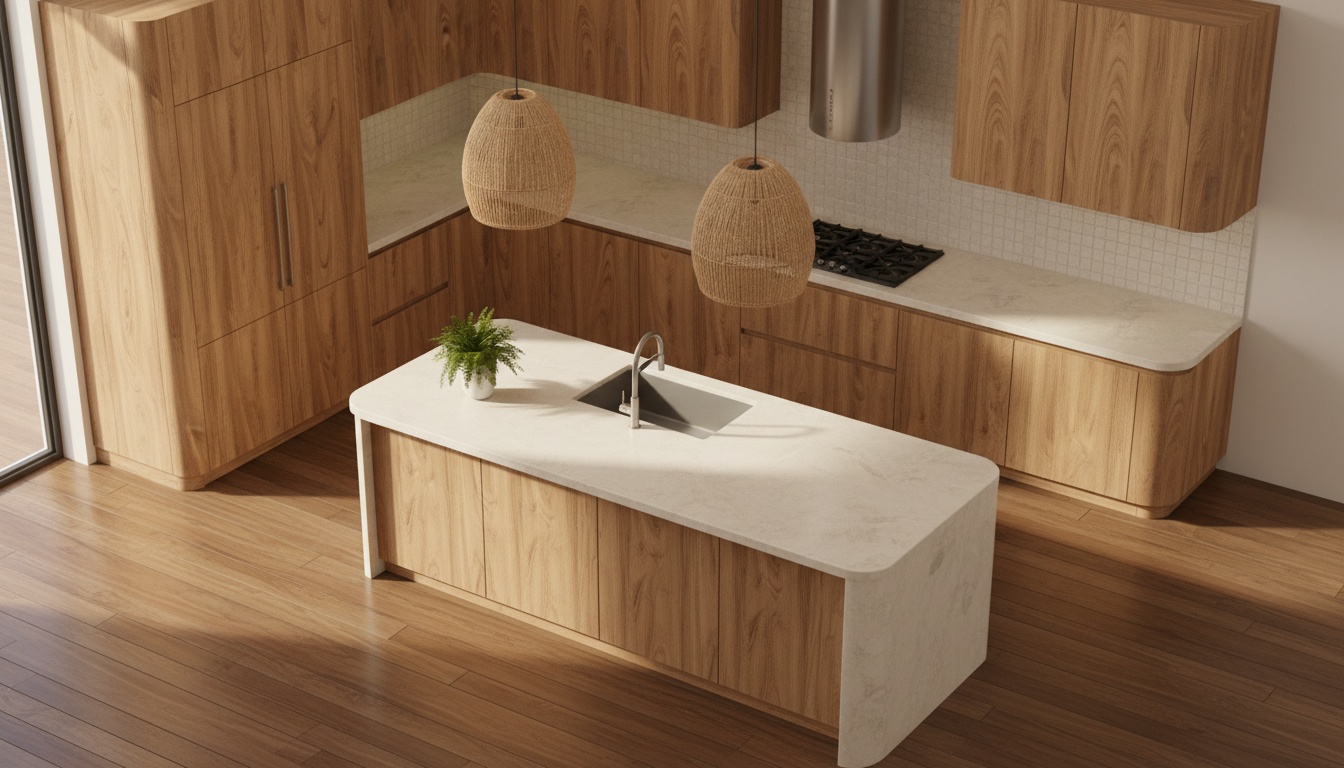
Light brown floors leave room for a darker cabinet color without making every large surface dark. Navy, olive and charcoal all deserve a sample comparison if you want more contrast. Warm white is still an option; use a distinct counter edge, hardware or backsplash texture if the pale cabinets and flooring feel too similar.
What color cabinets go with dark brown floors? Warm white, light greige and pale wood are straightforward options for a lighter cabinet run. Navy and black can work for a darker scheme, particularly with a pale counter and light upper surfaces. Choose based on the daylight and finishes you have, rather than assuming dark flooring rules out dark cabinetry.
For medium beige-brown through russet flooring, compare off-white, warm taupe and muted blue before changing other finishes. If the floor has a strong red or orange cast, put each sample beside the counter as well as the wood. A cabinet color that looks good with the floor may still clash with pink-beige stone or a cool gray backsplash.
In a brown floor kitchen, the countertop occupies the space directly above the cabinet doors, so it often matters more than a distant wall. For beige or speckled granite, compare warm white and taupe samples alongside the stone's background color. For a cool white counter, compare a less creamy cabinet white before assuming the warmest option is best.
With a dark countertop and a dark brown kitchen floor, a lighter cabinet color can separate the two horizontal surfaces. If you want dark doors too, examine the backsplash and upper part of the room for contrast. Do not add a busy patterned tile merely to brighten the scheme; you may need better task lighting or a calmer light-colored surface instead.
Wall color should connect with the counter, trim and cabinetry rather than matching the brown flooring exactly. With white cabinets and a brown floor, pale greige, soft cream or a restrained gray-green are worth sampling. If the cabinet color already makes a statement, a quiet wall lets that choice remain visible.
Benjamin Moore's guidance on warm and cool paint undertones explains why natural and artificial lighting can change how a paint color appears. Check cabinet samples under both, particularly if the kitchen looks different after its evening lights come on.
Take a kitchen photo that shows the floor, cabinet fronts and countertop together. Use Paintit.ai to compare two or three color directions while asking it to keep the fixed finishes unchanged. Inspect each result: AI may alter a detail you intended to keep, and a digital preview cannot guarantee the final paint color or the quality of a cabinet finish.
If you also want to compare the doors themselves, the cabinet color and door-style visualizer gives the change a cabinet-specific context. Keep shape changes separate from paint comparisons when you are deciding which part of the renovation is actually necessary.
Paintit's color picker includes Behr, Benjamin Moore, Dulux, Nippon Paint and Sherwin-Williams catalogs, with brand filters and search by color name, code or HEX. Use the catalog name to identify the paint you want to sample. A displayed color does not confirm that a particular coating is suitable for your cabinet material.
Once you have a shortlist, view a large cabinet door or painted sample vertically at the door's position. Check it in daylight and with the lights you normally use in the evening. Compare it near the countertop edge and floor junction. Confirm preparation, primer and finish requirements with the coating manufacturer or cabinet supplier before buying the full amount.
Either can work. Lighter cabinets make a dark floor easier to distinguish; dark cabinets create more contrast with light brown flooring. A similar-depth combination needs another separating surface, such as a pale countertop. Compare the whole room rather than treating lighter cabinets as a requirement.
Yes. The floor's depth changes the amount of contrast, while the countertop and backsplash help determine the right white. Compare warm white with a less creamy sample beside the existing finishes before ordering doors or choosing cabinet paint.
They can. Try a warm gray or greige for a restrained transition, or a cooler gray when you want contrast. Watch for green, violet or blue undertones, especially beside reddish flooring. A manufacturer's color name is less useful than the actual sample in your kitchen.
Use the same shade and undertone comparisons, but include the grout and tile pattern. Cream, greige, muted green and navy are possible cabinet colors for brown floors made from tile. A strongly patterned tile usually benefits from quieter cabinetry and counters.
They do not have to be. Light uppers with darker lower doors can distribute the color differently, while a painted island limits the change to one area. Keep a connection through the door profile, countertop or hardware so the cabinet groups still belong together.
For a small brown floor kitchen, compare warm white cabinets, a pale countertop and a simple light backsplash. If you prefer more color, try light greige or a muted green on the lower doors. Avoid assuming pale paint will solve missing daylight or inadequate worktop lighting.