7 min. reading

Yulii Cherevko
CEO paintit.ai
Published: Updated:

The best paint for decks is a coating explicitly approved for the wood and horizontal foot traffic. A deck-rated paint, solid stain or resurfacer may suit different conditions; regular exterior siding paint is not an interchangeable choice. Start with board condition, moisture and the existing finish.
A thick coating cannot make rotten boards safe. Before comparing oil and water-based products, inspect the deck, its drainage and access underneath. If you want the grain visible on sound bare wood, compare a suitable penetrating stain rather than assuming an opaque paint is necessary.
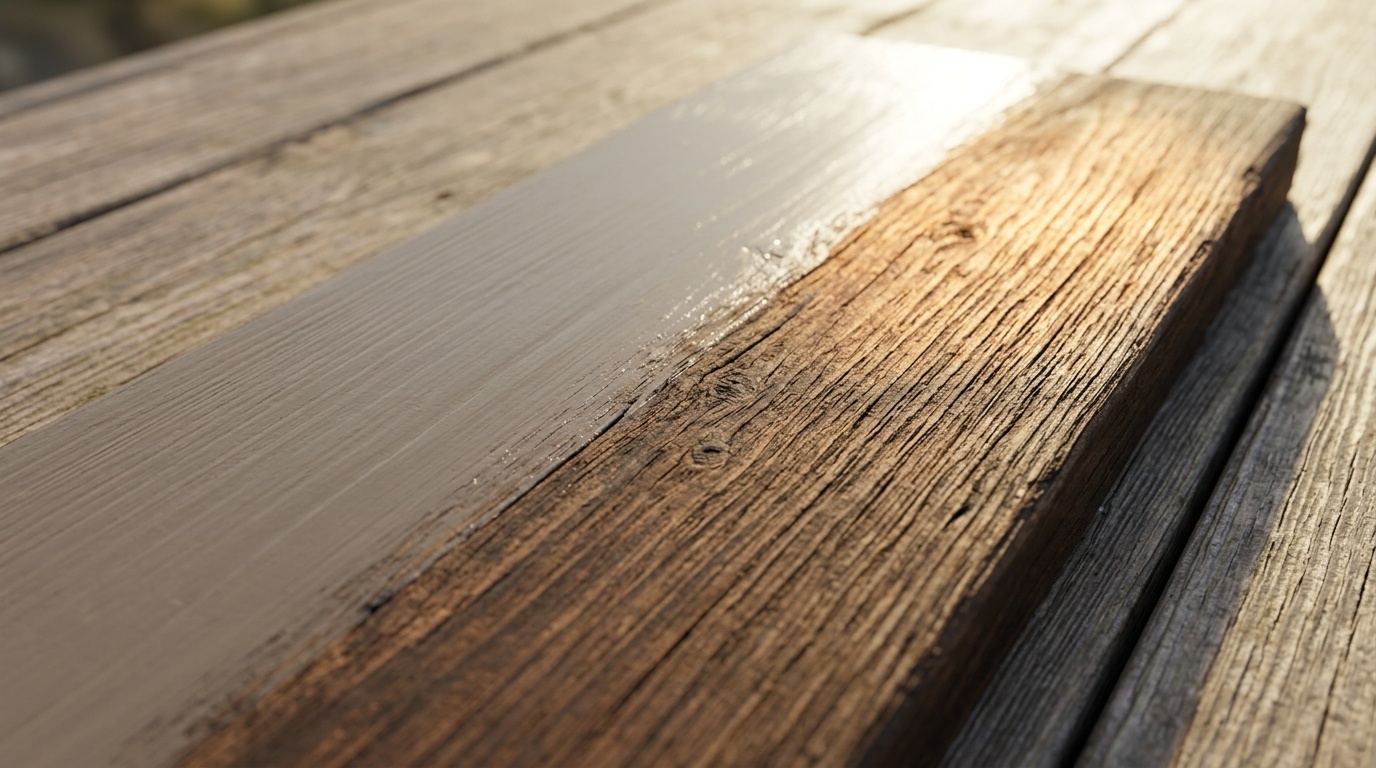
Binder and intended use are separate questions. Oil-based does not automatically mean penetrating, and water-based does not automatically mean breathable. Both labels cover different formulations. Use the exact product's substrate, moisture and application instructions.
A previously painted deck may need an approved repaint system after unsound coating is removed. A bare or fully stripped deck may allow a stain. Do not apply a penetrating finish over an intact paint film and expect it to soak into the timber.
| Deck Condition or Priority | Product Type to Compare | Before Buying |
|---|---|---|
| Sound previously coated boards | Compatible deck-rated repaint system | Check adhesion and the retained coating |
| Bare wood with visible grain desired | Approved penetrating stain | Follow wood preparation and coat-count limits |
| Weathered but structurally sound boards | Eligible resurfacer or opaque deck coating | Cosmetic filling is not structural repair |
| Steps or a wet walking route | Approved traction coating or compatible additive | Appearance and decorative texture do not establish grip |
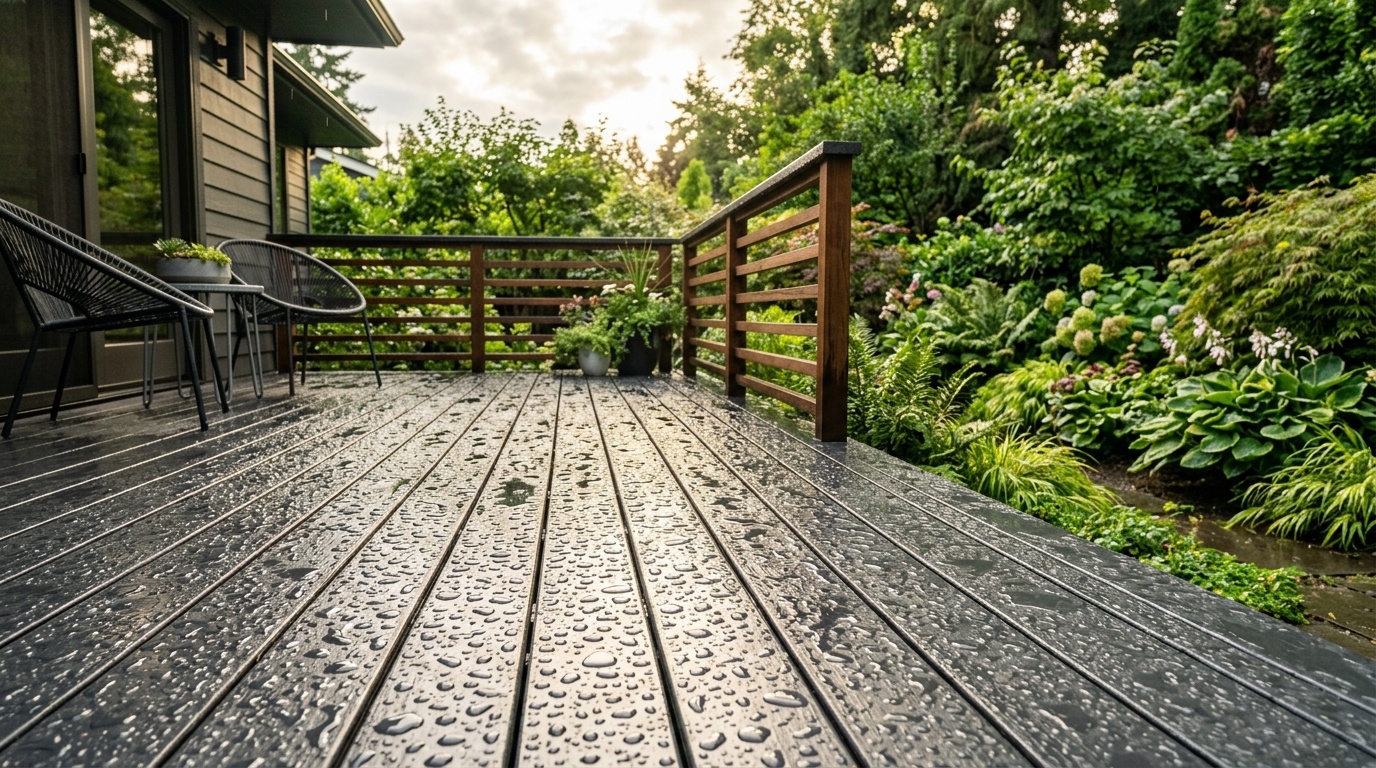
Horizontal boards collect moisture near fasteners, joints and debris. A coating does not fix blocked drainage or inadequate ventilation. Allow the timber to reach the selected system's moisture limit; a dry-looking top face is not enough to establish that condition.
Dark deck paint may become hotter in sun than a lighter alternative. Test physical samples in the intended location and consider barefoot use. An AI preview cannot predict surface temperature or make a dark coating safe for every substrate.
Winter exposure adds another reason to correct water entry before coating. It does not justify a blanket claim that every resurfacer fails in cold climates or every solid stain is immune to peeling. Product formulation, wood condition and installation matter.
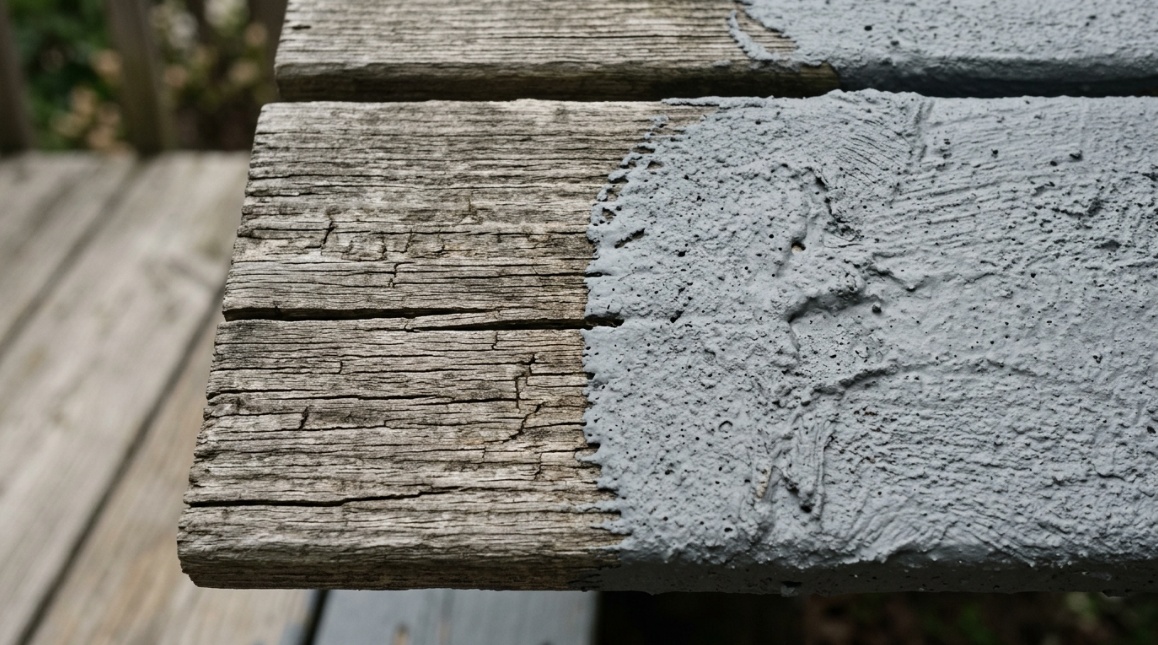
Resurfacers can conceal permitted shallow checking and splinters. They cannot repair rotten framing, unstable rails or structurally damaged boards. Replace or professionally assess those defects before decorating. Do not rely on a tool poke alone to certify deck safety.
Cabot says DeckCorrect fills cracks up to one quarter inch and requires two coats. Its page lists 75 square feet per gallon alongside that two-coat system; confirm whether the quoted quantity covers your complete application before ordering. Do not compare that figure directly with another paint's one-coat coverage.
Check the substrate and existing coating exclusions. A “restore” label does not mean a product can be applied over dirt, damp wood or widespread peeling. The preparation cost may outweigh the convenience of concealing cosmetic defects.
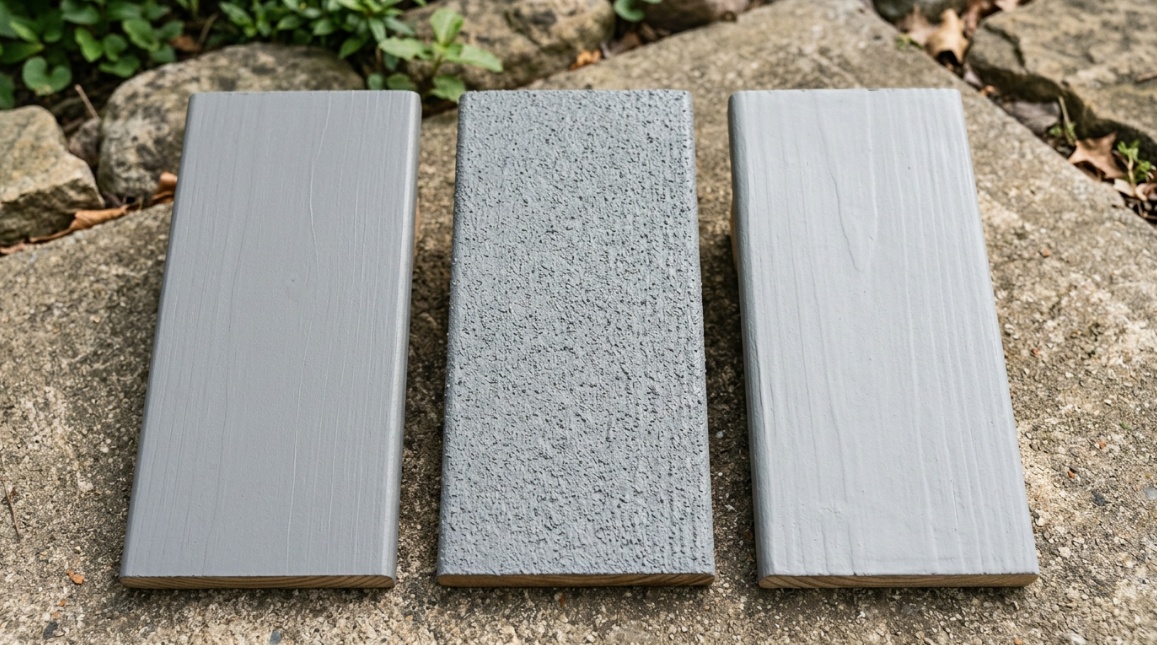
Compare it for structurally sound weathered boards where its specified preparation is feasible. Cabot lists two coats, a four-to-six-hour recoat interval and application between 50 and 90 degrees Fahrenheit. These are manufacturer instructions, not Paintit test results or a guarantee for a damp low-clearance deck.
TotalTread is a marine non-skid coating that the manufacturer also describes for docks, ramps and steps. Its March 2, 2026 technical sheet specifies 350–400 square feet per gallon at the stated film thickness and one or two coats. The product page's comparison panel shows a different range; use the matching technical sheet and purchased product instructions, not that panel, to calculate quantity.
For wood, that sheet calls for TotalBoat Topside Primer and describes ideal moisture content of 6–8%, with less than 10% potentially satisfactory. This is a product-specific limit, not a universal deck-paint threshold. It also requires preparation between coats and temperature-dependent recoating; do not substitute a generic two-coat afternoon schedule.
The page showed $51.99 for a quart and $129.99 for a gallon when checked on November 4, 2026, before shipping and tax. This is one manufacturer's dated USD listing, not a national deck-paint price or proof of superior value. Primer and preparation are additional.
INSL-X Floor and Patio and BEHR Porch & Patio are named ranges to investigate for the exact project, not automatic approvals for every deck or composite board. Confirm the current formulation, approved substrate and primer. A product with “patio” in its name may have restrictions that another range does not.
A solid stain can give an opaque appearance while following a different system from paint. It is not necessarily a penetrating product or maintenance-free. Compare the label rather than choosing solely by the word stain.
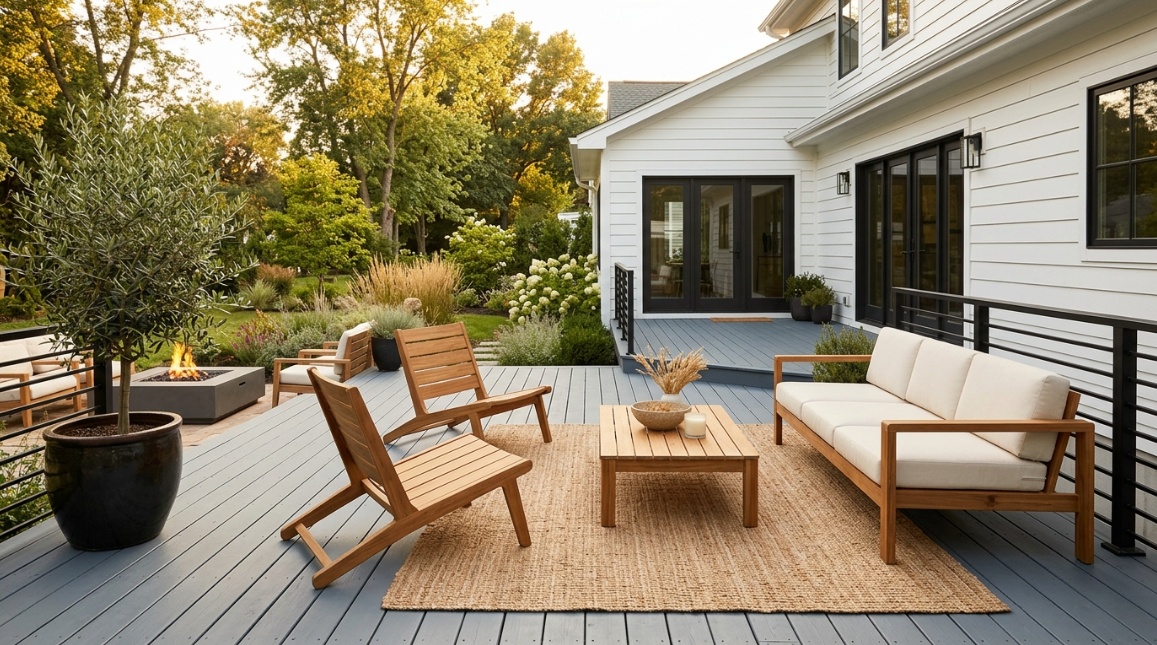
Compare medium gray, taupe or brown with the siding and surrounding paving. Very pale coatings can show dirt; dark coatings can make pollen and scuffs obvious. None is universally best at hiding marks, because local dirt, finish texture and cleaning change the result.
Choose the permitted finish and traction system before prioritizing gloss. Decorative flakes or a rough-looking photo do not establish slip resistance. Use only an additive and loading rate approved for the exact coating; do not improvise with beach sand or loose silica.
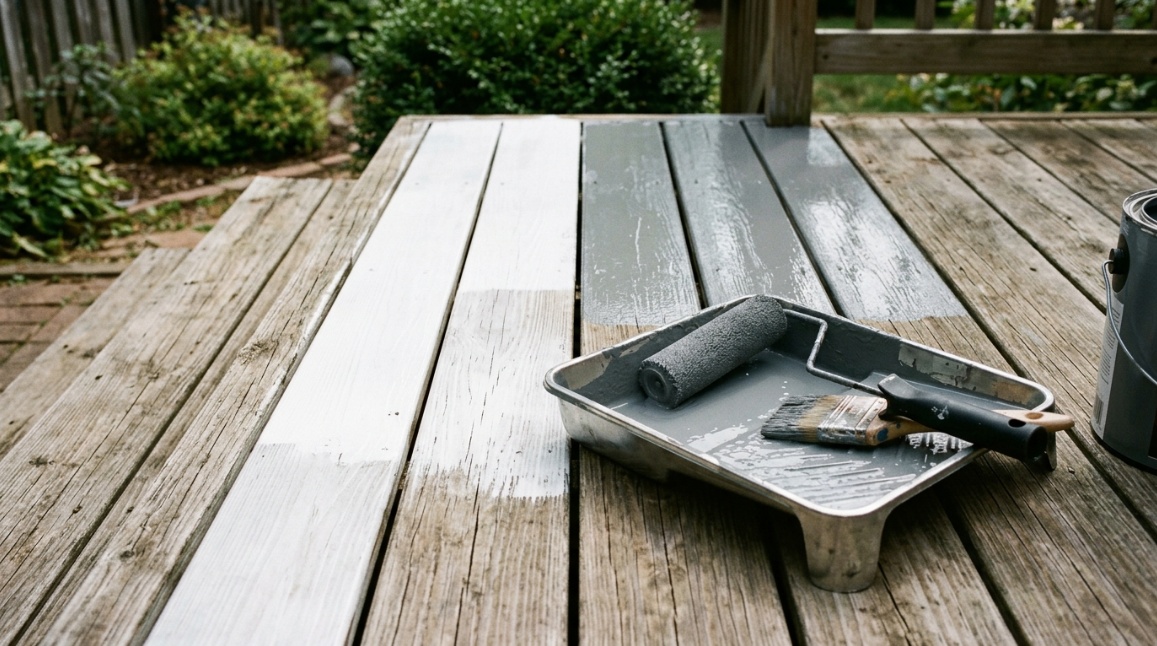
Read the safety data as well as the application instructions. Solvent-based coatings, cleaners and sanding each involve different hazards. Ordinary household dust masks do not provide vapor protection.
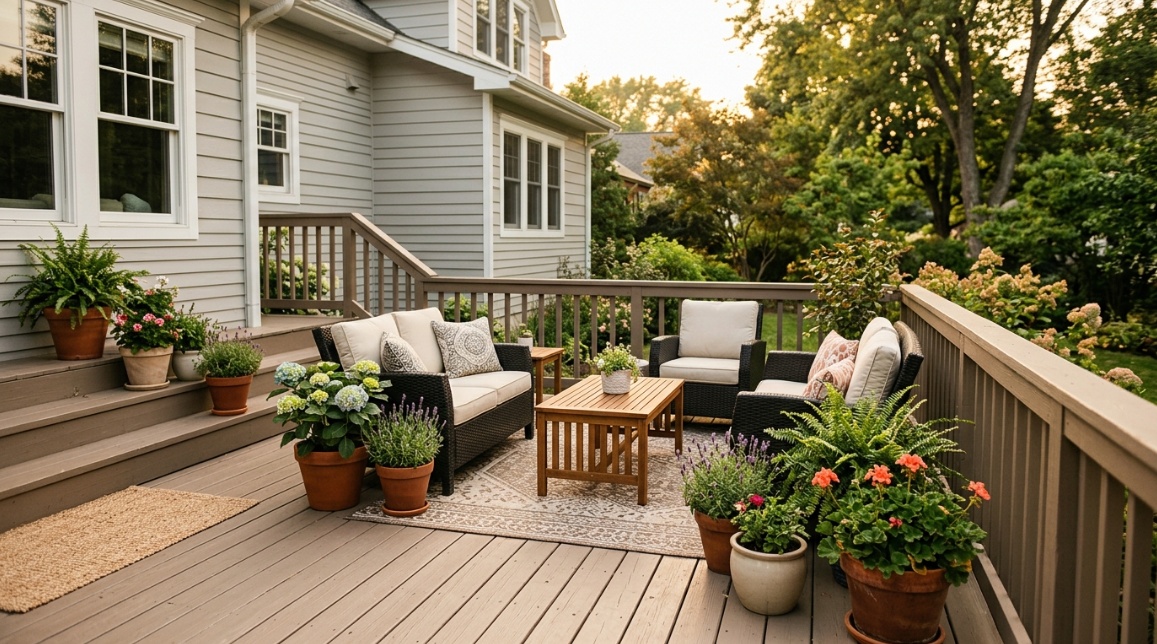
Use a photo that includes the deck, railings, siding and furniture. In Paintit, compare outdoor color concepts while naming the boards and railings separately. Inspect whether the generated image changed the layout, stairs or furniture without your request.
The preview cannot measure wood moisture, grip, heat, rot or load capacity. Use it to narrow physical samples after choosing an eligible coating.

Measure the area and calculate using the selected product's full coat schedule. Include cleaner, repairs, primer where required, tools and future access for maintenance. An unrelated market-growth statistic does not help decide whether this deck should be painted.
Keep some product details for touch-ups and inspect the deck regularly. There is no reliable fixed four-to-seven-year service-life promise for every climate and installation.
A sound painted deck may favor an approved repaint. Bare or properly stripped wood may allow a stain when visible grain and a different maintenance approach are preferred. Check the specific product and surface.
Only if it explicitly approves the walking surface. Exterior siding approval alone is insufficient for a deck.
There is no binder-only winner. Compare a deck-approved oil or alkyd system with eligible water-based products for the wood, retained coating, application and maintenance you can support.
Possible causes include moisture, contamination, failed old coating, unsuitable preparation or an incompatible product. Identify the cause before adding another layer.