6 min. reading

Yulii Cherevko
CEO paintit.ai
Published: Updated:
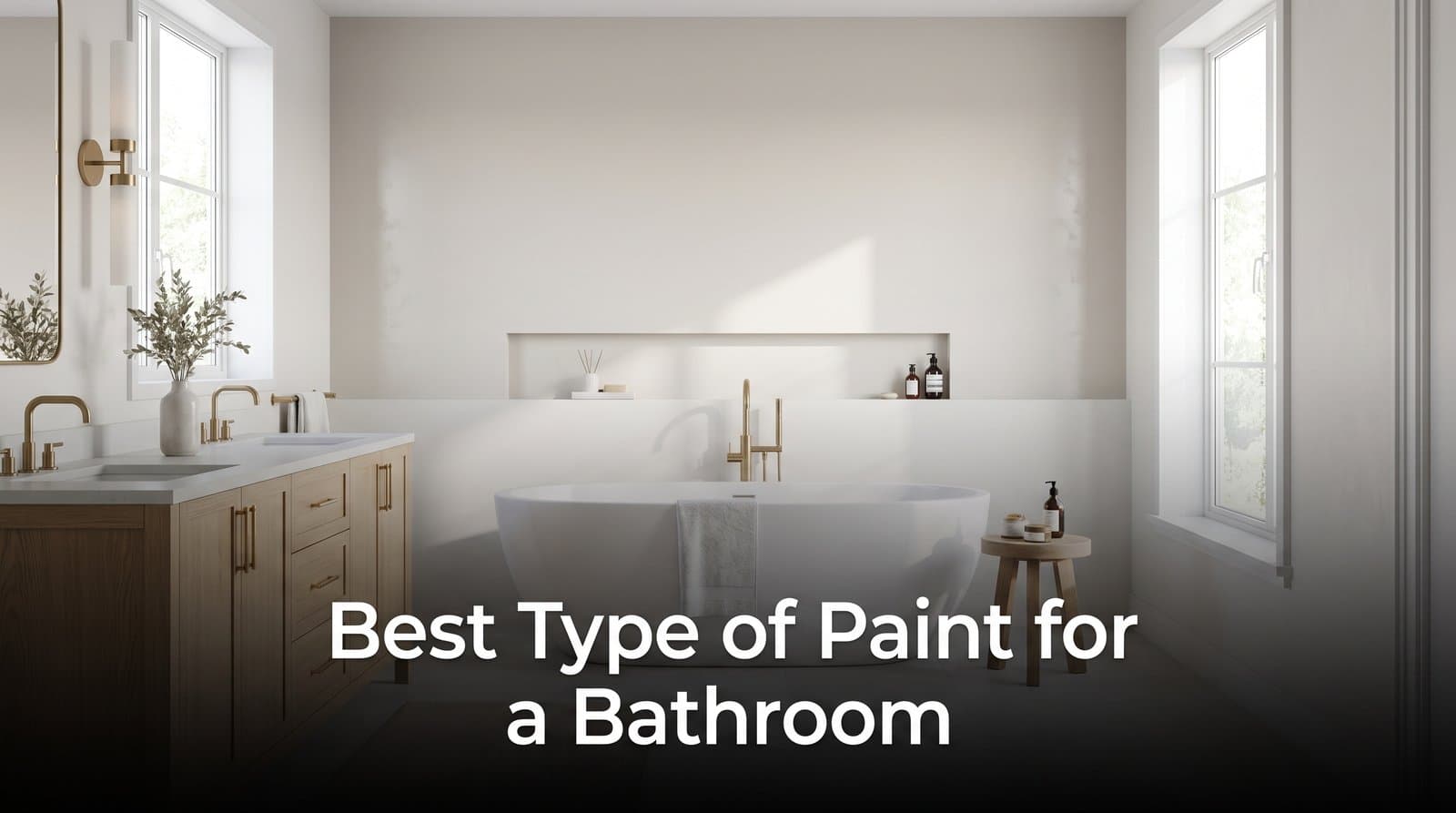
The best type of paint for a bathroom is a coating explicitly suited to the room's humidity and cleaning needs. Satin and semi-gloss are useful options, but neither sheen is compulsory. A purpose-made matte bathroom coating can also work; ordinary dry-room flat paint is not an equivalent product.
Choose the coating before the color. Walls above a bath, a ceiling that collects condensation and a powder room without a shower face different conditions. Paint is a decorative finish, not waterproofing for a shower enclosure or a treatment for an unresolved leak.
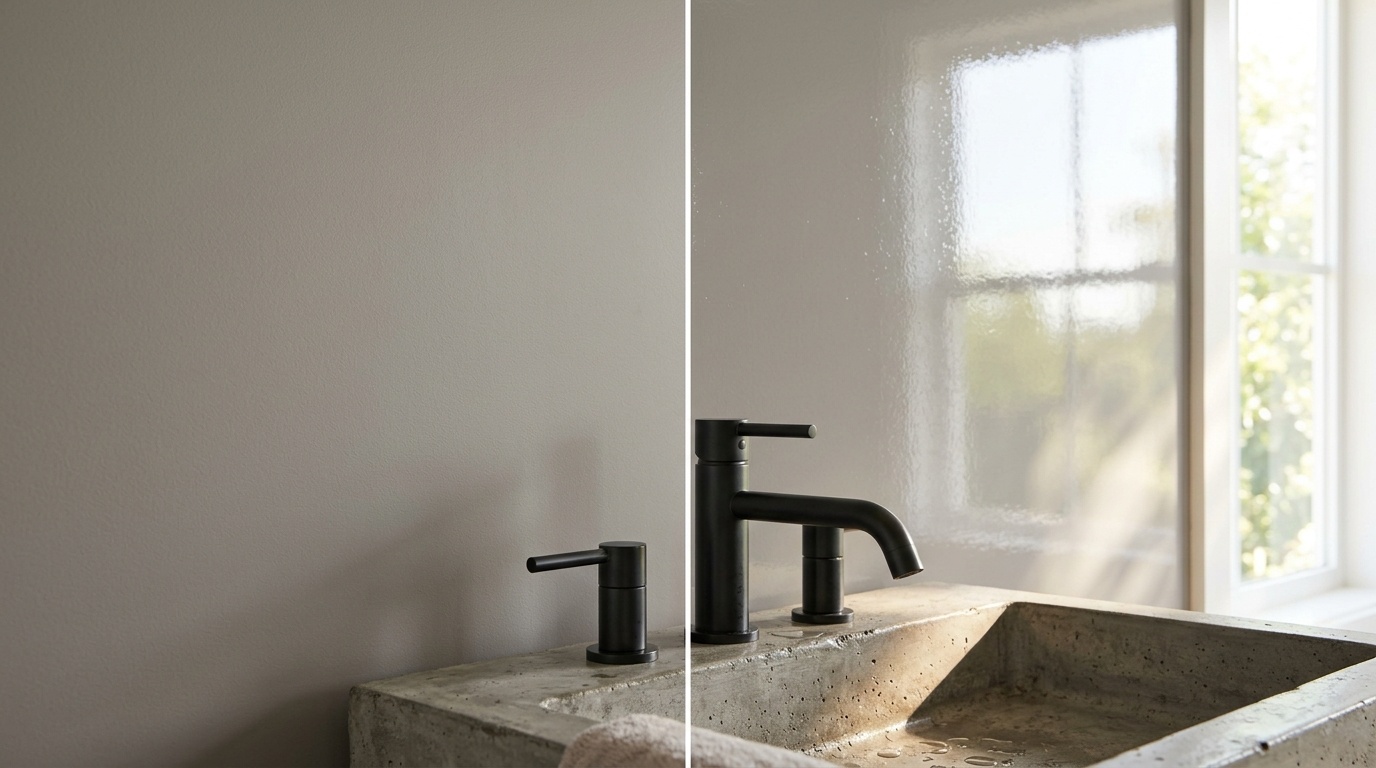
Satin reflects less light than semi-gloss and can make minor wall defects less conspicuous. Semi-gloss gives stronger reflections and clear contrast around trim. Either can suit a bathroom when the specific product is approved for the surface and expected conditions.
Do not infer moisture resistance solely from sheen. Benjamin Moore Aura Bath & Spa is a matte product formulated for high-humidity environments. That is a useful counterexample to the claim that every bathroom requires shiny walls.
| Surface or Room | Coating to Compare | Important Qualification |
|---|---|---|
| Full bathroom walls | Humidity-suitable satin or purpose-made matte | Check ventilation, substrate and cleaning instructions |
| Frequently cleaned family bathroom | Washable bathroom-rated coating | Cleaning performance belongs to the product, not sheen alone |
| Powder room | A compatible washable wall finish | Low steam permits more choices but does not remove prep |
| Bathroom ceiling | A humidity-suitable ceiling or wall coating approved overhead | Fix leaks and condensation; basic flat is not automatically suitable |
| Doors and trim | Compatible enamel intended for contact | Wall paint and trim enamel are different specifications |
| Shower enclosure | A properly specified waterproof surface system | Ordinary bathroom wall paint is not a shower liner |
Water-based acrylic products are common bathroom choices, but read the intended use. A paint's mildew-resistant film helps protect the coating; it does not remove existing mold, kill growth behind the wall or prevent condensation.
Benjamin Moore's US Aura Bath & Spa Matte page showed $108.99 for one US gallon when checked on November 4, 2026. It lists two recommended coats and coverage of 350–400 square feet per gallon per coat. This is a dated product-page example, not a national price or a comparison with UK formulations.
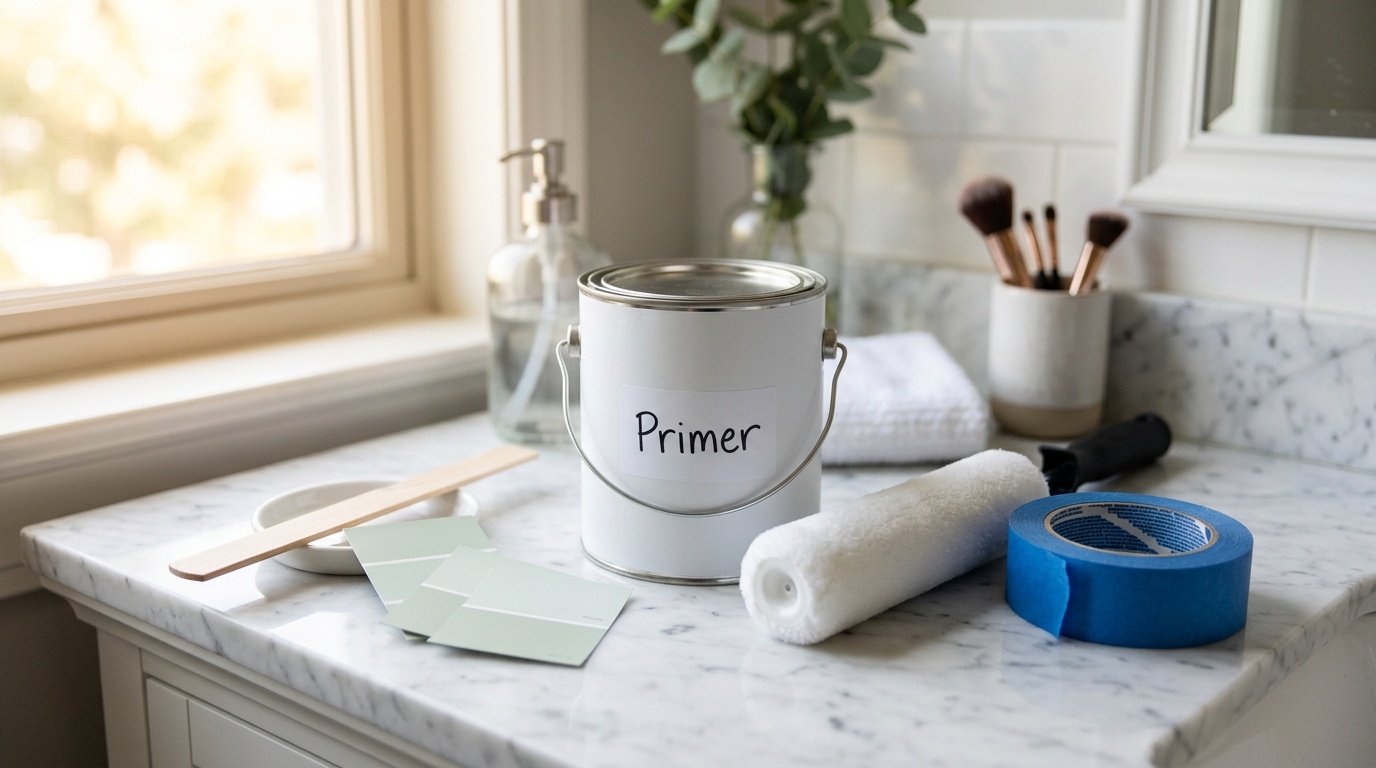
Prime bare repairs, stains or difficult existing finishes as the selected system directs. A paint-and-primer label does not automatically cover water stains, glossy old paint or damaged drywall. Repair the underlying moisture source before concealing the mark.
For UK buying, compare the locally supplied bathroom formulation and its coverage in square metres per litre. Do not transfer a US gallon price or US data sheet to a similarly named UK product. “Bathroom paint” and sheen names do not identify one standardized formula across markets.
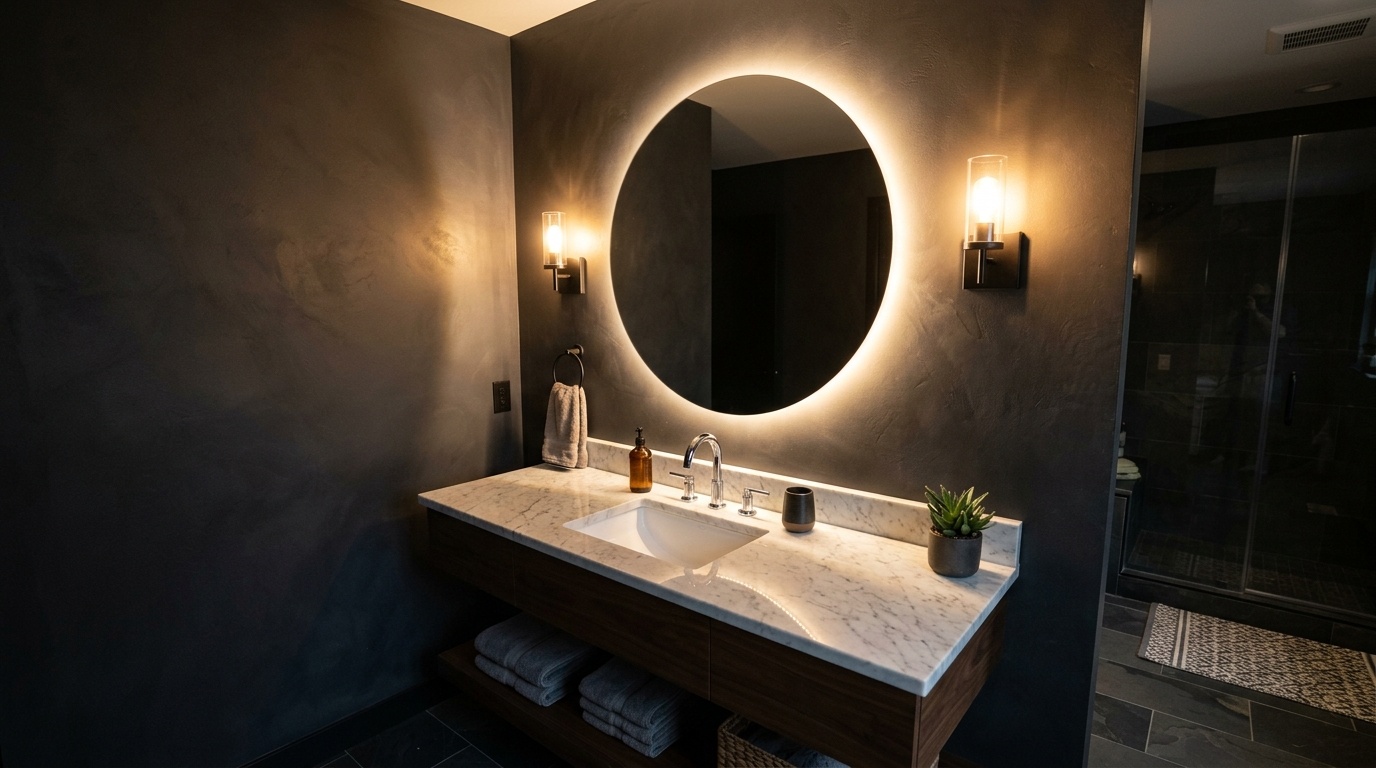
Vanity lighting and daylight can reveal different undertones. A pale gray may read blue beside a warm white basin; sage can look dull against a cool tile. Semi-gloss also adds visible highlights that a flat color chip cannot show.
Sample the exact coating and sheen beside the fixed tile, countertop and fittings. Check with the lights on and in daylight. An AI image can help compare a bathroom palette, but it cannot measure sheen, display calibration or the color of the applied film.
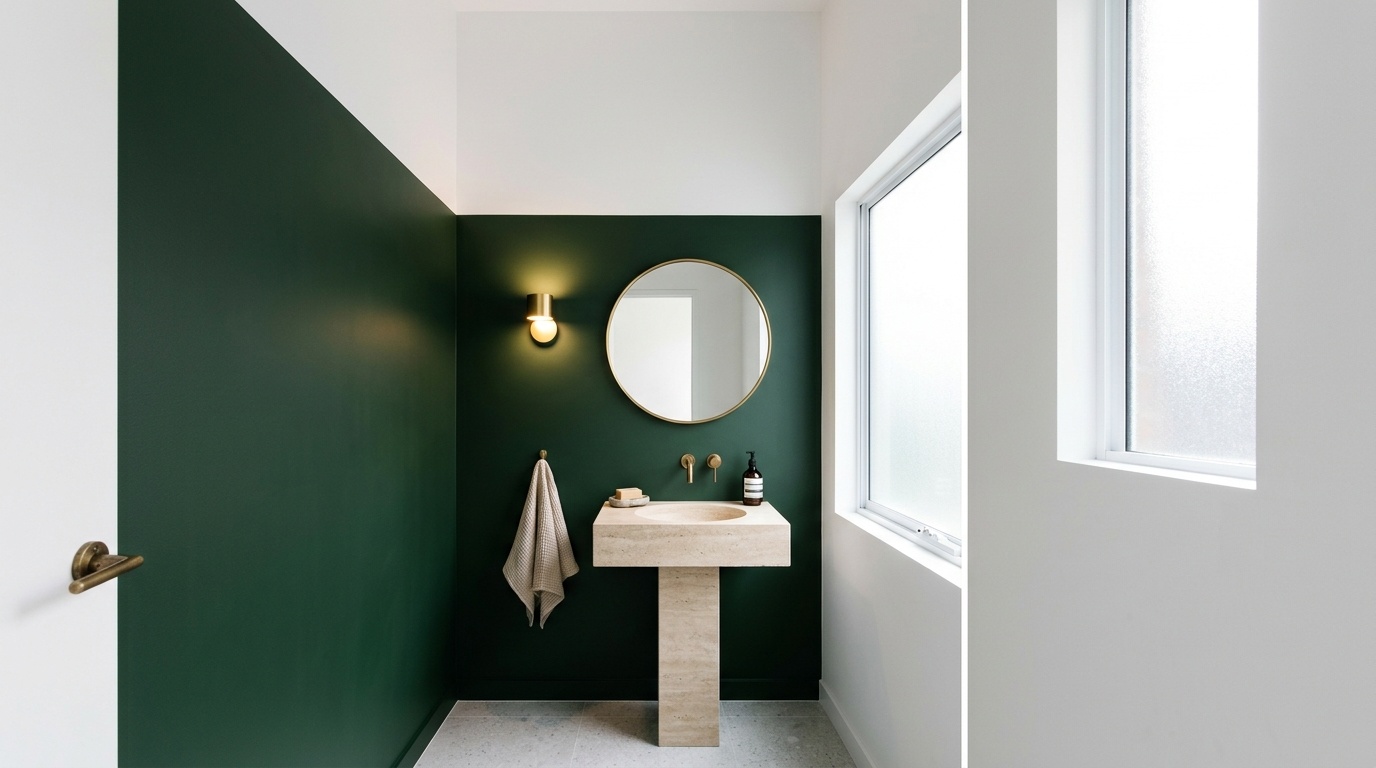
Choose a humidity-suitable coating for areas outside direct wet exposure. Use the extractor and address condensation. Follow the coating's waiting period before shower use; touch-dry is not the same as exposure-ready.
Prioritize a washable coating and a finish that tolerates the manufacturer's recommended cleaners. Tile or another appropriate splash surface may be more useful than a sheen change where water repeatedly hits the wall.
With no shower, there may be more scope for eggshell or a compatible matte. The basin area still needs sensible splash protection and a finish suited to cleaning. Dark colors do not remove those requirements.
A humidity-rated matte can keep glare low. Persistent spotting or peeling needs investigation, not simply a glossier topcoat. Check the fan, condensation patterns and leaks before repainting.
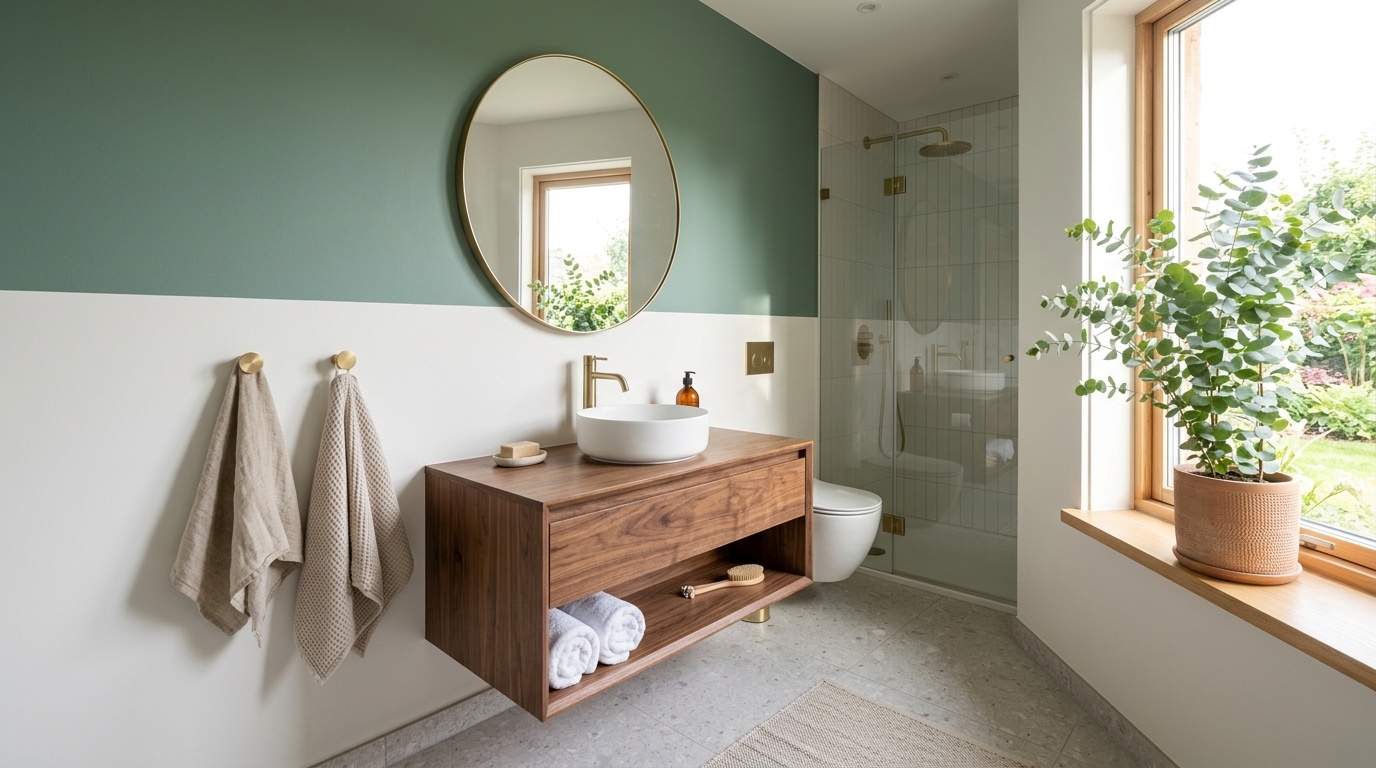
Use these illustrations to compare color relationships, not as proof of a particular paint's resistance to water or mold. The finish still needs a product specification and a real sample.
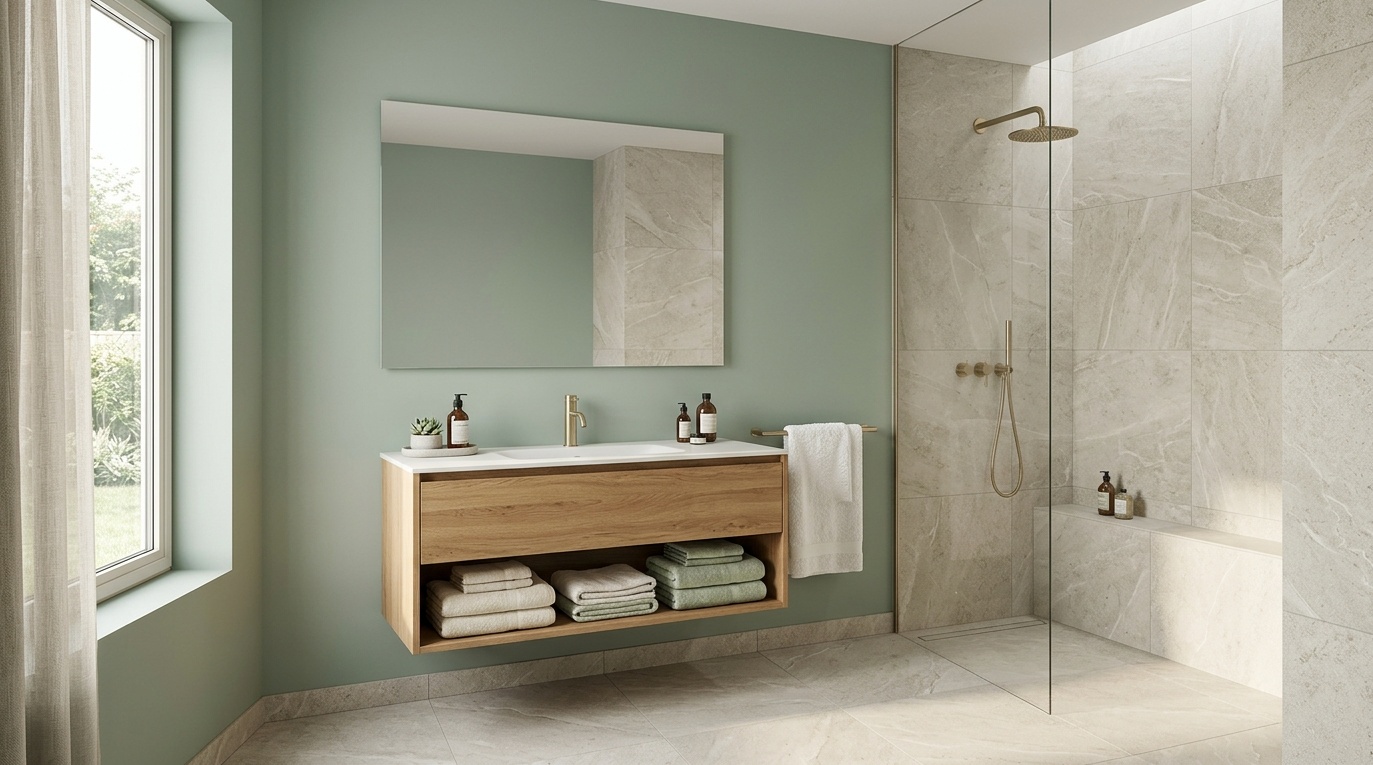
A muted eucalyptus or sage can relate to oak and brass. Compare a bathroom-rated satin with a suitable matte if reflections are distracting. Do not infer the real sheen from the illustration alone.
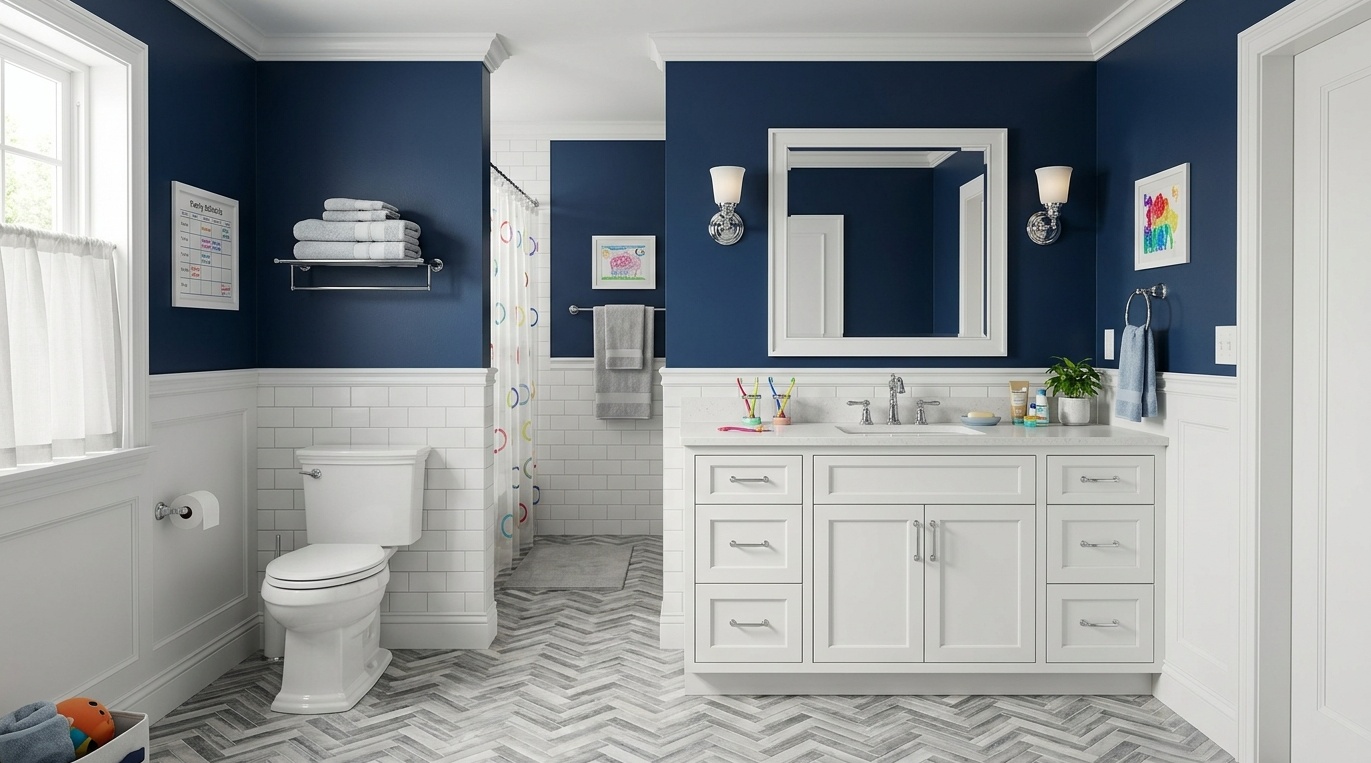
A darker upper wall can work with white tile and chrome. Use the tile or specified wet-area surface where direct water protection is needed; navy semi-gloss is not itself waterproofing.
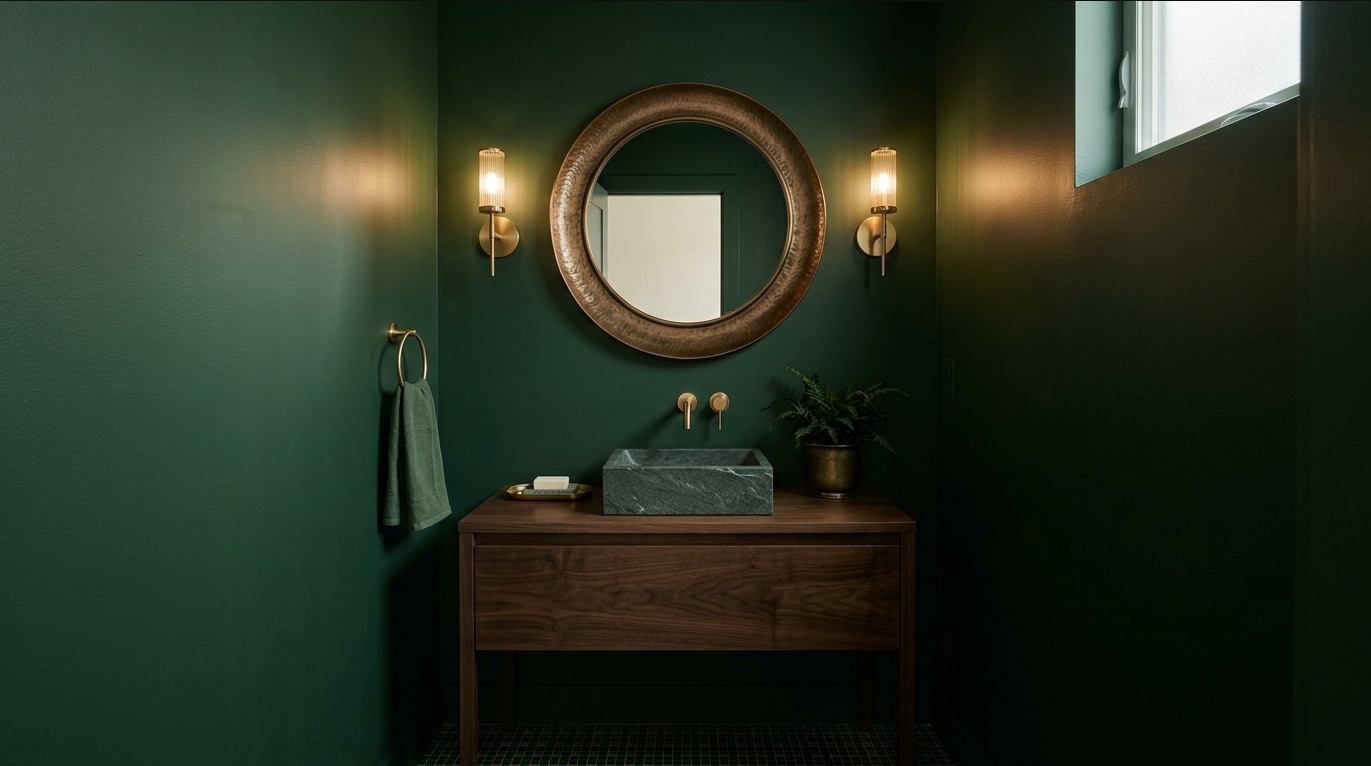
Check the color with the actual mirror and sconces. A lower sheen can soften reflections where the selected paint permits the use. Sample first, since a small dim room may make the color appear deeper.
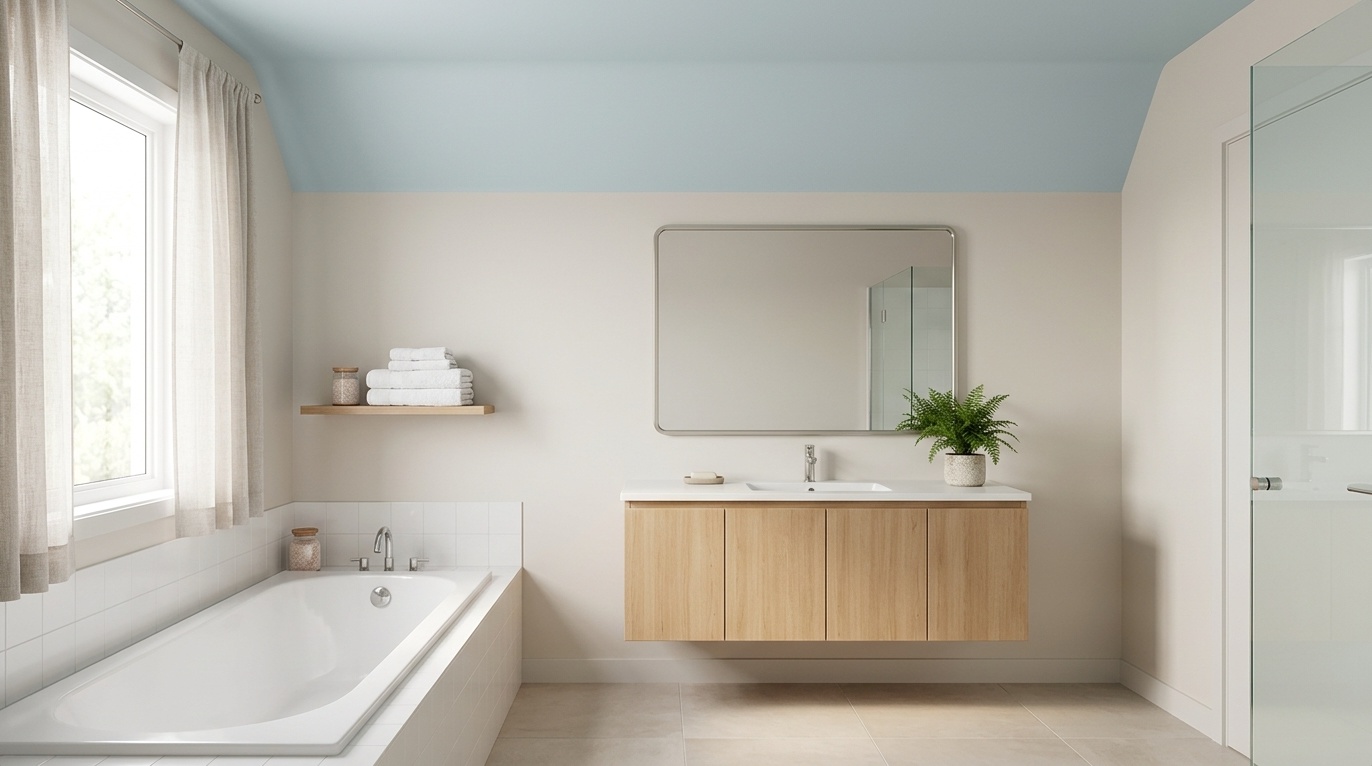
A pale blue or soft white ceiling can complete the palette. Choose a coating suitable for humidity and overhead use; the visible color tells you nothing about moisture resistance.
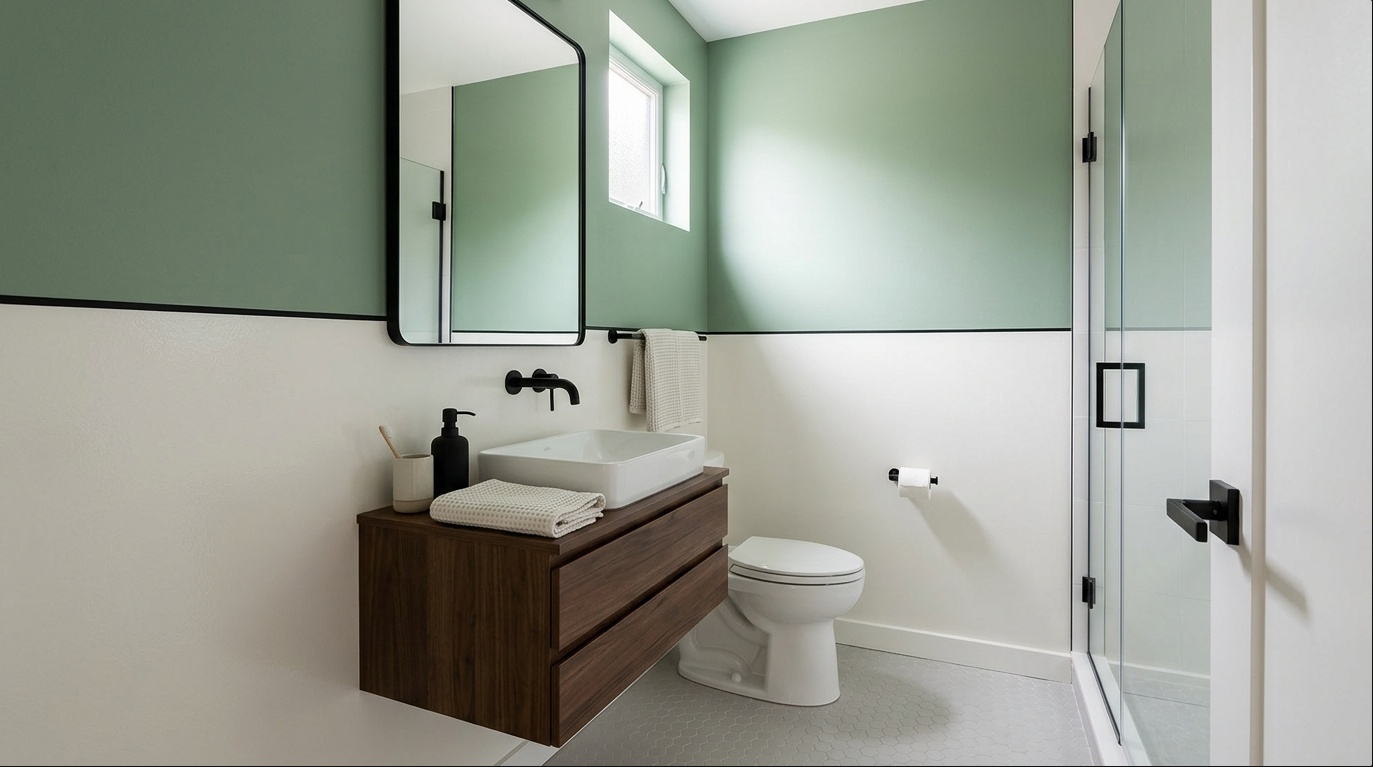
Use the basin, tile edges or architectural lines to place the color change. Keep the coating system consistent with each surface. A decorative painted band does not create a waterproof wet zone.
Peeling near the shower may indicate recurring moisture, an unsuitable substrate or weak existing paint. Bubbling can also have several causes. A photograph cannot diagnose which one applies. Resolve the source, remove failed material safely and follow the repair and primer specification before recoating.
The EPA's mold guidance emphasizes moisture control. Do not paint over moldy surfaces as a cleanup method. Get appropriate help for hidden damage, recurring growth, contaminated water or work beyond a small routine cleaning task.
Use a humidity-suitable coating outside the directly wetted enclosure. Satin, semi-gloss and some purpose-made mattes are options. The exact product and ventilation matter more than a sheen rule.
A bathroom-rated matte can be suitable. That does not mean ordinary flat ceiling paint is appropriate for persistent steam. Read the intended-use guidance.
Choose a coating approved for the ceiling surface and humidity. Fix leaks and condensation before painting and follow the instructions before resuming shower use.
No sheen makes a room mold-proof. Compare the coating's intended use and maintain moisture control. A protected paint film does not treat growth behind it.
Obtain permission, identify the existing coating and choose a repeatable washable bathroom finish. Do not use paint to conceal recurring dampness that needs a repair.