11 min. reading

Yulii Cherevko
CEO paintit.ai
Published:
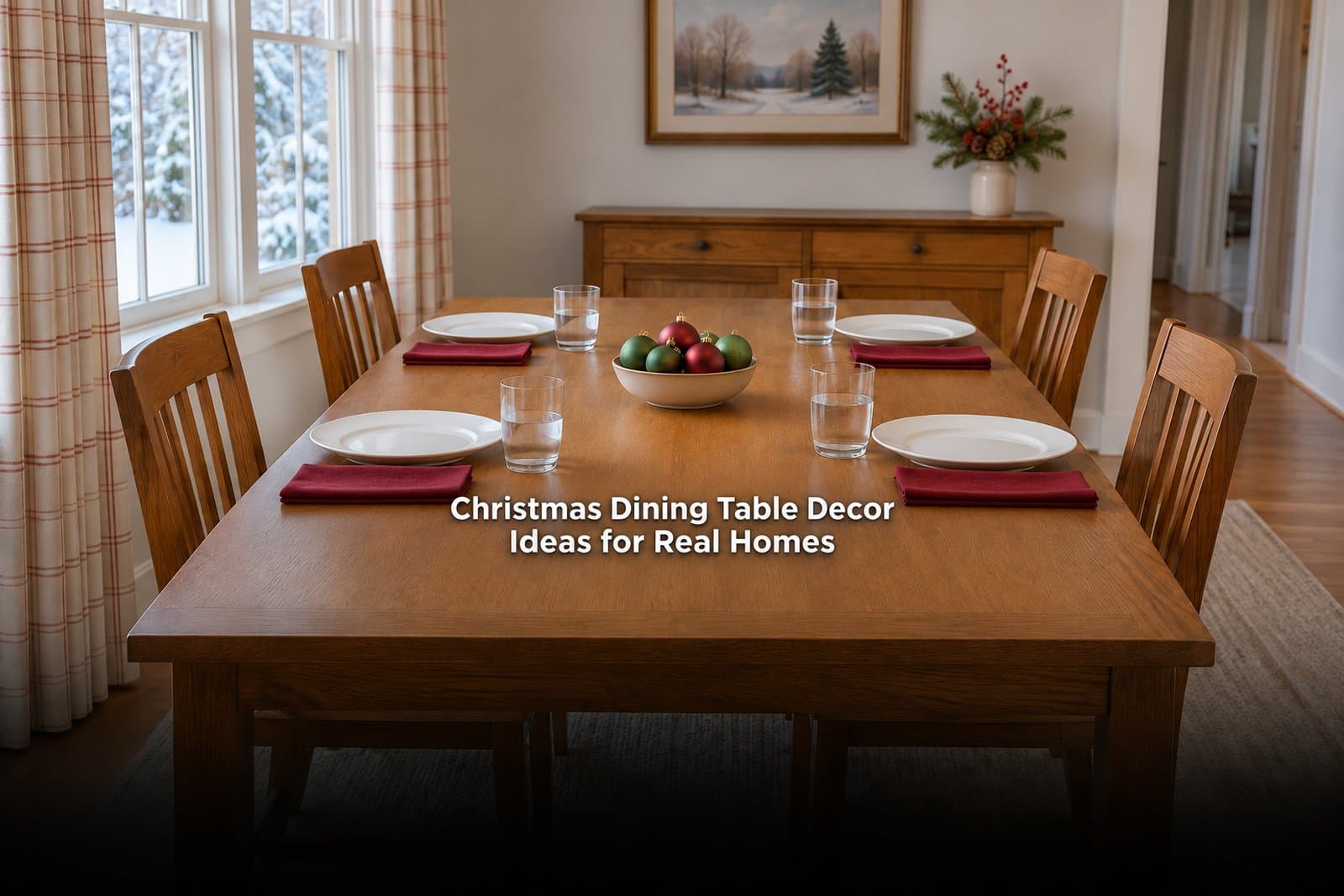
The best Christmas dining table decor ideas leave enough room to eat. Start with the plates, glasses, serving dishes, and chairs you will actually use. Then add one low centerpiece, a textile you like, and a few repeated details that suit the room. A beautiful table should still work when the food arrives.
You do not need new dinnerware or a separate dining room. The ideas below cover round tables, narrow tables, kitchen-diners, and larger dining rooms, with ways to explore a Christmas look on your own room photo before buying decorations.
Put a plate and the glasses you need at every seat, including the end seats. Bring out the largest serving platter, bowls, water jug, and trivets. If you serve Christmas dinner family-style, those pieces need somewhere to land. If you plate the meal in the kitchen, more of the center may remain available.
Now sit down. Can you see the person opposite, reach your glass, and get up without catching a ribbon? Pull each chair out and walk the route between the kitchen and table. Include any mobility aids and the space your guests actually need. Do this before putting a temporary tree beside the chairs.
For an extendable table, add the leaf first. A display arranged on the closed table may look unexpectedly small after extension, while a long runner can catch on the extension joint. Check the manufacturer's instructions for using the table and protecting its finish.
| Table or Room | Starting Arrangement | Leave Available |
|---|---|---|
| Long rectangular table | Two or three small groups with gaps between them. | Places for serving dishes and a view across the table. |
| Round table | One compact central bowl or removable tray. | A complete place setting at every seat. |
| Narrow table or kitchen-diner | Napkins and a runner; move the larger display elsewhere. | Room for food and the route to the kitchen. |
| Extendable table | Arrange the display after adding the extension. | Access to every chair and protection suitable for the finish. |
These are starting arrangements, not seating-capacity rules. The useful decorating area depends on your table, place settings, serving method, and guests. A photo alone cannot settle those questions.
A shallow bowl of ornaments or a small tray with a few seasonal pieces is easier to live with than a display built directly across the whole table. Choose something you can move without untying lights or gathering loose stems one by one.
Decide where it will go during dinner. An empty sideboard space works; a chair that someone needs does not. For Christmas centerpiece ideas that stay on the table throughout the meal, test the height from a seated position and leave gaps where serving bowls will sit. Keep loose glitter and decorative foliage away from plates and food.
White or cream dishes work with burgundy napkins, deep green ribbon, or blue-and-white textiles. Choose one of those directions rather than adding all three. Use the dishes that fit your dishwasher and cupboards instead of buying a holiday set simply to match one photograph.
If your plates already have a pattern, pick a color from it for the napkins. A plain tablecloth makes the pattern easier to appreciate. You can also skip chargers when they crowd the table: one dinner plate, the necessary cutlery, and a cloth napkin can look complete.
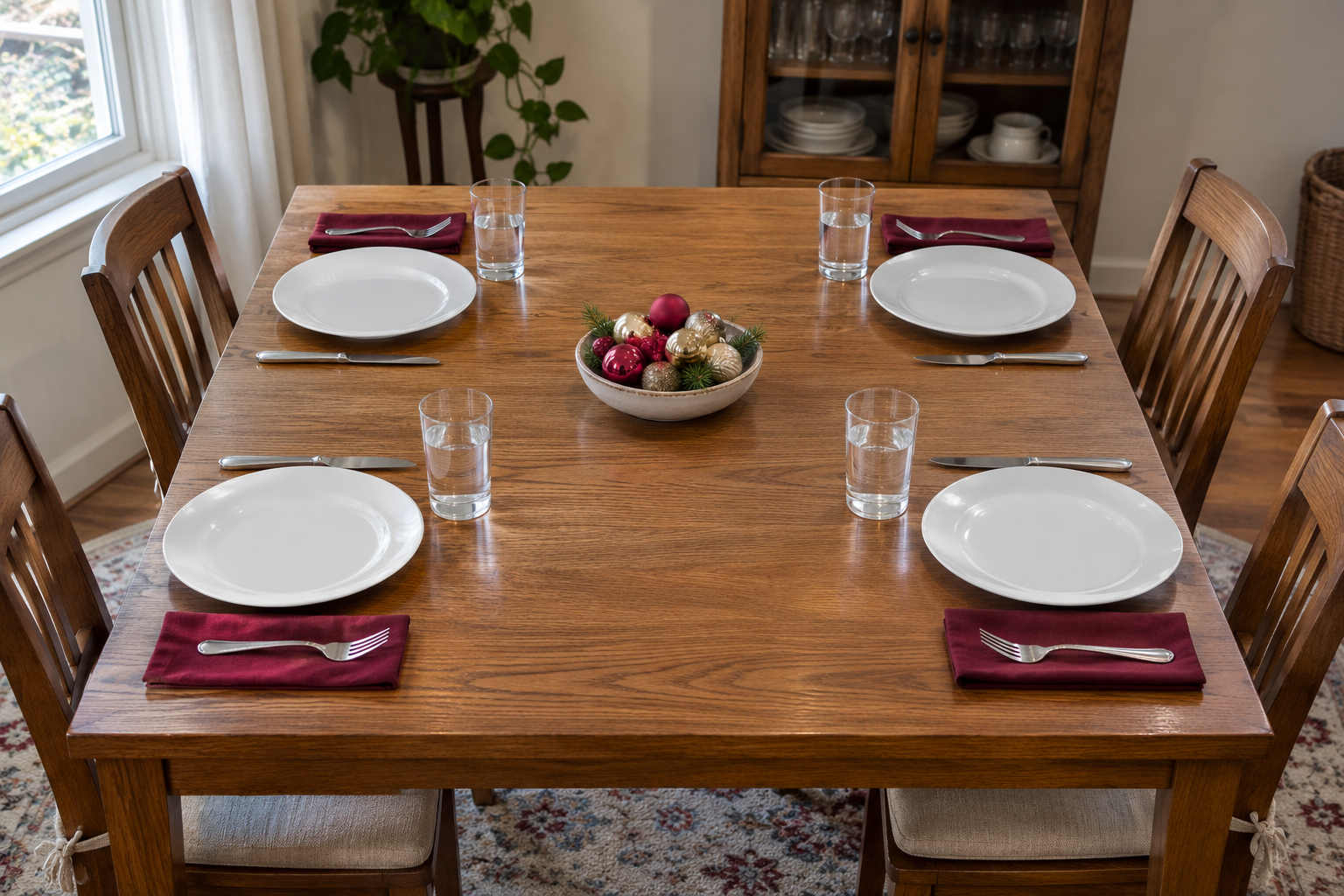
For a rectangular table, try two or three small groups with clear spaces between them. Repeat one element, such as matching shallow bowls or ribbon color, so the groups feel related. Do not fill the gaps afterward just because they look empty in a photo; they are where the food and water jug can go.
A runner can connect the groups without needing a continuous garland. Check that its edges do not bunch beneath a glass or trivet. If you use greenery, keep it on a suitable protective base and check for moisture, shedding, and contact with the tabletop finish.
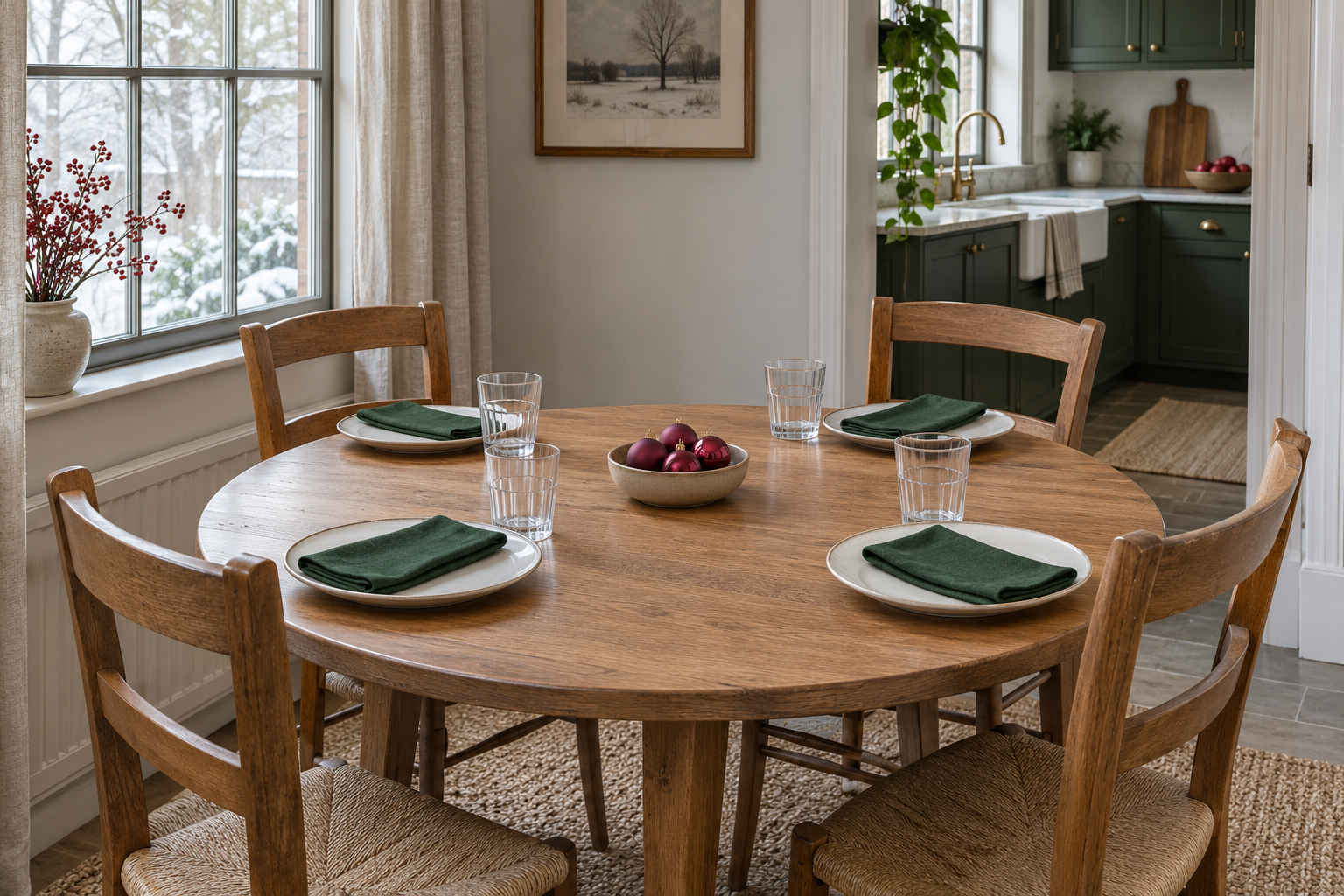
A round table usually needs a different arrangement from a long dining table. Start with one compact bowl or a small circular tray, then place all the dinner settings around it. Rotate the display and look from each seat. A centerpiece that works from the doorway can still block the guest on the other side.
Stop adding objects when the glasses or plates have to move toward the edge. For a small round table, a patterned tablecloth and coordinated napkins may supply nearly all the decoration you need. The centerpiece can be very modest, or removed altogether for dinner.
Try the room's existing lighting before buying more. A sideboard lamp can soften the room while the overhead light keeps the meal visible. Keep enough light for guests to read place cards, see the food, and move comfortably; a dark photograph is not a useful lighting target.
Battery-operated flameless candles are an option when you want candle-shaped decorations beside textiles or foliage. The U.S. Fire Administration's candle guidance recommends considering flameless candles and keeping burning candles at least 12 inches from anything that can burn. Do not copy an arrangement with flames tucked into greenery. Follow product instructions, including battery precautions, and keep decorations out of children's reach.
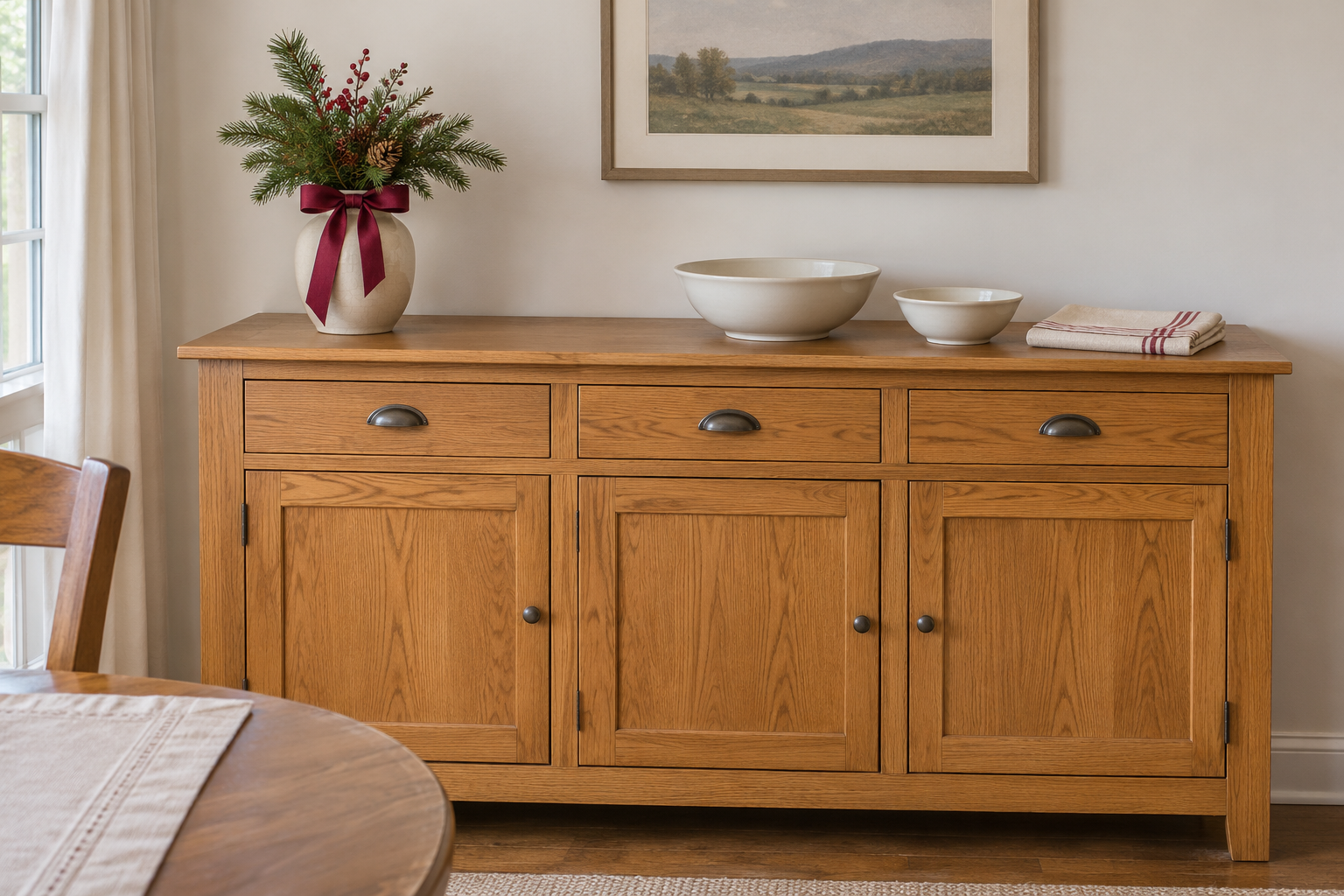
A sideboard can hold a taller vase or a small festive arrangement without taking over the meal. Clear a specific area first. If the sideboard is also your serving station, reserve its useful surface for food and put the decorations at one end rather than along the full length.
Check drawer and cupboard access before hanging ribbon or garland. A decoration that catches every time you retrieve a serving spoon will soon become irritating. If you have no sideboard, use an existing shelf or wall display; do not add a narrow console where people need to pass with hot dishes.
For simple Christmas table decor ideas, start with a folded cloth napkin tied loosely with ribbon. Put any name card beside it, where the guest can read it without dismantling the place setting. Skip loose ornaments on the plate if they need to be collected before anyone eats.
A single ribbon color can connect mismatched chairs and dishes. Use shorter ties that stay on the tabletop rather than trailing into laps or catching on chair arms. If you want Christmas crackers, allow space for them in the setting and check their contents are appropriate for the guests.
Chair bows can carry color around the room without another tabletop object. Try one on a chair first and sit against it. Move or omit it if the knot presses into your back, the tails reach the floor, or the ribbon covers a useful handhold.
In a small dining room, leave the kitchen route undecorated. Keep bags, wrapped gifts, and spare ornaments somewhere else. If an extra guest means removing a decoration or using a simpler place setting, make that change before the meal rather than squeezing another chair into a finished display.
A ribbon on an existing wall wreath or a few ornaments on a shelf can make dining room Christmas decor feel intentional without covering every surface. You do not need a second tree. Keep window handles, blinds, and curtains usable, and choose fixings that suit the decoration's weight and the wall or window finish.
In an open-plan room, borrow one color from the nearby lounge rather than copying its whole display. The separate guide to Christmas decorations for a small living room covers tree placement and seating areas, while the dining zone can stay focused on the table.
If your dining table is also a desk, homework space, or the only place to fold laundry, use a display that lifts away as a unit. Keep its temporary storage spot clear. A tray is only convenient if it has somewhere to go.
Before buying anything, take out the pieces you already own and decide which ones you want to see together. Note what needs cleaning, replacement batteries, or a safer fixing. Buy for a specific gap, such as plain napkins that work with your patterned plates, rather than starting a second theme that needs its own set of accessories.
Use the room's permanent finishes as the starting point. A palette that looks attractive against pale oak in a shop may feel different beside your dark table and patterned curtains. These combinations are suggestions, not rules about which colors belong at Christmas.
| Existing Room | Decorating Direction | Keep It Practical |
|---|---|---|
| Warm timber table and white dishes | Burgundy napkins, deep green ornaments, a plain runner. | Keep some wood visible and the centerpiece compact. |
| Dark table and patterned blue dishes | Cream napkins, a little blue ribbon, muted silver ornaments. | Let the plate pattern supply the detail. |
| Pale table and mixed everyday chairs | Green napkins, red ribbon, one small bowl of ornaments. | Repeat one ribbon rather than replacing the chairs or dishes. |
If you like a bright, mixed-color Christmas, keep it. Repeat a napkin, ribbon, or ornament shape to give the setting some continuity. There is no need to replace meaningful decorations because they do not match a new palette.
Take a clear photo that shows the whole table, its chairs, the nearest doorway, and any sideboard you want to decorate. Photograph the everyday room before covering it with seasonal pieces. A second, seated view can help you judge the table arrangement afterward.
Upload the photo to Paintit.ai as your main image. Describe one direction and name the furniture and finishes you want to keep. If you have an inspiration image you are allowed to use, add it as a reference for the decorating style. The photo-based room design tool can help you explore visual options without starting with a blank room.
Try a focused request like this:
Use my dining room photo to explore a restrained Christmas decorating concept. Keep the existing table, chairs, floor, wall color, windows, and room proportions as close to the photo as possible. Add burgundy cloth napkins, a small low bowl of ornaments at the table center, and one modest display at the far end of the sideboard. Show ordinary place settings with clear space between them. Do not add a tree, extra furniture, open flames, or hanging decorations. Treat this as a styling concept, not a measured layout.
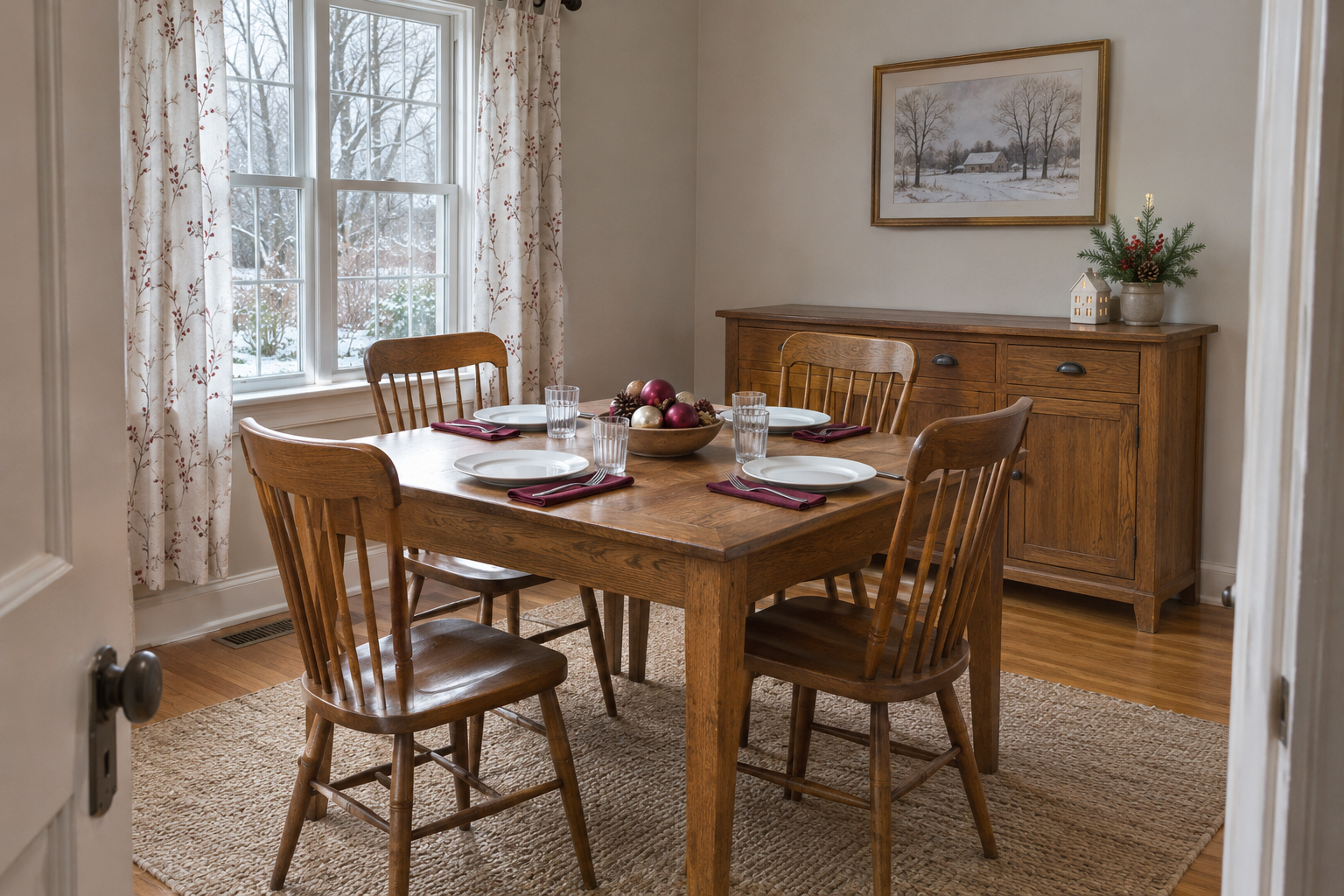
Review the result against the original. Count the chairs, check the tabletop shape, and look for invented extra space. If the image changes the furniture or architecture, refine the request or reject that version. An attractive image is not evidence that the real table seats more people.
Change one detail next: cream napkins instead of burgundy, or a smaller centerpiece instead of more greenery. Compare the look, then use actual product dimensions and a real place-setting test before buying. The AI concept cannot verify exact product appearance, table protection, mounting strength, or fire safety.
If something feels crowded, remove an item rather than shifting the problem to another seat. The point of the display is to make the meal feel special, not to give everyone another thing to manage.
Set the places first, then use a compact centerpiece you can remove or skip it during dinner. Plain dishes, coordinated napkins, and one seasonal color can be enough. Put the larger display on a suitable shelf or sideboard instead of squeezing it between plates.
It suits the table's shape, leaves space for the meal, and does not block conversation. A shallow bowl or removable tray is a useful starting point. Check it from every seat and decide where it will go if you need the center for serving dishes.
Use the plates you own and introduce a festive detail through napkins, ribbon, or a small arrangement. Repeat one color that already works with the dishes. Remove unnecessary layers if the settings become crowded.
No. A table display and one detail on a wall or sideboard can provide the seasonal focus. Only add a tree if its whole footprint fits without affecting chair movement, access, or the route through the room.
AI can help you compare the appearance of decorating ideas on a photo. It cannot confirm physical dimensions or seating capacity. Measure the pieces, set out the real dishes, and test the arrangement in person.